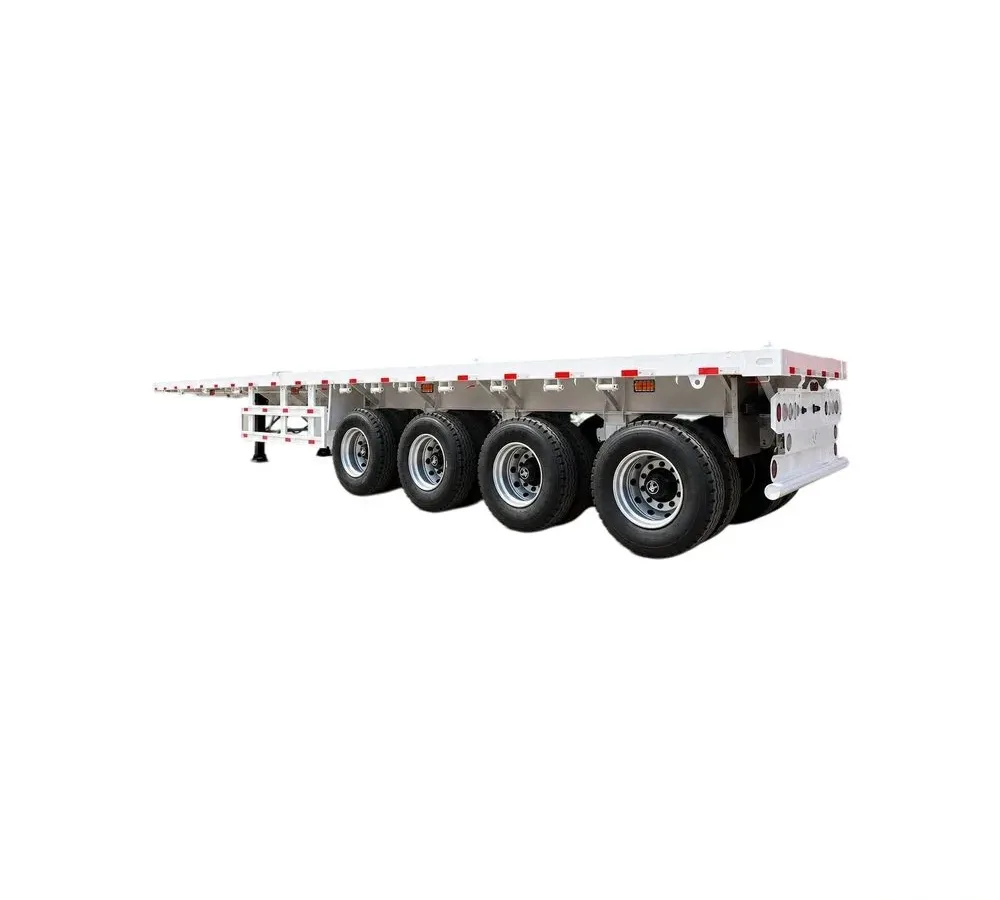
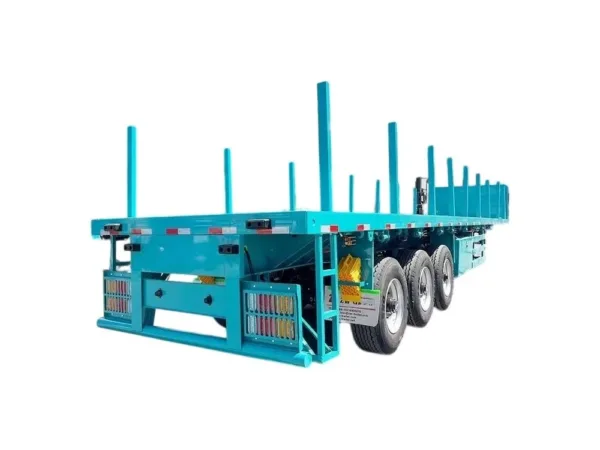
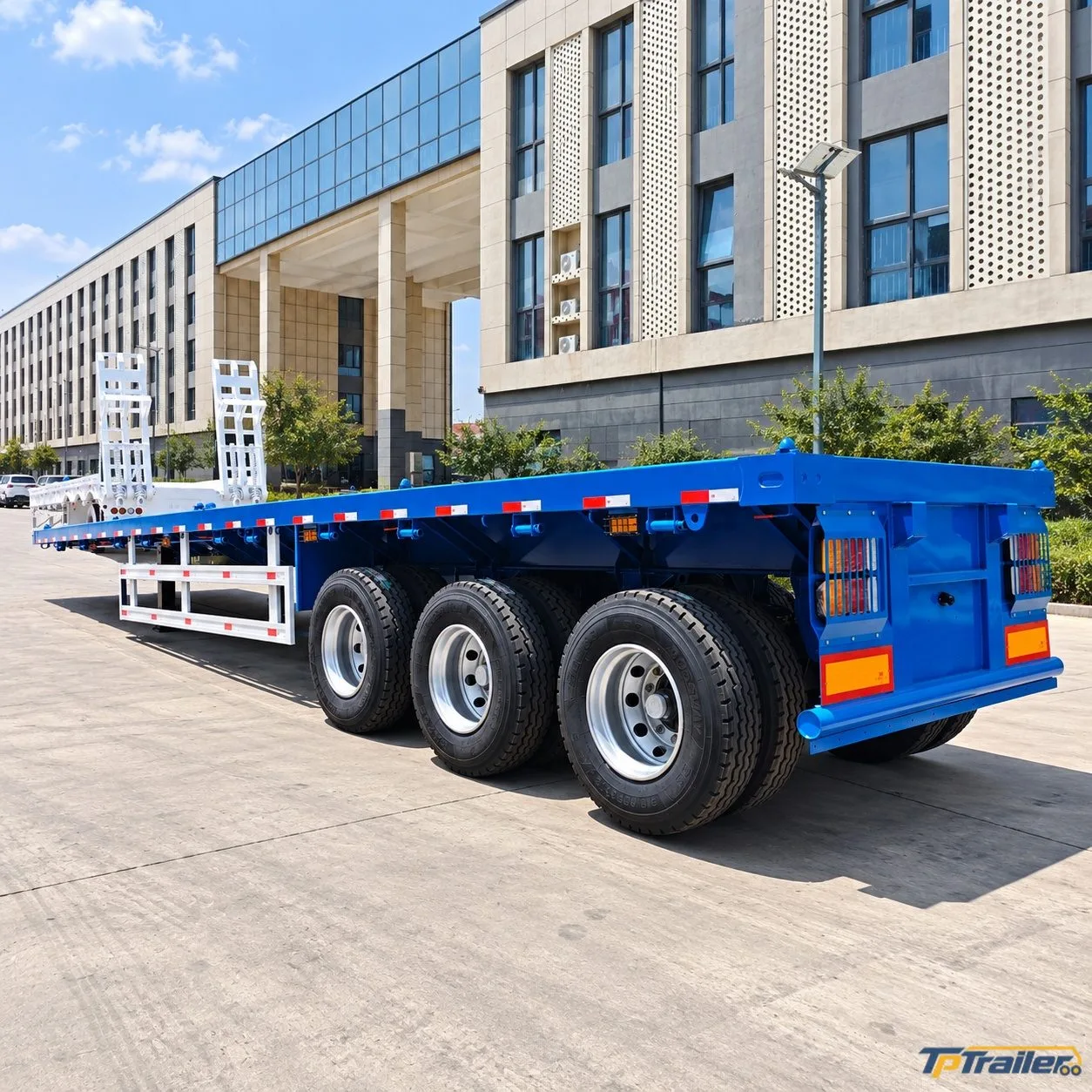
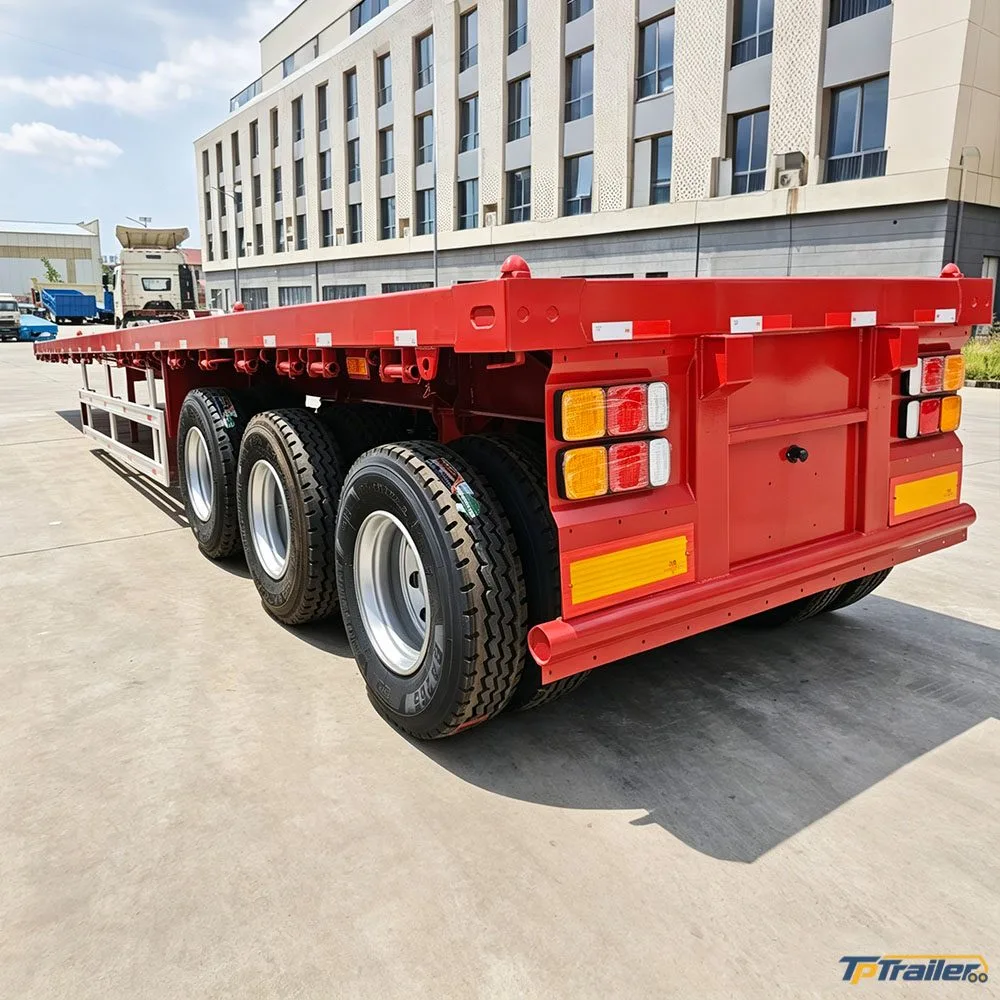
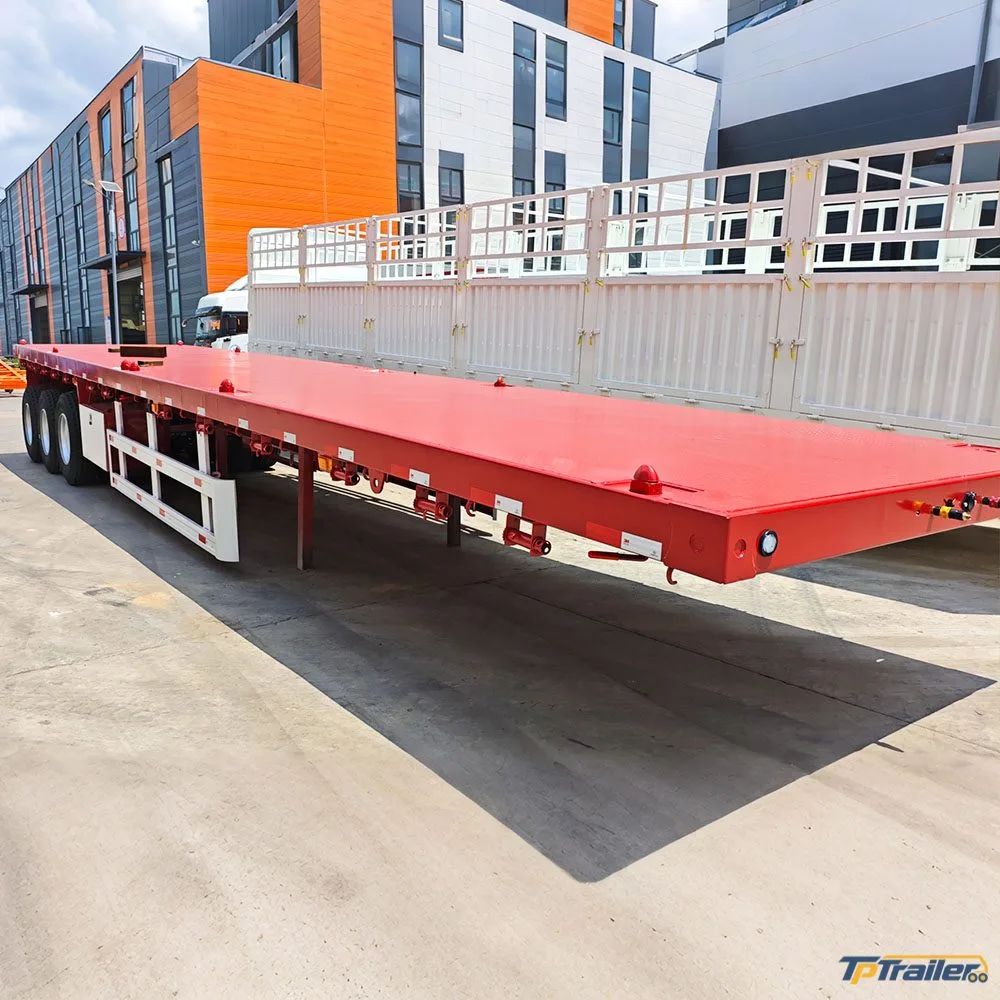
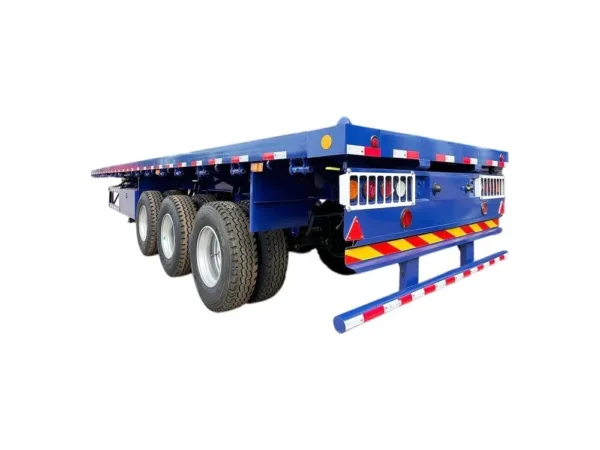
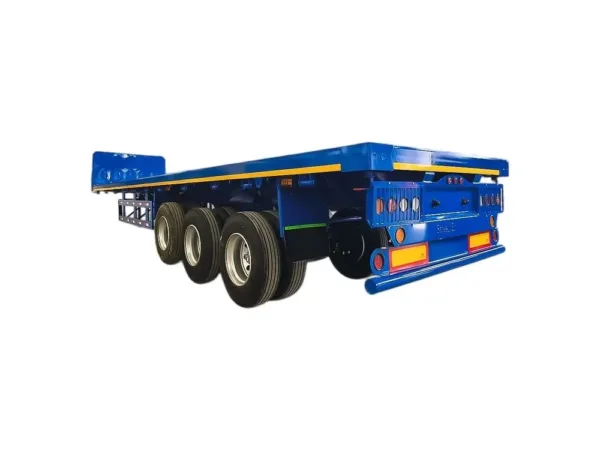
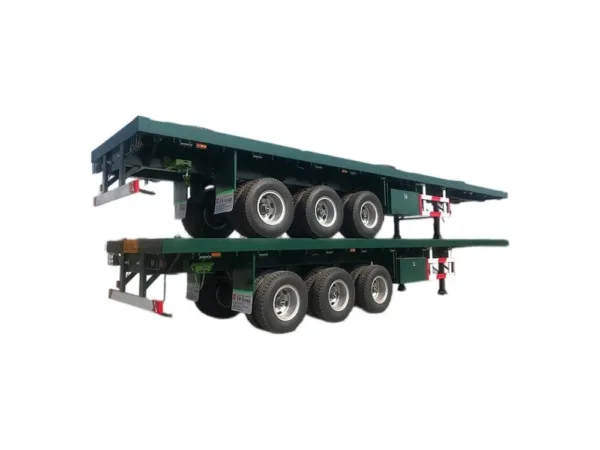
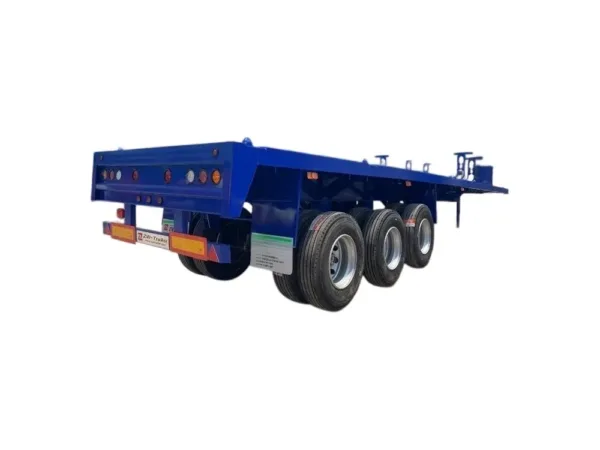
The 3 axle flatbed semi trailer 40ft is a heavy-duty steel platform trailer built to move containers and general freight over long international routes. It is aimed at logistics fleets, freight forwarders and container hauliers who need a dependable platform that keeps working load after load. Its strongest case is structural: a steel flatbed rated for a 30000 KG load capacity, spread across three axles, gives operators a stable base for both container boxes and loose cargo. That combination of platform strength and axle support is what makes this trailer a working asset rather than a compromise unit, especially where routes are long and turnaround time matters to the operator.
Table of Contents
Why It Works On Site
Rated load capacity for heavy freight. The 30000 KG load capacity sets the working ceiling for the platform, so operators can plan container and machinery loads against a known figure rather than guessing. This matters on container work, where a loaded box concentrates weight in a small footprint. The 3 axle flatbed semi trailer 40ft is specified around that figure, keeping the deck within its intended duty instead of being pushed past it on routine runs.
Three axles spread the weight. Distributing the load across three axles lowers the burden carried by any single axle group. On long international hauls this gives a more settled ride and steadier braking under load. For a fleet running the 3 axle flatbed semi trailer 40ft on mixed routes, that spread is what lets the same unit handle a dense container one day and lighter general cargo the next without changing setup.
40ft deck matches standard containers. The 40ft platform length is sized to the container boxes that dominate international logistics. That means a 40ft box sits on the deck as intended, with the load centred over the axle group. For operators, this removes the guesswork of matching trailer and box, and it keeps the 3 axle flatbed semi trailer 40ft productive on the container moves that make up most of the work.
Steel flatbed takes direct loading. A steel platform accepts cargo placed straight onto the deck, whether that is a container, bundled steel or palletised goods. There is no enclosure to work around, so loading and unloading are quicker. The 3 axle flatbed semi trailer 40ft therefore suits terminals and yards where the crane or forklift needs clear access from above and the side.
Open deck for oversized and awkward loads. Because the deck is open, cargo that will not fit a box can still be carried. Machinery, long sections and irregular freight can be set down and secured across the platform. This is where the 3 axle flatbed semi trailer 40ft earns its place in a mixed fleet: it covers the jobs a container-only unit has to turn down, keeping utilisation up across the working week.
Built for repeat international duty. The heavy-duty steel build is intended for the cycle of loading, hauling and unloading that international logistics demands. A platform that holds its shape under repeated heavy loads needs less attention between jobs. For a fleet operator, that means the 3 axle flatbed semi trailer 40ft stays available for booked work instead of sitting out for repairs.
Where It Is Used
The most common job for this trailer is container haulage between ports, container yards and inland depots. A 40ft box is loaded at the terminal and moved over road to a distribution point, then the empty is returned. The 3 axle flatbed semi trailer 40ft fits that cycle because the deck length matches the box and the axle group carries the concentrated weight of a loaded container.
Fleet operators running scheduled port-to-depot shuttles recognise this as steady, repeatable work where the trailer is loaded and unloaded many times a week. The open deck also lets the same unit take a container one way and general cargo on the return, which keeps the asset earning instead of running empty. For international logistics operators, that backload flexibility is often the difference between a route that pays and one that does not.
A second familiar use is general and project freight that does not travel in a box. Steel coils, bundled rebar, timber, palletised building materials and factory machinery all load directly onto the platform. The 3 axle flatbed semi trailer 40ft is used here because the flat steel deck gives a clear surface for forklift or crane placement and room to secure the load across its length.
Long-haul routes between industrial zones and construction or manufacturing sites are typical. Operators also use it for oversized items that exceed container dimensions, where the load is set down and lashed rather than enclosed. In each case the trailer is chosen for access and deck space, and the 3 axle flatbed semi trailer 40ft covers both without special setup.
Choosing The Right Spec
Match the load to the rated capacity. The 30000 KG load capacity is the working figure to plan against. Operators moving dense container loads or heavy machinery should confirm the cargo weight sits within that rating before booking the unit. Choosing the 3 axle flatbed semi trailer 40ft against real load weights, rather than assumed ones, keeps the trailer inside its intended duty and avoids overloading on routine runs.
Confirm the deck length suits your cargo. The 40ft platform is the right fit for standard 40ft containers and for long sections of steel or timber. If most of your work is container moves, the deck length maps directly to the box. If your freight is shorter but denser, the same 3 axle flatbed semi trailer 40ft still works, with the load positioned over the axles for balance.
Weigh axle count against route and load. Three axles suit operators who need the load spread and stability that heavier freight demands. The 3 axle flatbed semi trailer 40ft is the configuration to compare when your hauling mix includes loaded containers and dense general cargo. Lighter, more uniform loads may call for a different configuration, so match the axle setup to the work you actually run.
Compare order volumes against your fleet plan. Single units suit operators testing a route or covering a peak, while larger orders suit fleets standardising a working configuration. The 3 axle flatbed semi trailer 40ft is available across order quantities, so the choice comes down to how many units your hauling schedule needs and how consistently you will run them.
Customisation Before Delivery
Axle count is the first decision on a 3 axle flatbed semi trailer 40ft order. The three-axle layout is the standard build, but buyers running heavier containers or longer routes can discuss a different configuration with the sales team. Every axle choice is confirmed in writing at order confirmation, so the running gear matches the load pattern you actually operate.
Deck length and deck layout are settled before production starts. A 3 axle flatbed semi trailer 40ft is normally ordered for standard container footprints, yet the deck can be specified to suit the cargo mix you carry. Buyers who move mixed freight should list their container sizes and twist-lock positions early, because the deck is built to that agreed drawing.
Suspension type is a real choice on a 3 axle flatbed semi trailer 40ft, not an afterthought. Mechanical and air suspension behave differently on rough roads and under uneven loads, and the selection affects how the trailer tracks when loaded. State your preferred suspension at order confirmation so the chassis is welded and drilled for that system from the start.
Tyre specification and spare-wheel provision are agreed at order confirmation. A 3 axle flatbed semi trailer 40ft runs on six wheel positions per side arrangement, so tyre brand, size and ply rating change the cost and the service behaviour. Buyers should confirm whether spare wheels and a carrier are wanted, because retrofitting a carrier later is more work than ordering it.
Colour and finish are cosmetic options that still need a decision at order confirmation. A 3 axle flatbed semi trailer 40ft can be finished in a standard industrial colour or a buyer-specified shade, and the paint system chosen affects how the steel resists corrosion. Confirm the shade and finish before the chassis enters the paint stage, since repainting after assembly is slower and less clean.
Fitting And Installation
Fitting a 3 axle flatbed semi trailer 40ft to a tractor unit starts with the coupling interface. The buyer must match the fifth-wheel height, the kingpin position and the landing-gear clearance to the tractor that will pull the trailer. Air and electrical lines have to reach the tractor connections without strain, and hose routing should follow the chassis so nothing rubs or hangs low. Because no fitment drawing is included in this listing, a fitment drawing is confirmed at quotation instead. That drawing lets the buyer check mounting points, tube sizes and hose routes before the trailer ships, rather than discovering a mismatch at the yard. Confirm the tractor model and coupling details when requesting the quotation.
A wrong size at the coupling stage costs downtime that no schedule recovers. If the fifth-wheel height or kingpin position does not match, the 3 axle flatbed semi trailer 40ft cannot be coupled safely, and the tractor sits idle while adapters or adjustments are sourced. Hose and tube mismatches are smaller but just as disruptive, because a trailer that cannot build air pressure cannot move. Buyers should verify mounting points and line sizes against the confirmed fitment drawing on arrival, before the first loaded run. Torque values should come from the confirmed drawing and the tractor manual, not from assumption. A short check at handover protects the operating schedule far better than a rushed first trip.
Service Life And Maintenance
Brake linings and drums wear first on any 3 axle flatbed semi trailer 40ft, because every stop loads all three axles. Operators should inspect lining thickness and drum condition at each scheduled check, and listen for uneven braking on the road. Choosing a quality brake specification at order confirmation extends the interval between replacements, and consistent inspection keeps wear from reaching the drum surface.
Suspension components are the next wear point on a 3 axle flatbed semi trailer 40ft. Leaf springs, bushes and shock absorbers take the road shock that the load does not absorb, and worn bushes show up as wander or uneven tyre wear. The operator should check spring leaves for cracks and bushes for play. The suspension type chosen at order confirmation sets the inspection routine, so keep the agreed specification on file.
Tyres and wheel-end parts deserve routine attention on a 3 axle flatbed semi trailer 40ft. Operators should check inflation, tread depth and sidewall condition, and look for looseness or grease loss at the hubs. Tyre specification agreed at order confirmation affects wear rate, and matching the spare to the fitted tyres keeps roadside swaps simple. Record pressures and tread readings so a slow leak is caught early.
Steel corrosion is a slow wear process on a 3 axle flatbed semi trailer 40ft, and it starts where paint is chipped. The operator should inspect the deck, crossmembers and chassis rails for chips and surface rust, then touch up bare spots. The paint and finish chosen at order confirmation sets how much protection the steel carries, and a wash-down after salt or chemical exposure extends that protection.
Deck and twist-lock hardware wear with every container cycle on a 3 axle flatbed semi trailer 40ft. Operators should check twist locks for free movement and secure locking, and look at the deck surface for gouges that trap water. The deck layout agreed at order confirmation determines which lock positions matter most. Keep locks lubricated and inspect them before each loaded run, because a sticking lock is a loading delay.
Packing And Container Loading
A 3 axle flatbed semi trailer 40ft ships as a complete unit or in knocked-down form, depending on the order. The main deck, side rails and cross members are the structural heart of the unit. Each exposed steel surface is treated before dispatch so that salt air and condensation during a long sea voyage do not start corrosion. Buyers should ask the supplier to confirm the surface treatment in writing, because the input does not name a coating system. Wrapping and bracing protect edges, corners and the landing gear area. Loose items such as ramps or twist locks travel boxed and strapped, never loose on the deck.
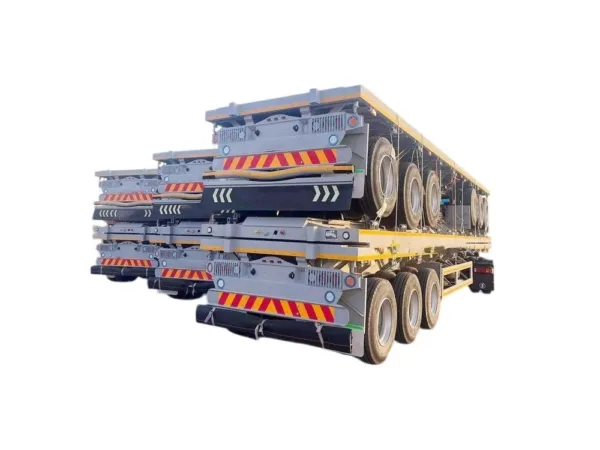
Space is the constraint on a 3 axle flatbed semi trailer 40ft shipment. A flat deck does not nest like a container, so the unit is usually loaded as a single piece or as stacked sections where the design allows. Stacking saves container slots but demands timber dunnage between layers and steel strapping to the container floor. Ask for a loading plan that shows the centre of gravity and the lashing points. The buyer should verify the plan before the container is sealed, not after arrival. A plan that ignores axle position invites load shift and damage claims.
On arrival, the buyer should inspect the 3 axle flatbed semi trailer 40ft against the packing list and the loading photos. Check the deck for dents, the rails for bends and the underside for rust that started in transit. Confirm that every boxed accessory is present and that twist locks turn freely. Photograph any damage before unloading. Report shortages to the supplier within the window stated in the sales contract, because the input gives no default claim period. A signed arrival report protects both sides.
Common Mistakes Buyers Make
Ordering the wrong deck length. A 3 axle flatbed semi trailer 40ft suits standard containers, but a buyer who plans oversize cargo may need a longer deck. The single check is to measure the longest load and compare it with the usable deck length, not the overall trailer length, before ordering.
Ignoring the load capacity. The stated load capacity is a limit, not a target. Buyers who plan dense cargo can exceed it once the trailer’s own weight is added. The check is to total the payload plus any container weight and confirm the figure sits under the rated load capacity.
Mismatching the kingpin and fifth wheel. A 3 axle flatbed semi trailer 40ft must couple to the tractor the buyer actually owns. The check is to confirm the kingpin size and the fifth wheel on the tractor match, and to state the tractor model when requesting the quotation.
Skipping the axle count in the quote. A three-axle layout behaves differently from a two-axle one on tight turns and rough roads. The check is to write the axle count into the purchase order, so the 3 axle flatbed semi trailer 40ft supplied matches the one quoted.
Forgetting the container plan. Buyers assume a flatbed fits any container, then face re-packing at the port. The check is to confirm the shipping method and container type before production, and to ask for a loading drawing for the 3 axle flatbed semi trailer 40ft.
Buyer Questions
Can the trailer be shipped in a standard container?
The input does not state a container type or a shipping method, so the answer is confirmed at quotation. Ask the supplier to send a loading drawing for the 3 axle flatbed semi trailer 40ft before you book freight. The drawing should show the deck length, the overall width and the lashing points. Compare it with the internal dimensions of the container you intend to use. If the unit does not fit as one piece, ask whether a knocked-down or sectioned packing option exists. Confirm the packing method in the sales contract.
What should I check when the shipment arrives?
Inspect the 3 axle flatbed semi trailer 40ft before unloading. Check the deck surface for dents, the side rails for bends and the underside for corrosion that began in transit. Confirm that every boxed accessory listed on the packing list is present. Turn the twist locks by hand to confirm they move freely. Photograph any damage and note it on the delivery receipt. The input gives no claim period, so agree the reporting window in the sales contract before the goods leave the supplier.
How do I confirm the trailer suits my tractor and cargo?
Send the supplier the tractor model, the fifth wheel type and the kingpin size you require. State the longest and heaviest load you plan to carry. The supplier can then confirm whether the 3 axle flatbed semi trailer 40ft matches your tractor and stays within the rated load capacity. Ask for the deck length and width in writing and compare them with your cargo. Put the axle count and the load capacity into the purchase order so the delivered unit matches the quote.
To receive a quotation for the 3 axle flatbed semi trailer 40ft, send the deck length you need, the axle count you require and the quantity you plan to order. State your tractor model and intended cargo so the supplier can confirm fitment. Volume pricing applies across quantity tiers, so include the full order size in your enquiry.
We use cookies to enhance your browsing experience, serve personalized content, and analyze our traffic. By clicking "Accept All", you consent to our use of cookies. Privacy Policy
Cookie Preferences
Required for the website to function properly. Cannot be disabled.
Help us understand how visitors interact with the website (Google Analytics).
Used to deliver personalized ads and measure ad campaign effectiveness.

















Write a Review