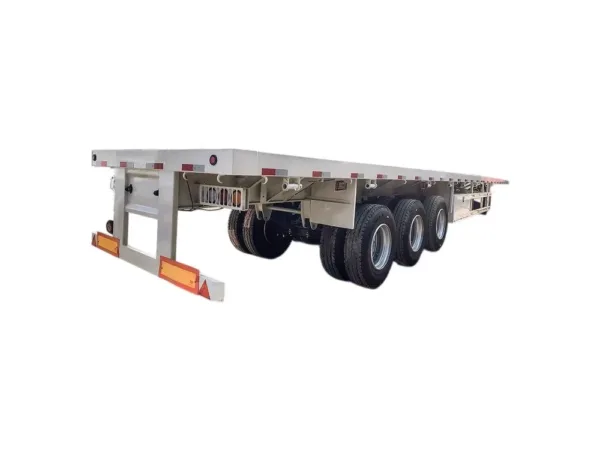
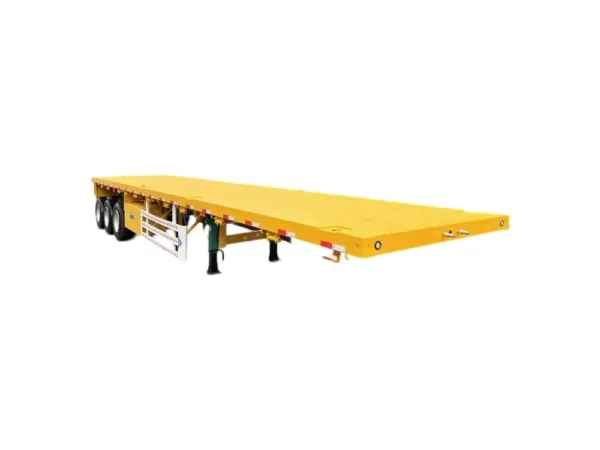
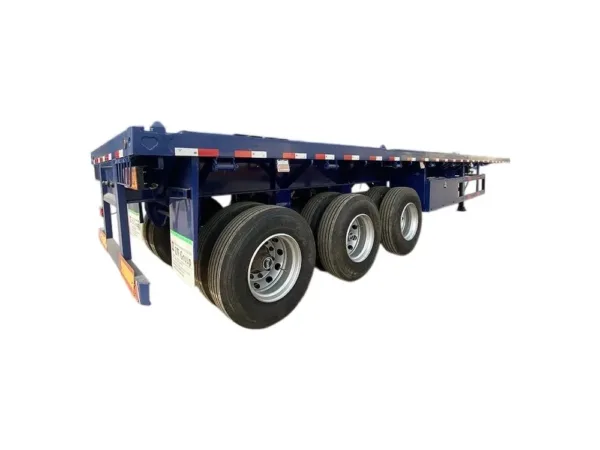
40ft Container Flatbed Semi Trailer 3 Axle Mechanical Suspension

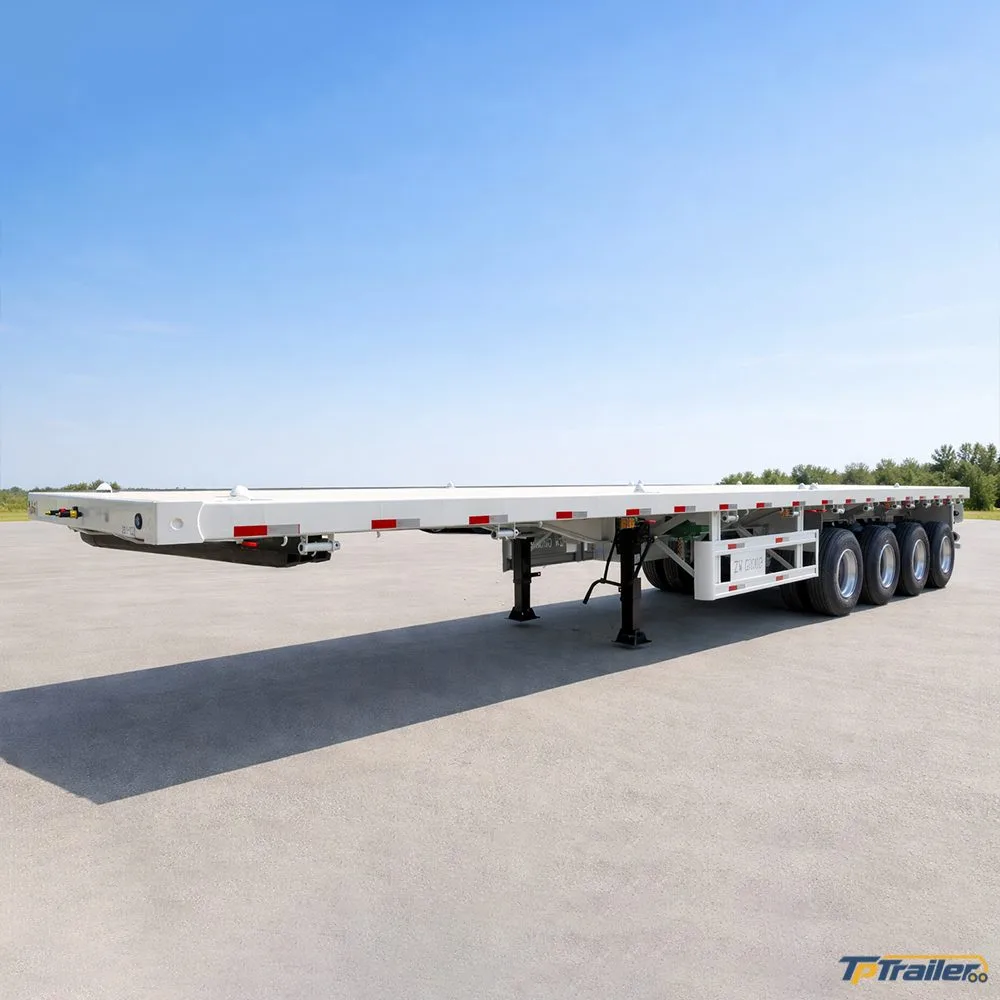
The 40ft container flatbed trailer is a 3 axle semi trailer with mechanical suspension and a load capacity over 3001 KG for cargo transport.
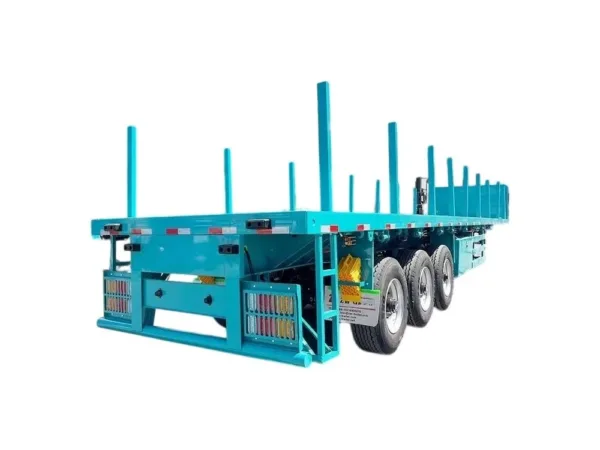
>3001 KG 3
FOB Reference Price US$6,000-9,000 Final price confirmed by inquiry

Certifications

  • ISO 9001

Key Features

  • 3 axle flatbed semi trailer for 40ft container cargo transport
  • Mechanical suspension for stable running on long hauls
  • 3001 KG load capacity rating for planned cargo loads
  • Flatbed deck suits container handling and general freight
  • Built for fleet operators and container haulage duty
Load Capacity >3001 KG
Max Payload >3001 kg

The 40ft container flatbed trailer is a three-axle semi-trailer built to carry containerised and loose freight on a flat, open deck. It suits fleet operators, freight forwarders and haulage contractors who need a simple, repairable platform rather than a complex enclosed unit. The mechanical suspension is the strongest reason to choose it: fewer parts, no electronics and straightforward servicing keep the trailer working between scheduled maintenance. The open deck also lets a single unit handle containers, steel, timber and machinery without a dedicated body for each. It is a working trailer for operators who value uptime and predictable upkeep over features they will not use.

Why It Works On Site

  • Mechanical suspension: leaf springs and simple hangers mean fewer components to fail and no air system to diagnose. That lets a workshop repair the 40ft container flatbed trailer with basic tools, so it returns to the yard faster after damage and does not wait on a specialist technician.
  • Three-axle layout: spreading the load across three axles gives a stable platform for long deck cargo and helps distribute weight along the trailer. For the buyer this makes the 40ft container flatbed trailer easier to load evenly and less prone to pitching on uneven yard surfaces.
  • 40ft deck length: the deck matches a standard 40ft container footprint, so a 40ft container flatbed trailer can take a full-size box without overhang. That lets one unit serve container work as well as longer steel, timber and pipe loads that need a continuous flat surface.
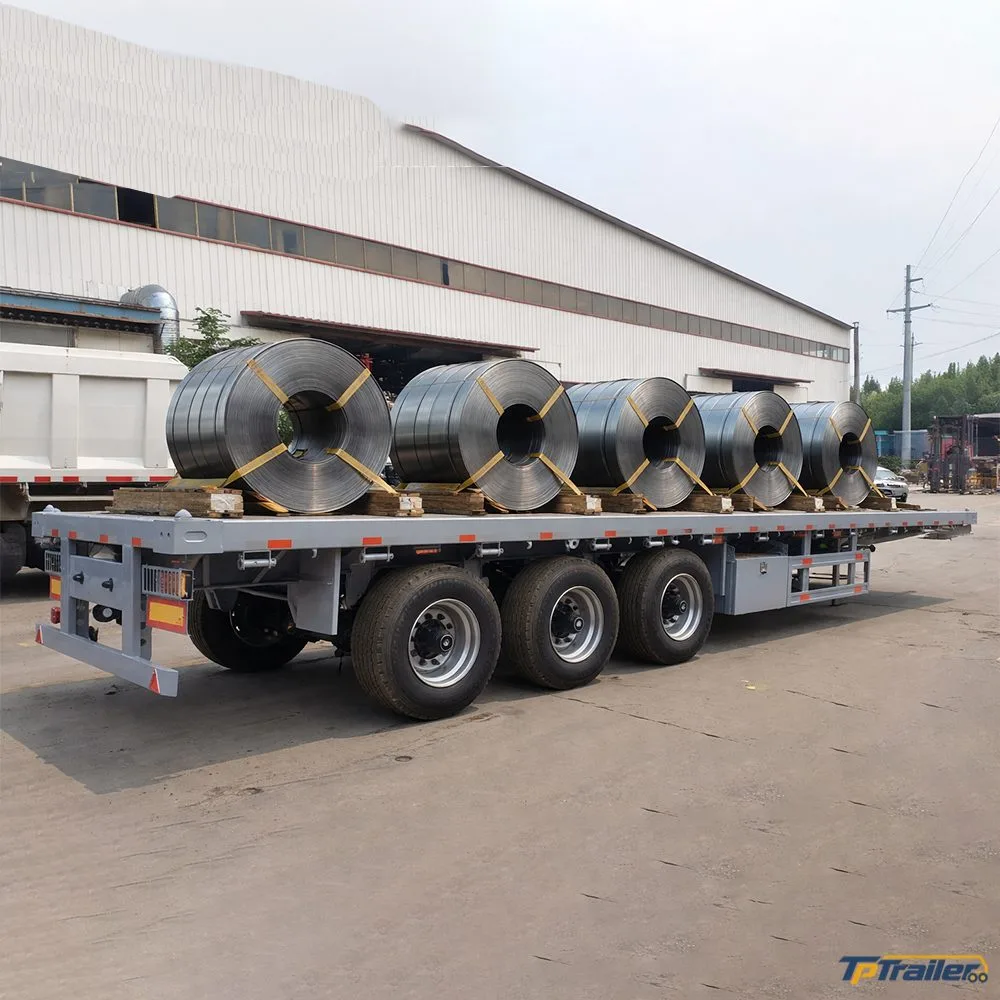
  • Flat, open deck: no sides or roof means forklifts, cranes and side-loaders can reach cargo from any angle. This lets the trailer handle awkward shapes and oversized items that would not fit through the doors of a van trailer, reducing handling steps on site.
  • Rated load capacity of 3001 KG: the stated load capacity sets the working envelope for this 40ft container flatbed trailer. Operators can match cargo weight to the rating before loading, which supports safer axle loading and reduces the risk of overloading on routine runs.
  • Container-compatible deck fittings: the deck is arranged for container securing, so a 40ft container flatbed trailer can switch between box work and flat cargo. That flexibility lets a fleet keep one trailer type in service across mixed jobs instead of holding separate units for each cargo class.

Where It Is Used

Fleet operators use a 40ft container flatbed trailer for container shuttles between depots, ports and inland yards. A typical job is moving a loaded 40ft box from a rail terminal to a distribution site, then running empty or part-loaded back. Because the deck is open, the same 40ft container flatbed trailer can carry the container on one leg and steel sections, palletised goods or timber on the next. That mix suits operators who cannot guarantee a backload of the same cargo type and need one trailer to cover several freight classes in a working week.

40ft container flatbed trailer - detail 1

Construction and industrial haulage is the other common duty. A 40ft container flatbed trailer carries rebar, pipe, scaffold, prefabricated frames and plant that will not fit in a box trailer. The open deck allows crane or forklift loading from the side, which matters on sites where access is tight and loading time is short. Operators also use the 40ft container flatbed trailer for machinery moves and yard transfers where the load is placed directly on the deck and secured with chains or straps. The mechanical suspension suits steady regional routes and mixed road surfaces more than high-speed long-haul work, so it fits depot-to-site and terminal-to-yard patterns.

Seasonal and project work is a third pattern worth planning for. A 40ft container flatbed trailer earns its keep on harvest haulage, event and exhibition logistics, and one-off plant relocations where the cargo changes every few weeks. Because nothing on the deck is dedicated to one cargo class, the trailer can be re-tasked between contracts without a body conversion. For a procurement manager buying against a mixed order book, that re-tasking ability is often worth more than a specialist body that sits idle between seasons.

Choosing The Right Spec

  • Match the load rating to the job: the stated load capacity of 3001 KG defines what this 40ft container flatbed trailer should carry. Buyers running lighter container and pallet work stay within the rating comfortably, while heavier steel or machinery loads need a careful weight check before the trailer is assigned to that route.
  • Three axles for stability: the three-axle arrangement on a 40ft container flatbed trailer spreads weight and steadies long cargo. Operators hauling pipe, timber or long steel should favour this layout because the extra axle support reduces flex and pitch, while short local shuttles may not need the same margin.
  • Mechanical versus complex suspension: choosing the 40ft container flatbed trailer with mechanical suspension suits fleets with basic workshop capability and routes where a breakdown must be fixed quickly. Operators who already run air-suspended equipment should confirm their service setup can handle leaf-spring maintenance before standardising on this variant.
  • Deck length against cargo mix: the 40ft deck on this container flatbed trailer fits a full container footprint and long flat loads. Buyers whose work is mostly shorter cargo should weigh whether the full deck is used, while operators mixing containers with long materials get the most from the 40ft container flatbed trailer format.

Customisation Before Delivery

  • Axle count is the first choice to settle. A three-axle layout spreads load across more tyre contact points than a two-axle build. Confirm the axle count you need at order confirmation, because the frame, suspension hangers and brake plumbing are laid out around it. Changing later is a rebuild, not an adjustment, and the 40ft container flatbed trailer cannot be re-axled in the yard.
  • Deck length and width are agreed before steel is cut. The 40ft container flatbed trailer is normally ordered to suit standard container twist locks, but you can specify the deck length that matches your cargo mix. State the working length you need at order confirmation so the cross-member spacing and side rail layout match.
  • Suspension type is chosen at order confirmation. Mechanical suspension is the standard fit and suits fixed routes and steady loads. If your routes vary or you carry mixed weights, say so when ordering so the spring pack and hanger arrangement are set for the duty you describe, not a generic default.
  • Tyre and wheel specification is fixed at order confirmation. Tyre size, ply rating and rim type all affect axle loading and ride height. Tell the factory the road conditions and typical gross weight so the tyre set matches. The 40ft container flatbed trailer leaves the line with the tyre package you sign off, not a substitute.
  • Surface finish and colour are confirmed at order confirmation. Coating choice affects how the 40ft container flatbed trailer resists corrosion on salted roads or coastal runs. Specify the colour and finish system you want, and note any branding or marking position, so the paint shop works from your sheet rather than a stock colour.

Fitting And Installation

On arrival, the tractor and the 40ft container flatbed trailer have to match up at the coupling. Check the kingpin size against your fifth wheel, the coupling height against your tractor’s plate, and the landing gear position against your yard layout. Confirm the electrical connector type and the number of pins your tractor provides. Air line couplers must match the tractor’s gladhand fittings, and the hose routing along the frame should clear the landing gear and any toolboxes.
40ft container flatbed trailer - detail 3
40ft container flatbed trailer - detail 2

If the input gives no fitment data for your tractor, a fitment drawing is confirmed at quotation instead of assumed. Walk the brake and light circuits before loading. A mismatch found in the yard costs an afternoon; the same mismatch found loaded on a road costs a recovery call, a missed slot and a customer who books elsewhere. The 40ft container flatbed trailer is a simple machine, but every connection point has to agree with the tractor pulling it.

Mounting points deserve the same attention. Twist locks, lashing rings and side posts are positioned to a layout, and your container or cargo fixtures must line up with that layout. Measure the mounting centres on the deck against your own equipment before the first load. Check that the suspension hangers and axle seats are as specified, and that the brake chambers and slack adjusters sit clear of the tyres through full travel.

Where torque values are not stated in your documents, ask for them at quotation rather than guessing at the wheel nuts or U-bolts. A wrong size at this stage is not a small cost: the 40ft container flatbed trailer sits idle while parts are sourced, the tractor earns nothing, and the schedule slips. Confirm the fitment drawing first, then book the first load.

Allow a settling-in period once the unit is in service. Re-check wheel nut torque, U-bolt tension and spring hanger fixings after the first loaded runs, because new assemblies bed in and fasteners can lose preload. Record baseline ride height and brake adjustment figures so later inspections compare against a known reading rather than a guess. For a 40ft container flatbed trailer, a short commissioning sheet signed off by the workshop turns a delivery into a documented handover and gives the maintenance planner a starting point for every future service interval.

Service Life And Maintenance

  • Brake linings and drums wear first on any loaded trailer. Inspect lining thickness and drum condition on a set schedule you build from your own duty cycle, and check slack adjuster travel at the same time. A dragging brake or uneven wear points to an adjustment or air problem. Catch it early and the 40ft container flatbed trailer stays on the road.
  • Tyres and wheel fixings are the next wear point. Check tread depth, sidewall condition and inflation across the set, and look for uneven wear that signals an axle or alignment issue. Re-torque wheel nuts after the first loaded runs and at your chosen interval. A loose wheel on a 40ft container flatbed trailer ends a trip fast.
  • Suspension components take constant load. Inspect spring leaves for cracks, hangers for wear and U-bolts for stretch. Check the bushings and equaliser wear points, since play here shows up as poor tracking and tyre scrub. Mechanical suspension is robust but not maintenance-free, so put it on the walk-around list for the 40ft container flatbed trailer.
  • Frame and deck condition decide how long the trailer lasts. Inspect for cracks at cross-member welds and around mounting points, and clear dirt and salt from the deck edges. The coating system chosen at order confirmation is what slows corrosion, so touch up chips and scratches before rust spreads. A coated 40ft container flatbed trailer holds its value far longer than a neglected one.
  • Air system and lights are quick checks with high cost when missed. Drain air tanks, inspect lines for chafe and check couplings for leaks. Test every lamp and reflector before each trip. These checks take minutes and prevent roadside failures. Keep a written record for the 40ft container flatbed trailer so trends in wear are visible before they become breakdowns.

Packing And Container Loading

A 40ft container flatbed trailer ships as a steel structure, so protection focuses on coating, moving parts and exposed fittings. The factory coats the main frame before dispatch. Axles, suspension hangers and landing gear are wrapped or covered to limit salt spray and road grime during the sea voyage. Loose items such as lamps, tool box lids and mudguards are boxed and strapped to the deck. Buyers should ask the supplier which surfaces are wrapped and which are left bare, because a 40ft container flatbed trailer has many small parts that can rub against each other in transit.

Space is the main cost driver. A 40ft container flatbed trailer is long and wide, so it is normally shipped as a complete unit or in a small number of sections, depending on the design and the route. Nested stacking is not typical for a finished trailer, because the deck, axles and suspension do not allow safe vertical stacking. Some suppliers ship knocked-down sections to save volume. Ask whether your 40ft container flatbed trailer arrives assembled or in sections, and confirm the loading plan before booking freight, since the answer changes the handling equipment you need at destination.

Plan the unloading equipment before the vessel sails. A sectioned shipment needs a crane or heavy forklift at the receiving yard, while a complete unit needs enough hard standing to roll it off and turn it. Match the lifting points marked on the packing list to the slings and spreader bars your yard can supply. For a 40ft container flatbed trailer, the loading plan and the unloading plan should be signed off together, so nobody discovers a lifting gap on the day the ship arrives.

Common Mistakes Buyers Make

  • Ordering the wrong deck length. A buyer matches the trailer to the container size without checking the actual cargo footprint. The deck must cover the load with the right overhang and twist-lock positions. The single check: measure your longest and widest load, then confirm the deck dimensions and lock layout against that measurement before you approve the drawing.
  • Ignoring the load capacity figure. The stated load capacity is easy to misread as the payload you can legally carry. Axle count, tyre rating and local road rules all affect the real limit. The single check: compare the rated load capacity with your planned payload and confirm the axle and tyre configuration in writing on the quotation.
  • Skipping the suspension review. Mechanical suspension suits many routes but behaves differently from air suspension on rough ground or sensitive cargo. Buyers order the standard setup and then complain about ride quality. The single check: describe your route and cargo type to the supplier and confirm the suspension type on the order before production starts.
  • Forgetting the coupling and kingpin details. The tractor unit must match the trailer coupling. A mismatch in kingpin size or fifth wheel height stops the trailer from working on arrival. The single check: send your tractor model and fifth wheel height to the supplier and ask them to confirm compatibility in the quotation.
  • Not agreeing the packing and loading plan. Buyers assume the trailer ships assembled and then face extra handling costs. The single check: ask for the loading plan and packing list with the quotation, and confirm who arranges the container loading and the unloading equipment at destination.

Buyer Questions

Can a 40ft container flatbed trailer be shipped in one container?

That depends on the trailer design and the container type. A complete 40ft container flatbed trailer is long, so shipping it inside a standard container is not always possible. Many suppliers ship the trailer in sections or on a flat rack instead. Ask the supplier for the loading plan and the packed dimensions before you book freight. Confirm whether the unit arrives assembled or in sections, and check that your destination has the crane or forklift needed to handle it.

What should I check on arrival before signing the delivery note?

Inspect the frame for coating damage, bends and weld cracks. Check that axles, suspension hangers and landing gear are present and undamaged. Confirm the lamps, tool box and mudguards match the packing list. Photograph any damage before unloading and note it on the delivery note. Ask the supplier for a packing list so you can count every item. For a 40ft container flatbed trailer, also confirm the deck is flat and the twist locks operate freely before you accept the unit.

How do I confirm the trailer matches my tractor and cargo?

Send the supplier your tractor model, fifth wheel height and the dimensions of your heaviest load. Ask them to confirm the kingpin, coupling and deck layout against those details in writing. For a 40ft container flatbed trailer, also confirm the axle count and suspension type you need. Request a general arrangement drawing and check it before production. Any point the supplier cannot confirm from the input should be marked as confirmed at quotation.

To receive a quote for a 40ft container flatbed trailer, send the deck length you need, the axle count and the quantity you plan to order. Add your tractor model and cargo dimensions if you have them. The supplier can then confirm the configuration, packing plan and pricing tier against your requirements.

Explore more 40ft container flatbed trailer in this range.

Load Capacity >3001 KG Max Payload >3001 kg
Place of Origin China

Reviews (0)

No reviews yet — click the Review button on the right to share your experience with this product.

Frequently Bought Together

Inquiry about: 40ft Container Flatbed Semi Trailer 3 Axle Mechanical Suspension

Fill in the form below and our team will respond within 24 hours.