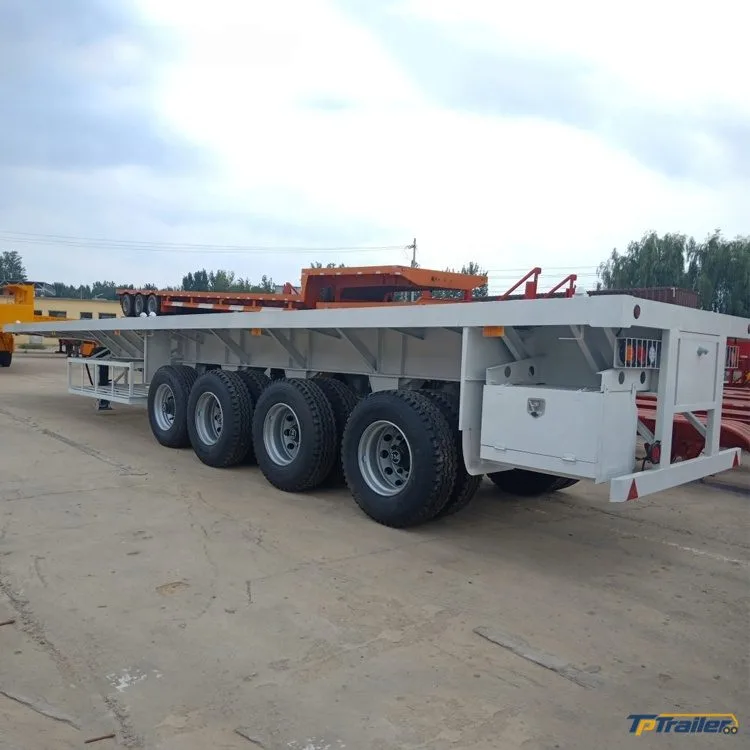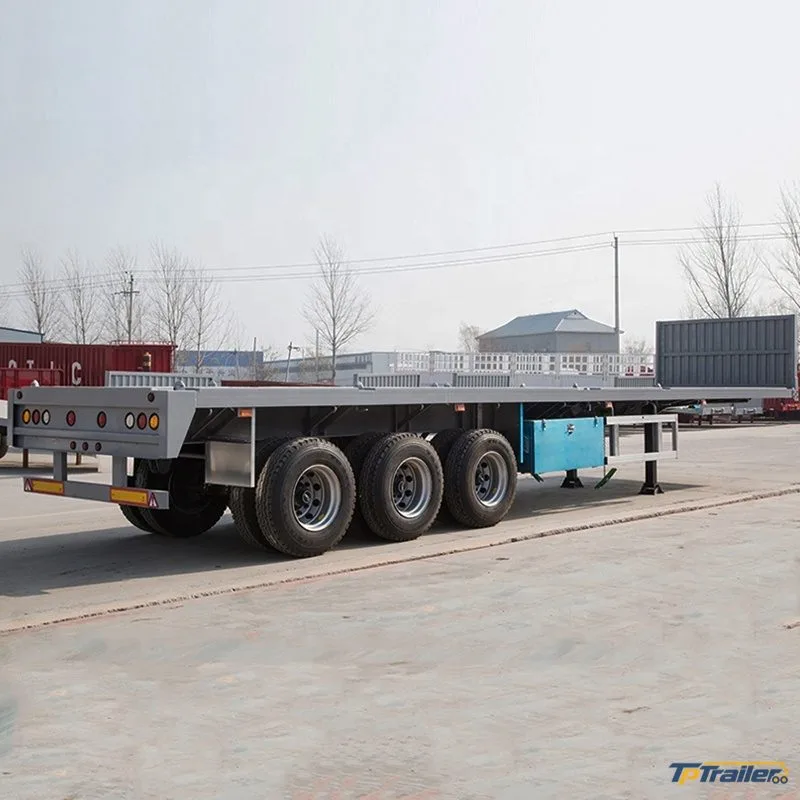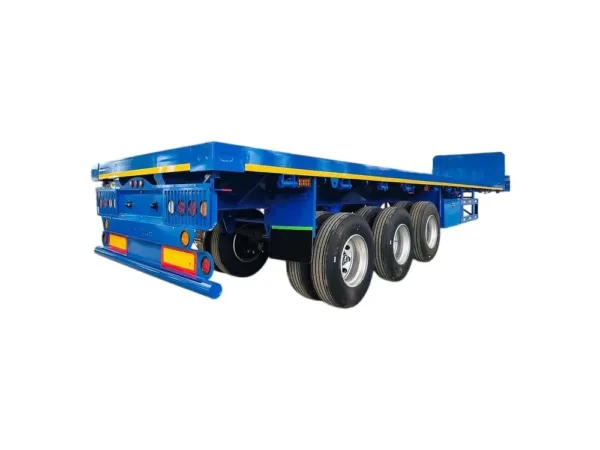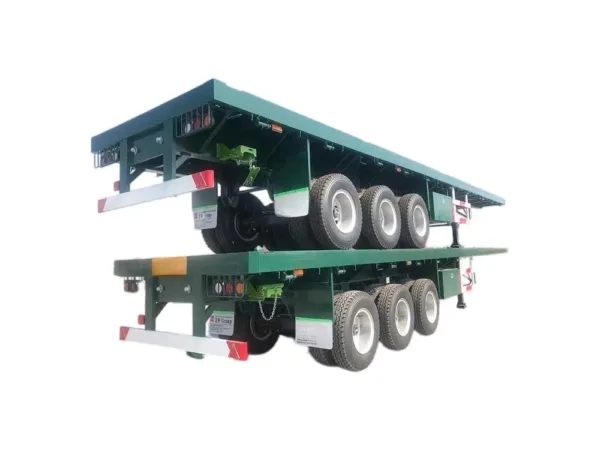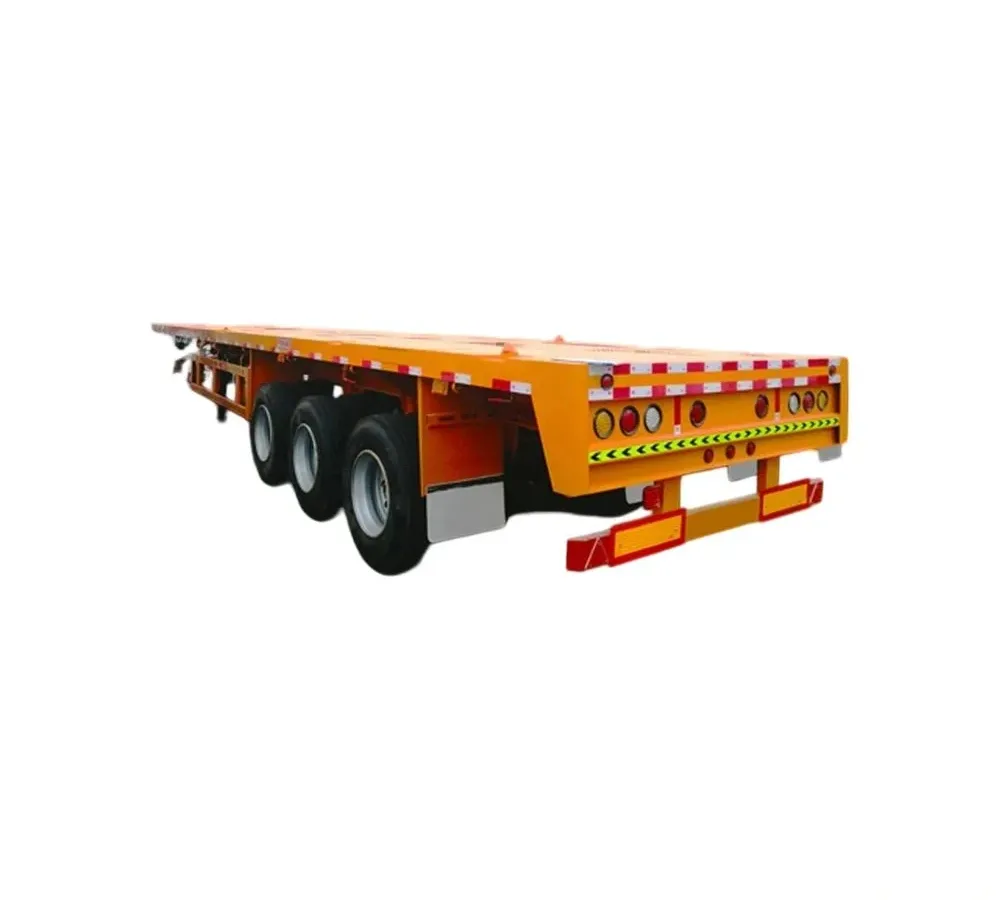
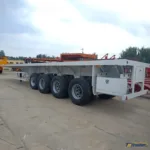
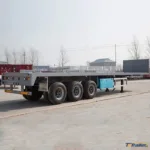
40 Foot Flatbed Semi Trailer 3 Axle 12r22.5 Tyre

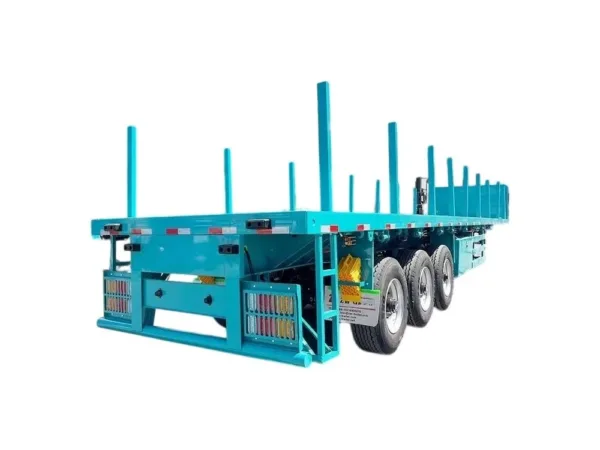
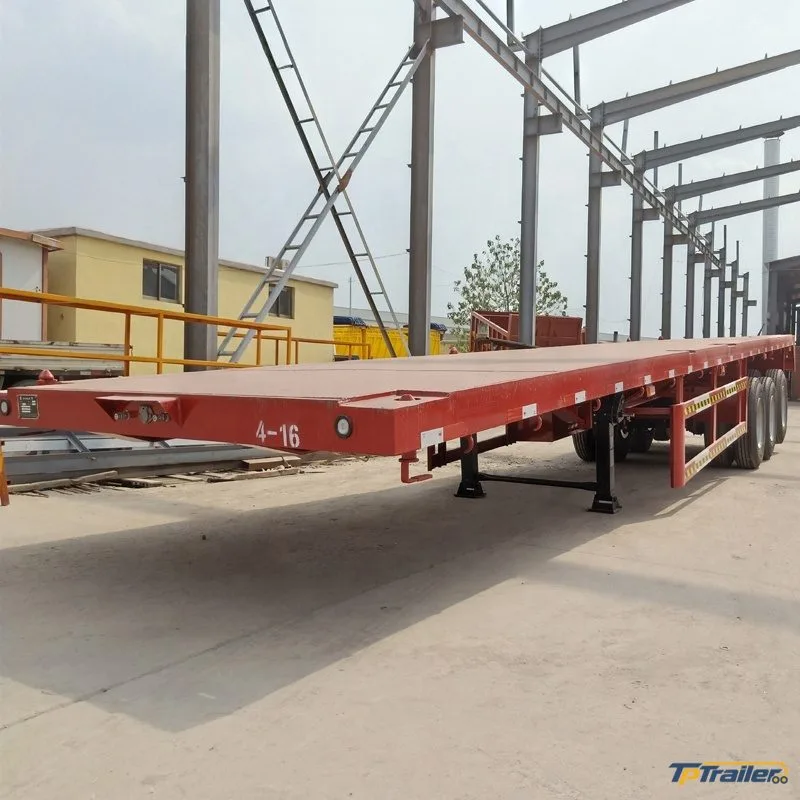
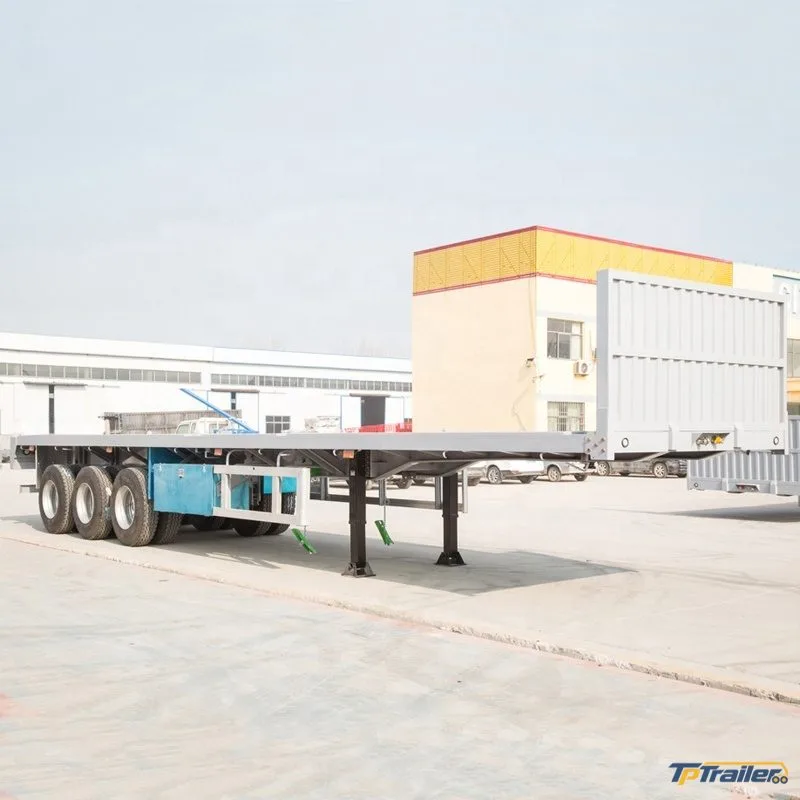
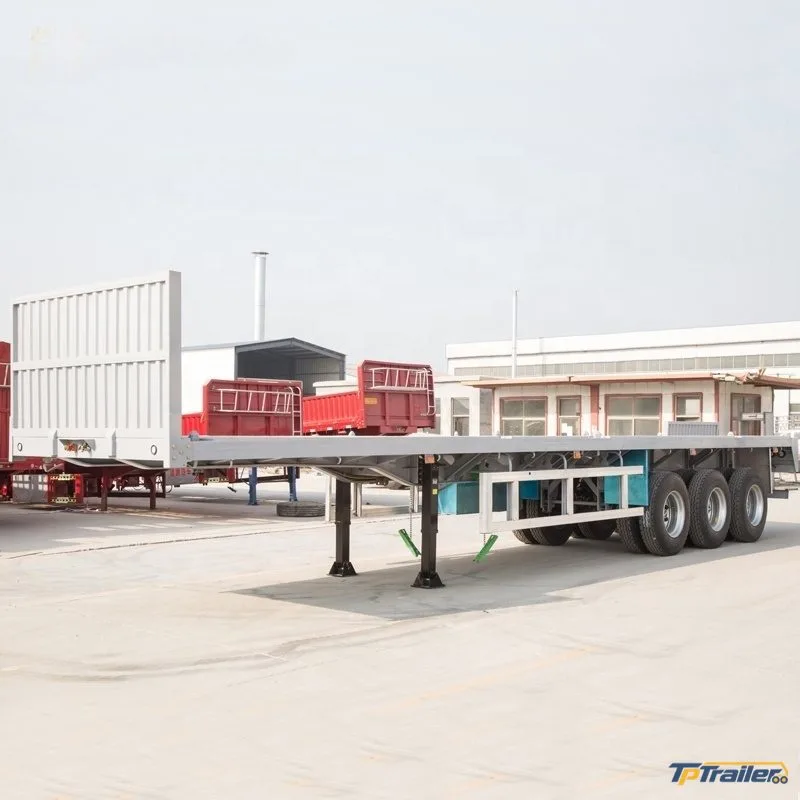
40 foot container trailer with 3 axles, 12r22.5 tyre and 6800+1310+1310 mm wheelbase. Steel flatbed semi trailer, quotes available on request.
3
FOB Reference Price US$4,500-6,500 Final price confirmed by inquiry

Certifications

  • ISO 9001

Key Features

  • 3 axle steel flatbed semi trailer for 40 foot container haulage
  • Fitted with 12r22.5 tyre and 11.00r20 tyre options
  • Mechanical suspension with 6800+1310+1310 mm wheelbase
  • Standard 28 ton landing gear supports loading and unloading
  • King pin choice of 2 inch (50 mm) or 3.5 inch (90 mm)
  • 24v electrical system and optional trailer color
  • Axle quantity available from 2 to 4 to suit the duty cycle
Dimensions * *

The 40 foot container trailer is a three-axle steel flat bed semi trailer built to carry standard shipping containers and general heavy freight, and it is aimed at fleet operators, transport contractors and freight forwarders running long-haul and regional routes. Its case is straightforward: a proven steel flat bed platform, a choice of two to four axles and a wheelbase tuned to container twist-lock positions, so one trailer type covers container hauling and open-deck loads without a second fleet purchase. The 40 foot container trailer is supplied with branded axles, mechanical suspension and a standard landing gear set, at a price band that keeps fleet expansion within reach.

Why It Works On Site

  • Axle count matched to the load. The trailer can be ordered with two to four axles, so a fleet can pair a lighter configuration with regional runs and a heavier one with dense container cargo. That flexibility lets one 40 foot container trailer serve several duty cycles instead of forcing a single compromise rating across the whole fleet.
  • Wheelbase aligned to container positions. The stated wheelbase grouping keeps deck length and axle spread in proportion to a standard container footprint. The result is predictable weight distribution over the deck and stable tracking on the highway, which matters when the load is a loaded container rather than evenly stacked flat cargo.
  • Branded axles and mechanical suspension. Branded trailer axles paired with mechanical suspension give a simple, serviceable running gear package. A workshop can inspect and repair it without specialist tooling, so a 40 foot container trailer spends less time off the road and more time earning on scheduled hauls.
  • Dual tyre options. The trailer is offered on either 11.00r20 or 12r22.5 tyres, letting a buyer match the unit to the tyre stock and road conditions already familiar to the fleet. Keeping one tyre family across a 40 foot container trailer and the rest of the yard simplifies spares, rotation and roadside replacement.
  • King pin choice. The king pin is available in a two-inch or three-and-a-half-inch size, so the trailer can be matched to the tractor fifth wheel already in service. That avoids adapter work and keeps coupling straightforward when a 40 foot container trailer is added to an existing tractor pool.
  • Standard landing gear and 24V electrics. Standard landing gear supports the trailer during uncoupling and container handling, while the 24V electrical system matches common heavy-truck wiring. Together they make the 40 foot container trailer quick to put into service and easy to move between tractors.

Where It Is Used

The most common job for a 40 foot container trailer is moving standard containers between ports, inland container depots and consignee yards. A tractor drops a loaded box at the gate, the trailer is uncoupled on its landing gear, and the next box is collected on the return leg. Because the deck is flat and open, the same unit can carry a container one day and steel sections, bagged materials or palletised goods the next.
40 foot container trailer - detail 1

Fleet operators running scheduled depot shuttles value the predictable deck length and the axle spread, since both keep loading and unloading within the yard’s normal handling pattern. On longer trunk routes the 40 foot container trailer handles the line-haul leg, while shorter yard tractors cover the final positioning work, which keeps the road unit productive instead of tied up in slow yard moves.

Outside container work, the flat bed format suits construction materials, machinery on skids, timber, pipe and other awkward loads that will not fit a box body. Transport contractors use a 40 foot container trailer for project cargo where the load is craned or forklifted onto the deck and secured with chains or straps. Regional distributors use it for bulk deliveries between warehouses, where the open deck speeds up side loading and unloading.

The mechanical suspension and branded axles are aimed at mixed road conditions rather than a single smooth corridor, so the trailer fits operations that combine highway running with depot and site access. Where a fleet already runs flat beds, adding a 40 foot container trailer gives container capability without changing the loading method the crew already knows.

Choosing The Right Spec

  • Axle count. Two axles suit lighter, volume-limited loads and shorter routes. Three axles, the middle ground, fit general container hauling and mixed freight. Four axles are for operators who regularly run dense loads and want the load spread across more wheels. Match the count to the heaviest cargo the 40 foot container trailer will actually see, not to the average load.
  • Tyre family. The two tyre options differ in size and load behaviour, so pick the one your workshop and parts store already support. A fleet standardising on one size across its 40 foot container trailer and tractors gains simpler spares and faster roadside fixes. Confirm the chosen tyre suits the routes and surface conditions the trailer will meet.
  • King pin size. Choose the king pin that matches the fifth wheel on the tractors that will pull the trailer. Where the 40 foot container trailer will be swapped between several tractors, confirm the coupling size is common across the pool before ordering, so no unit is left waiting for a compatible tractor.
  • Colour and electrical fit. Trailer colour is optional, which lets a fleet keep livery consistent across its units. The 24V electrical system should be checked against the tractor wiring before delivery. These choices do not change hauling capacity, but they decide how quickly the 40 foot container trailer slots into daily operations.

Customisation Before Delivery

  • Axle count. A 40 foot container trailer can be ordered with a different number of axles to suit the load pattern you run. The axle count changes how the load is shared across the running gear. State the count you need when the order is confirmed, and the build sheet is locked to that choice.
  • Deck length and configuration. The flat bed is built to carry containers and general cargo. Buyers who move mixed freight sometimes ask for a different deck arrangement. The deck length and layout for your 40 foot container trailer are agreed at order confirmation, so the finished unit matches the cargo you actually haul.
  • Suspension type. Mechanical suspension is the standard fitment on this 40 foot container trailer. If your routes or cargo call for a different suspension arrangement, raise it before the build is scheduled. The suspension choice is settled at order confirmation and is not changed once production starts.
  • Tyres and wheels. Two tyre sizes are offered on this 40 foot container trailer, and the size you pick affects ground pressure and replacement cost. Tell us the tyre specification you want at order confirmation. Wheel and tyre fitment is then fixed for the whole unit, keeping spares consistent across your fleet.
  • Colour and finish. Trailer colour is optional on this 40 foot container trailer. A colour choice helps fleet identification and inspection at a glance. Confirm the colour at order confirmation so the paint stage is planned into the build. Colour is a finish choice only and does not change the structure.

Fitting And Installation

A 40 foot container trailer arrives as a finished unit, so fitting work is mainly about matching it to your tractor and your operating site. The king pin is offered in two sizes, and the one you order must match the fifth wheel on the tractor that will pull it. Check the coupling height and the landing gear position against your yard and loading bays before the unit is dispatched. Confirm the electrical system voltage matches the tractor socket, and that the lighting loom plugs in without adapters. If any of these interfaces is unclear, a fitment drawing is confirmed at quotation rather than assumed.
40 foot container trailer - detail 3
40 foot container trailer - detail 2

On a 40 foot container trailer, a mismatch at the coupling or the electrical socket is not a small problem. A king pin that does not seat correctly keeps the unit parked until the tractor or the trailer is corrected. A voltage mismatch can leave the lights dead at handover. Both faults cost working days, and neither is fixed by the buyer on site. Give the tractor model and the socket type when you enquire. The build then leaves the works matched to your fleet, and the first trip is not a troubleshooting session.

Coupling height deserves its own check because it is easy to overlook when the tractor is on level concrete. Measure from ground to the centre of the fifth wheel jaw with the tractor on its normal running tyres, then compare that against the king pin plate height on the drawing. A difference of a few centimetres changes how the trailer sits and how the landing gear carries the load when the unit is dropped. The 40 foot container trailer should be quoted against the tractor you actually run, not against a nominal figure. If you operate several tractor models, identify the one that will pull the trailer most often and match to it.

The landing gear is rated at a standard 28 tons, which covers the static load of an uncoupled trailer on firm ground. That rating assumes the ground under the foot is sound; on soft yard surfaces, use load-spreading pads so the feet do not sink and tilt the unit. Operators who drop trailers on unpaved ground should plan pad placement into the yard routine. The 40 foot container trailer is stable when parked on its gear, but stability depends on the surface as much as on the gear itself. Brief the yard crew on this before the first unit arrives.

Service Life And Maintenance

  • Tyres and wheel ends first. Tyres and wheel-end parts wear before the structure on a 40 foot container trailer. The operator should check tread depth, sidewall condition and wheel-nut security at each pre-trip walk-around. Keep tyre size consistent across the unit. Matching the specified tyre keeps wear predictable and spares simple to manage.
  • Brake and air lines. Brake chambers, hoses and fittings are the next wear point on any 40 foot container trailer. Inspect the lines for chafing and the couplings for leaks during scheduled checks. Route and secure any replaced hose so it cannot rub on the frame. A small leak found early avoids a roadside stop later.
  • Suspension and U-bolts. Mechanical suspension carries the load, so the operator should look for loose U-bolts, worn bushes and cracked leaves. Check after the first loaded trips and then on a regular schedule. Re-torque fasteners to the values in the manual. Prompt attention here protects the axles and the deck from unnecessary stress.
  • Deck and frame protection. The steel deck and frame on a 40 foot container trailer rely on their coating for corrosion protection. Wash off road salt and cargo residue, and touch up any chipped paint before rust starts. Inspect welds and crossmembers for cracks during the same check. The optional colour finish is cosmetic, so structural inspection still matters most.
  • Landing gear and king pin. The landing gear and king pin take stress every time the unit is parked or coupled. Grease the landing gear screw and check the king pin for wear on a set schedule. Look for play at the coupling plate. Catching wear early keeps the 40 foot container trailer stable when it is dropped and re-hitched.

Set the inspection interval by duty cycle rather than by calendar alone. A 40 foot container trailer on short depot shuttles accumulates coupling and landing gear cycles faster than one on long trunk hauls, even if the odometer reads lower. Count drop-and-hook events as well as kilometres when you plan service. A unit that is uncoupled ten times a day wears its king pin and gear differently from one that stays hitched for a week. Writing this into the maintenance plan keeps the schedule honest and stops the trailer from being serviced on distance alone.

Packing And Container Loading

A 40 foot container trailer ships as a partly knocked-down flatbed. The chassis frame, axles, suspension and landing gear are protected with anti-rust treatment before dispatch. Loose items such as the king pin assembly and electrical harness are wrapped and tied inside the frame rails. The buyer should confirm the protection method at quotation, because coating type and wrapping standard are not fixed in the product data. Ask the supplier to state how the frame is treated and how the 12r22.5 tyre sets are secured for the sea voyage.

A 40 foot container trailer is not normally crated in full. Flatbed decks are long and low, so the practical loading method is to break the unit into frames, axle groups and wheels, then pack them in layers. Nested or stacked loading can reduce the container footprint, but the buyer should confirm the exact loading plan before booking freight. Check that the deck sections are separated by timber dunnage and that the tyre bundles cannot shift. Ask for loading photos before the container doors close.

Weigh the packed unit against the container limit before the plan is agreed. Axle groups and tyre sets add mass quickly, and a plan that fits by volume can still exceed a weight limit on the route to port. The 40 foot container trailer should be quoted with both packed dimensions and total weight stated in writing. Confirm who is responsible for lashing inside the container and what lashing points are provided. These details are settled at quotation, not at the dock, and they decide whether the shipment clears without rework.

Common Mistakes Buyers Make

  • Wrong king pin size. The king pin is offered in two sizes, and a tractor matched to the wrong one cannot couple. Confirm the fifth wheel size on your prime mover before ordering, and state the choice in writing. This single check avoids a trailer that arrives unable to attach.
  • Wrong tyre specification. The trailer tyre listing covers more than one size, and the buyer who assumes the default may receive a set that does not match the spare stock or local road conditions. Confirm the tyre size in the order and check it against the packing list on arrival.
  • Ignoring the wheelbase. The trailer wheelbase is fixed by the axle layout, and a buyer who needs a different spread for local turning circles must raise it before production. State the required axle count and wheelbase in the enquiry, then check the drawing before the frame is welded.
  • Overlooking electrical voltage. The electrical system runs at a set voltage, and a mismatch with the tractor or local lighting requirements causes failures at first use. Confirm the voltage with the supplier at quotation and match it to the towing vehicle before the 40 foot container trailer is shipped.
  • Skipping the arrival check. Buyers sign off before counting loose parts, then find the king pin or harness missing later. Verify the frame, axle groups, landing gear and tyre sets against the packing list, and photograph any damage before releasing the container.

Buyer Questions

Can the 40 foot container trailer be loaded into one standard container?

The product data does not fix a container plan, so the loading method is confirmed at quotation. Ask the supplier for a written loading plan showing how the frame, axle groups and tyre sets are arranged. A partly knocked-down flatbed is the usual approach for this trailer type. Before booking freight, confirm the packed dimensions and total weight, because these decide whether a single container works. Request loading photos before the doors close.

Which axle count and tyre size should a buyer order for Tanzania?

Axle quantity is offered as a range, and the tyre listing covers more than one size, so neither is fixed by default. State the axle count you need and the tyre size you want in the enquiry, then ask for a written confirmation. Match the tyre choice to the roads you actually run and to your spare stock. The 40 foot container trailer order should name both values, because they are not assumed at production.

What should the buyer check when the trailer arrives?

Check the frame for coating damage, count the axle groups and tyre sets against the packing list, and confirm the king pin size matches your tractor. Verify the landing gear and the electrical harness are present and undamaged. Photograph any issue before releasing the container. Because the 40 foot container trailer arrives partly assembled, keep the loading plan on hand during unpacking so nothing is discarded with the packing.

To quote a 40 foot container trailer, send the overall length, the axle count you need and the quantity you plan to order. Add your king pin and tyre preferences, and the destination port. The supplier can then confirm the loading plan, packing method and price tier in writing.

Explore more 40 foot container trailer in this range.

Dimensions * *

Reviews (0)

No reviews yet — click the Review button on the right to share your experience with this product.

Frequently Bought Together

Inquiry about: 40 Foot Flatbed Semi Trailer 3 Axle 12r22.5 Tyre

Fill in the form below and our team will respond within 24 hours.