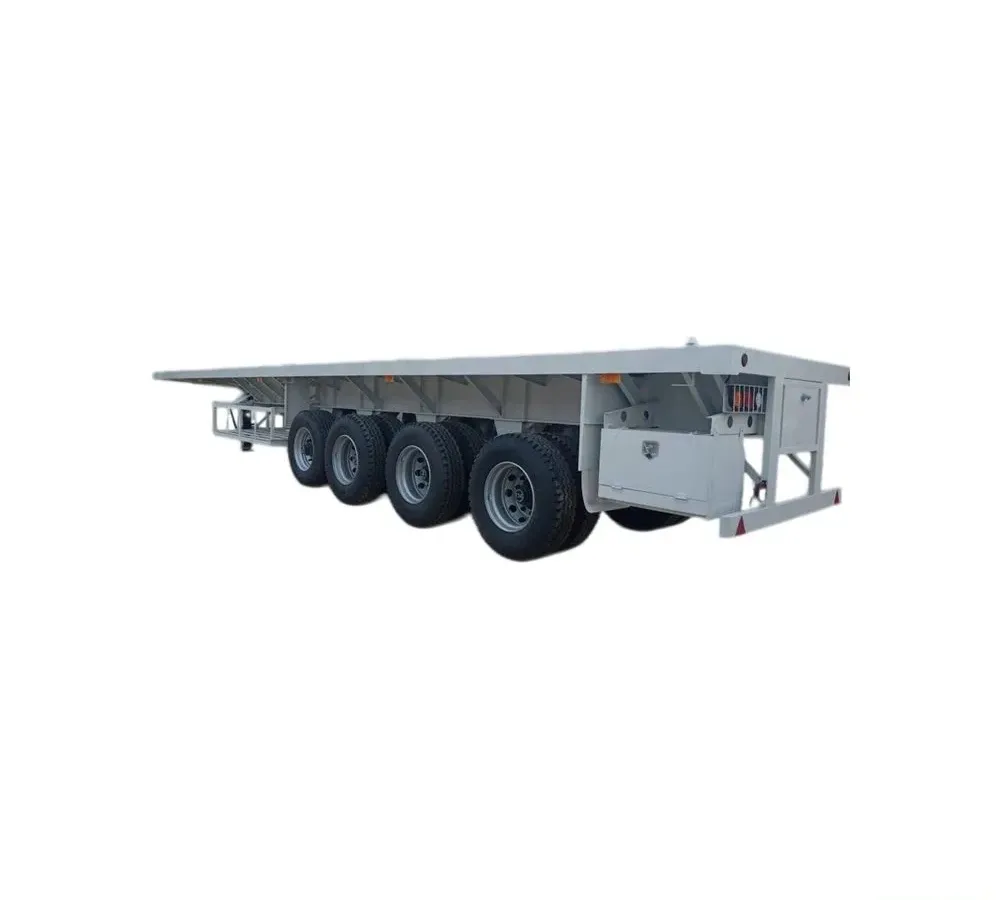
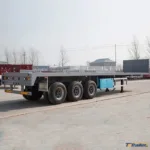
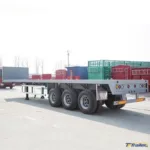
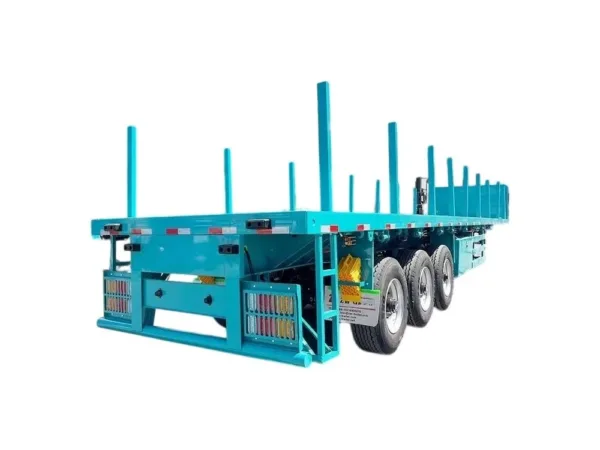
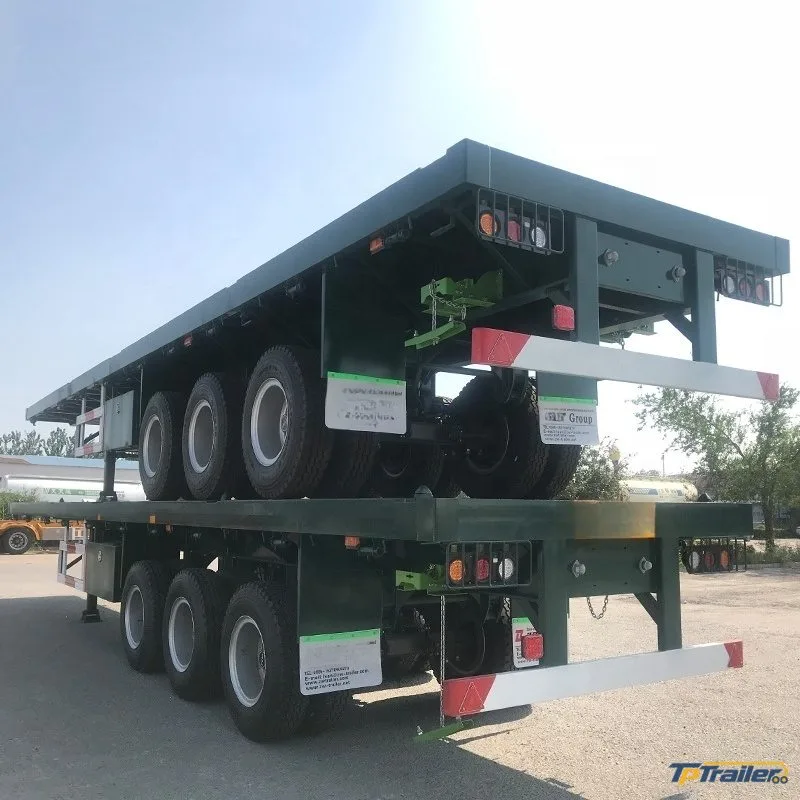
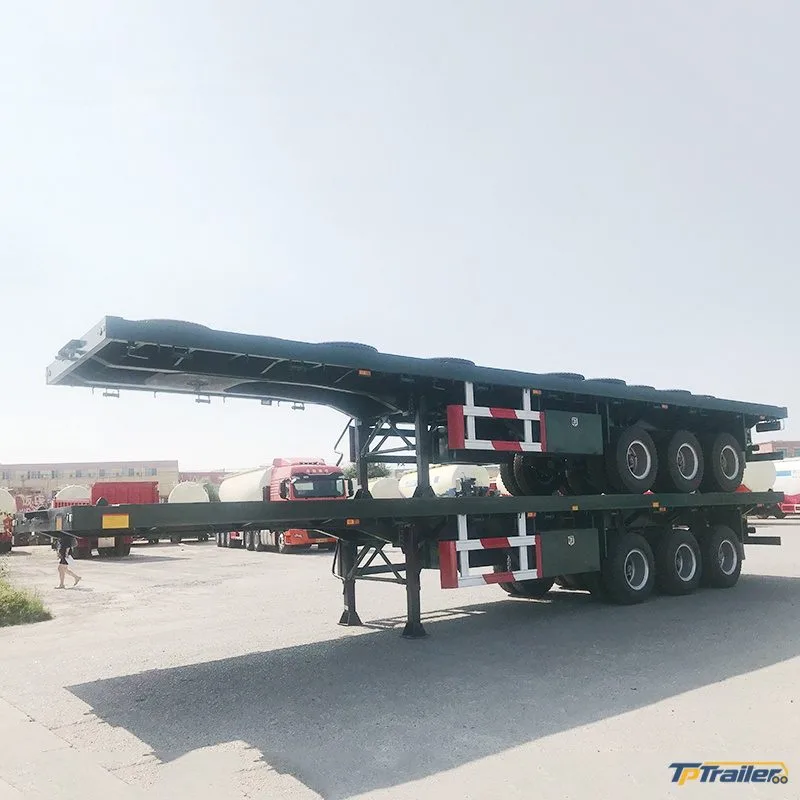
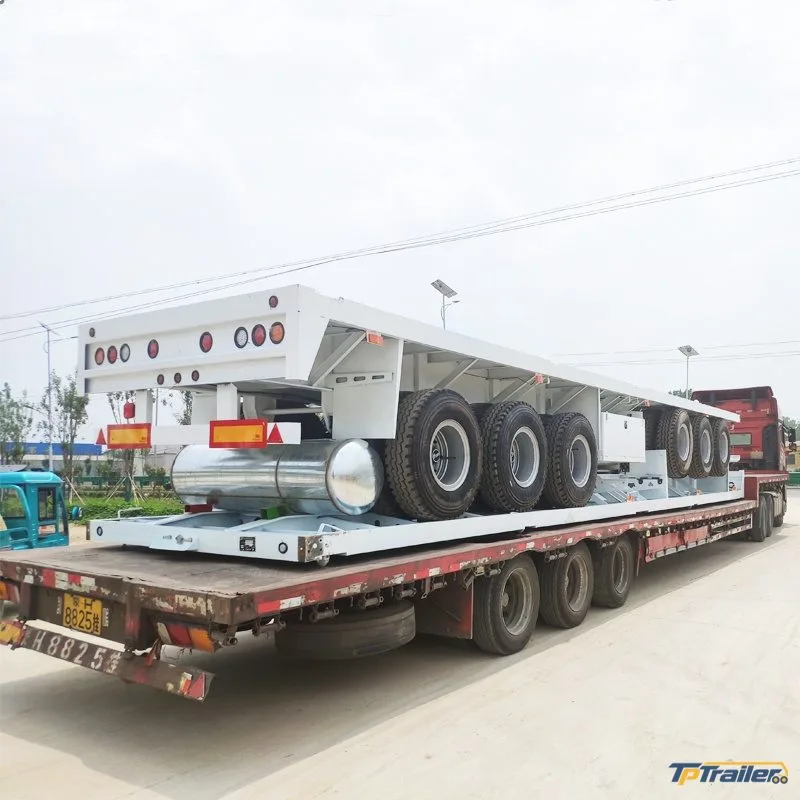
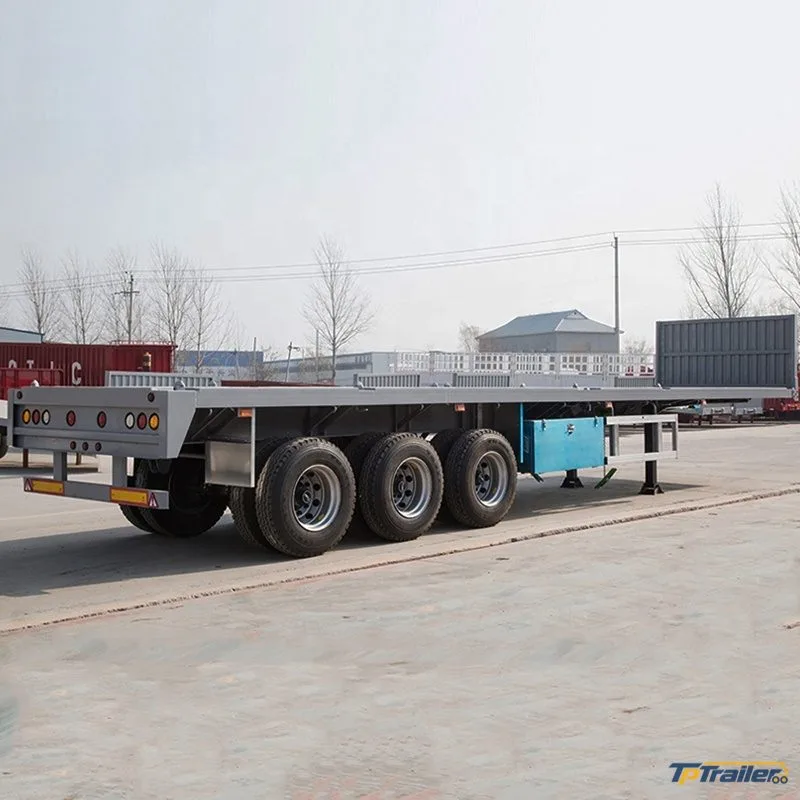
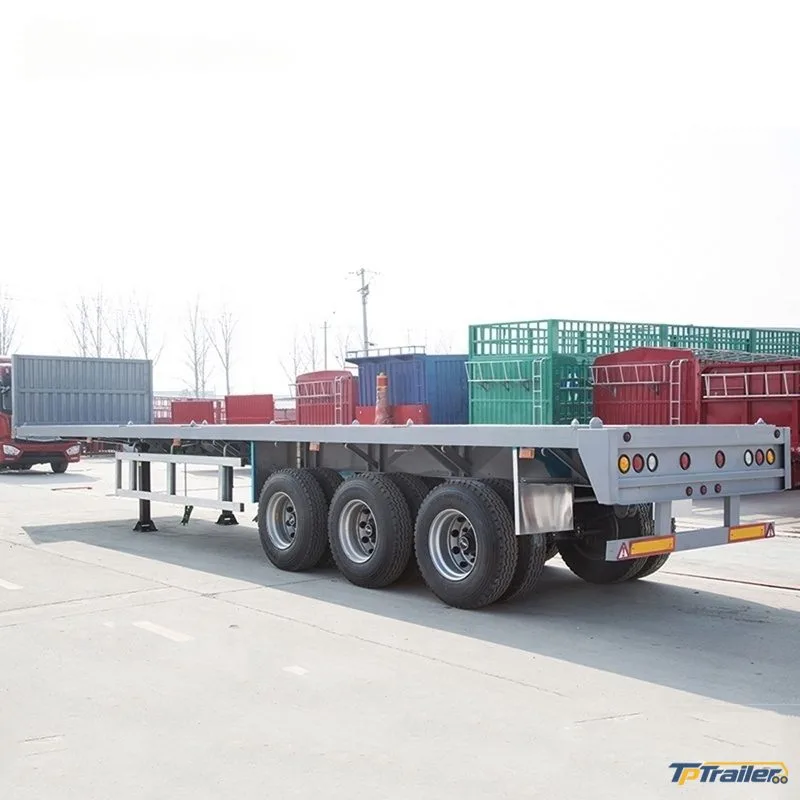
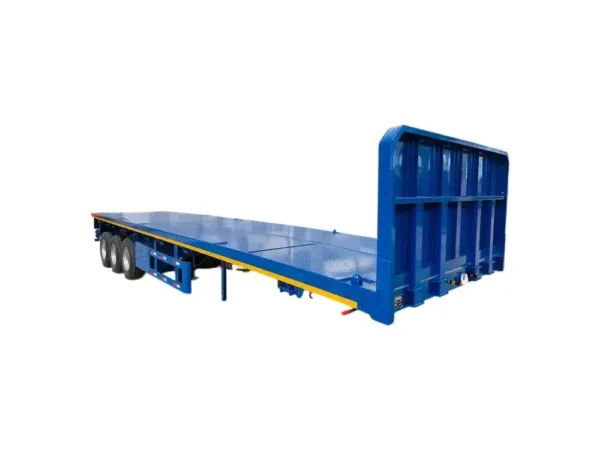
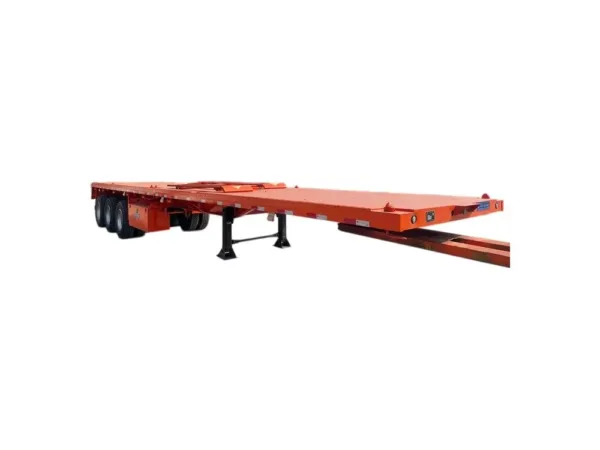
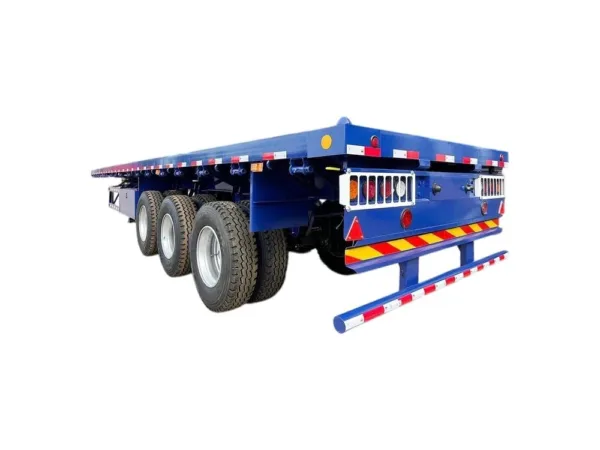
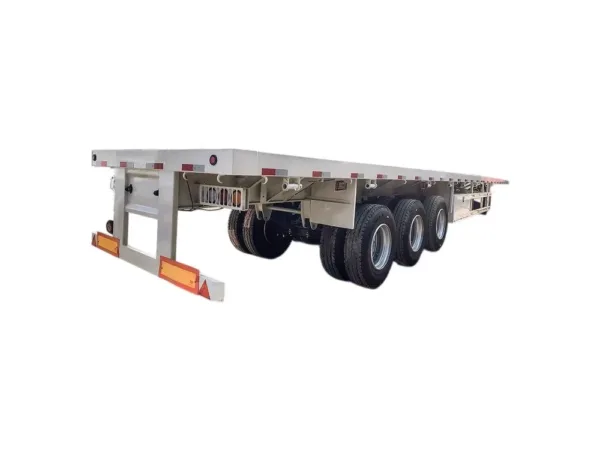
The 40ft flatbed trailer with container lock is a heavy-duty flatbed semi trailer built to move containerised freight across long-haul and regional routes. It is aimed at fleet operators, transport contractors and freight forwarders who need a dependable platform for container transport rather than a specialised lowbed or box unit. Its three-axle running gear, mechanical suspension and standard king pin make it a straightforward match for common tractor units, while the container lock points give the deck a second job beyond general flat cargo. The single strongest reason to choose it is versatility: one trailer handles both container work and open deck loads, so the asset stays productive across changing freight demand.
Table of Contents
Why It Works On Site
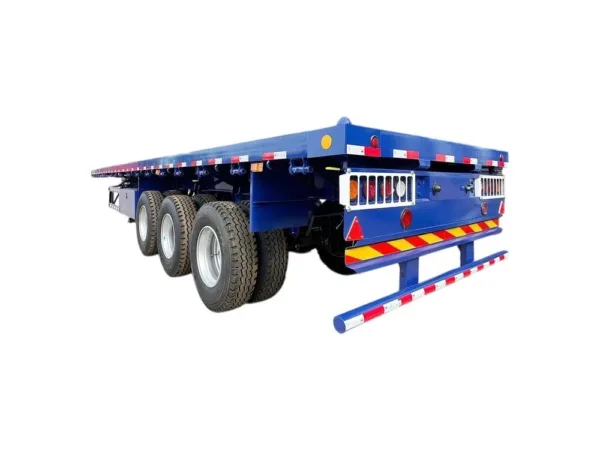
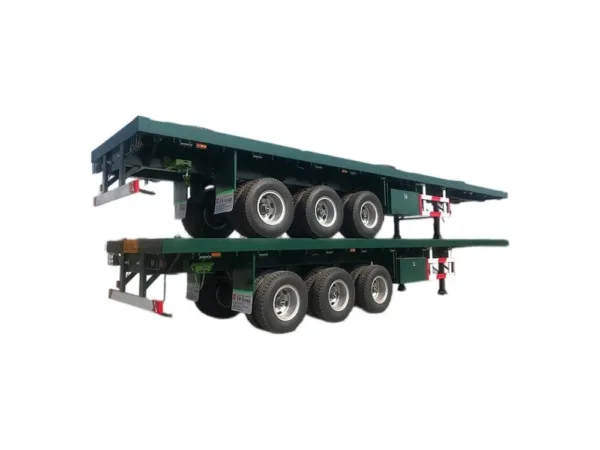
Three-axle running gear. The axle configuration spreads the load across more contact points than a lighter tandem setup, which suits operators running steady container weights on mixed road surfaces. It gives the 40ft flatbed trailer with container lock a stable footprint for long-distance hauling, and the extra axle capacity helps when the deck carries dense cargo rather than light general freight.
Mechanical suspension. A mechanical setup keeps maintenance familiar and repairable in workshops that may not stock specialised parts. For a fleet running a 40ft flatbed trailer with container lock on routine routes, that simplicity reduces downtime risk and makes the suspension behaviour predictable under load. It is a practical choice where service networks are thin and operators value rugged, understandable components over complex systems.
Container lock points. The locking fittings let the deck secure containers directly, turning a flat platform into a container carrier without extra adapters. This is the core reason a 40ft flatbed trailer with container lock earns its place in a mixed fleet: it can switch between container transport and open deck loads, keeping the trailer working instead of parked between contracts.
Standard landing gear. The landing gear supports the trailer when it is uncoupled, which matters at depots where units are dropped and swapped frequently. For a 40ft flatbed trailer with container lock moving through busy yards, reliable static support speeds up the exchange and keeps the deck stable during loading and unloading without relying on the tractor.
King pin compatibility. The king pin is offered in two common sizes, so the trailer can match different tractor fifth wheels rather than forcing a single coupling standard. That flexibility helps operators slot a 40ft flatbed trailer with container lock into an existing fleet without changing their prime movers, and it simplifies resale or reassignment across regions.
Tyre and rim sizing. The tyre and rim combination is a widely used commercial size, so replacements are easy to source on the road. For a 40ft flatbed trailer with container lock in continuous service, that availability keeps the unit rolling and reduces the risk of a long wait for a matching wheel or tyre far from base.
Where It Is Used
Container transport is the primary job, and this is where the 40ft flatbed trailer with container lock is most at home. Operators use it to move loaded containers between ports, inland depots, warehouses and distribution centres, as well as repositioning empty boxes on return legs. Because the deck carries the locking fittings, the trailer can be loaded and locked down without a separate container chassis, which suits hauliers who need one asset to cover both import and export flows.
On regional routes the same unit handles containerised machinery, packaged goods and building materials, and the open deck makes it easy to inspect the load and secure it before departure. For fleets serving rail terminals and cross-dock yards, the 40ft flatbed trailer with container lock keeps turnaround predictable because the container is secured directly to the platform rather than transferred between equipment.
Beyond containers, the flat deck earns its keep on general and oversized freight. Steel sections, pipes, timber, palletised building products, generators and construction plant all sit on the platform, with the container locks recessed or clear of the load area when not in use. Fleet operators on long-haul corridors value the 40ft flatbed trailer with container lock for this mixed-duty profile: a container run outbound and a flat load on the return keeps the asset earning instead of running empty.
In agriculture and manufacturing supply chains, it moves bagged goods, machinery components and bundled materials between production sites and depots. The 40ft flatbed trailer with container lock is also a practical choice for project logistics where loads vary week to week, because the deck adapts to the cargo rather than the cargo having to fit a fixed body.
Choosing The Right Spec
Match the king pin to your tractors. The two king pin sizes cover the common fifth wheel standards in service, so the first decision is which coupling your prime movers already use. Choosing the 40ft flatbed trailer with container lock with the matching king pin avoids adapters and keeps hook-up quick. If the fleet is mixed or likely to change, the alternative size gives room to reassign the trailer later without rework.
Confirm the axle count against your loads. The three-axle layout is the stated configuration, and it suits operators moving regular container weights over long distances. Buyers should compare it with the payloads they actually haul and the routes they run, since axle count affects how the load is distributed and how the trailer behaves on uneven surfaces. The 40ft flatbed trailer with container lock is specified for container transport, so matching it to typical box weights keeps it within its intended duty.
Choose suspension for your service conditions. The mechanical suspension specified here is the practical option for operators who prioritise simple servicing and rugged behaviour on mixed roads. It suits fleets running the 40ft flatbed trailer with container lock on established routes where workshop familiarity matters more than complexity. Buyers whose work is dominated by long, smooth corridors should weigh how the suspension matches their surface conditions before confirming the order.
Decide colour and finish for your fleet. Colour is customer-optional and the trailer is finished with final paint, so the 40ft flatbed trailer with container lock can be ordered to match fleet livery or a simple standard finish. That choice is mostly about branding and inspection visibility rather than performance. Operators running mixed fleets often standardise colour to simplify identification at depots and yards.
Customisation Before Delivery
Axle count. The 40ft flatbed trailer with container lock can be ordered with the tri-axle layout shown in the product name or built as a four-axle unit. More axles spread the load across the road and raise the tare weight. The choice is settled at order confirmation, not after the steel is cut.
Deck length. Buyers choose between the shorter and longer deck options for the 40ft flatbed trailer with container lock. The longer deck carries larger container sizes and long freight. The shorter deck suits tighter yards and lighter routes. Confirm the length you need when the order is placed.
Suspension. Mechanical suspension is the standard fitment on this 40ft flatbed trailer with container lock. It is simple, rugged and easy to repair in markets where air parts are hard to source. State the suspension type at order confirmation so the running gear is built to match.
Tyres and rims. The trailer is supplied on the stated tyre size with matching rims. Buyers who run a mixed fleet can ask for a different tyre option where it is available. Tyre and rim choice is fixed at order confirmation so the axles are set up correctly.
Colour and paint. Colour is customer optional, and the final paint is applied before dispatch. A bright colour helps drivers spot the 40ft flatbed trailer with container lock at night. Give the colour reference at order confirmation so the paint batch is mixed once.
Fitting And Installation
The 40ft flatbed trailer with container lock arrives as a complete unit, so fitting work centres on the tractor side. The buyer has to match the king pin size to the fifth wheel on the truck. Two king pin sizes are offered, and the one you order must match the coupling on the tractor. The landing gear must sit clear of the ground when the trailer is coupled and raised.
Check that the mounting points on the tractor and the trailer line up before the first loaded run. Hose routing from the tractor to the trailer needs enough slack for turns without touching the deck edge. Confirm the electrical connector type on the tractor so the lighting circuit plugs in without adapters. Any fitment drawing is confirmed at quotation, so the buyer knows the interface before the order is placed.
A wrong size at the coupling point costs real downtime. If the king pin does not match the fifth wheel, the 40ft flatbed trailer with container lock cannot be coupled safely and the tractor cannot pull it. If the air lines are routed too tight, they rub through on turns and the brakes fail on the road. If the landing gear is the wrong height, the trailer will not sit level when uncoupled.
Each of these faults stops the trailer at the yard gate instead of earning. Checking the tractor interface before the trailer ships is cheaper than correcting it at the port. The buyer should send the tractor details with the order so the 40ft flatbed trailer with container lock is built to couple on arrival.
Service Life And Maintenance
Tyres and rims first. Tyres wear before anything else on this 40ft flatbed trailer with container lock. The operator should check tread depth and sidewall condition on every pre-trip walk-around. Uneven wear points to axle alignment or wrong inflation. Keeping the stated tyre size and matching rims protects the wear pattern and extends the interval between tyre changes.
Brake and air lines. The air lines and brake chambers are the next wear point on the 40ft flatbed trailer with container lock. Inspect the hoses for cracks and chafing, and check the couplings for leaks. A soft pedal or slow pressure build means the system needs attention before the next load. Route the lines clear of sharp edges to slow the wear.
Suspension and bushes. Mechanical suspension is rugged, but the bushes and shackles still wear. The operator should look for loose U-bolts, cracked leaves and worn pins on the 40ft flatbed trailer with container lock. Re-torque the fasteners to the values in the manual and replace worn bushes early, before they damage the spring seats.
Container locks. The container locks take heavy load and should be checked for free movement and secure locking. Inspect the lock bodies and pins on the 40ft flatbed trailer with container lock for bending or looseness. A lock that will not seat means the container is not held down. Clean and lubricate the locks so they stay easy to operate.
Paint and steel. The final paint is the main protection on the 40ft flatbed trailer with container lock. Chipped paint lets rust start on the deck and frame. Touch up chips before they spread and wash off road salt and mud. A clean, painted surface slows corrosion and keeps the trailer in service longer.
Packing And Container Loading
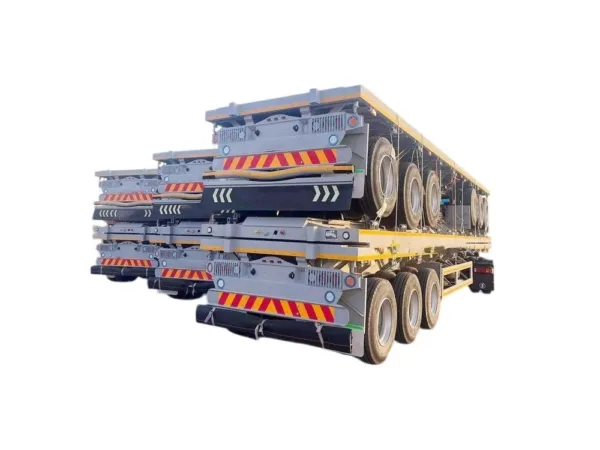
Each 40ft flatbed trailer with container lock is prepared for ocean freight with the frame surfaces protected against salt air and road grime. Painted steel is the main exposure point, so the final paint coat is allowed to cure before dispatch. The king pin area, landing gear and axle ends are the parts most likely to be knocked in transit. Buyers should ask how the supplier covers these points and confirm the protection method at quotation. Loose items such as container twist locks are usually boxed and secured to the deck rather than shipped loose inside the frame.
A 40ft flatbed trailer with container lock is a long rigid unit, so nesting and stacking are not realistic space savers. The deck cannot be folded, and stacking trailers risks bending the frame and damaging the axles. Loading is normally one unit per flat rack or per open-top space, with the trailer secured by its chassis points. Buyers should confirm the shipping method before booking. On arrival, check the paint for scuffs, the king pin for damage, the landing gear for smooth travel, and that every container lock is present and turns freely.
Common Mistakes Buyers Make
Ordering the wrong king pin size. The king pin is offered in two sizes, and the wrong one will not couple safely to the tractor. The single check: measure the fifth wheel jaw opening on the tractor that will pull the trailer and match it to the king pin option before ordering. Confirm the choice in writing on the order, because a fitted king pin cannot be changed at the destination port.
Ignoring the suspension type. The suspension listed is mechanical, and a buyer expecting air ride for fragile loads will be disappointed. The single check: confirm the suspension type against the road conditions and load profile on the intended routes. If the route is rough or the cargo is sensitive, raise it at quotation before the build starts, since changing suspension after production is costly.
Assuming container locks are universal. A 40ft flatbed trailer with container lock is built for container transport, but lock positions must suit the container sizes the buyer actually moves. The single check: list the container lengths and confirm the lock layout matches them. Ask for the lock spacing in writing, then compare it with the containers in the buyer’s fleet before signing.
Overlooking tire and rim matching. The tire and rim sizes are specified as a pair, and mixing them with locally sourced wheels can create fitment problems. The single check: confirm the tire size and rim size together on the quotation, then verify that local replacement tires match. Keep a note of both so future purchases stay consistent across the fleet.
Skipping the landing gear rating. The landing gear is rated for a stated load, and buyers often assume it suits any load. The single check: compare the landing gear rating with the heaviest load the trailer will carry when uncoupled. Confirm the rating on the quotation and check it against the tractor and yard conditions where the trailer will be parked.
Buyer Questions
Can the trailer be shipped in a standard container?
The trailer is a long rigid unit, so it is not packed inside a standard container. It is normally shipped on a flat rack or as break bulk, depending on the route and the freight forwarder. Buyers should confirm the shipping method with the supplier at quotation and ask which port of loading applies. Before booking, measure the trailer length against the flat rack limits and check that the forwarder can handle the unit at both ends.
What should I check when the trailer arrives?
Inspect the paint for transit scuffs and the frame for bends. Check that every container lock is present and turns freely. Test the landing gear through its full travel and look at the king pin for impact damage. Confirm the tire and rim sizes match the order. Photograph any issue before unloading and report it to the supplier the same day, because claims are easier to settle before the unit is moved.
Can the color and axle count be changed to my order?
Color is customer optional, so the buyer can specify a shade at quotation. The axle count shown is three, and any change to it affects the frame, suspension and braking layout, so it must be agreed before production. Send the required axle count, the intended load and the container sizes you move. The supplier then confirms what is possible and what stays fixed. Any change not confirmed in writing is not part of the build.
To receive a quote for a 40ft flatbed trailer with container lock, send three details: the trailer length you need, the axle count, and the quantity you plan to order. Add the container sizes you move and your preferred king pin size. The supplier can then confirm the configuration and the price tier that applies to your volume.
We use cookies to enhance your browsing experience, serve personalized content, and analyze our traffic. By clicking "Accept All", you consent to our use of cookies. Privacy Policy
Cookie Preferences
Required for the website to function properly. Cannot be disabled.
Help us understand how visitors interact with the website (Google Analytics).
Used to deliver personalized ads and measure ad campaign effectiveness.












Write a Review