


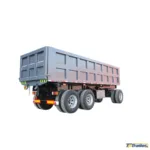
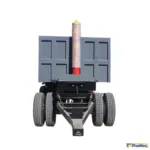
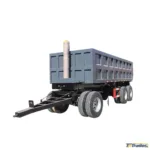

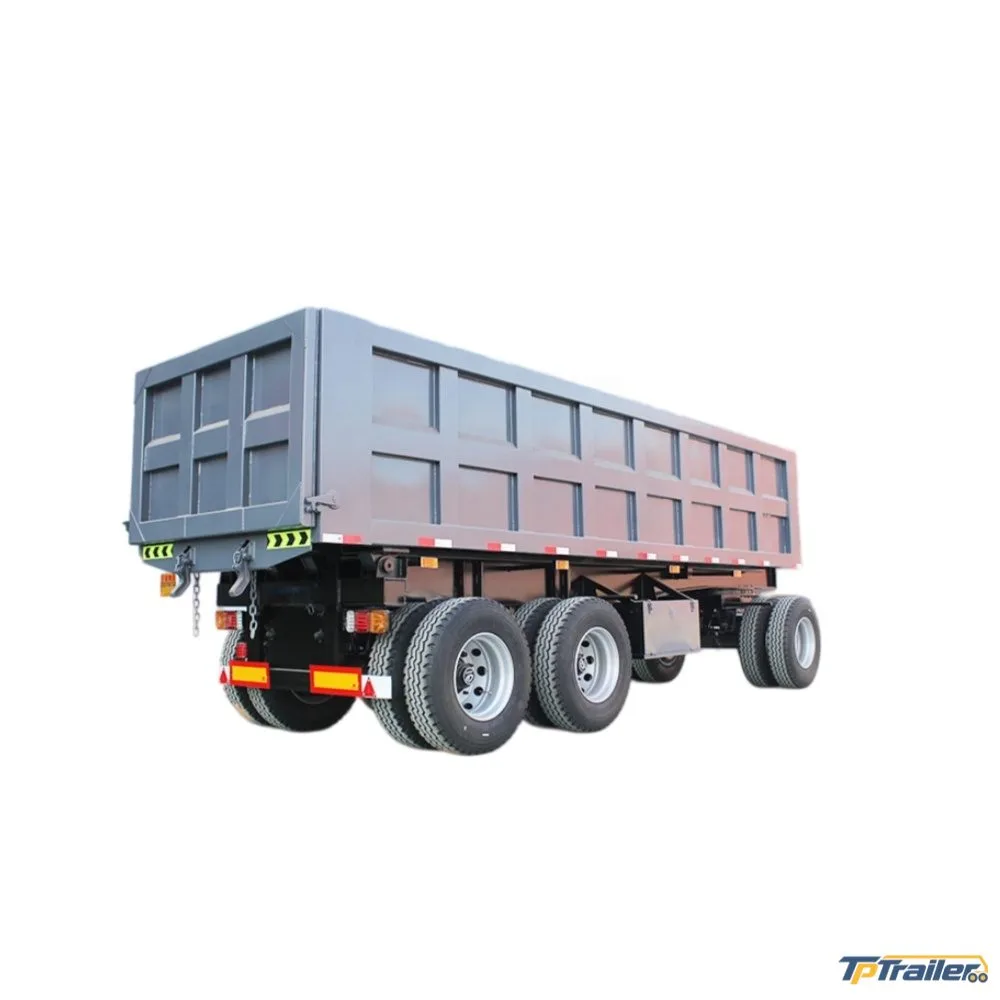
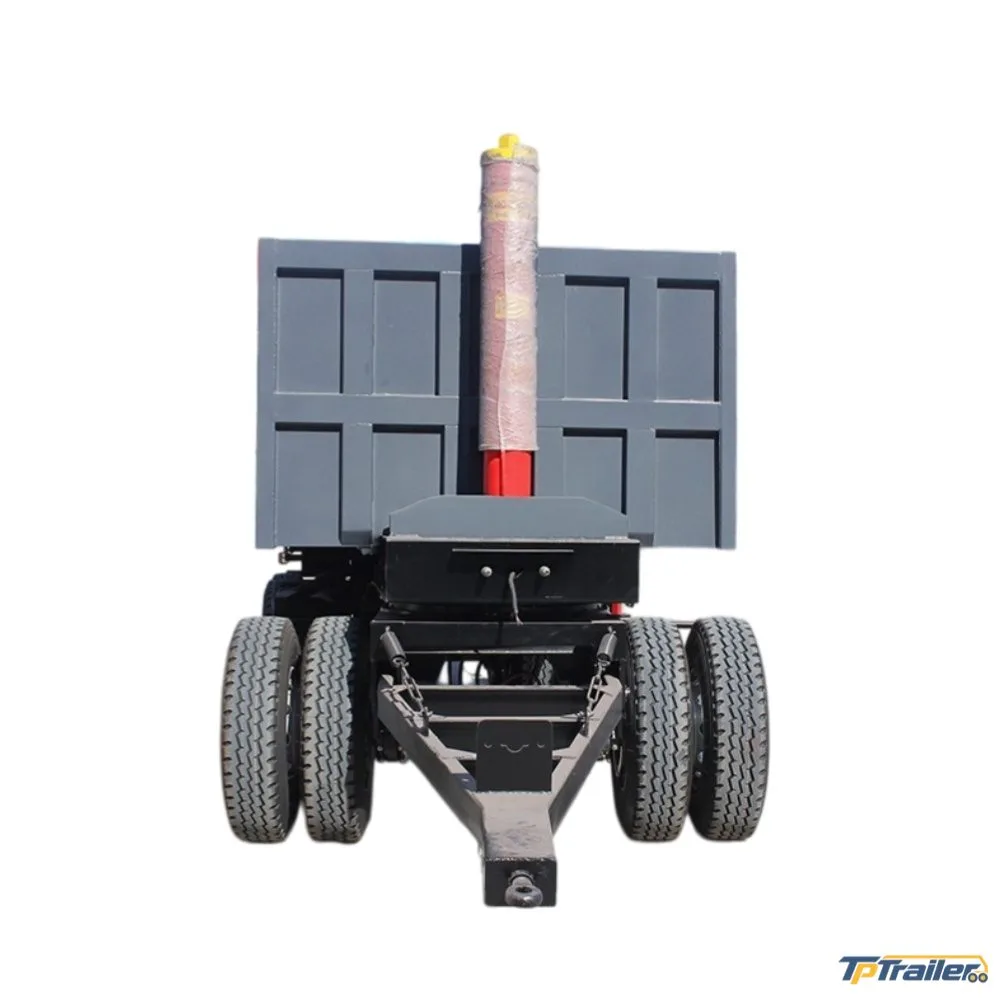
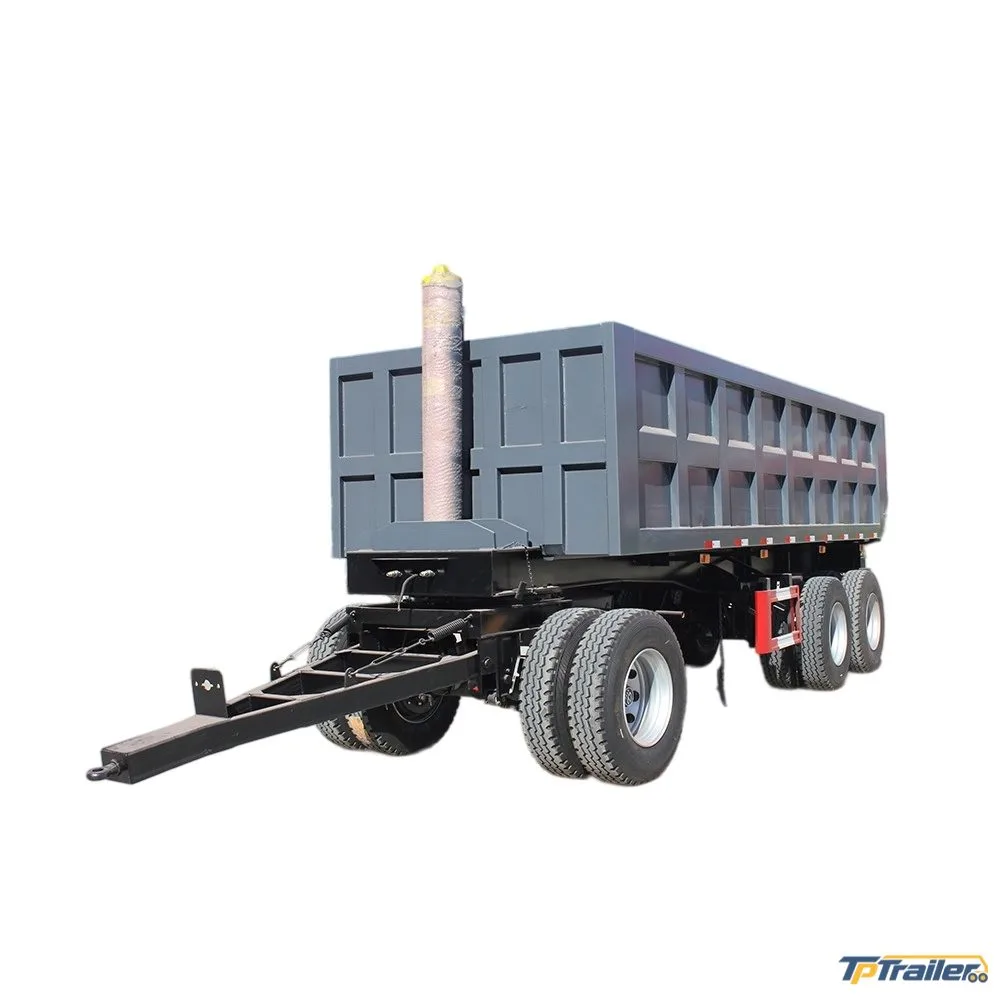
Steel Container Tipper Semi Trailer with drawbar and turntable, rated at 30000 KG load capacity for container tipping work. Contact us for details.








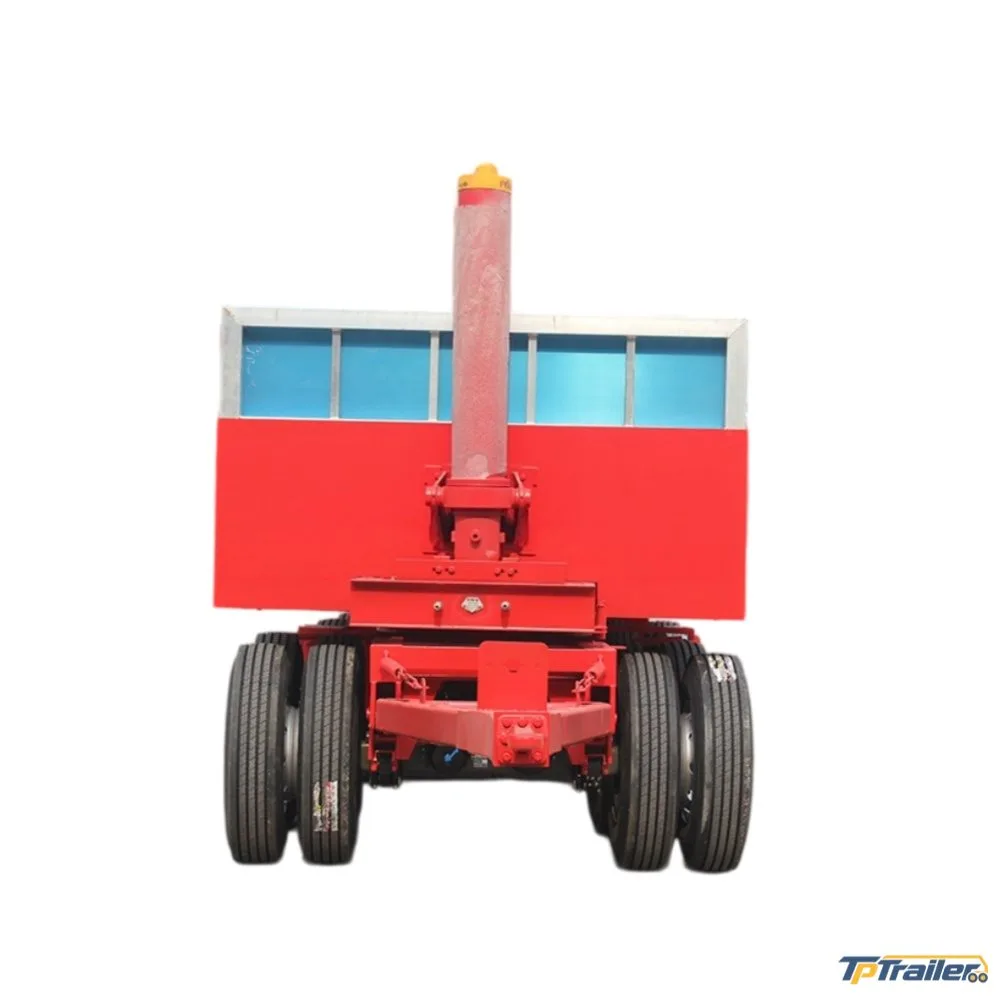
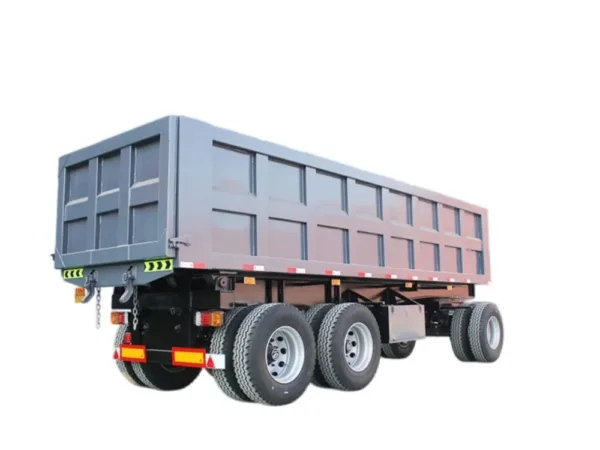
Container Tipper Semi Trailer is a steel-built hauling unit that combines a tipping body, a drawbar and a turntable so one operator can move and empty bulk cargo without a separate crane or forklift. It suits fleet operators, farm contractors and depot managers who handle loose loads daily. The strongest reason to choose it is the load capacity of 30000 KG, which lets a single unit carry full container loads of grain, feed or scrap on routine runs. The steel structure and tipping geometry keep discharge quick, and the drawbar-turntable layout keeps the unit stable while the body lifts.
Fleet operators use the Container Tipper Semi Trailer on grain and feed work, where the tipping body empties into a pit, auger hopper or store bay. A loaded container arrives from the field or store, the body lifts, and the cargo flows out by gravity. The load capacity of 30000 KG suits full-container loads of wheat, barley, maize or compound feed, so a single unit keeps pace with a loader filling the container.
On farm sites the drawbar and turntable let the assembly turn inside a yard and spot beside a narrow pit without a long reverse. Contractors running harvest haulage value the same unit because it can tip at the store and return for the next load without a separate unloading machine on site.
Depot and yard work is the second common duty. The Container Tipper Semi Trailer moves scrap, wood chip, sawdust, sand and gravel between stockpiles and discharge points. Because the body tips by gravity, the unit clears a container into a bay or bunker without a grab, which keeps the yard moving when a loader is busy elsewhere. The steel body takes direct loading from grabs and bucket loaders, so the leg holds up to abrasive cargo. On road transfer the semi-trailer coupling lets a tractor unit pull the loaded unit between sites, then the same trailer tips on arrival. That single-unit flow cuts the number of machines and handoffs per job.
Municipal and green-waste collections are a third duty where the Container Tipper Semi Trailer earns its place. A skip or container of grass cuttings, leaves or mixed garden waste is heavy but not dense, so the rated capacity leaves headroom for a full box. The operator tips at a transfer station or composting pad, and the gravity discharge drops the load without a tipper lorry on site. For a contractor covering several depots, one unit can service a collection round and still be free for a grain run in the same week. That flexibility is the reason the drawbar-turntable format suits mixed-duty fleets better than a single-purpose tipper.
On arrival, the buyer has to match the trailer to two things: the towing vehicle and the container handling routine. The drawbar and turntable coupling must line up with the tractor or truck that will pull it. Check the towing eye or ring size, the coupling height and the mounting points before the first hook-up. On the tipper side, confirm the hydraulic take-off, the hose routing and the tube size against the pump and cylinder on the towing unit.
A Container Tipper Semi Trailer that couples correctly still needs the hydraulic circuit to match, so plan that check into the arrival day. If the input gives no fitment data, treat the fitment drawing as the reference and confirm it at quotation. Do not guess the coupling dimensions from a photograph.
A mismatch is expensive in downtime. A drawbar that does not meet the towing eye keeps the trailer parked while a replacement is sourced. A hose route that fouls the chassis means the tipper cannot be raised safely until it is reworked. A Container Tipper Semi Trailer held up on a missing adapter earns nothing, and the haulage schedule slips day by day. The cost is not only the part; it is the crew standing idle and the containers waiting at the yard. Confirm the fitment drawing and the hydraulic connection points at quotation, before the order is placed. That single step removes most of the risk from the arrival day.
Plan the first hook-up as a dry run. Couple the empty unit, raise the body through its full arc with no load, and watch the hose run and the turntable clearance as it moves. A Container Tipper Semi Trailer behaves differently empty and loaded, so repeat the raise with a part load before the first full tip. Note the deck height against your loading bank and the rear swing against your pit edge. If either figure is wrong, it is far cheaper to correct a mounting block or a hose length in the yard than to rebuild a tipping point. Record the measurements you take so the second unit in the fleet matches the first.
Set a service interval that reflects the duty, not the calendar alone. A unit tipping several times a day on abrasive scrap needs closer checks than one on seasonal grain work, and a Container Tipper Semi Trailer working in wet or coastal air needs the coating inspected more often than a shed-kept unit. Keep a simple log of raises, loads and repairs so the fleet manager can see when a bush or a hose is due. That log is also the evidence base for the next order: if one axle layout or coating has held up over a season, the second unit should match it.
A Container Tipper Semi Trailer ships as a steel structure, so sea freight protection is about surfaces and fixtures rather than fragile parts. The chassis frame, drawbar and turntable are coated before dispatch, and that coating is what the salt air attacks first. Expect the exposed steel to arrive wrapped or sheeted, with the drawbar eye and turntable ring greased and capped. Loose items such as pins, locks and fittings should be crated and strapped to the deck, not left in a cab or a container corner. Ask the supplier for loading photos before the container doors close. A Container Tipper Semi Trailer is a long, heavy unit, so the lashing plan matters as much as the wrapping.
Nesting and stacking are limited on a Container Tipper Semi Trailer. The turntable and drawbar sit proud of the frame, so units do not sit flat on one another without blocking. Most loading plans stand units on their own wheels and use the space above the deck for crated parts. Confirm the shipping method at quotation: a complete trailer and a knocked-down unit load very differently. On arrival, check the coating for rub-through at lashing points, confirm the turntable turns freely, and verify that every crated item on the packing list is present. Photograph the container interior before unloading, because a Container Tipper Semi Trailer claim is hard to support once the unit is moved.
Ask the supplier for the lashing plan before booking freight. A Container Tipper Semi Trailer is secured through its chassis and axle points, with timber blocking under the frame and straps or chains to the container floor rings. The turntable and drawbar need their own restraint because they sit proud of the frame. Request loading photos showing the straps in place and the doors closed. Confirm who supplies the blocking timber and whether the lashing gear stays with the unit or returns with the container.
That depends on the shipping configuration and the container type, so confirm it at quotation. Complete trailers take far more space than knocked-down units, and the turntable and drawbar limit how closely two frames can sit. Give the supplier the unit length, the axle count and the quantity, and ask for a loading plan with the number of containers stated. Do not assume a second unit fits because the first one did. The Container Tipper Semi Trailer order should state the loading plan in writing.
Inspect before unloading and photograph everything. Check the coating at lashing and contact points for rub-through, confirm the turntable rotates freely, and test the drawbar eye against your hitch. Compare the crated parts against the packing list and note any shortage on the delivery document. Check the axle and suspension mountings for movement in transit. Report damage to the supplier with photos and the container number before the unit is moved, because a Container Tipper Semi Trailer claim is weaker once the trailer leaves the port.
Ready for a quote? Send the unit length you need, the axle count, and the quantity you plan to order. Confirm the drawbar eye and turntable details with your tractor, and state the shipping configuration you prefer. With those four points, the supplier can price the Container Tipper Semi Trailer and set the loading plan.
| Load Capacity | >30000 KG | Type | Semi-Trailer |
|---|---|---|---|
| Max Payload | >30000 kg | Place of Origin | China (Mainland) |
| Province | Guangdong | Use | Truck Trailer |
| Material | Steel | Size | 12000^ * 2500^ * 1100(mm) |
| Dimensions | 1250 × 250 × 150 | ||

No reviews yet — click the Review button on the right to share your experience with this product.



Fill in the form below and our team will respond within 24 hours.
Write a Review