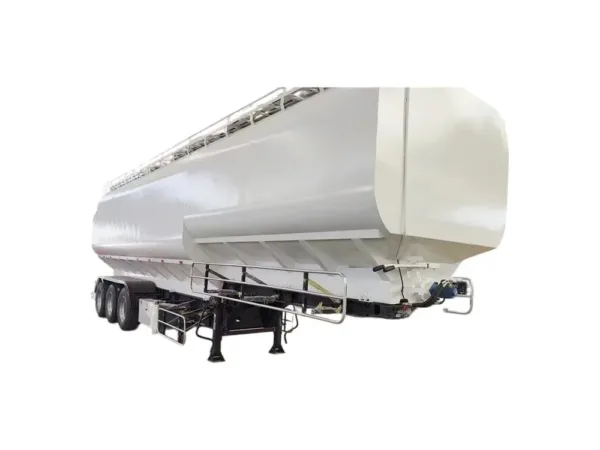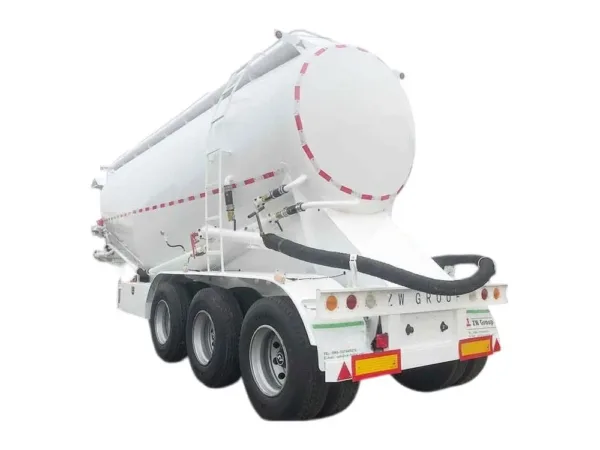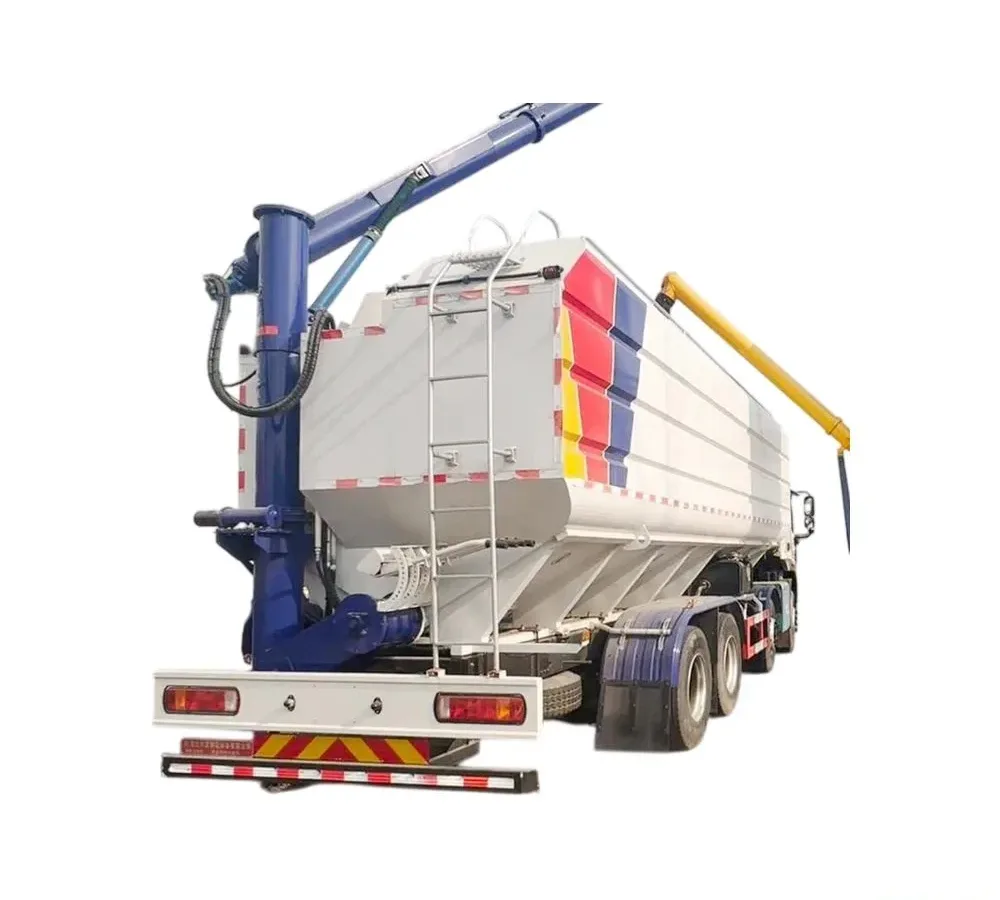
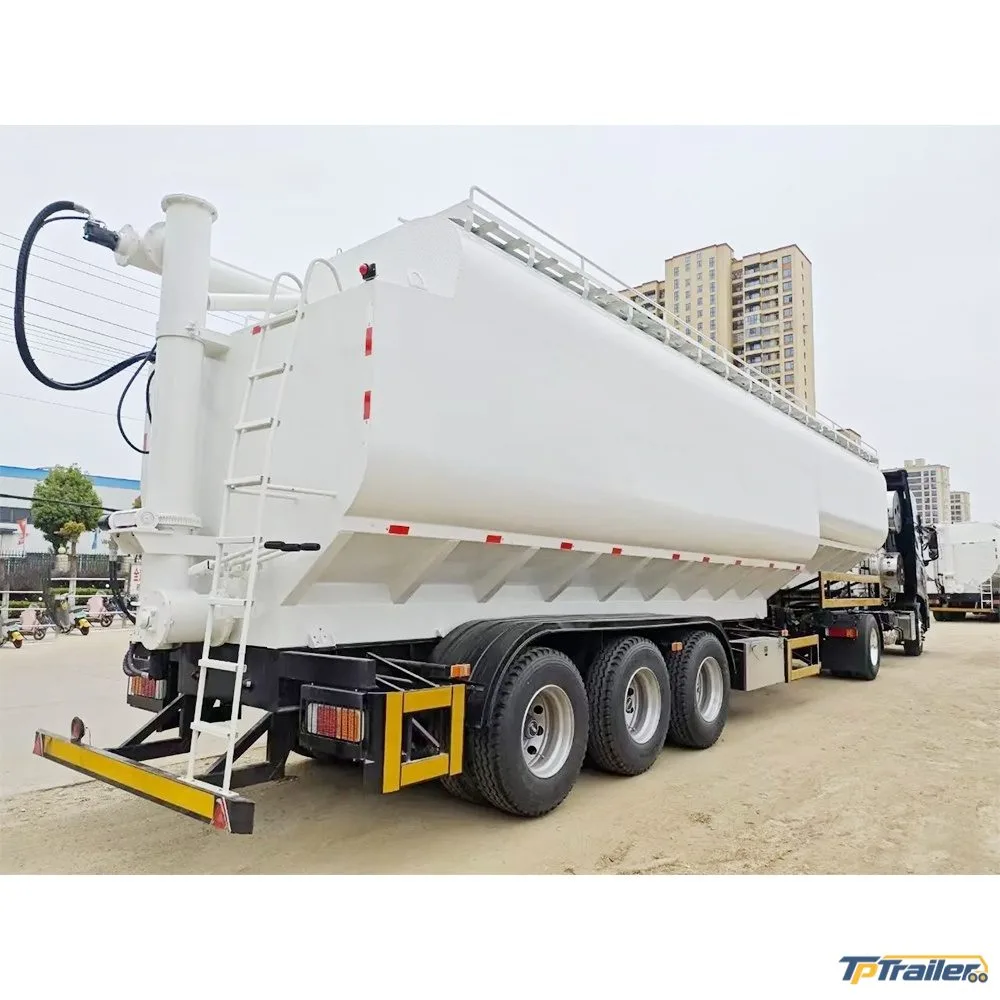
3 Axles 65CBM Steel Bulk Feed Transport Semi Trailer

This 3-axle 65 m3 semi-trailer for feed transportation delivers efficient animal feed delivery with a load capacity over 3001 KG for bulk cargo hauling.

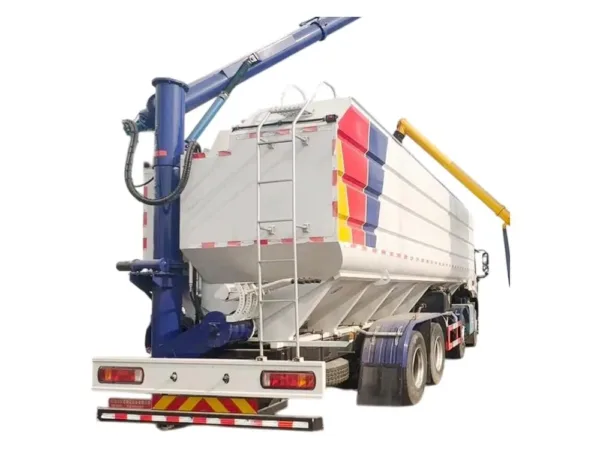
>3001 KG 3
FOB Reference Price US$20,000-30,000 Final price confirmed by inquiry

Certifications

  • ISO 9001

Key Features

  • 65CBM steel tank body for bulk animal feed haulage
  • 3-axle running gear for stable highway transport
  • Designed for efficient animal feed delivery runs
  • Steel construction suited to daily cargo utility work
  • Bulk tanker format speeds up loading and discharge
  • Suits fleet operators moving feed in large volumes
Load Capacity >3001 KG
Max Payload >3001 kg
Size 12600 × 2550 × 4000

The 3-axle 65 m3 semi-trailer for feed transportation is a steel bulk tanker built to move loose animal feed from mill to farm without bagging. It suits feed mills, livestock integrators and transport fleets that need a dedicated bulk hauler. The single strongest reason to choose it is the combination of a large tank body and a three-axle running gear, which lets one tractor unit clear a full mill silo in a single trip. With a load capacity of 3001 KG, the trailer is sized for routine feed delivery work rather than occasional use, and it keeps the cargo enclosed from loading point to discharge.

Why It Works On Site

  • Three-axle running gear spreads the load. Distributing the tank body across three axles keeps the gross weight within road limits on long hauls, so the 3-axle 65 m3 semi-trailer for feed transportation can run full loads on public highways without overloading a single axle group. That means fewer trips for the same tonnage and less tyre and brake stress per trip.
  • The steel tank body handles bulk feed. Steel is the practical shell for grain, pellets and mash because it resists abrasion from flowing feed and holds its shape under repeated loading. The 3-axle 65 m3 semi-trailer for feed transportation keeps the cargo dry and contained, so feed arrives at the same quality it left the mill.
  • A 65 cubic metre body matches mill silo output. The tank volume is the working point of the whole unit, sized so a single fill clears a mill batch without a second run. For the 3-axle 65 m3 semi-trailer for feed transportation, that volume turns each loading cycle into one delivery, cutting queue time at the silo and idle time at the farm.
  • Load capacity of 3001 KG sets the payload plan. The rated load capacity of 3001 KG is the figure a fleet planner uses when matching tractor units and route schedules. It lets the 3-axle 65 m3 semi-trailer for feed transportation be scheduled against known farm demand, so dispatch staff can plan trips around real tonnage rather than guesswork.
  • Bulk discharge cuts handling labour. Moving feed as bulk cargo removes the bagging, pallet and manual unloading steps from the delivery chain. The 3-axle 65 m3 semi-trailer for feed transportation is built for that flow: load at the mill, haul, and discharge at the farm, with fewer hands and fewer handling losses along the way.
  • Dedicated feed service protects cargo quality. A trailer used only for feed avoids cross-contamination from other cargoes. That makes the 3-axle 65 m3 semi-trailer for feed transportation a clean, single-purpose asset for mills and integrators who need consistent feed quality on every drop.

Where It Is Used

The most common job is the mill-to-farm run. A feed mill loads finished compound feed into the tank and the trailer delivers it to livestock farms across a regional network. On this route the 3-axle 65 m3 semi-trailer for feed transportation carries pelleted, crumbled or mash feed in bulk, discharging into farm storage. Fleet operators recognise this pattern well: short and medium highway legs, regular repeat drops, and a schedule built around farm feeding cycles rather than one-off loads. Because the cargo stays enclosed, the feed is protected from rain, dust and roadside contamination for the whole journey, which matters when the destination is an open farm yard.
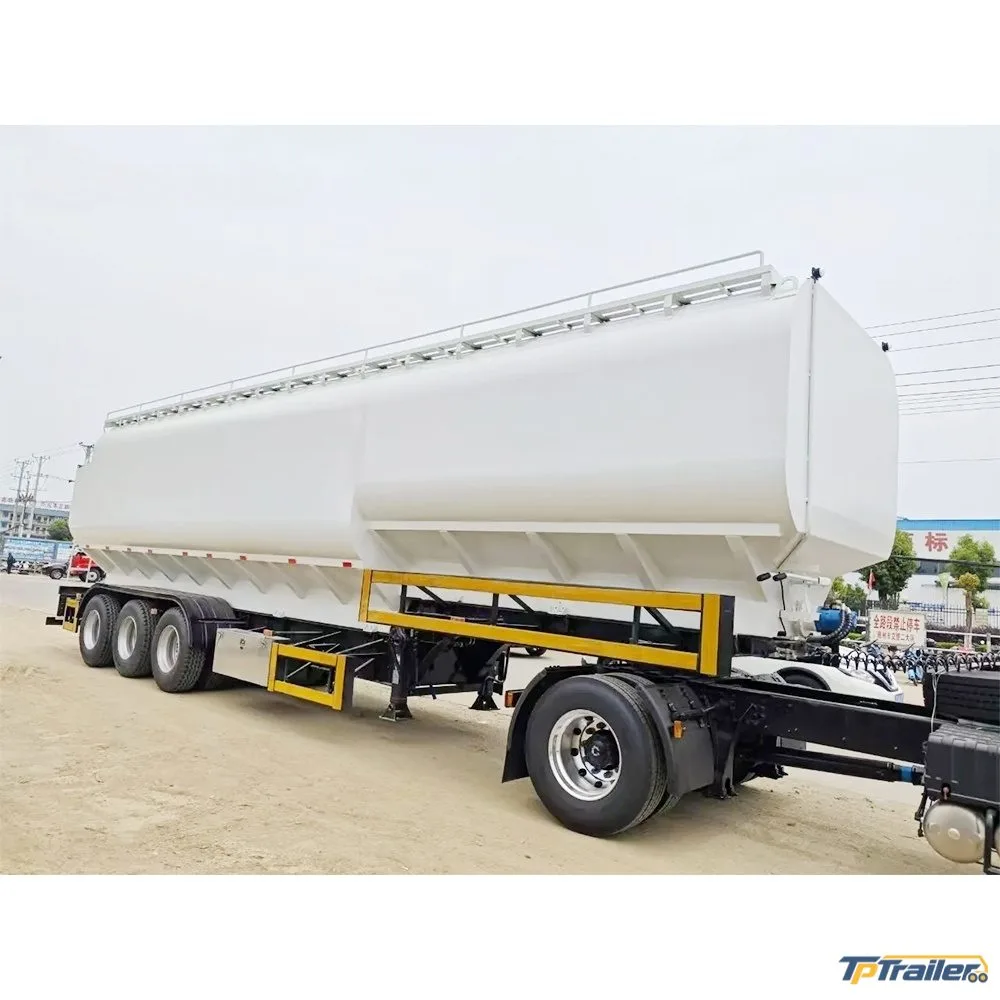
3-axle 65 m3 semi-trailer for feed transportation - detail 1

A second recognised use is bulk transfer between mill sites and central stores. Here the 3-axle 65 m3 semi-trailer for feed transportation works as a shuttle unit, moving raw or finished feed between a production plant and a distribution point. The same trailer can serve ingredient movement for feed blending, where grain and meal are hauled in bulk before processing.

Operators on this duty value the tank volume because it reduces the number of shuttle runs per shift, and they value the three-axle layout because the routes often mix highway and secondary roads. For integrators running their own feed supply, the trailer also supports scheduled farm drops where bulk delivery replaces bagged handling entirely. A third pattern appears on seasonal grain work, where the unit hauls harvested grain from store to mill between feed contracts; the enclosed shell keeps the load clean, and the three-axle gear copes with the soft ground around farm stores.

Choosing The Right Spec

  • Match the tank volume to your mill batch. The 65 cubic metre body is the anchor of the specification. If your mill fills a batch in one silo run, this volume lets the 3-axle 65 m3 semi-trailer for feed transportation take the whole batch in one loading. Buyers whose batches are smaller should check how often the tank would run partly filled, since that changes trip economics.
  • Check the load capacity against your routes. The rated load capacity of 3001 KG is the figure to compare with your tractor unit and the weight limits on your regular roads. The 3-axle 65 m3 semi-trailer for feed transportation is planned around that rating, so confirm it matches your intended payload before committing a fleet slot to it.
  • Decide between dedicated feed service and mixed duty. A trailer kept on feed only protects cargo quality, which suits mills and integrators with strict feed standards. If the unit will share duty with other bulk cargoes, plan cleaning between loads. The 3-axle 65 m3 semi-trailer for feed transportation works best when its role is fixed at the buying stage.
  • Align axle count with your haul distance. Three axles suit regional and long highway runs where weight distribution matters. Shorter, tighter farm routes may favour a different balance of capacity and manoeuvrability. Review the 3-axle 65 m3 semi-trailer for feed transportation against your typical route profile so the running gear matches the work it will actually do.

Customisation Before Delivery

  • Axle configuration. The 3-axle 65 m3 semi-trailer for feed transportation is built around a three-axle running gear, and buyers who run lighter routes can discuss a different axle count at order confirmation. The chosen layout is written into the order so the chassis, suspension mounts and brake plumbing are matched to it before production starts.
  • Suspension type. Mechanical and air suspension are both common on bulk feed haulers, and the choice affects ride height, axle spacing and the mounting brackets welded to the frame. Settle the suspension at order confirmation so the 3-axle 65 m3 semi-trailer for feed transportation leaves the line with the correct hangers and shock absorber points.
  • Tyre and wheel set. Tyre size, tread pattern and rim type are confirmed with the order, because they set the rolling radius and the clearance under the discharge pipework. Operators running long highway legs and operators working farm tracks often want different rubber, and the 3-axle 65 m3 semi-trailer for feed transportation is specified accordingly.
  • Finish and colour. Steel surfaces take a primer and topcoat, and the colour and finish level are agreed at order confirmation. A brighter topcoat helps inspectors spot corrosion early on a 3-axle 65 m3 semi-trailer for feed transportation, while a dark finish hides dust on feed routes.
  • Discharge and hatch layout. Auger outlets, hatch positions and compartment divisions are set at order confirmation to suit the receiving bins and silos on the buyer’s route. Confirm the layout early so the 3-axle 65 m3 semi-trailer for feed transportation is fabricated with the openings in the right places rather than modified afterwards.

Fitting And Installation

On arrival, the tractor unit and the trailer have to agree on the basics before the 3-axle 65 m3 semi-trailer for feed transportation goes into service. The fifth wheel height, the kingpin position and the landing leg stance determine whether the trailer sits level when coupled. Air and electrical lines must reach the couplings without strain, and the discharge pipework has to clear the tractor frame on full lock. Check the mounting points on the running gear and the torque on the wheel nuts against the figures supplied with the unit. If any of these dimensions are unclear at the quotation stage, ask for a fitment drawing to be confirmed in writing rather than guessing at the yard.

3-axle 65 m3 semi-trailer for feed transportation - detail 3
3-axle 65 m3 semi-trailer for feed transportation - detail 2

A mismatch looks small and costs days. A kingpin height that is wrong by a fraction forces the operator to rework the fifth wheel plate or run nose-down, which loads the front axle unevenly and wears tyres fast. Hose routing that fouls the frame rubs through lines within weeks, and a discharge outlet that cannot reach the silo inlet turns every delivery into manual handling. Because the 3-axle 65 m3 semi-trailer for feed transportation is a working unit, not a showpiece, downtime is measured in missed feed drops and idle drivers. Confirm the coupling, hose and outlet details before the unit ships, and the first day in service is a working day rather than a repair day.

Commissioning is a short checklist, but it should be done in order. Couple the tractor to the assembly on level ground and check that the landing legs retract fully and lock. Test the brake system with the engine off, then with air pressure built, and confirm the lines hold without audible leaks.

Run the discharge drive with the tank empty before the first load, listening for binding or rubbing at the auger bearings. Set the hatch gaskets and close each cover by hand to feel for even compression. Only after that dry run should the 3-axle 65 m3 semi-trailer for feed transportation take its first full load, and the operator should record the first discharge time so later runs have a baseline to compare against.

Service Life And Maintenance

  • Running gear and tyres. Tyres, wheel bearings and brake linings wear first on any 3-axle 65 m3 semi-trailer for feed transportation, simply because they carry the load and turn the miles. Inspect tread depth, bearing play and lining thickness at each scheduled check, and correct axle alignment early so uneven wear does not shorten tyre life.
  • Tank shell and coating. The steel shell and its protective coating take the weather and the road spray. Walk the tank after wet or salty routes and touch in chips before rust spreads. A properly applied primer and topcoat extends the repaint interval, which is why the finish choice on the 3-axle 65 m3 semi-trailer for feed transportation matters over a long service life.
  • Discharge system. Augers, seals and drive components carry abrasive feed every day. Inspect flights for wear and seals for leakage, and listen for changed noise under load. A worn auger moves feed slowly and can crack grain, so replacing seals early on the 3-axle 65 m3 semi-trailer for feed transportation protects both cargo quality and the drive train.
  • Hatches and seals. Hatch gaskets and compartment seals keep feed dry and contained. Check them for hardening, cracking and compression set, and close hatches evenly rather than forcing them. Water ingress through a tired seal spoils a whole load, so this is one of the cheapest inspections to run on the 3-axle 65 m3 semi-trailer for feed transportation.
  • Frame, welds and fasteners. The chassis, suspension hangers and structural welds carry every load cycle. Inspect for cracks, loose fasteners and paint breakdown at stress points, and keep the frame clean of corrosive residue. Catching a small weld fault early on the 3-axle 65 m3 semi-trailer for feed transportation is far cheaper than a structural repair mid-season.

Set the inspection interval by duty, not by calendar alone. A unit running two feed drops a day on paved roads accumulates wear differently from one working farm tracks in wet conditions, and the 3-axle 65 m3 semi-trailer for feed transportation should be checked more often on the harder duty. Keep a simple log of tyre pressures, seal replacements and discharge times; a gradual rise in discharge time is the earliest sign that an auger or seal needs attention, well before a driver reports a problem. Plan the deep inspection for the quiet season, when the trailer can be off the road for a week without breaking a delivery schedule.

Packing And Container Loading

Each 3-axle 65 m3 semi-trailer for feed transportation leaves the works as a complete unit or as a knocked-down set, depending on what the order confirms. Steel surfaces are cleaned and coated before dispatch, and exposed threaded parts and the tank interior are sealed against moisture. The buyer should confirm the shipping configuration at quotation, because the frame, axles and tank sections are matched to one build. Ask the supplier which parts travel loose and which stay assembled, then check that list against the packing list before the container is sealed.

Space saving comes from careful stowage, not from stacking loaded trailers. Loose steel sections, axle sets and running gear can be nested and braced inside the frame envelope to reduce wasted volume. The 3-axle 65 m3 semi-trailer for feed transportation is a long, wide unit, so loading is planned around the container or vessel deck rather than around pallet count. On arrival, verify the frame is straight, the coating is unbroken, the tank interior is dry and the loose-part count matches. Photograph the unit before unloading and record any damage on the delivery papers.

Freight paperwork deserves the same attention as the steel. Ask for the packed dimensions, the gross weight of each package and the lifting points marked on the frame, because a crane operator at the destination port needs those figures before the unit is slung. Confirm which fasteners, gaskets and small fittings travel in a labelled crate rather than loose in the tank, and have that crate listed on the packing list. When the 3-axle 65 m3 semi-trailer for feed transportation arrives in several sections, assemble on hard standing and check that every mating face is clean before bolting, so the build goes together once and stays tight.

Common Mistakes Buyers Make

  • Ordering the wrong tank volume. Buyers compare tank size against a remembered figure instead of their own feed density and route. Confirm the volume you need against the load capacity you carry, and put both in writing on the order. That single check avoids a trailer that is either short on payload or heavier than the tractor can pull.
  • Ignoring the loaded weight. The load capacity is not the same as the gross weight on the road. Measure your heaviest legal load and confirm it against the rating the supplier quotes. One check on the weighbridge ticket prevents an overloaded trailer and a rejected registration.
  • Mismatching the kingpin and coupling height. A trailer that sits wrong at the fifth wheel stresses the frame and the landing gear. Confirm the kingpin position and the coupling height with your tractor before the build starts. That check keeps the 3-axle 65 m3 semi-trailer for feed transportation level and stable when coupled.
  • Skipping the axle and brake specification. Buyers accept a standard axle set without checking their road rules on axle load and braking. Confirm axle count, track and brake type against local rules before ordering. That one comparison avoids a trailer that cannot be registered or insured for the route.
  • Leaving the discharge arrangement open. The way feed leaves the tank decides how the trailer is built. State the discharge method, outlet size and auger layout you need at quotation. That check stops a delivered 3-axle 65 m3 semi-trailer for feed transportation from needing a rebuild before its first load.
  • Forgetting the receiving end. Buyers study the trailer and overlook the farm bin, silo height and inlet size it must fill. Measure the receiving point and the ground clearance at the drop, then match the outlet and pipework to it. A unit that cannot reach the inlet is idle whatever its tank volume, so confirm this detail while the 3-axle 65 m3 semi-trailer for feed transportation is still on paper.
  • Buying without a maintenance plan. Some fleets order the trailer and only then ask who inspects seals, augers and brakes. Agree the inspection interval, the spare seal and gasket stock and the person responsible before delivery. That planning decides whether the 3-axle 65 m3 semi-trailer for feed transportation stays in service for years or spends seasons waiting for parts.

Buyer Questions

Can the trailer be shipped in a standard container?

That depends on the shipping configuration agreed at quotation. A complete 3-axle 65 m3 semi-trailer for feed transportation is a long, wide unit and may travel as a knocked-down set or on a flat rack rather than inside a closed container. Ask the supplier for the packed dimensions and the loose-part list before you book freight. Then confirm the loading plan with your forwarder and check that cranes or ramps are available at both ends of the route.

What should I measure on my tractor before ordering?

Measure the fifth wheel coupling height, the kingpin distance you can accept and the clearance around the landing gear. Also record the tractor’s rated towing capacity and the axle loads allowed on your routes. Send those figures with the enquiry so the 3-axle 65 m3 semi-trailer for feed transportation is built to couple correctly. If a figure is unknown, the supplier can confirm the matching point at quotation rather than after delivery.

How is the tank protected during sea freight?

The steel is coated and the tank interior is sealed before dispatch, and loose parts are braced inside the frame envelope. Salt air and condensation are the main risks on a long sea route, so ask what protection is applied and how the unit is covered. At destination, open the tank and check for moisture before signing. Record any coating damage on the delivery papers and photograph the 3-axle 65 m3 semi-trailer for feed transportation before unloading.

To receive a quotation, send the overall length you need, the axle count you require and the quantity you plan to order. Add your discharge method and the tractor coupling figures if they are already known. With those details, the supplier can confirm the build, the shipping configuration and the price tier that applies to your order. State the receiving bin height and inlet size as well, and the 3-axle 65 m3 semi-trailer for feed transportation can be quoted as a complete delivery system rather than a tank on wheels.

Explore more 3-axle 65 m3 semi-trailer for feed transportation in this range.

Load Capacity >3001 KG Max Payload >3001 kg
Place of Origin China (Mainland) Size 12600 × 2550 × 4000
Dimensions * *

Reviews (0)

No reviews yet — click the Review button on the right to share your experience with this product.


Frequently Bought Together

Inquiry about: 3 Axles 65CBM Steel Bulk Feed Transport Semi Trailer

Fill in the form below and our team will respond within 24 hours.