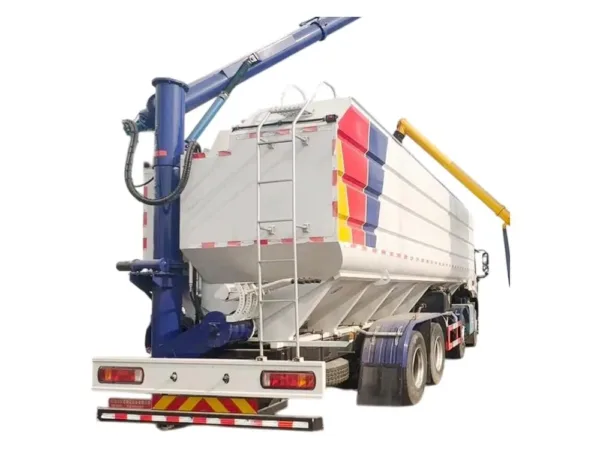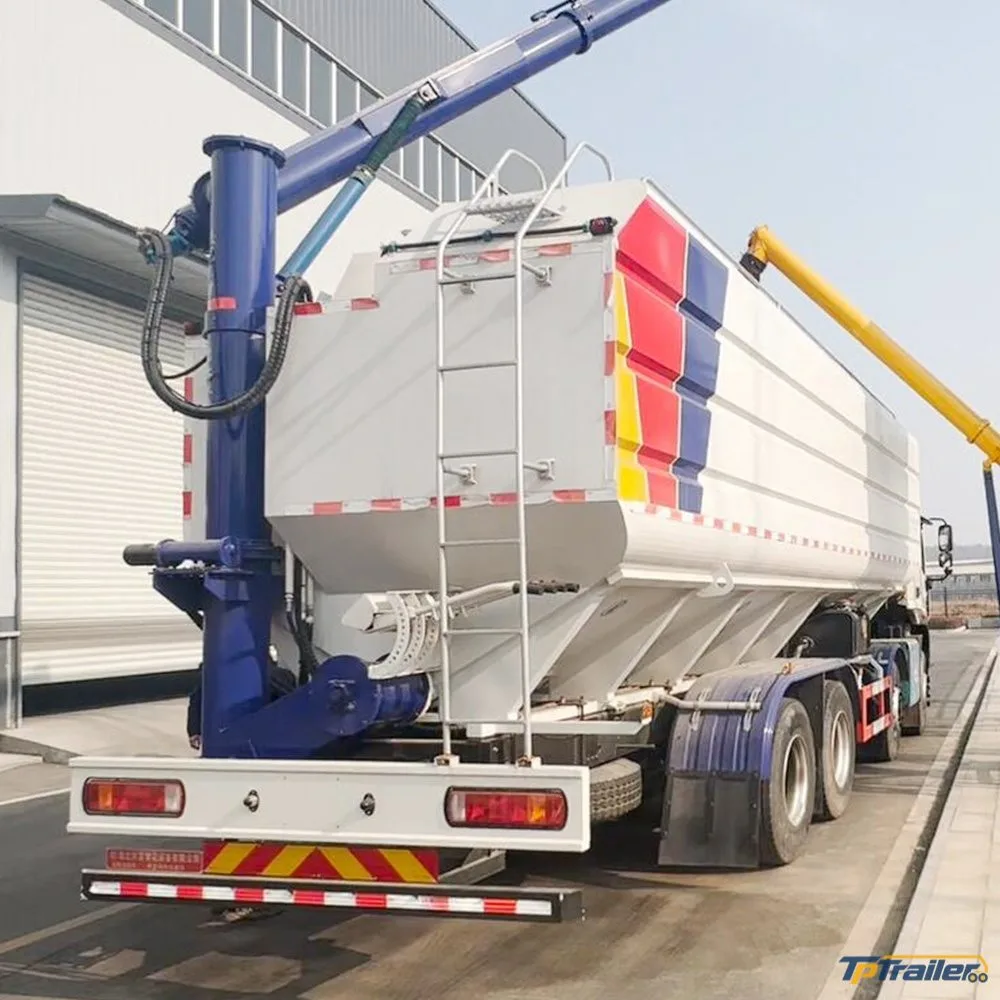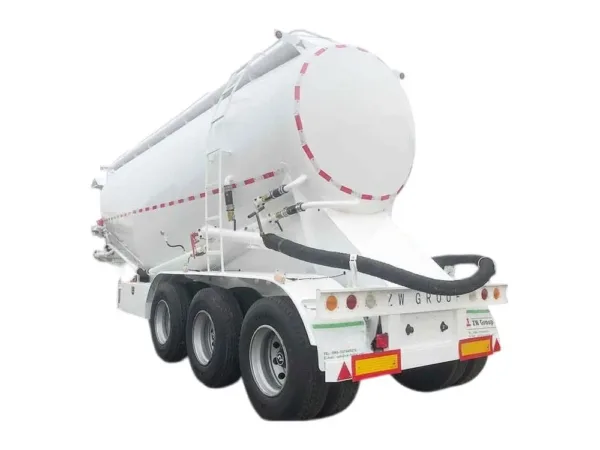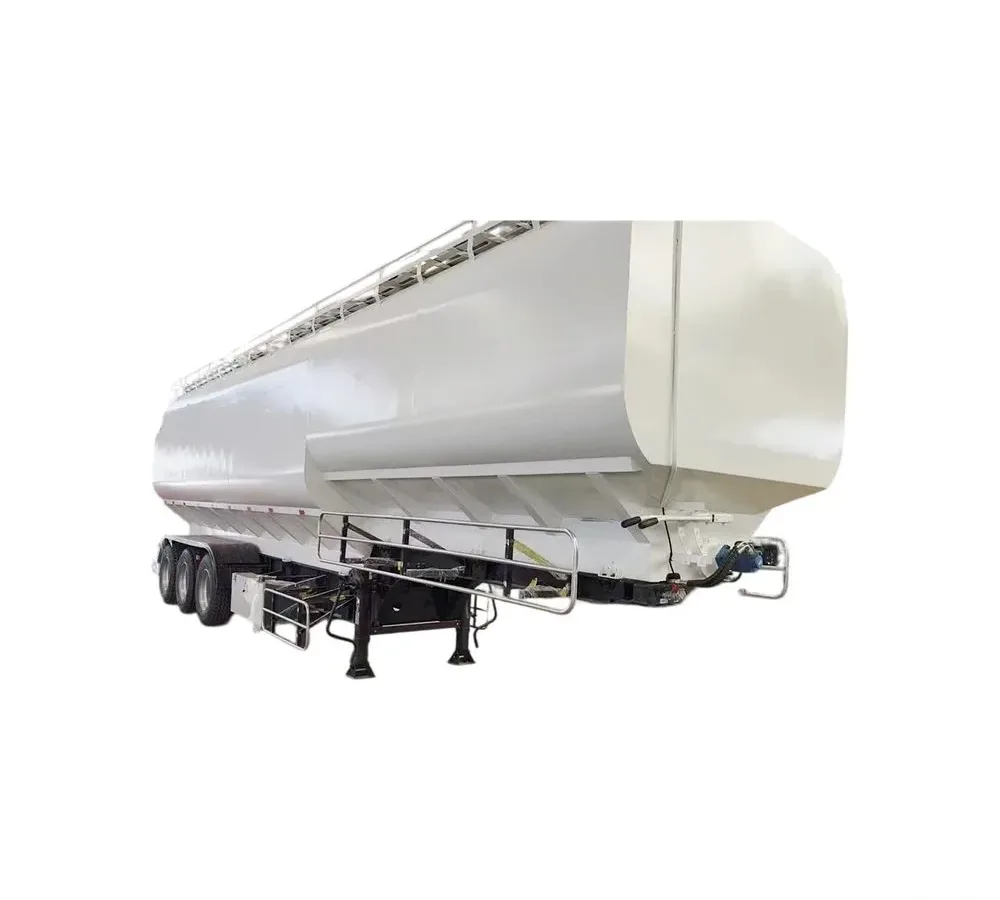
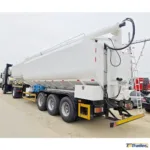
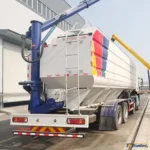
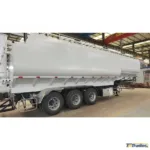
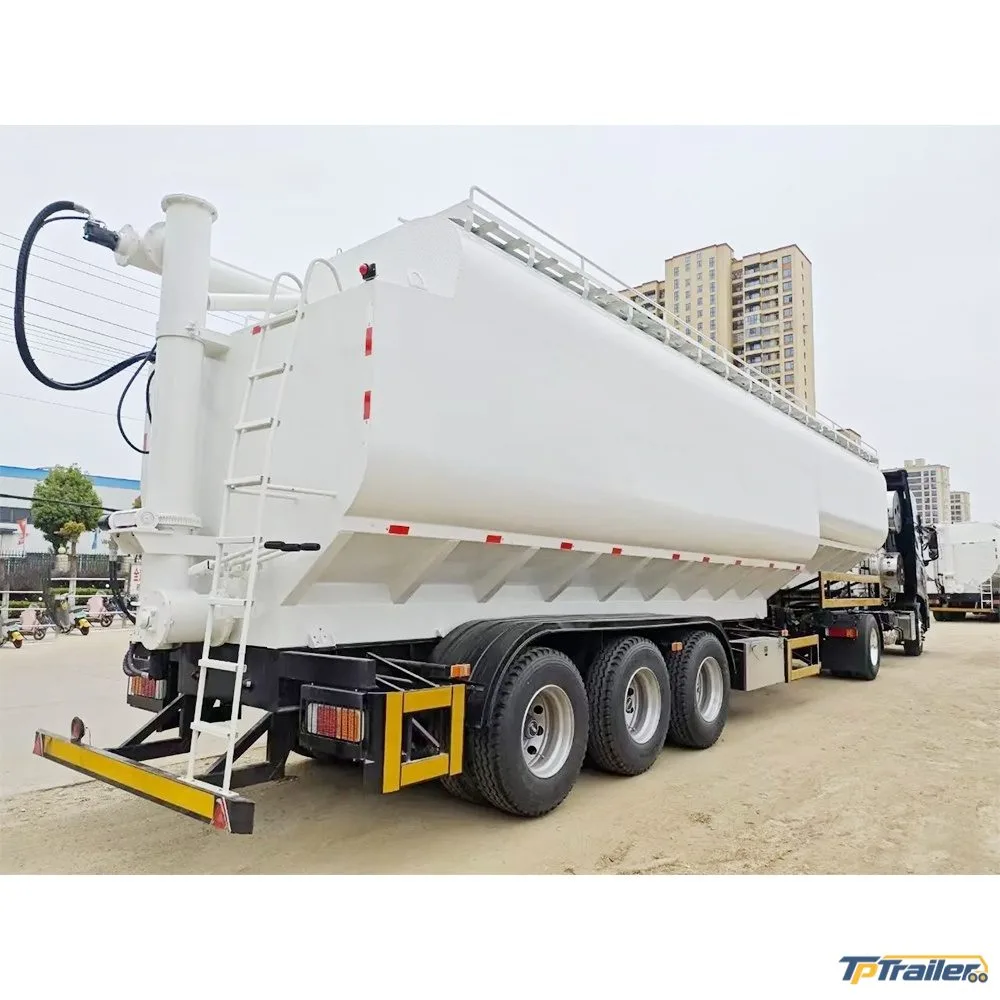
3 Axles 65CBM Bulk Feed Transport Tanker Semi Trailer

3-axle 65 m3 semi-trailer for feed transportation with 3 axles and 65CBM tank capacity for bulk feed haulage. Request a quote for your fleet.

>3001 KG 3
FOB Reference Price US$20,000-30,000 Final price confirmed by inquiry

Certifications

  • ISO 9001

Key Features

  • 3 axles for stable load distribution on bulk feed haulage
  • 65CBM tank capacity for high-volume animal feed transport
  • Built for bulk feed transport duty in fleet operations
  • Suitable for long-distance feed delivery routes
Load Capacity >3001 KG
Max Payload >3001 kg
Size 12600 × 2550 × 4000

The 3-axle 65 m3 semi-trailer for feed transportation is a bulk tanker built to move loose animal feed from mill to farm in a single sealed haul. It suits feed mills, feed distributors and livestock operations that need volume without bagging. The tank body carries the load, the three axles spread the weight, and the discharge system empties the cargo on arrival. The strongest reason to choose it is capacity: one trailer replaces a long run of bagged truckloads, cutting handling, spillage and labour on every delivery. This page covers the build, the on-site work it enables, the fitment and maintenance routine behind it, and how to match the specification to your hauling pattern.

Why The 3-Axle 65 m3 Semi-Trailer For Feed Transportation Works On Site

  • High-volume tank body. The large tank volume lets a single 3-axle 65 m3 semi-trailer for feed transportation clear a full mill allocation in one trip. For the buyer, that means fewer runs per day and fewer loading slots to book, so dispatch planning stays simple and the fleet spends less time queuing at the silo.
  • Three-axle running gear. Three axles share the payload across more contact points than a two-axle build. On farm tracks and yard surfaces the load sits more evenly, and the unit keeps its footing when it leaves sealed road for the last stretch of the delivery.
  • Sealed cargo space. Feed is vulnerable to rain, dust and contamination once a bag is opened. A closed tanker body keeps the load dry and clean from fill point to discharge point, so the trailer delivers product that still meets the mill’s quality standard on arrival.
  • Load capacity rating. The Load Capacity rating of 3001 KG sets the working limit the buyer plans around. Knowing that figure up front lets a fleet operator match each 3-axle 65 m3 semi-trailer for feed transportation to a route and a feed type, rather than discovering the ceiling mid-season.
  • Pneumatic-style discharge layout. Bulk feed tanks are built to empty through a discharge line rather than by tipping. That means the assembly can unload into a farm bin or holding hopper without a tipper bed, which keeps the delivery point flexible on sites with limited space.
  • Single-unit hauling. One tractor unit and one tanker replace a queue of bagged loads. The buyer gains a predictable cycle per trip, and the trailer becomes the standard unit for scheduled mill-to-farm runs instead of a special-order job.

Where It Is Used

The core job for the 3-axle 65 m3 semi-trailer for feed transportation is the mill-to-farm run. A feed mill fills the tank with finished pellets or mash, and the trailer carries that load out to a livestock operation, where it is discharged into on-site storage. Fleet operators recognise this cycle well: a fixed route, a known number of drops, and a return leg that can be planned around the next fill. Because the cargo stays sealed, the same unit can handle different feed formulations across a week without cross-contamination worries between loads, provided the tank is cleaned between product changes. That flexibility is what makes the trailer a working asset rather than a single-product vehicle.
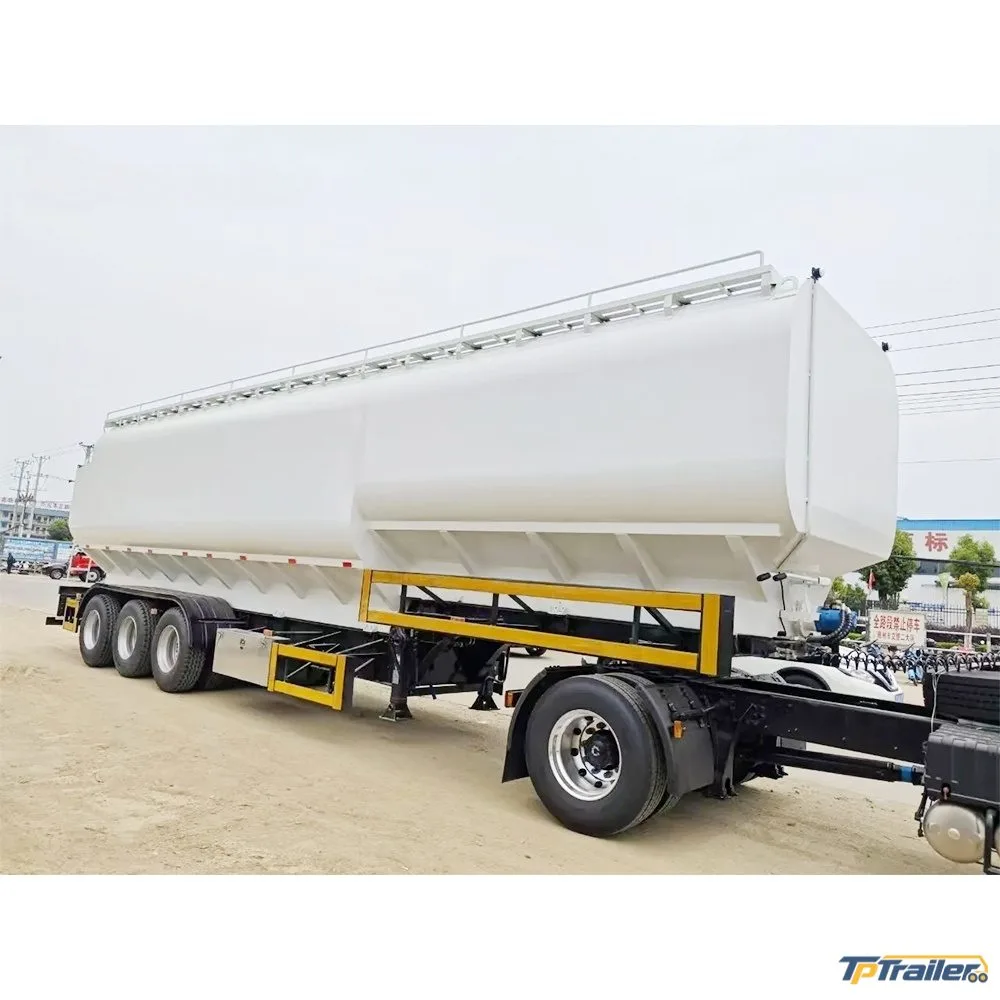
3-axle 65 m3 semi-trailer for feed transportation - detail 1

The second pattern is distribution between storage points. Feed moves from a production site to a regional depot, or from a depot to a cluster of farms, and the 3-axle 65 m3 semi-trailer for feed transportation covers that middle leg without repacking. Cargo types include pelleted feed, meal and mash blends, and other free-flowing feed materials that suit bulk handling. Routes are typically a mix of highway running and short rural access roads, which is where the three-axle layout earns its place. Operators running this pattern value the trailer because one unit covers both the long trunk leg and the final farm delivery, so the fleet does not need to switch trailers mid-cycle.

A third pattern appears where a mill runs its own delivery fleet rather than contracting haulage out. In that setup the trailer is scheduled against production batches, and the discharge window at each farm is agreed in advance so the unit is not left waiting at a full bin. The 3-axle 65 m3 semi-trailer for feed transportation fits this model because the sealed body lets the mill promise a clean, uncontaminated load as part of the sale, which is a harder promise to keep with bagged or open-topped transport.

Choosing The Right Spec

  • Match the volume to your drop pattern. A high-volume tank suits routes with few, large drops. If your schedule is many small farm deliveries, plan the fill level and drop sequence around the tank size so the 3-axle 65 m3 semi-trailer for feed transportation is not carrying part-loads over long distances.
  • Check the load capacity against your feed type. The Load Capacity rating of 3001 KG is the planning figure. Dense pelleted feed and lighter mash blends do not weigh the same per unit of volume, so confirm the trailer is loaded within its rating for the product you actually haul.
  • Confirm the axle setup suits your routes. Three axles distribute load across more wheels, which matters on soft farm yards and uneven access roads. If your delivery points are mostly sealed industrial sites, the same 3-axle 65 m3 semi-trailer for feed transportation still works, but the axle spread is where the farm-route advantage shows.
  • Plan discharge around the receiving point. The tanker discharges through a line into a bin or hopper, so the farm’s storage height and access layout decide how the unit is positioned on arrival. Check that each drop point can receive from the trailer before committing the route.
  • Weigh the trip economics, not just the tank size. A larger body only pays if your routes can fill it. Compare the loaded trip count you expect per week against the fill volume your mill can release in one slot, and let the smaller of the two decide the specification rather than the headline volume alone.

Customisation Before Delivery

  • The axle count is confirmed at order confirmation, so the running gear matches the load you actually carry. A buyer moving dense feed blends may prefer the standard three-axle layout, while lighter bulk loads can be discussed against the trailer’s rated capacity. Because the configuration is fixed before build, the choice is settled at order confirmation rather than changed afterwards.
  • Deck length and tank volume are agreed at order confirmation, so the body suits your silo heights and yard turning space. For a 3-axle 65 m3 semi-trailer for feed transportation, the volume is the starting point, and the buyer states the discharge reach needed. Discuss the body dimensions with the sales team when the order is placed.
  • Suspension type is selected at order confirmation, and the choice should reflect road surface and typical payload rather than habit. A unit running on mixed rural roads may suit a different spring setup from one working paved highways. State your operating route so the selection is made once, correctly.
  • Tyre specification and colour are chosen at order confirmation. Tyre size and tread pattern follow the axle and load rating agreed for the build, and the finish is matched to your fleet livery or a plain industrial colour. Both are settled before production, so confirm them alongside the 3-axle 65 m3 semi-trailer for feed transportation order itself.
  • Auxiliary items such as discharge pipework routing and access points are discussed at order confirmation. Buyers using the trailer across several farms often want the outlet arrangement matched to their blower equipment. Raise these points early so the unit leaves the works set up for your operation.
  • Hatch and access-cover layout is agreed at order confirmation as well. Where the mill fills from an overhead silo, the fill point position decides how the trailer sits under the spout; where filling is done by auger, the opening height and reach matter more. Give the supplier the fill method you use, and the cover arrangement is set to match before the 3-axle 65 m3 semi-trailer for feed transportation is built.

Fitting And Installation

On arrival, the buyer’s workshop has to match the 3-axle 65 m3 semi-trailer for feed transportation to the tractor unit and to the feed handling equipment on site. The critical checks are the fifth-wheel coupling height, the kingpin engagement, the landing gear position and the clearance around the tank body when the unit is coupled. Air and electrical connections follow the standard tractor coupling points, and the brake system is checked against the towing vehicle before the trailer carries any load.

3-axle 65 m3 semi-trailer for feed transportation - detail 3
3-axle 65 m3 semi-trailer for feed transportation - detail 2

Because this page does not publish fitment data, a fitment drawing is confirmed at quotation instead. That drawing lets your workshop prepare the coupling area, confirm the hose and pipework route, and check that the discharge outlet lines up with your blower or auger before the trailer is scheduled into service.

A wrong size or a mismatched coupling point costs downtime at the worst moment, usually during a harvest or delivery window when feed must move. If the discharge pipework does not meet the blower intake, the trailer sits idle while adapters are fabricated. If the outlet height is wrong for the receiving silo, every load needs manual handling. Torque values for structural fasteners are not stated here, so they are taken from the fitment drawing and the workshop manual supplied with the unit. Confirm the 3-axle 65 m3 semi-trailer for feed transportation fitment details at quotation, and book the coupling inspection before the first loaded run rather than after it.

Plan the first hitch as a dry run. Couple the tractor to the empty unit, raise and lower the landing gear through its full travel, and turn the combination at low speed in the yard to check that the tank body and pipework clear the tractor’s rear structure. Connect the air lines and confirm the brakes release and apply cleanly on all three axles before any feed is loaded. A dry run on the 3-axle 65 m3 semi-trailer for feed transportation takes an hour and exposes most fitment problems while the yard is still empty and the workshop has time to react.

Service Life And Maintenance

  • The running gear wears first on any bulk feed trailer. Inspect wheel bearings, brake linings and suspension bushes at each scheduled service, and check tyre pressures before long runs. A 3-axle 65 m3 semi-trailer for feed transportation covers many loaded kilometres, so bearing play and lining thickness should be measured rather than judged by eye. Replacing worn parts early protects the axle beams and keeps the braking balance even across all wheels.
  • The tank body and its seams are the next inspection point. Look for cracks, loose welds and seal wear around hatches and outlets, since feed dust works into small gaps. Washing down after each discharge keeps residue from hardening. On the trailer, a coated or painted exterior finish chosen at order confirmation slows surface corrosion and extends the interval between touch-ups.
  • Discharge pipework, valves and couplings carry abrasive feed and wear at bends and joints. Inspect gaskets, clamps and hose ends for thinning or leaks, and confirm that valves close fully. Operators should check the outlet assembly after every few loads. Specifying a durable pipe material and a protective finish at order confirmation reduces wear and keeps the unit discharging cleanly.
  • Hatches, lids and access covers take daily handling. Check hinges, latches and sealing strips for slack or perishing, and confirm lids seal against rain and dust. A sealing strip that hardens lets moisture in and spoils feed. On the 3-axle 65 m3 semi-trailer for feed transportation, replacing seals at the first sign of cracking is cheaper than a rejected load.
  • Structural fasteners, the kingpin area and the landing gear should be inspected for looseness and corrosion. Clean and re-grease the fifth-wheel contact area, and check the chassis for paint damage after rough road use. A protective coating chosen at order confirmation helps here. Keeping the trailer chassis dry and coated extends its working life.
  • Keep a simple service log per unit. Record the date, the odometer reading and what was inspected or replaced, and compare the interval against the route the trailer actually runs. A leg that has moved from highway work to rough farm access will show faster wear on bushes and seals, and the log is what tells you to shorten the inspection interval before a failure forces the issue.

Packing And Container Loading

The 3-axle 65 m3 semi-trailer for feed transportation ships as a complete unit or in knocked-down sections, depending on the configuration agreed at order. Tank shells, hoppers and discharge augers are braced against movement inside the frame, and exposed pipe ends are capped before dispatch. Steel contact points receive protection to limit rubbing during the voyage. The buyer should confirm with the supplier which packing method applies, because a complete unit and a sectioned unit load and unload differently at the destination port.

Loading follows the transport method agreed at quotation. A complete trailer is normally driven or winched onto a flat rack or roll-on vessel, while sectioned bodies may travel in standard containers. Nested stacking is limited because the tank body is a fixed welded shell, so space savings come from removing running gear and accessories rather than from stacking shells. Ask the supplier for the loading plan and the lifting points before booking freight. On arrival, check the frame for bending, the tank shell for dents, and the seals on valves and hatches.

If the unit travels in sections, agree the assembly sequence before the ship sails. The order in which the running gear, tank shell and discharge pipework are rejoined decides what lifting equipment the destination workshop needs and how long the trailer stays off the road. Ask for the section weights so you can book a crane or forklift of the right capacity, and confirm that the fasteners and seals for reassembly travel with the 3-axle 65 m3 semi-trailer for feed transportation rather than being sourced locally.

Common Mistakes Buyers Make

  • Ordering the wrong axle count. A buyer specifies a two-axle chassis while the route needs three axles, then finds the trailer cannot be registered as planned. The check: confirm the axle count in writing against local road rules before the deposit.
  • Ignoring the load capacity figure. Some buyers compare tank volume only and overlook the declared load capacity, then discover the trailer cannot carry the intended tonnage legally. The check: match the load capacity to the densest feed product you will haul.
  • Mismatching the kingpin and coupling height. A trailer arriving with a coupling height that does not suit the tractor cannot be hitched safely. The check: measure your tractor’s fifth wheel height and send it with the order for the 3-axle 65 m3 semi-trailer for feed transportation.
  • Skipping the discharge configuration review. Auger length, outlet position and drive type are often assumed rather than specified, and the delivered unit cannot reach the target silo. The check: confirm discharge reach and outlet layout in the quotation drawing.
  • Overlooking brake and lighting standards. A trailer built to the supplier’s home market may not pass local inspection. The check: state the required brake system and lighting voltage when requesting the trailer quote.
  • Buying on price per unit alone. Two quotations for the same nominal volume can differ in running gear, suspension and pipework, and the cheaper build may cost more over a service life of hard farm mileage. The check: compare the specification line by line, and price the wear parts you expect to replace first.

Buyer Questions

What should I send with my inquiry to get an accurate quotation?

Send the required overall length, the axle count, and the quantity you intend to order. Add the feed product you haul and its bulk density, because that decides whether the load capacity suits your operation. State the tractor’s coupling height and the brake and lighting standards your market requires. With those details the supplier can quote the 3-axle 65 m3 semi-trailer for feed transportation against your actual route rather than a generic build. Anything not covered in the reply should be confirmed at quotation.

Can the tanker be shipped in a standard container, and what does that change?

Container shipment depends on whether the body is supplied complete or in sections. A complete trailer is usually carried on a flat rack or a roll-on vessel, while a sectioned body may fit standard containers. Ask the supplier to confirm the loading method at quotation and to provide the loading plan. Container shipment can reduce freight cost but adds assembly work at destination, so confirm who reassembles the unit and what tools are needed before you book.

How do I confirm the trailer matches my tractor before it ships?

Measure your tractor’s fifth wheel height and send the figure with the order. Confirm the kingpin size and the electrical connection type, and ask for the quotation drawing showing the 3-axle 65 m3 semi-trailer for feed transportation with its coupling position. Review the drawing before production starts. On arrival, check the frame, the tank shell and the valve seals, then hitch the unit to the tractor at low speed before loading feed. Any mismatch should be raised with the supplier before the trailer enters service.

To receive a quote, send the overall length you need, the axle count, and the order quantity. Add your target market and the feed product you haul so the build matches your route. The supplier will confirm the remaining configuration details at quotation, and the 3-axle 65 m3 semi-trailer for feed transportation can then be specified against your real delivery cycle rather than a catalogue default.

Explore more 3-axle 65 m3 semi-trailer for feed transportation in this range.

Load Capacity >3001 KG Max Payload >3001 kg
Place of Origin China (Mainland) Size 12600 × 2550 × 4000
Dimensions * *

Reviews (0)

No reviews yet — click the Review button on the right to share your experience with this product.


Frequently Bought Together

Inquiry about: 3 Axles 65CBM Bulk Feed Transport Tanker Semi Trailer

Fill in the form below and our team will respond within 24 hours.