
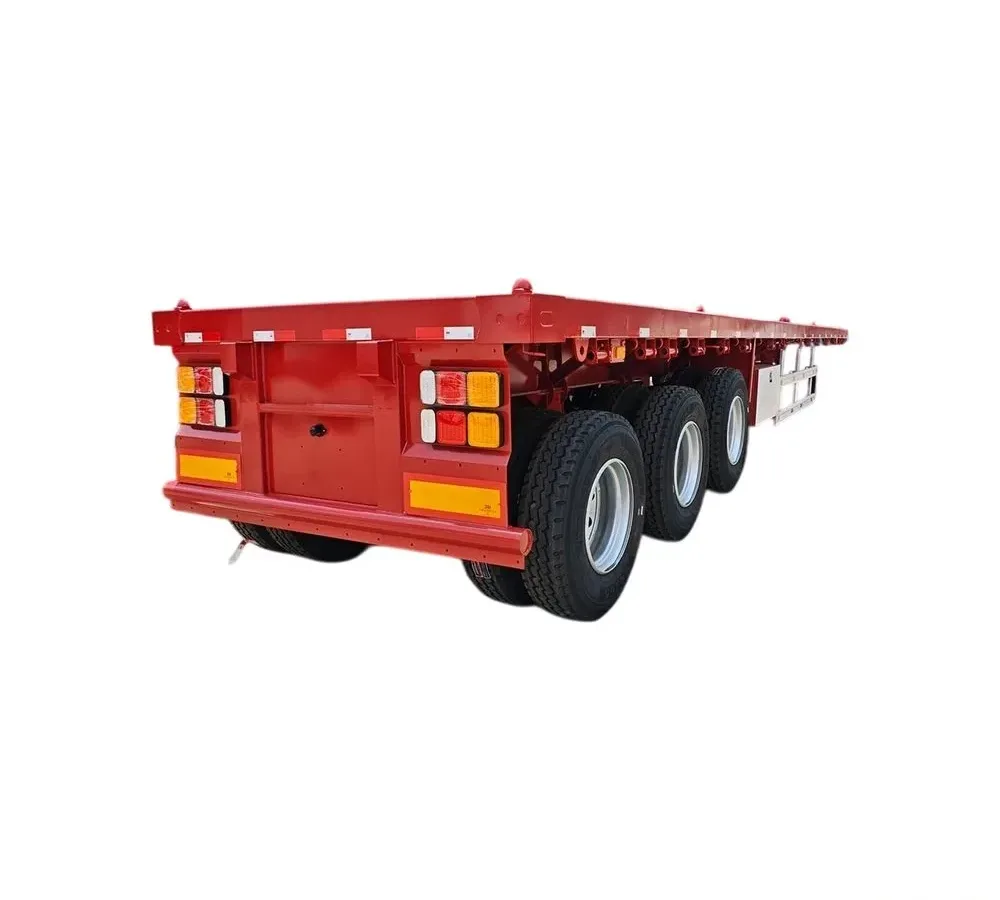

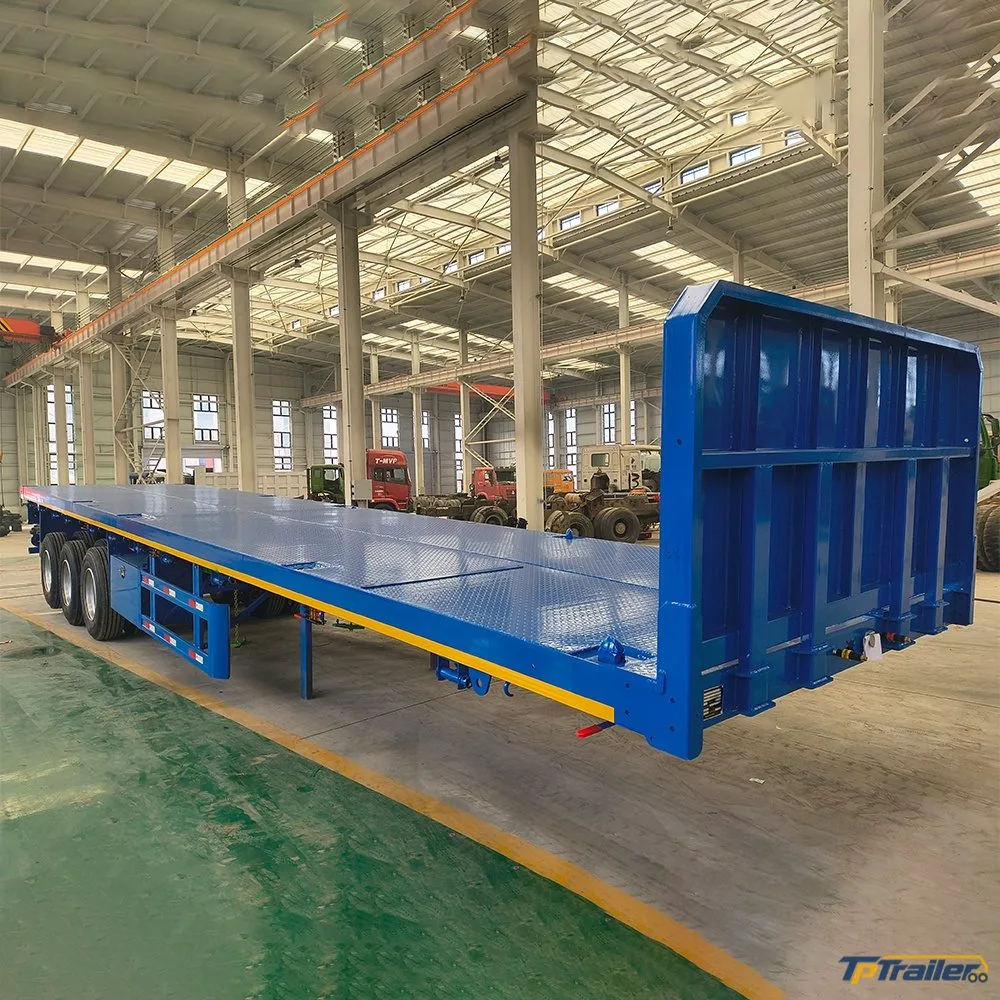
3 axle flatbed semi trailer 40ft with 30000 KG load capacity for container and cargo logistics. Request a quote for international shipping today.
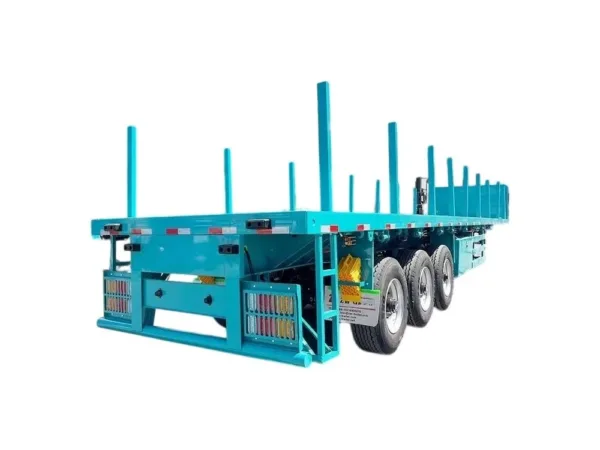


The 3 axle flatbed semi trailer is a container and general-cargo platform built for fleet operators who move standard freight over mixed routes. It carries up to 30000 KG across a long, open deck, so containers, steel, timber and machinery can be loaded from any side. It suits hauliers, logistics firms and traders who need a dependable workhorse rather than a specialised unit. The strongest reason to choose it is simplicity: one platform handles container work and loose cargo, which keeps a mixed fleet flexible. A 3 axle flatbed semi trailer is designed for buyers who want predictable loading, straightforward maintenance and a deck that earns on almost any backhaul.
A 3 axle flatbed semi trailer earns its place on the routes fleet operators already run. Container shuttles between ports, depots and inland yards are the clearest case: the deck takes a standard container, locks it down and delivers it without a second vehicle. Building-material runs are another regular job, with steel beams, rebar bundles, cement products and roofing sheets loaded by crane or forklift.
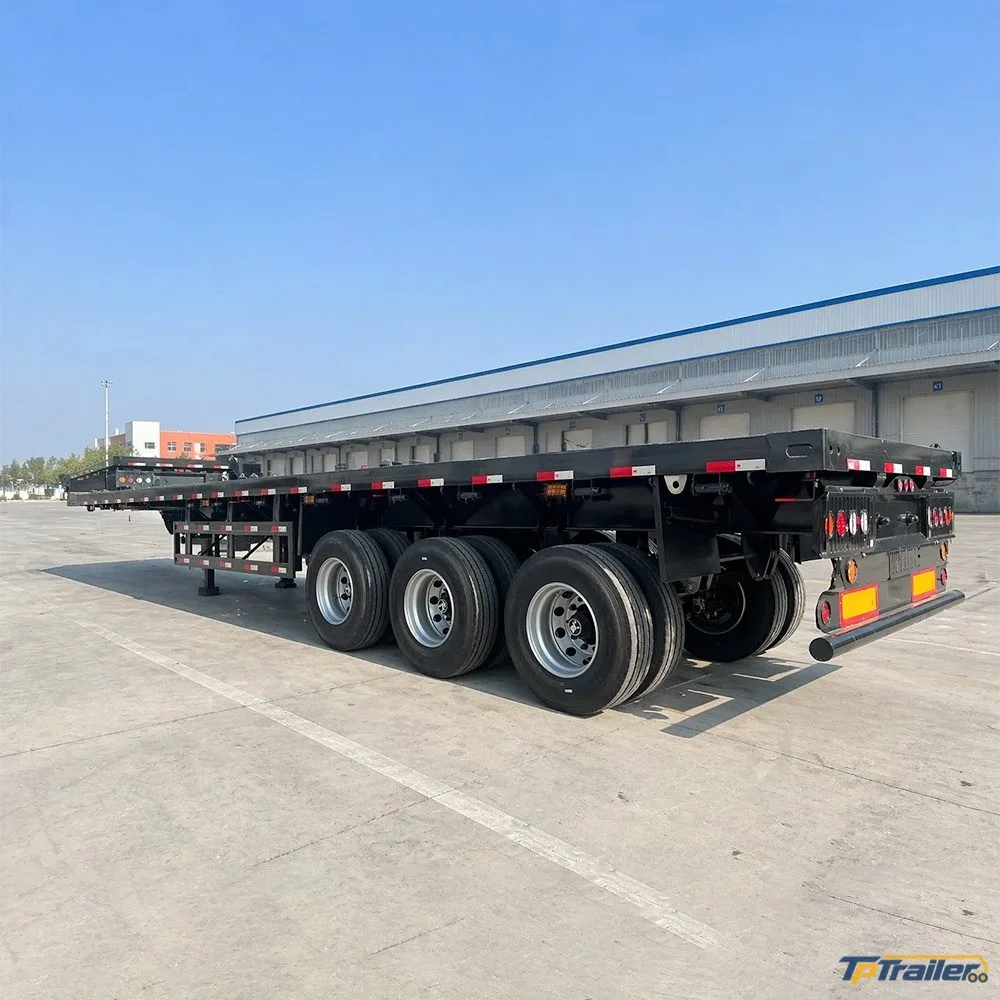
Timber and panel haulage suits the open platform because long packs overhang the deck edges and are strapped directly to the frame. Machinery movement is a further use, where tracked or wheeled equipment is driven or lifted on and secured with chains. On each of these jobs the 3 axle flatbed semi trailer does the same thing: it presents a flat, accessible surface and holds the load securely for the road leg.
Beyond single loads, the trailer works well in mixed-cargo operations where the backhaul is never certain. A driver may leave with a container and return with steel plate, pallets or a crated machine, which is why general hauliers keep a 3 axle flatbed semi trailer in the fleet rather than a single-purpose body. Regional distribution centres use it for oversize or awkward items that will not fit a van or box trailer. Construction supply yards rely on it for deliveries where the receiver has a crane but no loading dock.
Agricultural and rural routes use it for feed, fencing and equipment moves. In each case the operator values the same traits: open access from all sides, a deck that accepts many cargo types, and a platform that is easy to load, strap and inspect between jobs. A 3 axle flatbed semi trailer fits routes where the cargo changes more often than the road does.
Customisation on a 3 axle flatbed semi trailer is a short list of decisions, and every one of them is locked at order confirmation because the frame is cut, welded and painted to a single specification. Buyers who arrive with their deck length, axle count, suspension type, tyre plan and finish already settled get a unit built to the job; buyers who leave options open discover that a frame cannot be re-cut after welding. The points below are the ones that change the structure or the running gear, so they are the ones worth deciding early.
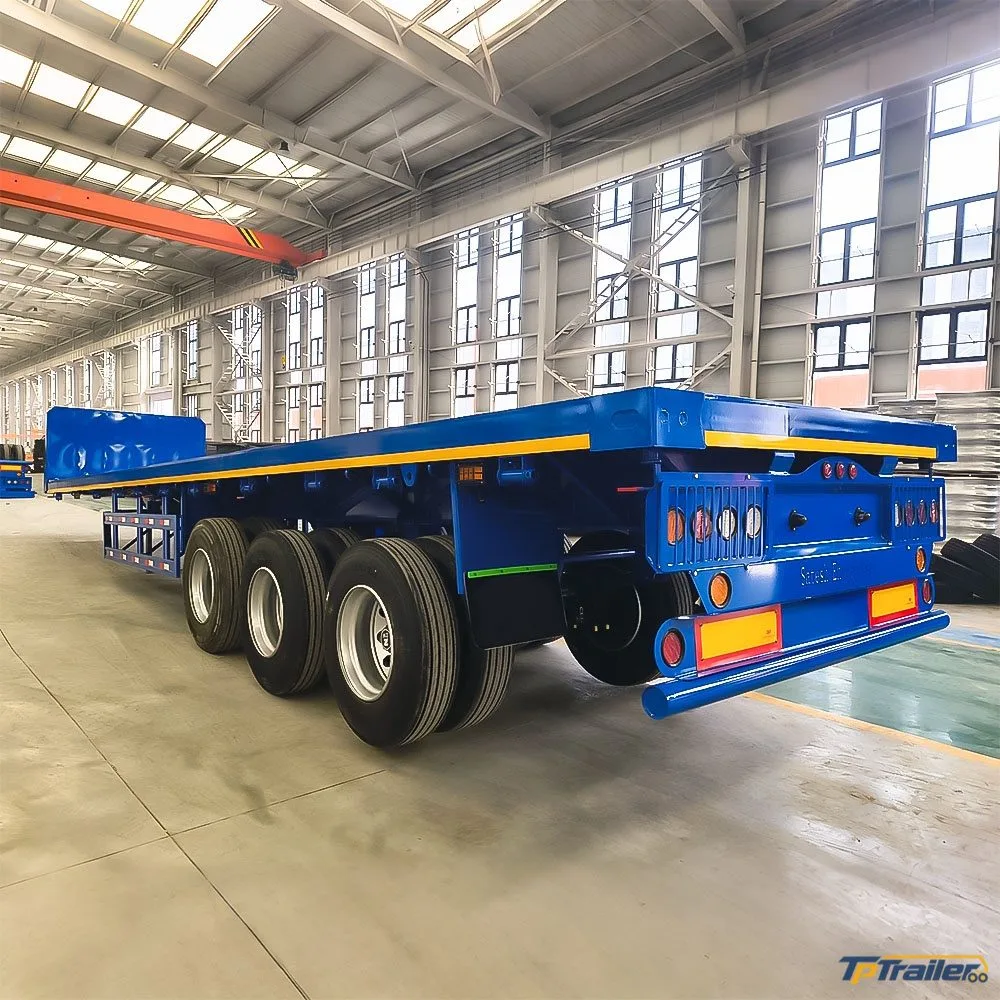
Fitting starts with the tractor unit, not the trailer. The fifth wheel height, the kingpin position and the deck height must line up so the 3 axle flatbed semi trailer sits level when coupled. Check the mounting points on the tractor against the trailer coupling before the first hook-up. Air and electrical connections need matching tube and hose sizes, and the routing should follow the frame without sharp bends. If the input gives no fitment data for your tractor, a fitment drawing is confirmed at quotation rather than assumed. Measure the coupling gap and the clearance to the cab before you load.
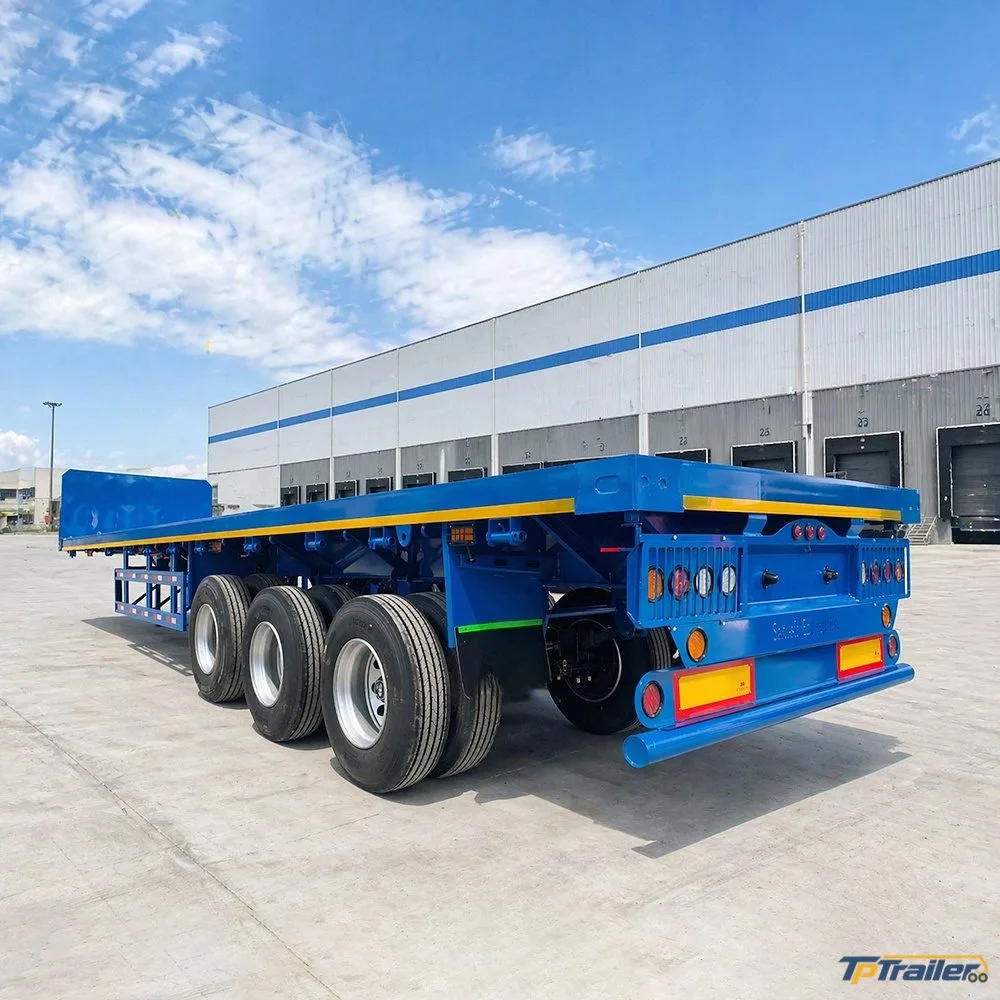
A wrong size costs downtime that no schedule absorbs. A kingpin that does not seat, a hose that chafes or a deck that sits high all stop the unit from working on day one. The 3 axle flatbed semi trailer is built to a confirmed configuration, so the buyer’s job is to match the tractor and the connection hardware to that configuration. Have the coupling height and hose lengths checked by the workshop before collection. Any mismatch found early is corrected at the fitting stage, not on a loaded run. Keep the fitment drawing with the trailer documents.
Service life on a 3 axle flatbed semi trailer is decided by how consistently the wear items are checked, not by how hard the unit works. The assembly has no body panels to hide the frame, so a short walk-round at each service interval catches most problems while they are still cheap. The points below are the checks that repay the time, in the order they usually show up on a working trailer.
The 3 axle flatbed semi trailer ships as a complete unit or in knocked-down form, depending on what the buyer agrees at quotation. For sea freight the chassis is cleaned, bare steel surfaces are coated with a protective film, and the deck is covered to limit salt spray and road grime during transit. Axles and suspension are braced so the running gear does not shift with the vessel’s motion. Small fittings, lamps and loose hardware are boxed and strapped to the frame, not left loose on the deck. Ask the supplier to confirm the exact packing method in writing before the unit leaves the yard.
Stacking is the first question for any 3 axle flatbed semi trailer order. A complete trailer cannot be nested the way a container is, so most units ship on a flat rack or roll-on/roll-off vessel. Knocked-down frames can be bundled to reduce wasted volume, but that depends on the supplier’s packing plan and the shipping line’s rules. On arrival, inspect the coating, check the deck for distortion, count the boxed hardware against the packing list, and photograph any damage before signing the delivery receipt. The 3 axle flatbed semi trailer should match the agreed configuration exactly.
That depends on the shipping form you order. A complete trailer is normally too large for a standard container and ships on a flat rack or by roll-on/roll-off vessel. A knocked-down frame may be bundled for container loading, but the loading plan must be agreed at quotation. Before ordering, confirm the shipping form, the loading method and the port of discharge with the supplier, and check that your freight forwarder can handle that method. Do not assume container loading without written confirmation.
Inspect the protective coating on bare steel and the deck surface for transit damage. Count the boxed hardware, lamps and fittings against the packing list, and check the axles and suspension for movement during shipping. Photograph anything that looks wrong before you sign the delivery receipt. Then confirm the trailer matches the agreed configuration for axle count, deck length and load capacity. Report discrepancies to the supplier in writing with photos, and keep the shipping documents until the unit is accepted.
Add up the heaviest container plus its cargo, then compare that total with the load capacity stated for the 3 axle flatbed semi trailer. Remember that the load capacity is a maximum, not a working target, and that axle limits on your routes may be lower. Confirm the figure in the quotation and in the specification sheet, and ask the supplier to state it in writing. If your cargo is close to the limit, discuss it before ordering.
To receive a quote, send the required deck length, the axle count you need, and the quantity you plan to order. Add your destination port and preferred shipping form. With those details, the supplier can confirm the configuration, packing method and price tier for your 3 axle flatbed semi trailer order, and you can compare the delivered cost against the work the unit will actually do.
Explore more 3 axle flatbed semi trailer in this range.
| Load Capacity | >30000 KG | Type | Semi-Trailer |
|---|---|---|---|
| Max Payload | >30000 kg | Place of Origin | China |
| Use | Truck Trailer | Material | Steel |
| Size | Customer | ||

No reviews yet — click the Review button on the right to share your experience with this product.











Fill in the form below and our team will respond within 24 hours.
Write a Review