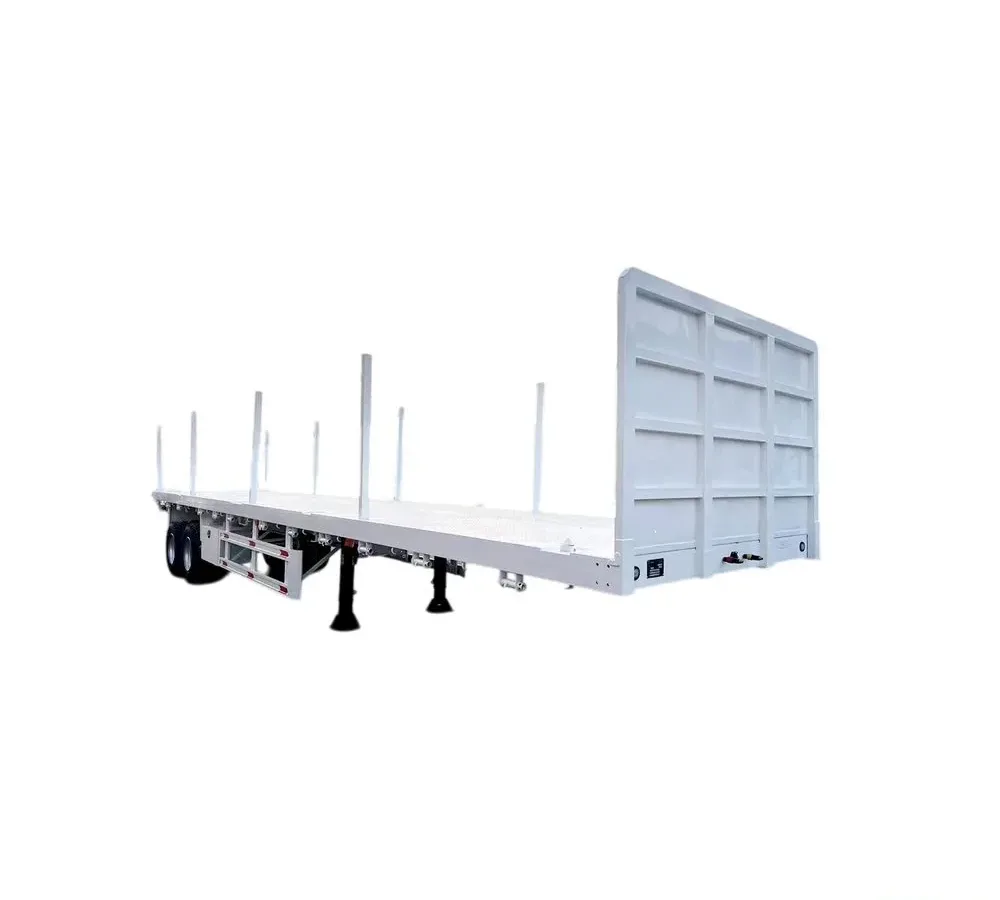
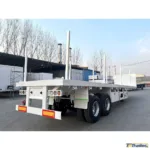
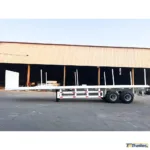
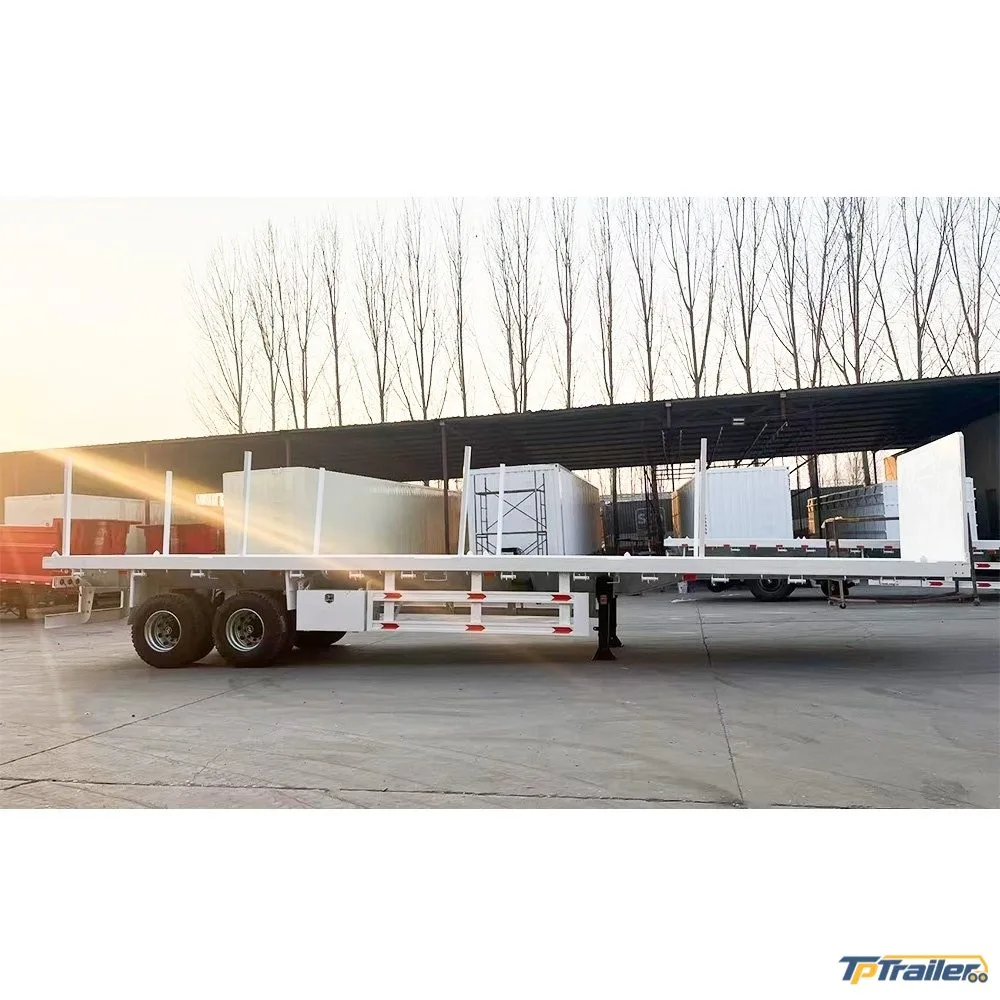
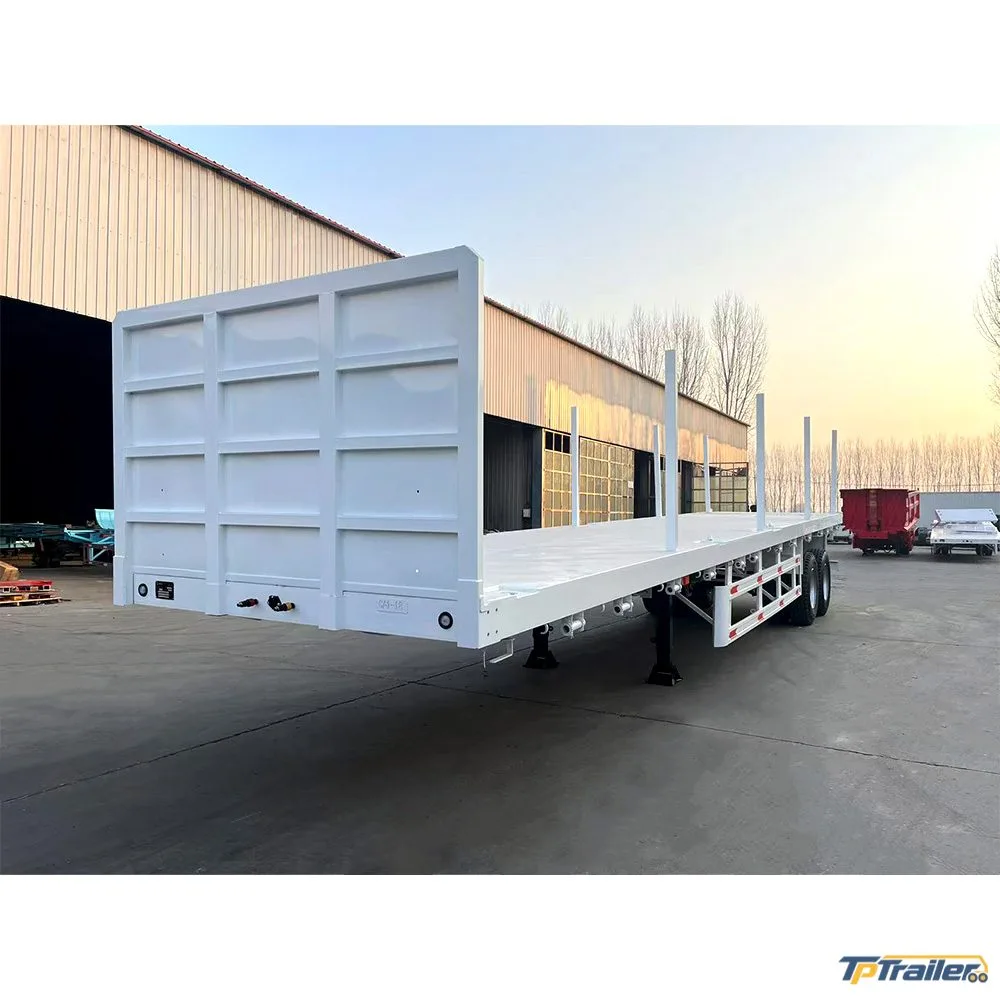
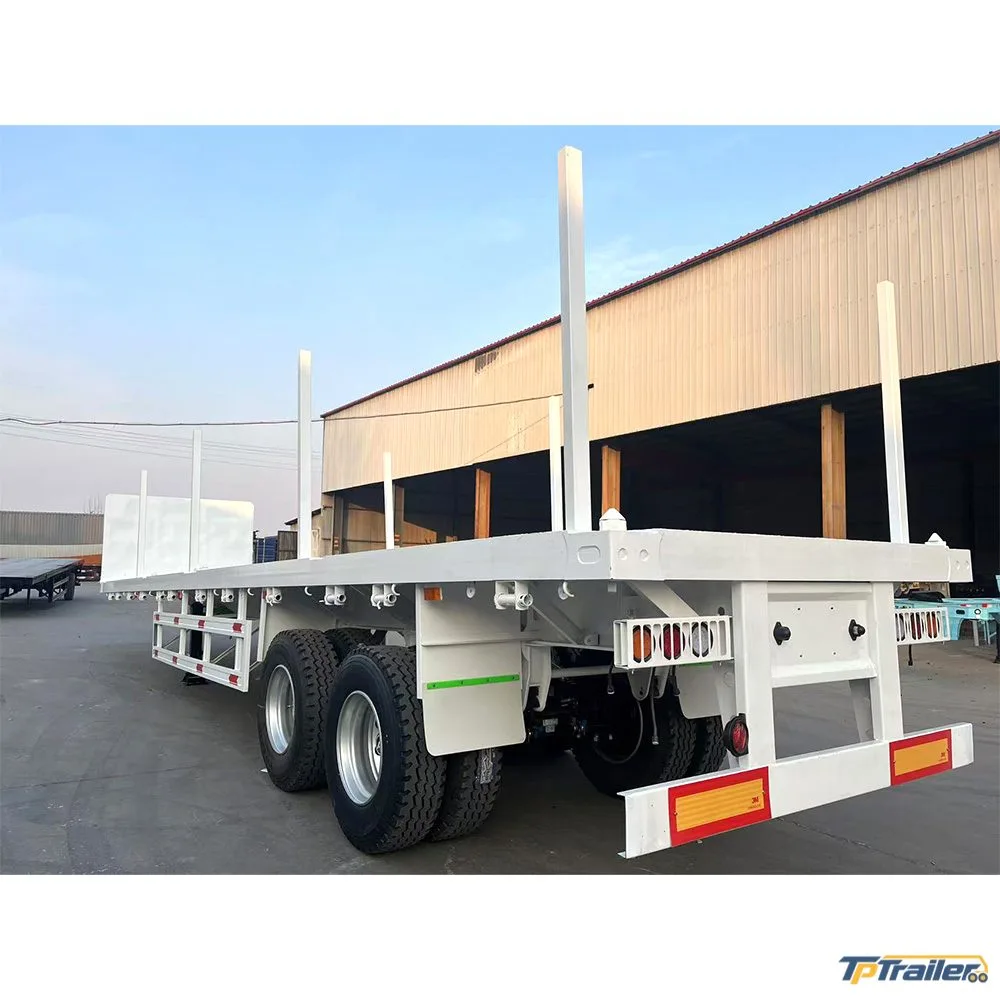
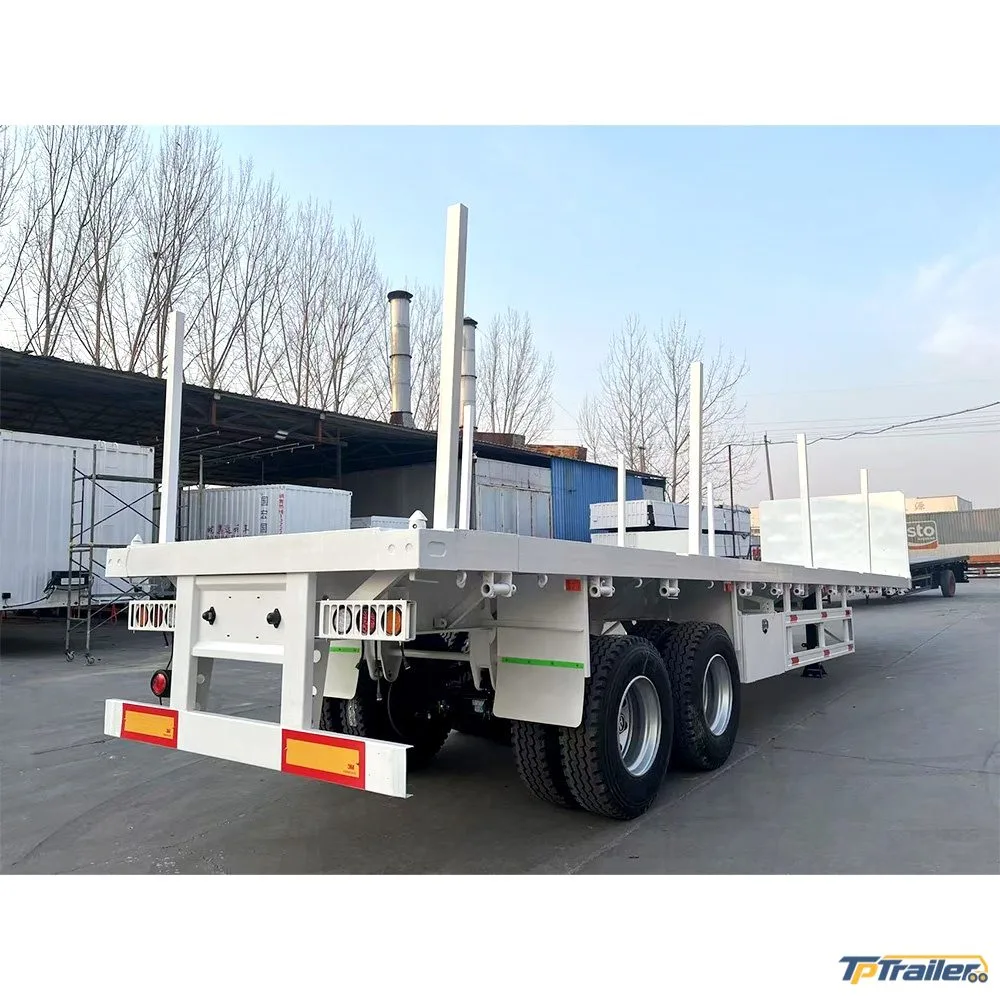
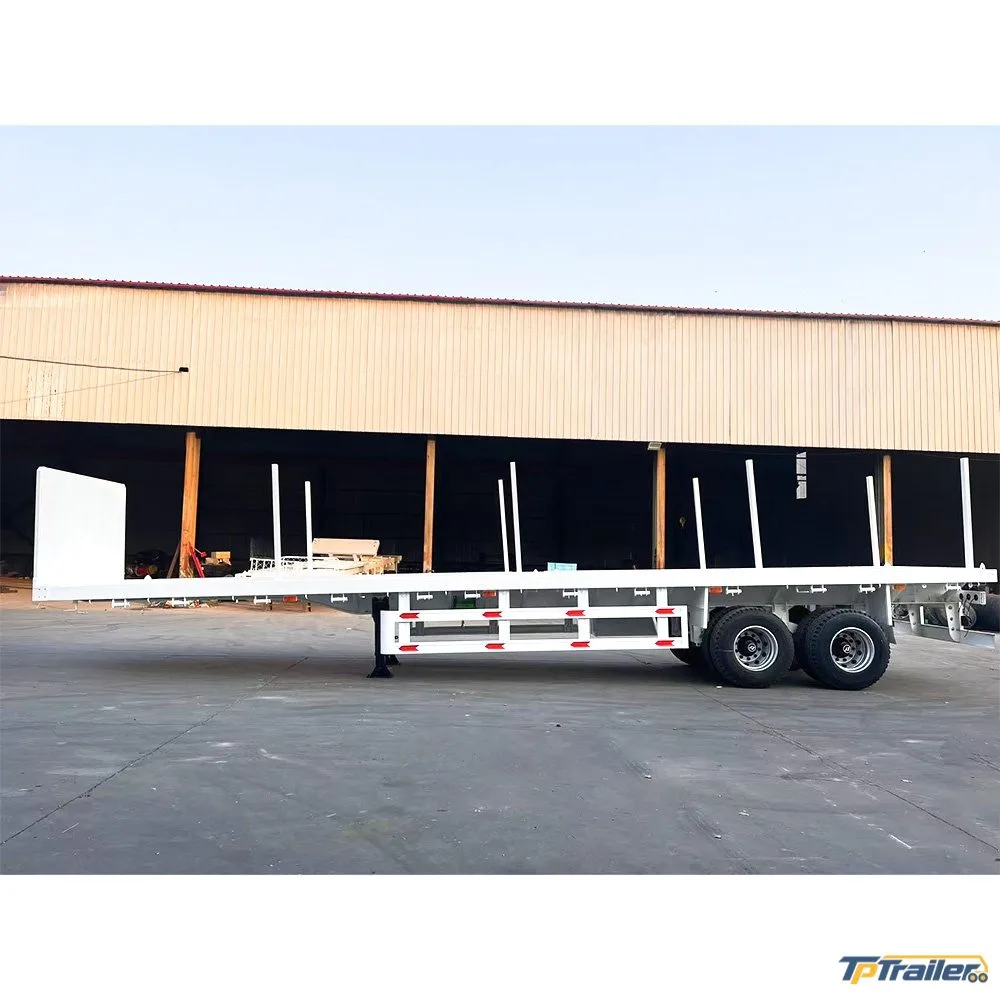
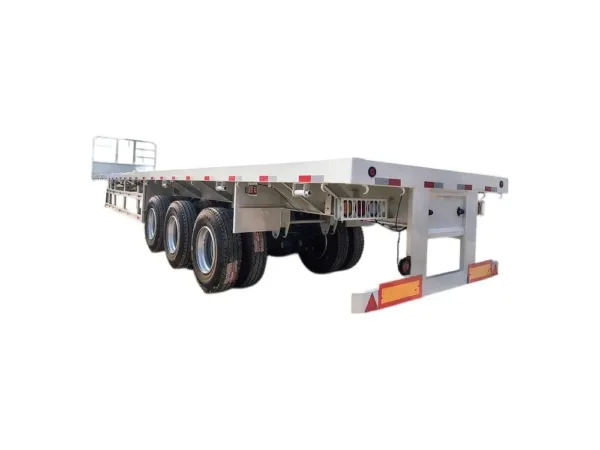
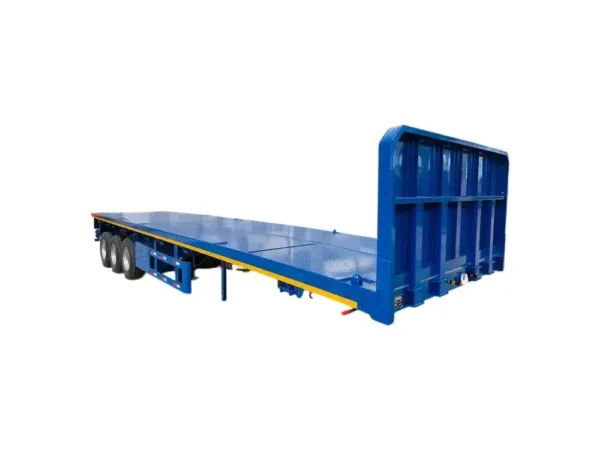
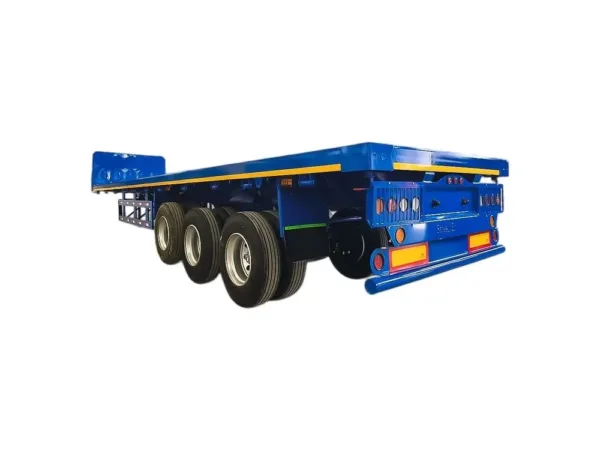
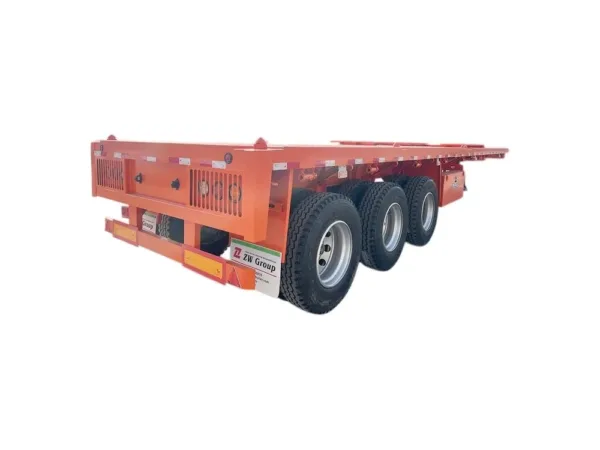
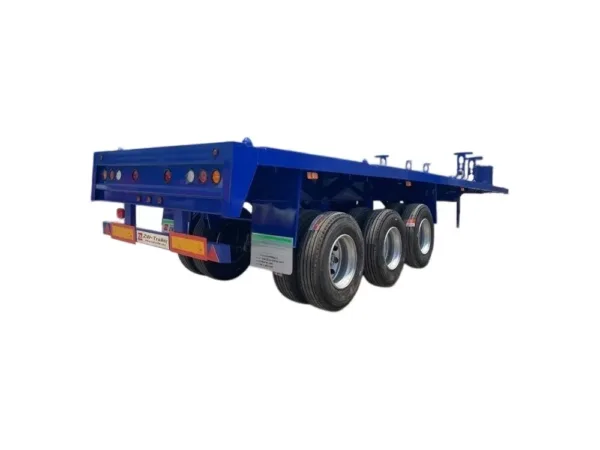
2 Axle Flatbed Semi Trailers are the workhorse format for fleets that move steel, timber, containers and oversized machinery on regular trunk routes. This ZW Group unit pairs a 40ft flat deck with side bar stick pipes, brand landing gear and a mechanical suspension, so it covers both loose cargo and container work without a second trailer type. It suits hauliers, rental fleets and transport contractors who want a predictable, repairable platform rather than a specialised body. The strongest reason to choose it is the combination of a 3mm-thick checkered plate deck and multi-position twist locks on one chassis — one trailer that loads pallets, pipes and boxes without a changeover.
Table of Contents
Why It Works On Site
3mm-thick checkered plate platform. The raised pattern gives grip underfoot and under cargo, so drivers can walk the deck safely during strapping and inspection in wet or dusty yards. It also resists sliding of steel plates and palletised goods during braking, which cuts reliance on extra dunnage and speeds up every load and unload cycle on busy 2 Axle Flatbed Semi Trailers.
Twist locks in 4, 8 or 12 sets. Container work stops being a separate booking. The lock positions let the same 2 Axle Flatbed Semi Trailers carry a single box, a pair of shorter units or a mixed arrangement, so dispatch can accept container jobs and flat cargo on the same day without swapping trailers or turning work away.
2 Axle running gear. Two axles keep the tare weight and tyre count down compared with tri-axle builds, which matters on routes with axle-load limits and tight urban delivery points. For operators running 2 Axle Flatbed Semi Trailers on mixed regional work, the simpler axle set also means fewer tyres to stock and a shorter, more manoeuvrable combination.
12.00R22.5 tyres on 9.00-22.5 rims. This is a common heavy-duty size, so replacements are easy to source on the road and tyre stock is shared with other fleet equipment. On 2 Axle Flatbed Semi Trailers that run long distances, that availability keeps downtime short when a tyre is damaged away from base.
Mechanical suspension. Steel spring suspension is simple, visible and repairable in most workshops without specialist diagnostics. For fleets operating 2 Axle Flatbed Semi Trailers in mixed road conditions, it gives predictable behaviour when loaded and keeps maintenance within the reach of a standard service bay.
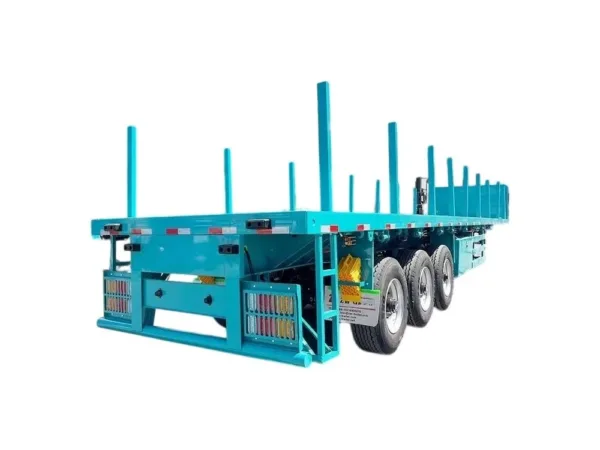
Side bar stick pipes and brand landing gear. The side bars contain and locate timber, pipes and irregular loads, while branded landing gear supports stable coupling and uncoupling on uneven ground. Together they let a driver secure and park 2 Axle Flatbed Semi Trailers safely at customer premises without extra handling equipment.
Where It Is Used
These 2 Axle Flatbed Semi Trailers fit the daily pattern of construction supply and steel distribution. A typical run is a loaded outbound leg with rebar bundles, structural sections, plate or coil on skids, followed by a return load of palletised building materials. The checkered deck and side bars hold long stock in place, and the open top lets a yard crane or forklift load from either side or from above.
Fleets use 2 Axle Flatbed Semi Trailers for roof trusses, precast panels, scaffolding and formwork, where the load is long, flat and awkward to side-load into a curtain or box body. The flat platform also accepts over-width items within legal limits, which is why plant hire and civil contractors keep this format for excavator buckets, attachments and site cabins.
Container and intermodal work is the second routine use. With twist locks fitted, the same 2 Axle Flatbed Semi Trailers handle 20ft and 40ft boxes between depots, railheads and customer yards, so a fleet can take box work without buying a dedicated skeletal trailer. Operators running 2 Axle Flatbed Semi Trailers on this duty value the ability to switch back to flat cargo the next day.
Typical routes are regional trunk runs, port-to-warehouse shuttles and depot transfers, plus delivery legs into industrial estates where a shorter two-axle combination turns and reverses more easily. Timber, sawn board, pipe and tube loads also suit the deck and side bars, giving a fleet one trailer that covers several contract types across the working week.
Choosing The Right Spec
Match the load capacity to the cargo. The stated load capacity of 25001-30000 KG covers dense freight such as steel, stone and machinery. If most of your work is bulky but light — insulation, empty containers, timber framing — you still gain margin for return loads. Check the rated figure against your heaviest regular consignment before fixing the order.
Choose twist lock count by container mix. Four sets suit operators who mainly haul one 40ft box. Eight or twelve sets give flexibility for shorter containers and mixed arrangements on 2 Axle Flatbed Semi Trailers working intermodal routes. Pick the count from the box sizes you actually move, not from the maximum available, since unused locks add handling time at each lift.
Decide on 2 Axle Flatbed Semi Trailers against your route profile. Two axles keep tyre and brake costs low and suit regional and urban work with axle-load limits. Where the same 2 Axle Flatbed Semi Trailers must combine dense payloads with long motorway legs, confirm the axle and tyre combination against your permit position and typical gross weight before committing the fleet.
Confirm deck and side bar detail against handling. The 3mm-thick checkered plate and side bar stick pipes suit crane, forklift and manual strapping work. If your customers load from the side with long pipe or timber, check the side bar arrangement and lock positions with the supplier so the trailer matches the loading method used at both ends of the route.
Customisation Before Delivery
Axle configuration. The 2 Axle Flatbed Semi Trailers are built around a twin-axle layout, and the axle count is fixed at order confirmation. Buyers moving dense loads should confirm the load capacity figure against their own cargo weights before signing. Changing the axle count after the build starts is not a simple swap, so settle it early.
Deck length. Deck length is agreed when the order is confirmed, and the 40ft platform is the reference build. Operators who run mixed freight should state the longest cargo they expect to carry. The length choice drives the deck plate layout and the side bar positions, so it is best locked in before production planning begins.
Suspension type. Mechanical suspension is the standard fit on these 2 Axle Flatbed Semi Trailers. Buyers who run long distances on uneven roads should discuss suspension preference at quotation. The choice affects ride behaviour and how the running gear is mounted, so it belongs in the order confirmation rather than in a later retrofit.
Tyres and rims. Tyre size and rim size are stated in the specification, and the pairing is set at order confirmation. Operators should match the tyre choice to their usual road surfaces and load profile. Spare tyre planning is easier when the size is fixed early, because replacements can then be sourced locally.
Twist locks and finish. Twist lock sets are available in several counts, and the number is agreed with the order. Paint colour and finish are also settled at confirmation. Buyers carrying containers should state how many locking points they need so the deck is prepared correctly before delivery.
Fitting And Installation
On arrival, the buyer has to match the trailer to the tractor unit. Check the coupling height and the kingpin engagement first, then confirm the landing gear sits clear of the ground when the trailer is uncoupled. The 2 Axle Flatbed Semi Trailers use a mechanical suspension, so the axle mounting points and the suspension hangers must be inspected for transit damage before the first loaded run. Tyre and rim sizes are stated in the specification, so verify the fitted wheels against the order paperwork. If the input carries no fitment drawing, a fitment drawing is confirmed at quotation instead of being assumed.
Electrical connections, lamp wiring and the brake system lines should be traced end to end before the trailer is put into service. Torque values are not published here, so follow the values supplied with the unit. A mismatch in coupling height or a wrong tyre size is not a small problem. It grounds the trailer, delays the first load and can force a return visit from a technician. That downtime costs more than the time spent checking dimensions against the quotation documents on the day of delivery.
Plan the arrival inspection as a short, ordered routine. Confirm the deck plate surface is intact and the checkered pattern is not distorted. Walk the side bar and stick pipe positions and check that each is secured as ordered. Count the twist locks against the confirmed order, because the count is a build option and not a universal fit. Check the landing gear operation through its full travel with the trailer unloaded.
Then confirm the brake system responds correctly when connected to the tractor. Buyers running 2 Axle Flatbed Semi Trailers in a fleet should record the tyre and rim combination on the unit file, so later replacements match. Where the trailer is delivered without a pre-agreed fitment drawing, request the dimensional confirmation at quotation stage and keep it with the order. That single document removes most of the guesswork on arrival day and shortens the gap between delivery and first revenue load.
Service Life And Maintenance
Deck plate wear. The platform uses a checkered plate, and this surface takes the first wear from loading equipment and cargo movement. Operators should inspect for dents, lifted edges and worn checkering. Keeping the plate clean and free of standing water protects the finish. Any deformation that traps water should be treated before it spreads.
Tyre and rim condition. Tyres and rims carry the load and show wear first on any trailer. Check tread depth, sidewall condition and rim runout at each inspection. Confirm pressures against the tyre maker’s guidance for the load carried. Uneven wear across the axle often points to a suspension or alignment issue worth investigating early.
Suspension checks. Mechanical suspension components work hard on these 2 Axle Flatbed Semi Trailers. Inspect the spring leaves, hangers and mounting points for cracks, looseness or shifted leaves. A visual check after every long trip catches most problems. Loose hardware should be corrected before the next loaded run, not deferred.
Brake system attention. The brake system is a safety item and deserves a fixed place in the inspection routine. Check lines for chafing, connections for leaks and the response at the wheels when connected. Operators running 2 Axle Flatbed Semi Trailers on mixed routes should inspect more often on dusty or wet roads, where contamination builds faster.
Landing gear and fittings. Landing gear takes stress during every coupling and uncoupling. Check the legs for straightness and the gearing for smooth travel. Inspect the twist locks and side bar fittings for bending or seizure. Keeping these parts clean and lightly protected extends their working life and keeps loading quick.
Packing And Container Loading
2 Axle Flatbed Semi Trailers ship as a bare steel platform, so protection focuses on surfaces and fittings rather than crates. The checkered plate deck, side bar stick pipes and landing gear are the exposed points. Suppliers normally load the units directly into the container or onto a flat rack with the deck face protected and the twist lock pockets kept clear of debris. Ask for the loading pattern in writing before dispatch. Confirm which parts travel loose and how they are secured. A written loading plan is the only way to compare offers on equal terms.
2 Axle Flatbed Semi Trailers cannot be nested like small parts. The chassis depth and the axle assembly set the height of each unit, so stacking is limited. Some suppliers remove wheels or landing gear to gain clearance, but that changes what arrives on site. Most buyers accept one unit per container or a small group on a flat rack. Confirm the loading method in the quotation, and state whether the axles stay fitted. For 2 Axle Flatbed Semi Trailers, the loading plan decides the freight cost per unit as much as the trailer itself.
Common Mistakes Buyers Make
Assuming the deck suits every cargo. The platform is a checkered plate, and buyers sometimes expect a smooth floor for sliding loads. Check the plate type against how you load and secure freight. If your cargo needs a different surface, raise it before the order is placed, not after the unit lands.
Overlooking the twist lock count. The trailer can be supplied with different twist lock sets, and the count must match the containers you carry. Confirm the number and position of the locks in the quotation. A mismatch is the most common reason a 2 Axle Flatbed Semi Trailer is rejected at delivery.
Ignoring the load capacity band. The rated load capacity is a range, so the buyer must state the payload they intend to run. Match it to the axle count and the tyre size. Do not assume the top of the band applies without confirmation. Ask the supplier to confirm the rating for your duty cycle in writing.
Mixing tyre and rim sizes. The tyre and rim sizes are listed properties, and they must be ordered as a matched pair. Buyers who specify one without the other create a fitment problem. Confirm both in the quotation. Then check the delivered units against the paperwork before the trailer enters service.
Skipping the arrival inspection. Many buyers sign off without checking the deck, the side bar stick pipes and the landing gear. Photograph the unit on arrival. Compare the serial and specification sheet against the order. For 2 Axle Flatbed Semi Trailers, a short inspection at handover saves a long dispute later.
Buyer Questions
Can the trailer be shipped with the axles and tyres fitted?
That depends on the loading method the supplier proposes. State the axle count and the tyre size at quotation, then ask whether the units travel assembled or partly broken down. For 2 Axle Flatbed Semi Trailers, assembled loading is common on a flat rack. Confirm the securing points and the protection used on the deck. Get the loading plan in writing so the freight forwarder can price the shipment correctly.
What should I check when the trailer arrives?
Check the deck plate for transit damage, the side bar stick pipes for bending, and the landing gear for free movement. Confirm the twist lock count matches the order. Compare the tyre and rim sizes against the specification sheet. Photograph everything before unloading. For 2 Axle Flatbed Semi Trailers, a short arrival checklist protects your claim position if something is wrong.
Can I order a mixed batch of 2 Axle Flatbed Semi Trailers?
Yes, if the supplier accepts it. Give the axle count, the twist lock configuration and the tyre size for each unit in the batch. The quotation should list every unit separately. Pricing depends on the total quantity, so state the full order size. Ask for the loading plan for the whole batch. Confirm what is included as standard and what is optional before you commit.
Send the trailer length, the axle count and the quantity you need. Add the twist lock configuration and the tyre size if you have them. The supplier can then confirm the specification, the loading plan and the price for your order.
We use cookies to enhance your browsing experience, serve personalized content, and analyze our traffic. By clicking "Accept All", you consent to our use of cookies. Privacy Policy
Cookie Preferences
Required for the website to function properly. Cannot be disabled.
Help us understand how visitors interact with the website (Google Analytics).
Used to deliver personalized ads and measure ad campaign effectiveness.














Write a Review