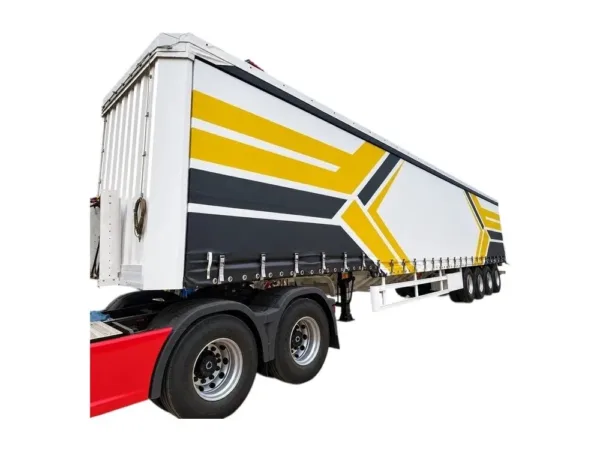
3 Axle Curtain Side Semi Trailer 30 Ton Steel Chassis

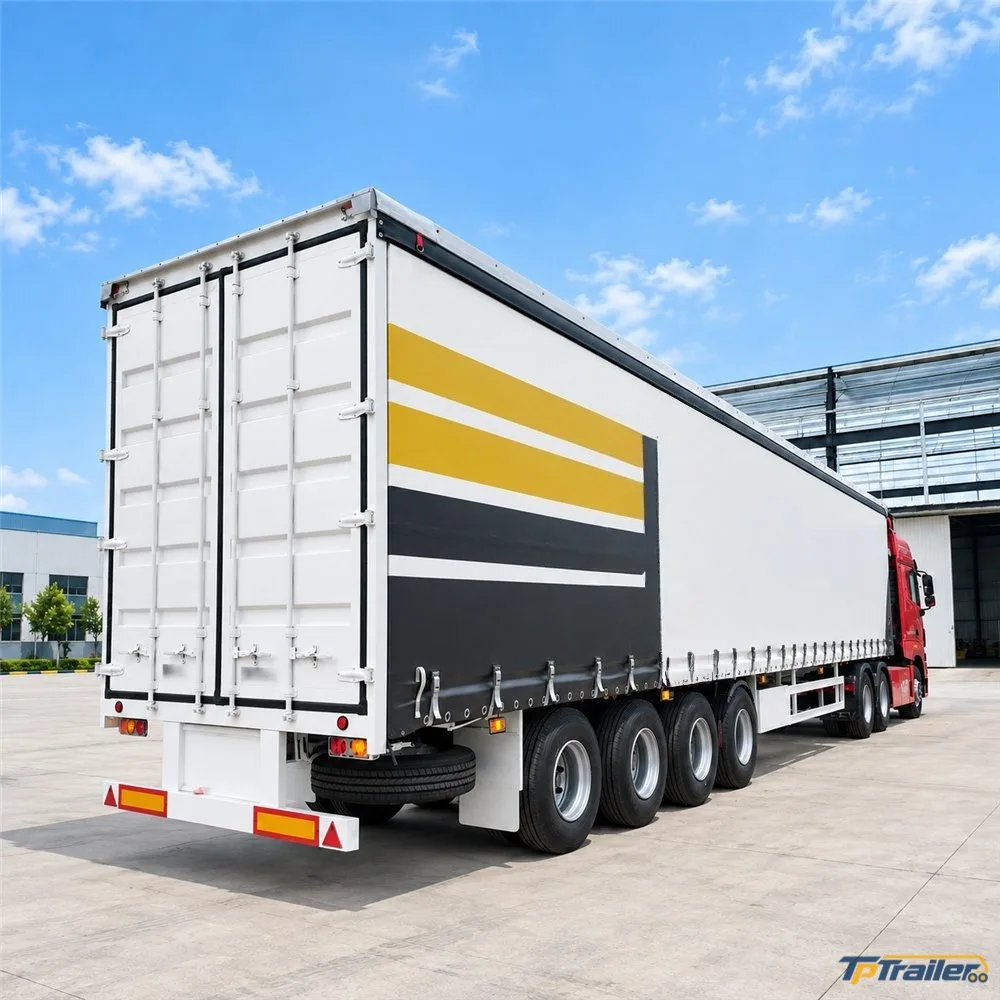
Curtain side semi trailer with 3 axles and a steel chassis rated at 30000 KG load capacity for general freight. Ask for a quote today.
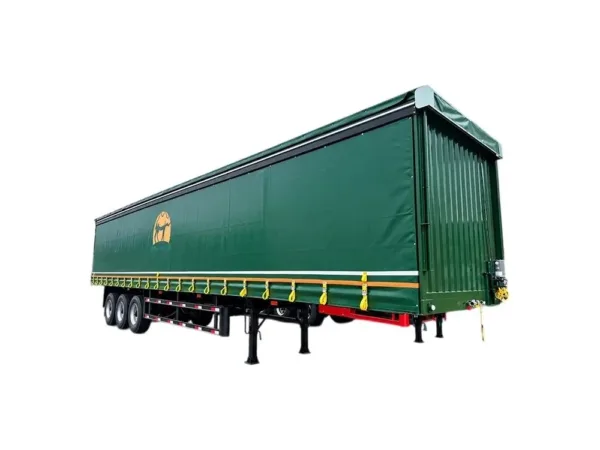
>30000 KG 3
FOB Reference Price US$4,500-6,000 Final price confirmed by inquiry

Certifications

  • ISO 9001

Key Features

  • 3 axle configuration for stable load distribution
  • Steel chassis built for general freight cargo transport
  • Curtain side body for side access to cargo
  • Load capacity rated at 30000 KG
Load Capacity >30000 KG
Type Semi-Trailer
Max Payload >30000 kg

The curtain side semi trailer is a three-axle general freight platform built for fleets that need fast side access without a rigid box body. It pairs a steel chassis with a flexible curtain wall, so a single unit handles palletised cargo, bagged goods and loose general freight. It suits hauliers, freight forwarders and own-account fleets running mixed loads on regular routes. The strongest reason to choose it is loading speed: the curtain opens along the full length, so forklifts work from the side and turnaround time drops. With a 30000 KG load capacity, it covers most general cargo work without oversizing the fleet.

Why It Works On Site

  • Full-length side access: the curtain rolls back along the whole deck, so a forklift can load or unload pallets at any point instead of working from the rear only. That cuts dock time on multi-drop runs and lets one curtain side semi trailer serve several delivery points in a single shift.
  • Steel chassis: the steel frame carries the deck and absorbs road shock, which keeps the body square over years of mixed freight. A square body means curtains still run freely in their tracks, so the crew is not fighting a twisted frame at every stop.
  • Three-axle layout: spreading the load across three axles keeps axle weights balanced when cargo sits unevenly on the deck. Operators loading heavy pallets to one side get a more stable ride, and the curtain side semi trailer stays predictable on long highway legs.
  • 30000 KG load capacity: this rating covers dense general freight such as bagged materials, drums and stacked cartons. It lets a planner accept heavier consignments without splitting them across two units, which keeps the assembly productive on backhaul loads.
  • Curtain walls: the flexible sides protect cargo from weather and road spray while staying light compared with rigid panels. Crews open and close them by hand, so no hydraulic system is needed and daily checks stay simple for the driver.
  • General freight deck: a flat, open deck takes pallets, crates and loose items without internal partitions. That flexibility means one curtain side semi trailer can be reallocated between contracts as freight mix changes, rather than sitting idle when a dedicated body no longer fits.

Where It Is Used

Fleet operators put a curtain side semi trailer on trunk routes between depots, where the job is moving palletised general freight on a fixed schedule. Loading happens at a dock with a forklift, often at night, and the crew needs the trailer ready fast. Side access lets them load from either flank, so two forklifts can work at once without waiting for the tail lift.
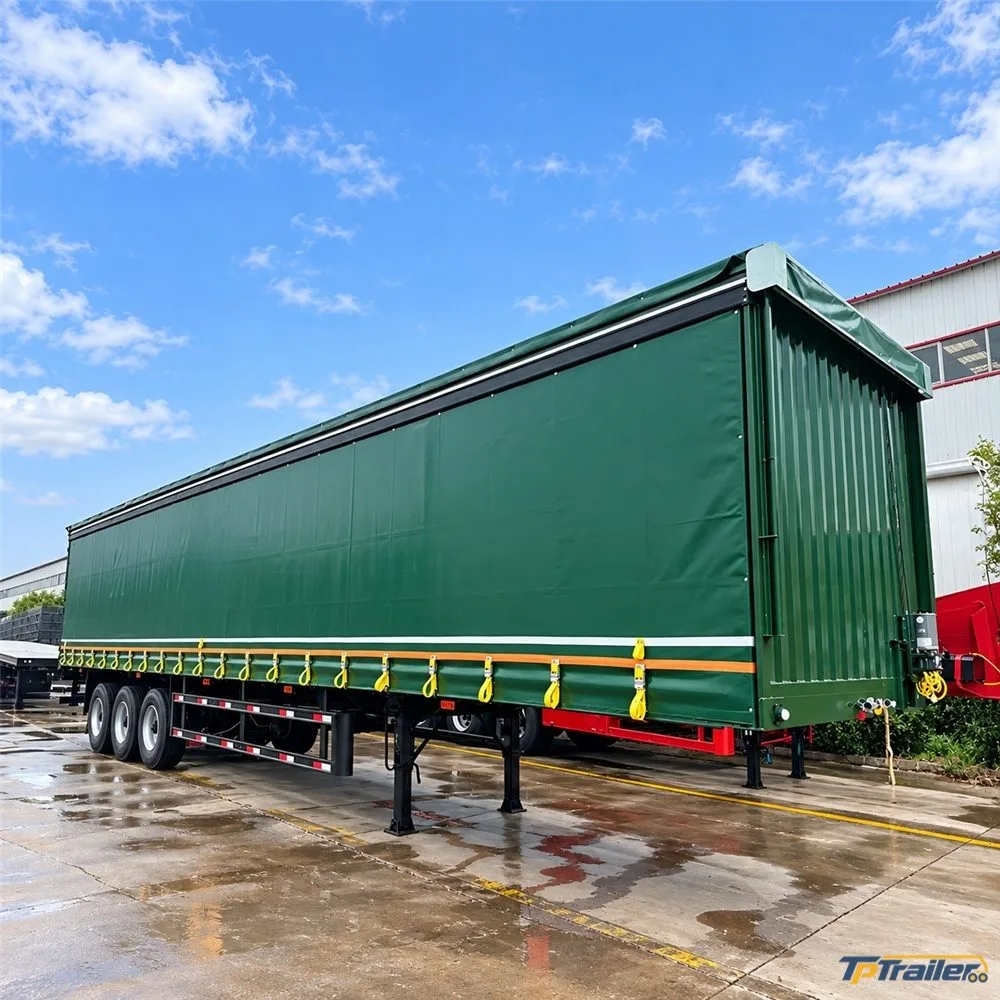
curtain side semi trailer - detail 1

Bagged goods, stacked cartons, drums and wrapped pallets all sit on the same deck, and the curtain closes over them for the run. On these routes the curtain side semi trailer earns its place because it turns around quickly and takes a mixed manifest without repacking. Operators also use it for regional distribution, where a truck drops part loads at several yards before returning to base.

A second common job is construction and industrial supply, where cargo is heavy, awkward and rarely uniform. Pipes, timber, hardware crates and machinery parts arrive in odd shapes, and a rigid box body would slow the crew down. The open deck and side opening of a curtain side semi trailer let them load long items from the flank and secure them against the chassis.

The 30000 KG load capacity means dense loads such as bagged cement or steel fittings can travel in one unit. These runs often mix paved highway with yard access, so a steel chassis and three-axle layout matter more than a light body. The same trailer then returns with empty pallets or packaging, keeping the asset working in both directions.

Agricultural and seasonal work is a third pattern worth planning for. Seed bags, feed sacks and fertiliser arrive in short, intense campaigns, and the trailer has to switch between bulky light loads and dense palletised ones within the same month. A curtain side semi trailer handles that swing because the deck has no fixed shelving or internal walls to strip out between jobs. The crew loads from the side with a telehandler or forklift, closes the curtain, and the load is protected for the road leg. When the campaign ends, the same unit moves to general distribution work instead of standing idle until next season.

Choosing The Right Spec

  • Match load capacity to your densest cargo: the stated 30000 KG rating is the ceiling for the deck. Check the weight of your heaviest regular consignment, not the average, because a curtain side semi trailer loaded past its rating is a compliance and safety problem. If most loads sit well below the figure, the unit still works, but you are carrying extra structure for no gain.
  • Three axles for balance: the axle count suits operators who load unevenly or run long highway distances. If your freight is light and evenly palletised, the same layout still works, but the benefit shows most when heavy items sit to one side. Match the axle setup to your route profile before ordering a curtain side semi trailer.
  • Curtain specification for weather exposure: fleets running exposed routes or coastal runs should confirm the curtain material and fixings suit their conditions. Operators on short sheltered runs can keep the standard setup. Ask what the curtain is rated for, then decide whether a curtain side semi trailer needs a heavier wall for your climate and cargo.
  • Order volume and price tiers: the listed price moves with quantity, so a single unit costs more per trailer than a batch. Fleets replacing several ageing units at once should compare the tier pricing before committing. Buying one curtain side semi trailer now and more later usually costs more than planning the fleet order together.

Customisation Before Delivery

  • The curtain side semi trailer can be ordered with a different number of axles to suit your permitted axle load and route profile. Axle count is fixed at order confirmation, together with the suspension type, so the running gear is built as one matched set rather than assembled from mixed parts.
  • Deck length and side height are open to adjustment on the curtain side semi trailer. Tell us the cargo lengths you carry most often and the loading method, and the deck layout is agreed at order confirmation. This keeps the load bed matched to your freight instead of forcing cargo into a fixed envelope.
  • Suspension choice is settled with the axle specification. Mechanical and air options are both discussed at order confirmation, since the choice affects mounting points, ride height and how the curtain side semi trailer behaves when partly loaded. Confirm it early so the chassis brackets are built for the right system.
  • Tyre size and rim configuration are confirmed at order confirmation. The tyre set must match the axle rating and the roads you run, so state your typical route and load pattern. The curtain side semi trailer is then supplied on a wheel and tyre package that suits your operating conditions.
  • Body colour and curtain colour are selected from the options offered at quotation. Colour choice is recorded at order confirmation so the curtain side semi trailer leaves the line in the finish you approved. State any marking or lettering requirements at the same time, so panels are prepared before assembly.

Fitting And Installation

On arrival, the buyer has to match the curtain side semi trailer to the tractor unit that will pull it. Check the fifth wheel height, the kingpin position and the clearance around the landing legs. Confirm the electrical socket type and the position of the air line couplings on the tractor, because the trailer harness and hose routing must reach them without strain. Look at the mounting points for any added equipment and confirm the bolt pattern before you drill. Where the input gives no fitment data, a fitment drawing is confirmed at quotation. That drawing is the reference for the workshop, not a guess made on the day the trailer lands.

curtain side semi trailer - detail 3
curtain side semi trailer - detail 2

A mismatch found at collection costs downtime, not just a part swap. If the coupling height is wrong, the curtain side semi trailer sits nose-up or nose-down and the load shifts on the deck. If the hose routing is too short, the lines rub on the chassis and fail early. If the electrical plug does not match, the trailer cannot be lit for the road and the unit waits. Each of these turns a planned first load into a workshop visit. Confirm the tractor details before production, review the fitment drawing at quotation, and the handover becomes a check rather than a repair job.

Allow a full shift for the first coupling and inspection, even when everything matches on paper. Walk the unit from kingpin to rear underrun bar, check that the curtain tracks are clear of transport lashings, and confirm the landing legs wind freely before the trailer takes a load. Small issues found in the yard are cheap to fix; the same issues found at a customer’s dock cost a missed slot. Treating the first inspection as a proper commissioning step, rather than a quick glance, is what keeps a curtain side semi trailer out of unplanned workshop time in its first month.

Service Life And Maintenance

  • The curtains and their tensioning hardware wear first on any curtain side semi trailer. Operators should inspect the curtain for cuts, the straps for fraying and the buckles for bend, and check that the roof-to-curtain joint still seals. A coated or heavier-grade curtain material, chosen at order, extends the interval between replacements compared with a lighter standard panel.
  • Tyres and wheel ends are the next wear point. Check tread depth, sidewall condition and wheel nut torque at each pre-trip walkaround. Listen for bearing noise and watch for uneven wear across the tread, which points to alignment or suspension trouble. Keeping the specified tyre set on the curtain side semi trailer protects the axle rating and avoids mismatched rolling circumference.
  • Brake and air system checks belong on a fixed routine. Drain the air tanks, inspect the chambers and look for chafed hoses along the chassis. A hose rubbing on a bracket fails without warning. Route and clip lines as shown on the fitment drawing, and the curtain side semi trailer air system stays reliable through repeated coupling and uncoupling.
  • The steel chassis needs its coating inspected, not just washed. Look for stone chips, scuffs on the lower rails and any rust bloom at weld seams. Touch up bare spots before they spread. A galvanised or heavy-coated chassis option, selected at order, holds its finish longer in wet or coastal work and keeps the curtain side semi trailer structure sound.
  • Suspension and landing gear take the load every day. Grease the landing gear screw and check the legs for bend. Inspect suspension bushes, shackles and air bags for cracks or leaks. Confirm the axle alignment after any kerb strike. Regular checks here keep the curtain side semi trailer tracking straight and protect the deck from the flexing that follows worn suspension parts.

Packing And Container Loading

A curtain side semi trailer ships as a complete unit or in a small number of major assemblies. Steel chassis sections are cleaned and coated before dispatch, so the surface that carries the load reaches the port without flash rust. Curtains are rolled and tied back against the frame, and loose hardware such as buckles, tensioners and straps travels in a labelled crate fixed to the deck. Buyers should ask the supplier to photograph each unit after packing, because a curtain side semi trailer is a large item and small parts are easy to overlook once the container doors close.

Stacking is not realistic for a finished trailer. Nested loading applies to smaller sub-assemblies, not to a full curtain side semi trailer, so container planning centres on overall length and axle count rather than on compression. Confirm with the factory whether the unit ships assembled or partly knocked down, and check the loading plan against the container interior before booking. On arrival, verify the chassis coating, the curtain panels, the axles and the crate contents against the packing list. Any shortage found after the curtain side semi trailer leaves the port is hard to prove later.

Ask how the unit is lashed inside the container, because a long steel chassis can shift on a sea leg if the blocking is improvised. The loading plan should show where the lashings attach and how the axles are chocked, and the crate of loose hardware should be secured so it cannot slide against the curtain panels. Request photographs of the loaded container, not only of the packed trailer, so the condition at departure is documented. That record supports any insurance claim and gives your receiving team a reference when the doors are opened at the destination yard.

Common Mistakes Buyers Make

  • Ordering without confirming the load capacity against the real cargo. A curtain side semi trailer rated for general freight is not automatically right for dense loads. Check the rated load capacity against your heaviest planned consignment and confirm the axle and suspension choice with the factory. The single check that avoids a return is a written load figure on the quotation, not a verbal assurance on a call.
  • Ignoring the overall length and axle count in the container plan. Buyers book freight before fixing the trailer configuration. A longer curtain side semi trailer with more axles may not fit the planned container or vessel slot. The check is to confirm the final length and axle count in writing, then pass the same figures to the freight forwarder before the booking is made.
  • Assuming the curtain and roof are interchangeable across suppliers. Curtain systems differ in track, tensioner spacing and roof fixing. A replacement ordered for one curtain side semi trailer may not fit another. The check is to request the curtain fixing detail and the roof attachment method from the factory and compare them with your existing fleet before ordering spares.
  • Skipping the chassis coating and steel grade confirmation. The steel chassis carries the freight, so grade and protection matter more than appearance. Some buyers approve a sample photo and never ask what coating the production units receive. The check is to confirm the steel chassis specification and coating process on the order, then verify the same on the unit before it is loaded.
  • Leaving packing and loading to assumption. A curtain side semi trailer is often quoted without a stated shipping condition. Buyers then discover the unit arrives partly disassembled or with loose parts in an unmarked crate. The check is to request the packing list and loading plan with the quotation, and to confirm who supplies lashing and protection for the sea leg.

Buyer Questions

Can the trailer be shipped in a standard container, and how should I plan the booking?

The input does not state a container size or a loading method, so the shipping configuration is confirmed at quotation. Before booking, ask the factory for the overall length, the axle count and whether the unit ships assembled or partly knocked down. Give those figures to your forwarder and let them match the curtain side semi trailer to a vessel slot. Do not book freight on the basis of a catalogue photo, because the packed dimensions decide the cost.

What should I check on the unit when it arrives at my yard?

Check the steel chassis for coating damage, then confirm the curtain panels, roof and hardware against the packing list. Count the crate contents, because buckles, tensioners and straps are the items most likely to go missing. Photograph any damage before unloading, and keep the shipping documents together. If something is short, raise it with the supplier while the curtain side semi trailer is still on the transport, not after it has been put into service.

How do I confirm the load capacity suits my freight before I order?

The rated load capacity is listed, but your duty cycle decides whether it is enough. Measure the weight of your heaviest regular consignment and compare it with the figure on the quotation. Ask the factory to confirm the axle and suspension arrangement that supports that rating for a curtain side semi trailer used in general freight. Get the confirmed load figure and configuration in writing before you place the order.

To receive a quotation, send the required overall length, the axle count and the quantity you plan to order. Add your cargo type and the load you expect to carry, so the factory can confirm the right curtain side semi trailer configuration. With those details, pricing and shipping can be confirmed in one reply.

Explore more curtain side semi trailer in this range.

Load Capacity >30000 KG Type Semi-Trailer
Max Payload >30000 kg Place of Origin China
Use Truck Trailer Material Steel
Size 16000x2500x4000mm

Reviews (0)

No reviews yet — click the Review button on the right to share your experience with this product.

Frequently Bought Together

Inquiry about: 3 Axle Curtain Side Semi Trailer 30 Ton Steel Chassis

Fill in the form below and our team will respond within 24 hours.