
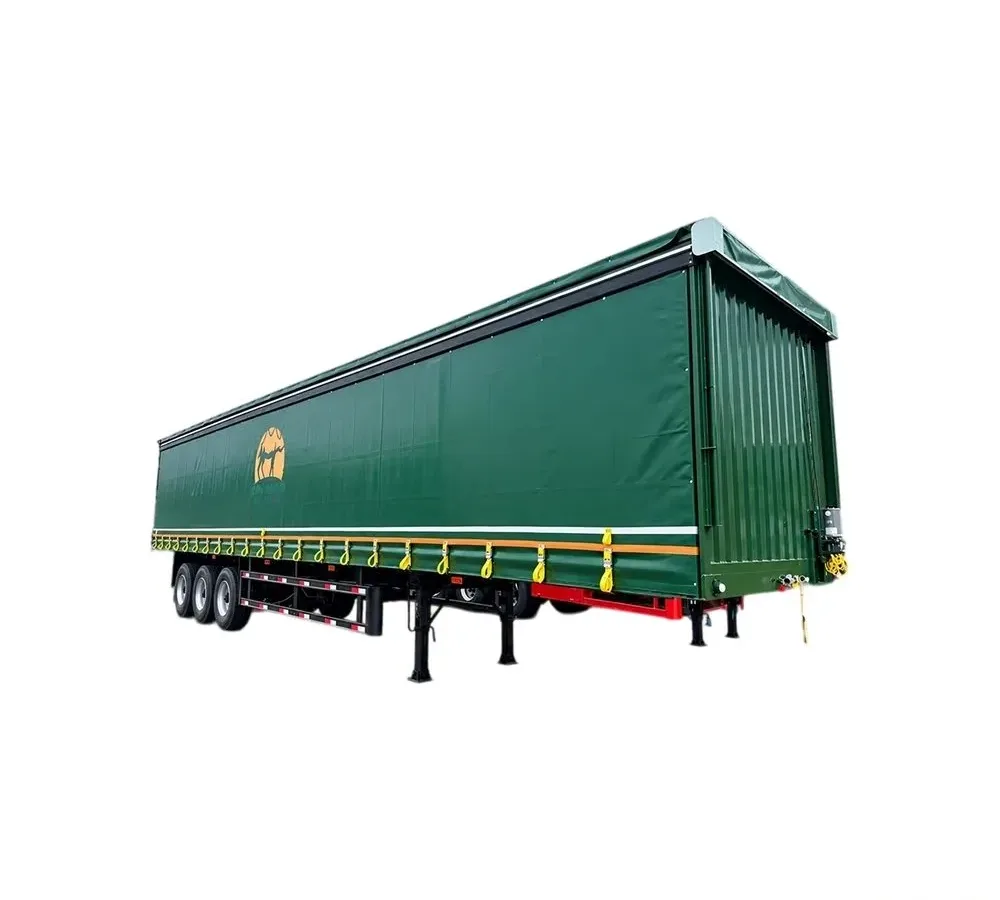


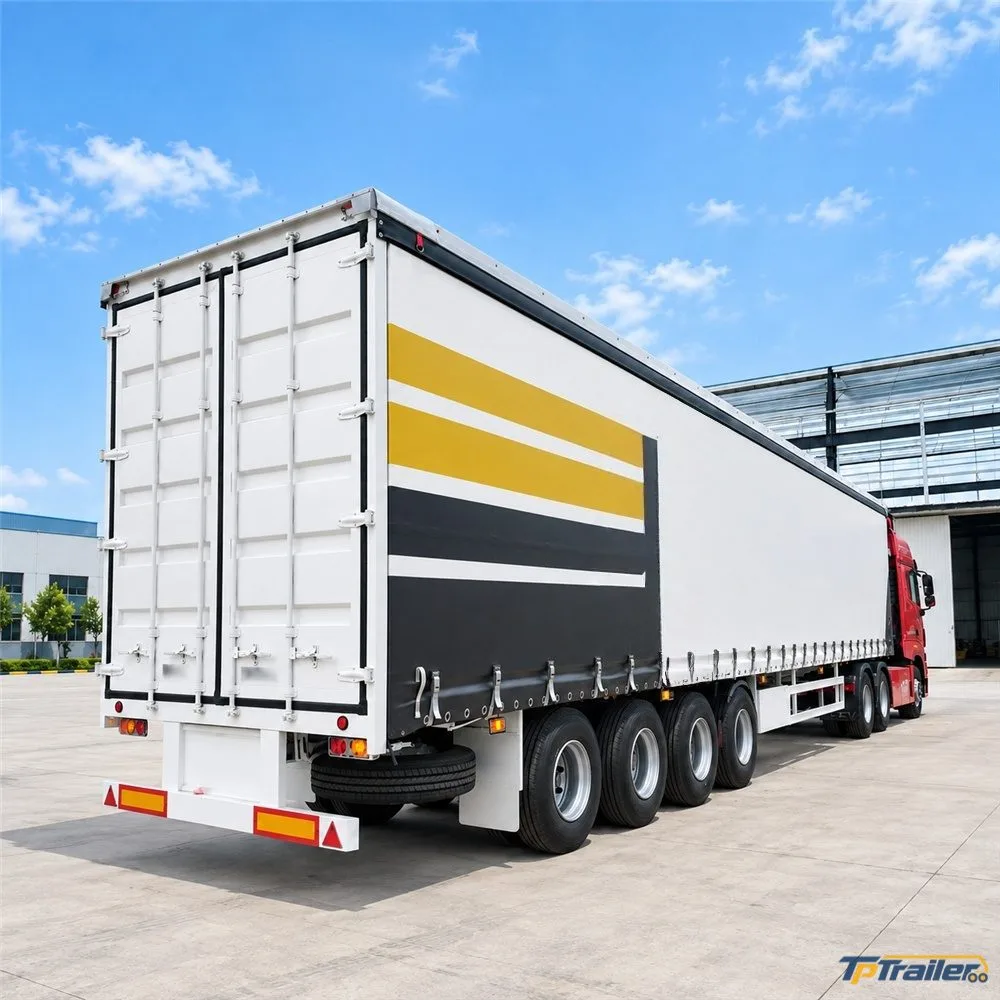
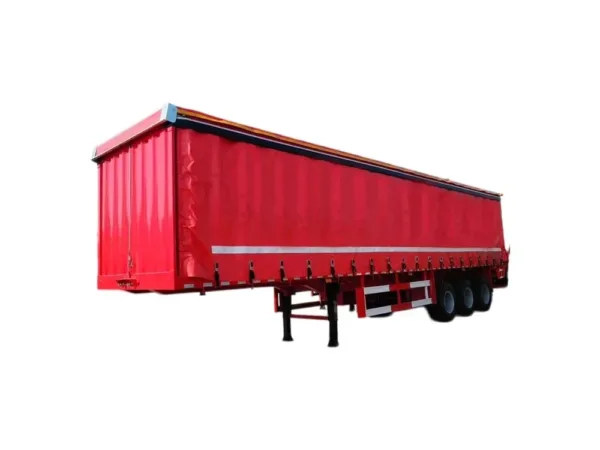
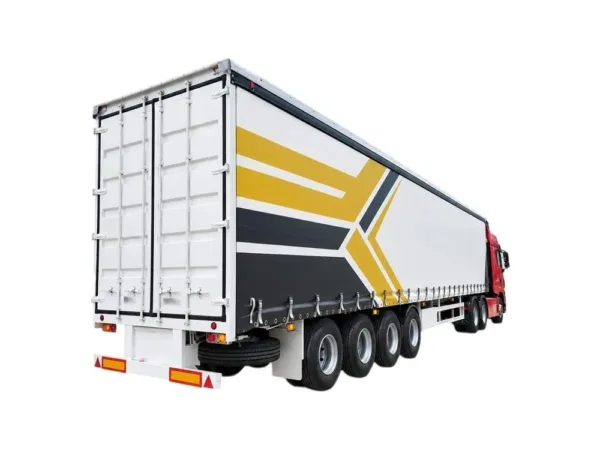
3 axle curtain side semi trailer with 13m sliding curtain and 30000 KG load capacity for warehouse pallet cargo. Contact us for a quote today.
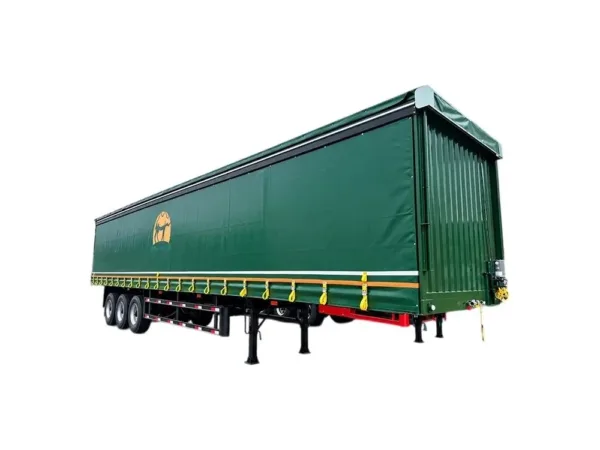

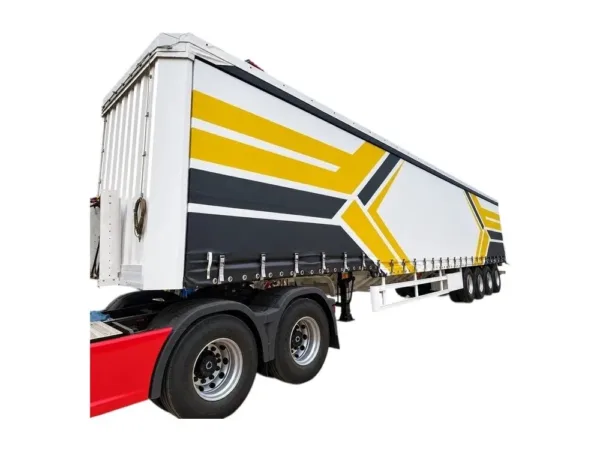


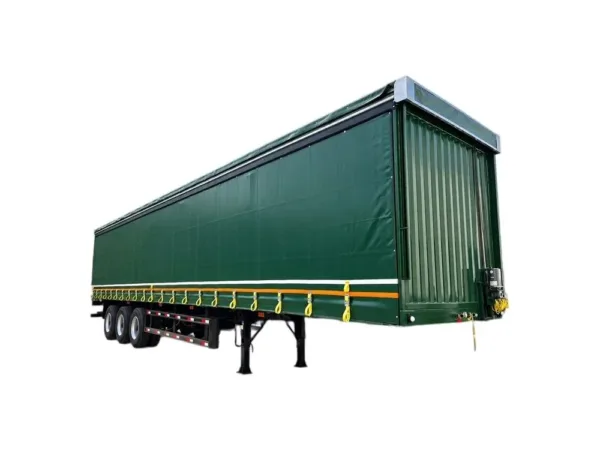
The curtain side semi trailer is the fleet answer for operators who load pallets from the flank and still want weather protection on the road. This 13m three-axle unit pairs a sliding curtain body with a flat cargo deck, so a forklift can work either side while the roof and front wall keep rain off the load. It suits hauliers moving warehouse pallet cargo, mixed retail freight and bagged goods on regular trunk routes. The strongest reason to choose it is flexibility: one trailer handles side-loaded pallets and rear-loaded freight without a crane, and the load capacity of 30000 KG keeps it inside normal heavy-goods work. Fleets buy it to cut loading time, not to chase maximum cube.
Warehouse pallet transport is the core job for a curtain side semi trailer. It pulls up at a distribution centre, the curtain slides open, and a forklift loads full pallet rows straight onto the deck from the yard. Because the flank opens along the body, the loader is not queued behind rear-door traffic, and pallets can be placed in delivery order for the next stop.

On multi-drop retail work the driver opens one section, pulls the pallets for that store, and closes up again. The roof and front wall keep cartons and shrink-wrapped goods dry between stops, which matters on routes that cross open ground or run through changing weather. For fleets moving fast-moving consumer goods, this is the everyday pattern the trailer is bought to serve.
The second pattern is mixed and bulky freight where a rigid box would slow the dock down. Building materials in packs, bagged aggregates, bundled timber, crated machinery and strapped industrial items all load from the side or the rear on the same flat deck. A curtain side semi trailer handles that variety because the deck is open and the curtain is a cover, not a wall.
Operators use it on regional trunk lanes between depots, on supplier collections where the load is not known until the yard, and on return legs where the outbound pallets are gone and loose freight fills the space. The load capacity of 30000 KG lets dispatch combine dense and light consignments on one run, so the trailer is not sent back empty.
A third pattern is seasonal and promotional volume, where the order book swells for a few weeks and then settles. A curtain side semi trailer covers that peak without a dedicated box body, because the same deck that carried pallets in December can carry garden equipment or event stock in spring. Planners like the unit for this work because the side opening lets temporary staff load without training on rear-dock procedures, and the curtain closes the load down again in seconds. Where a fleet keeps spare capacity for peak weeks, this is the body that absorbs the surge.
Most of the choices that matter on a curtain side semi trailer are settled before the build starts, not after the unit arrives. The supplier needs your intended duty cycle, your dock layout and your heaviest regular load to confirm the specification, and those details change the price tier as well as the build. Treat the list below as the agenda for the quotation conversation rather than a menu of extras: each point changes how the trailer behaves on your lanes, and each one should be written into the order confirmation.

Commissioning a curtain side semi trailer is a short job if the unit arrives complete, and a long one if hardware is missing. On arrival, check the curtain runs freely along its track, that the tensioning straps pull evenly and that the roof and front wall sit square to the frame. Confirm the axles, landing gear and suspension components match the order confirmation, and photograph anything that does not before unloading. A fleet that inspects the assembly against the packing list at the yard avoids the common situation where a trailer sits idle waiting for a buckle set or a replacement panel.
Routine maintenance on the leg is mostly about the curtain and the running gear. Keep the track clean so the curtain slides without binding, check the tensioning straps for wear, and inspect the roof and front wall for abrasion after long runs. On the chassis side, follow the axle and suspension checks your workshop already runs for heavy-goods trailers, and watch the landing gear and coupling points. Because the curtain is the most exposed part of a curtain side semi trailer, a simple rule helps: inspect the panels and straps at every service interval, and replace worn straps before they fail at a dock rather than on the road.
Packing for ocean freight is where the curtain panels need the most care. The supplier should wrap each panel in protective sheeting, secure the hardware and tensioning straps in labelled bundles, and brace the frame sections so nothing shifts in transit. Buyers should ask for photographs of the packed unit before dispatch and confirm how the axles, landing gear and curtain hardware are boxed separately, because loose fittings are the first thing to go missing between the factory and the port.
Space saving matters on a curtain side semi trailer shipment: frames and axles can sometimes be nested or partly disassembled, but the curtain panels must stay flat and uncreased, so check with the supplier what is actually broken down and what stays assembled. Ask for the packed dimensions and total weight per unit before booking container space, and on arrival verify panel count, strap and buckle sets, axle and suspension components, and that the curtain runs freely along its track.
Ask the supplier to describe the wrapping on the curtain panels, the bracing of the frame, and how hardware is boxed and labelled. Request photographs of the packed unit before it leaves the factory. Confirm that panels are kept flat and that tensioning straps are bundled rather than loose. On arrival, check the panel surfaces for creases or abrasion, count the hardware bundles against the packing list, and record any shortage or damage in writing before you sign the delivery receipt.
That depends on how far the supplier breaks the unit down. Ask for the packed dimensions and weight per unit, and confirm whether frames and axles are nested or partly disassembled. Curtain panels usually need to stay flat, so they limit how tightly units stack. Give the supplier your quantity and ask them to propose a loading plan with the container type and count. Confirm the plan at quotation, since it changes with quantity and configuration.
Confirm the load capacity, overall length, axle count and sliding curtain configuration in writing on the order. Ask which documents travel with the shipment and who arranges inspection. Request the packing list and pre-shipment photographs. Check that the delivery terms, payment schedule and any spare parts are listed. Where the input is silent, such as lead time or certification, treat those points as confirmed at quotation only, and do not release payment until the written confirmation matches your specification.
Send your required overall length, axle count and order quantity for a quotation on the curtain side semi trailer. State your typical payload and the sliding curtain configuration you need, plus your destination port. With those details the supplier can confirm the specification, packing plan and price tier for your order.
Explore more curtain side semi trailer in this range.
| Load Capacity | >30000 KG | Type | Semi-Trailer |
|---|---|---|---|
| Max Payload | >30000 kg | Place of Origin | China |
| Use | Truck Trailer | Material | Steel |
| Size | 16000x2500x4000mm | ||


No reviews yet — click the Review button on the right to share your experience with this product.








Fill in the form below and our team will respond within 24 hours.
Write a Review