


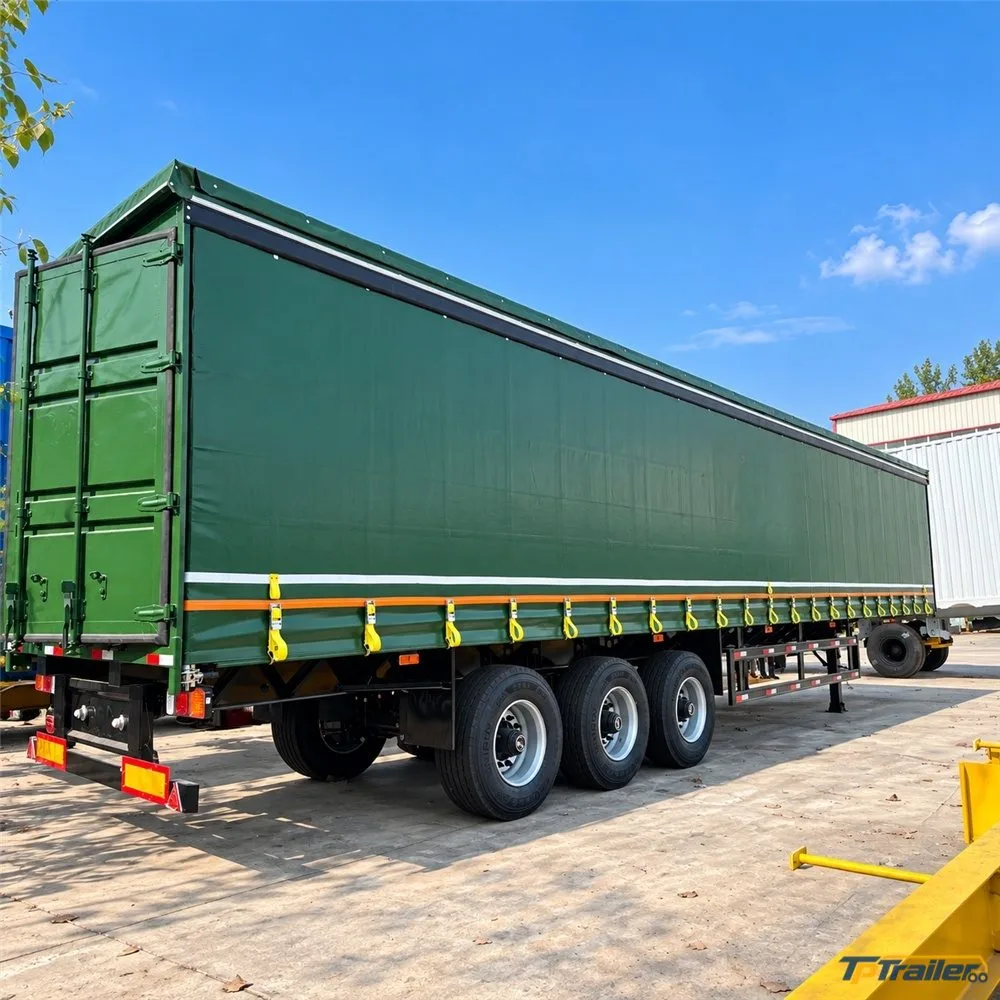
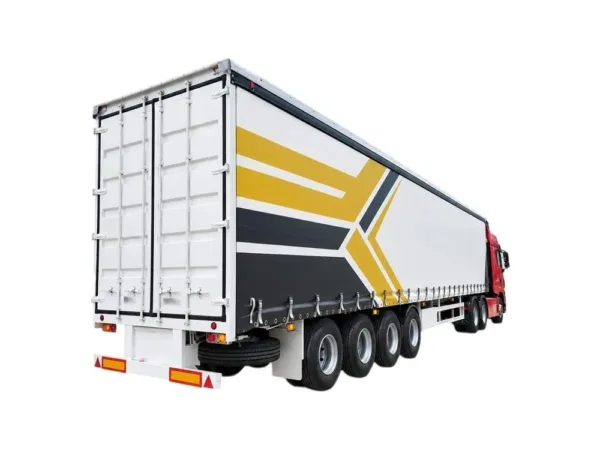
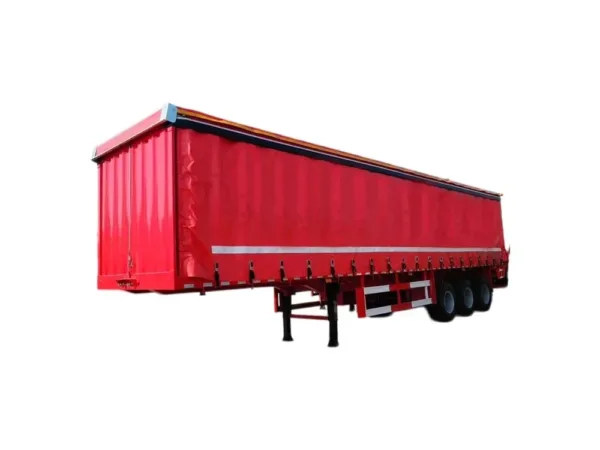
This 4 axle curtain side semi trailer carries up to 30000 KG with air suspension, suited to palletized goods and highway freight transport.
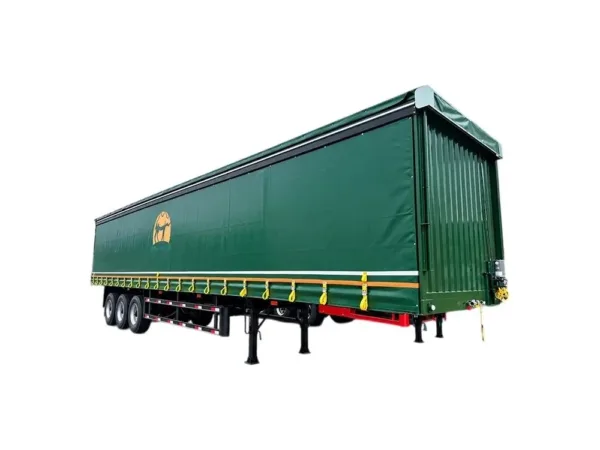

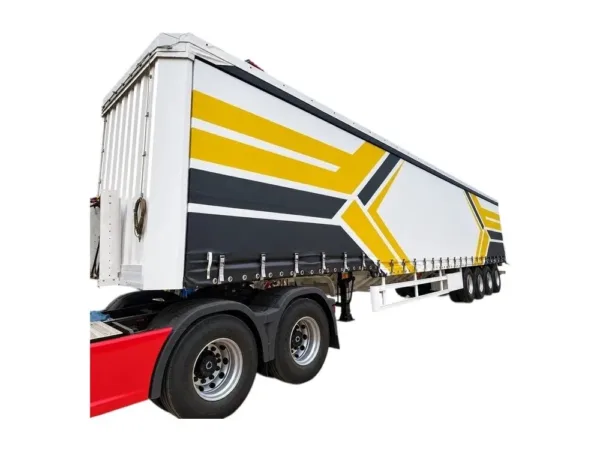


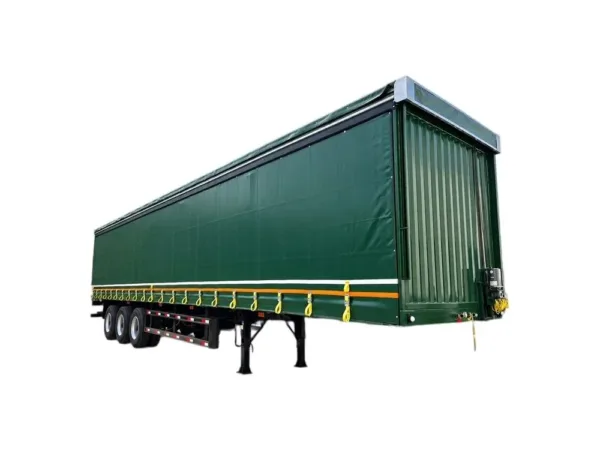
The curtain side semi trailer is a four-axle flatbed platform wrapped in flexible side curtains, built for fleets that move palletized goods and highway freight. It suits transport operators, logistics contractors and distribution fleets that load from the side with a forklift rather than through rear doors. The strongest reason to choose it is the combination of a 30000 KG load capacity with air suspension: heavy pallet loads ride on a cushioning axle setup while the curtain sides open wide for fast, flexible access. It carries general cargo without the fixed walls of a box van, so loading and unloading stay quick on busy routes.
Fleet operators use the curtain side semi trailer for palletized distribution work where goods are loaded and unloaded from the side. Typical jobs include moving shrink-wrapped pallets between warehouses and depots, delivering to retail and wholesale sites, and running mixed consignments of boxed and bagged products. Because the curtains open along the length of the platform, a forklift can work from the yard or the dock without needing a rear loading bay.
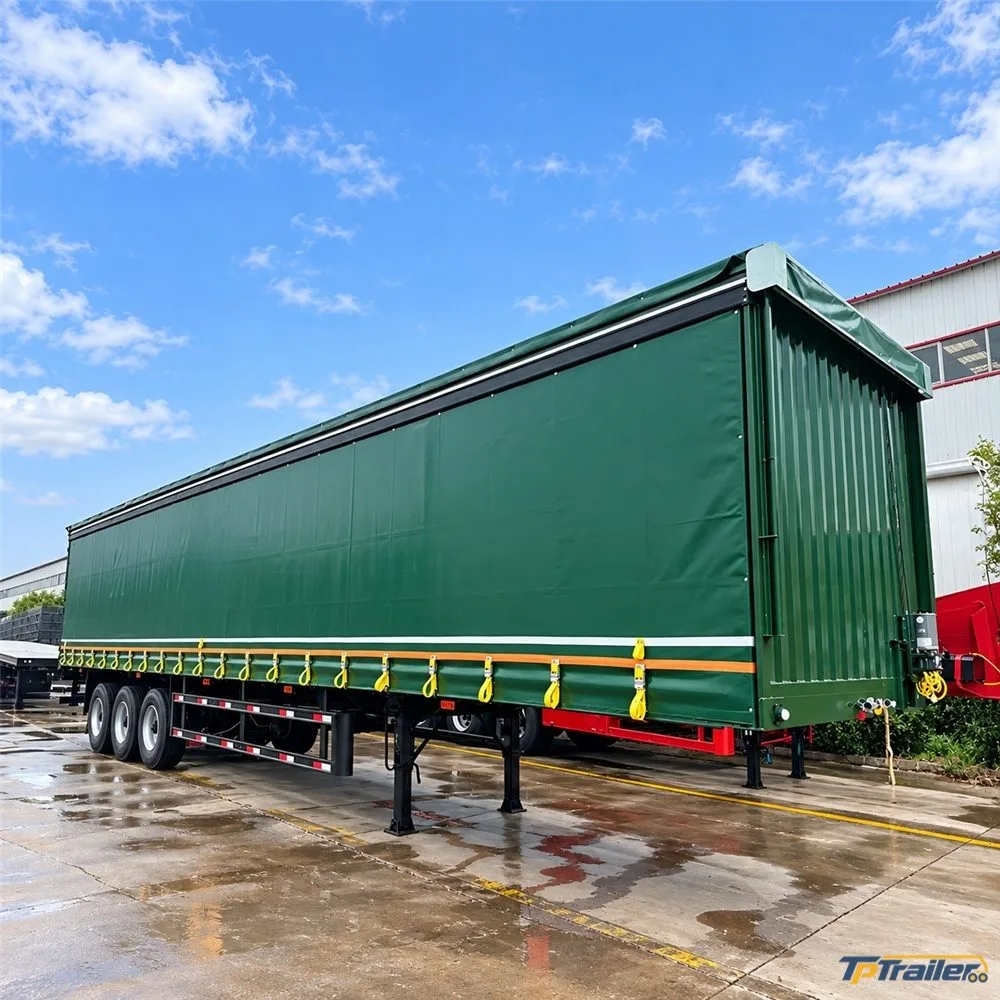
That makes the trailer practical for sites with limited dock space, where side access is the only realistic way to load. The same trailer also handles crates, drums and stacked goods that are strapped to the deck, so a fleet can keep one vehicle type in rotation across several freight contracts rather than matching a dedicated body to each job.
On highway freight routes, the curtain side semi trailer covers long-distance transport of general cargo where weather protection and steady ride quality matter. Operators run it on trunk routes moving palletized consumer goods, building materials in packaged form and industrial supplies between distribution centres. The air suspension keeps the deck settled over long stretches, which suits loads that are stacked high or packed tight.
When a route mixes highway running with short collection and delivery legs, the side-opening curtains let crews load and unload quickly at each stop without repositioning the vehicle. Fleets that alternate between full pallet loads and part loads find the flat platform easy to reconfigure, so the curtain side semi trailer stays productive across changing freight demand instead of sitting idle between contracts.
Depot and yard operations are a third setting where the trailer earns its place. Where a site has no raised dock at all, the flat deck and open sides let a forklift work from ground level, and the air suspension can be dropped to bring the deck closer to the loading face. That is the difference between a vehicle that needs a purpose-built bay and one that can be loaded wherever there is hard standing. Distribution fleets running regional shuttles between a main hub and satellite depots often keep the curtain side semi trailer on the same short loop, because the repeated side loading suits the pallet flow and the crew learns the curtain routine quickly.
On arrival, the buyer has to match the tractor unit to the trailer rather than the other way round. Check the fifth wheel height against the kingpin plate, confirm the landing gear footprint on the yard surface, and verify the electrical socket type and pin assignment on the tractor. Air line couplings and hose routing need to reach the tractor’s service and emergency ports without strain at full articulation.


Lamp functions, ABS wiring and the side marker circuit are tested before the unit leaves the yard. Where the input gives no fitment drawing, a fitment drawing is confirmed at quotation, so couplers, hose lengths and connector types are settled in writing before production. The curtain side semi trailer should be coupled, raised and lowered through its full air suspension travel as part of the handover check.
A wrong size at handover is expensive because a curtain side semi trailer cannot earn while it sits. A mismatched coupling or hose set turns a delivery into a workshop job, and the operator loses the first dispatch slot plus the labour to correct it. Electrical pin differences are worse, because they surface as lamp faults after dark rather than at the inspection. Buyers should therefore send tractor details with the order: fifth wheel height, socket type, air coupling style and the yard’s turning space. Those details feed the fitment drawing confirmed at quotation, and the trailer arrives ready to couple. Checking the mounting points, tube size and hose routing against that drawing takes minutes and prevents a stranded unit.
There is a second fitment task that catches fleets out: matching the trailer to the drivers who will actually use it. The curtain tracks and tensioning hardware sit at a working height, and the height valve on an air-suspended trailer has to be reachable for the daily check. Walk the unit with the crew before it enters service and agree who checks the curtain straps, who watches the air gauge and who signs the coupling check. A curtain side semi trailer that is coupled correctly but checked by nobody still fails at the roadside, so the handover is the moment to fix responsibility.
Turn the maintenance routine into a written schedule rather than a habit. A curtain side semi trailer that is checked daily by one driver and weekly by a workshop gets two chances to catch a worn strap or a leaking air bag before it becomes a breakdown. Record the date, the odometer reading and what was found, and keep the sheet with the vehicle. When the unit is later sold or returned at the end of a contract, that record shows the air suspension and the curtain hardware were looked after, which is the difference between a fair resale figure and a knock-down offer.
A curtain side semi trailer is too long to ship assembled inside a standard box container. The usual method is to load the trailer in knocked-down form, with the running gear, axles and suspension grouped as one bundle and the frame sections stacked alongside. Steel contact points get timber dunnage and strapping so edges do not rub through during the voyage. The curtain itself is rolled, wrapped and kept away from sharp steel. Buyers should confirm the loading plan in writing before dispatch, because the plan decides how much space the shipment really uses.
Space saving comes from stacking, not nesting. Frame rails and axle assemblies are laid flat and braced against movement, which is why a curtain side semi trailer shipment can share a container with other units. Lashing points, timber blocking and wheel chocks stop the load shifting in heavy weather. On arrival the buyer should check the container seal, photograph every bundle before unloading, and verify that the axle count, suspension type and curtain panels match the order. Any crush damage or missing strapping should be recorded on the delivery paperwork before the container is emptied.
Two packing details are worth settling at quotation. First, ask which parts travel loose and which are pre-assembled, because a loose hardware box is easy to mislay in a busy yard and the curtain side semi trailer cannot be finished without it. Second, agree who pays for dunnage and strapping if the shipment is consolidated with another buyer’s cargo, since shared containers sometimes arrive with one party’s bracing removed. Both points belong in the written loading plan, not in a phone call.
The trailer ships in knocked-down form, with frame sections, axles and suspension bundled and braced inside the container. Steel surfaces get timber dunnage and strapping, and the curtain is rolled and wrapped away from sharp edges. Ask the supplier for the loading plan and bundle dimensions before dispatch. On arrival, check the container seal, photograph each bundle before unloading, and note any crush damage or missing strapping on the delivery paperwork before the container is emptied.
Stacking is the usual method, so more than one unit can share container space when the loading plan allows it. The exact number depends on bundle dimensions and bracing, which the supplier confirms at quotation. Give the supplier your order quantity early, because volume pricing and container planning both depend on it. Ask for the bundle dimensions and the per-container unit count in writing, then book freight against that figure rather than against trailer length alone. A curtain side semi trailer ordered in volume also moves through the same packing routine, so the second and third units follow the plan agreed for the first.
Confirm the axle count, the suspension type and the load capacity against your real payload and route. Describe the cargo, the loading side and the climate so the curtain specification can be matched at quotation. Ask for the loading plan, bundle dimensions and the packing method in writing. Finally, state the quantity, because the price per unit changes with order volume. Put all confirmed points into the purchase contract so the curtain side semi trailer matches the agreed specification.
To receive a quotation for a curtain side semi trailer, send the overall length you need, the axle count and the suspension type, plus the quantity you plan to order. Add your cargo type and loading side if the curtain specification matters. With those details, the supplier can confirm the configuration, the packing plan and the price tier for your volume, and the curtain side semi trailer you receive will match the job it was bought for.
Explore more curtain side semi trailer in this range.
| Load Capacity | >30000 KG | Type | Semi-Trailer |
|---|---|---|---|
| Max Payload | >30000 kg | Place of Origin | China |
| Use | Truck Trailer | Material | Steel |
| Size | 16000x2500x4000mm | ||

No reviews yet — click the Review button on the right to share your experience with this product.








Fill in the form below and our team will respond within 24 hours.
Write a Review