
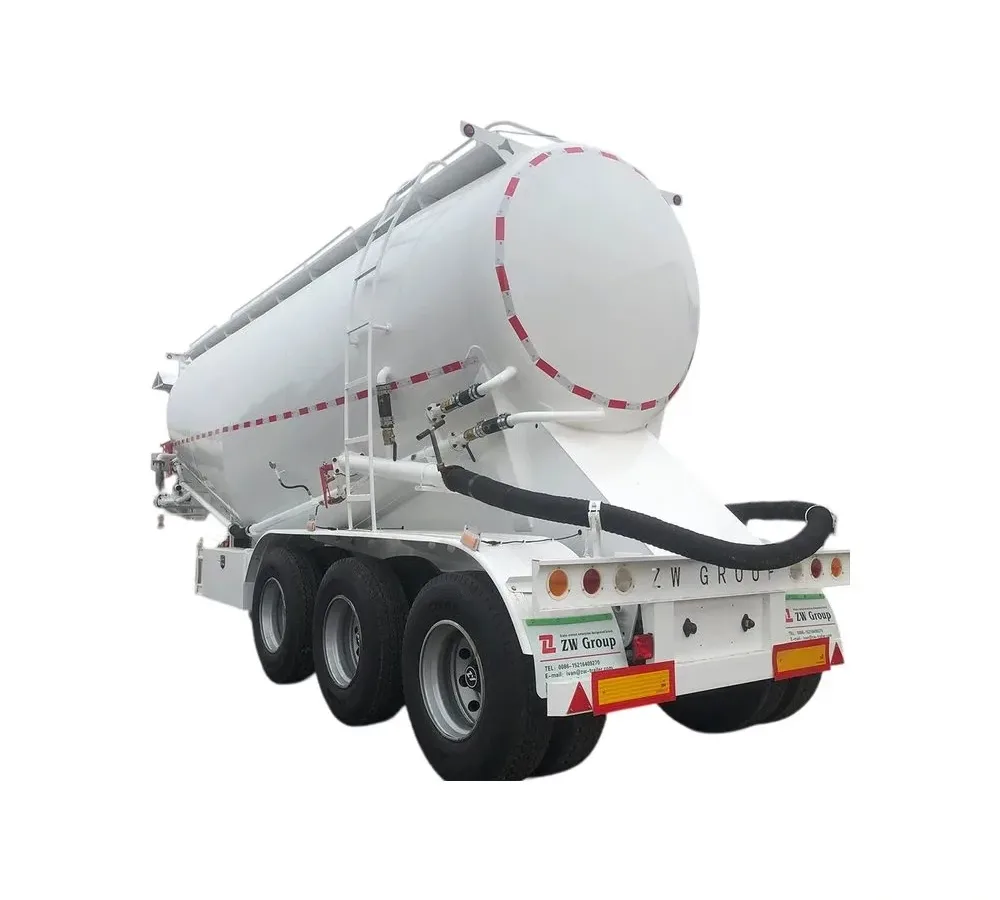



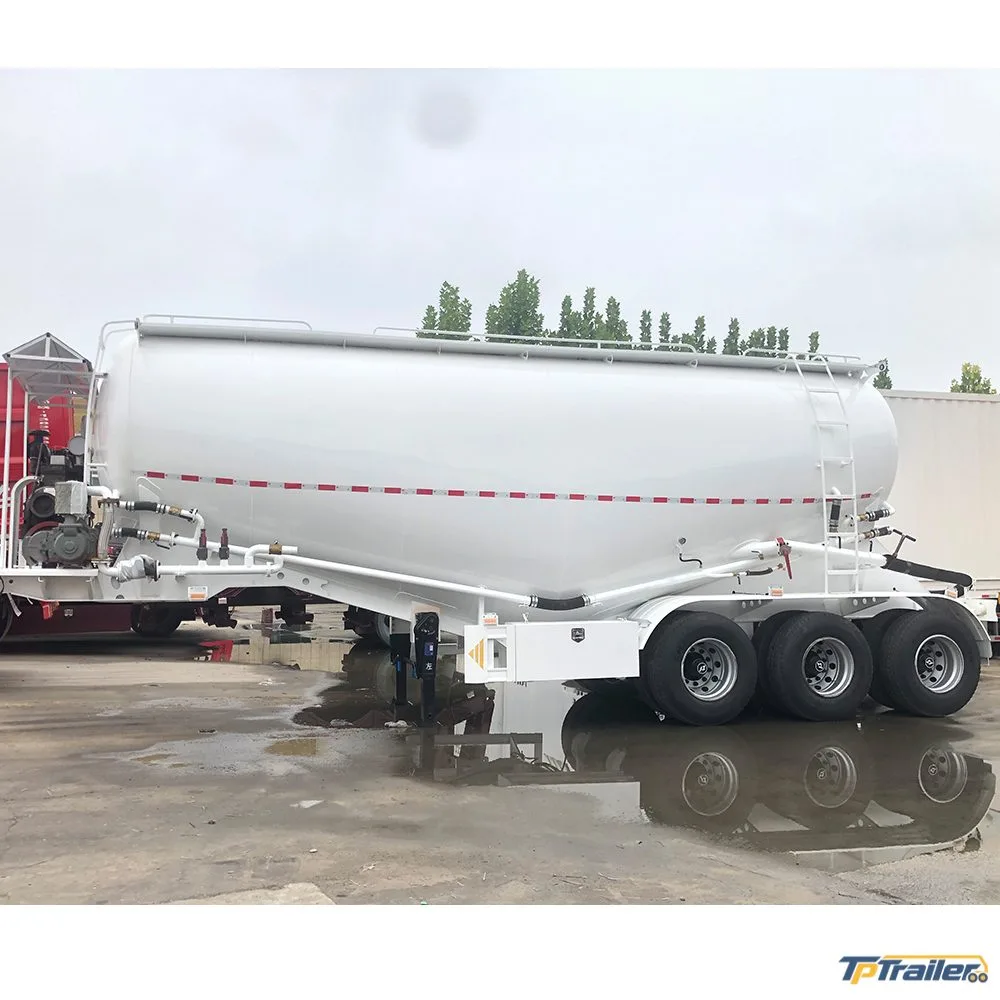
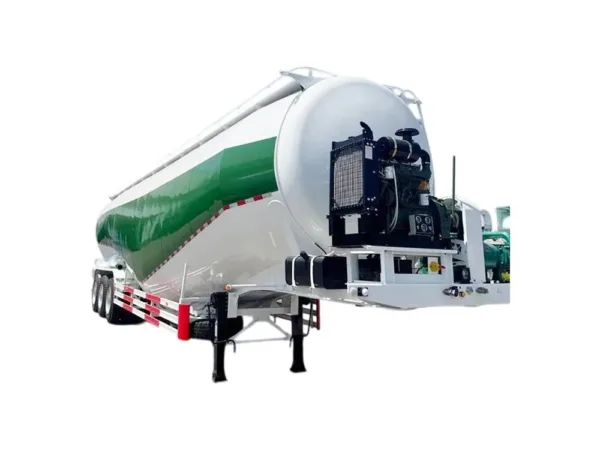
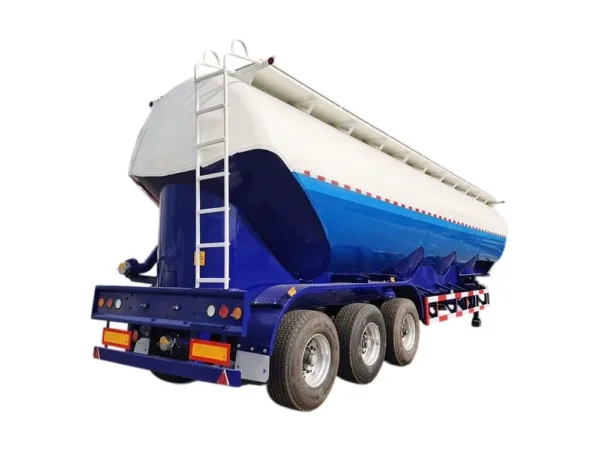
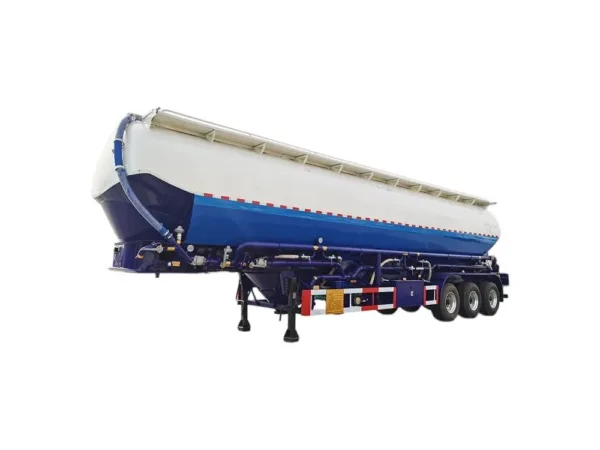
bulk cement tanker trailer with 60T load capacity and 3 axles in steel. Dry bulk cement powder semi trailer for fleet buyers; quotes available on request.
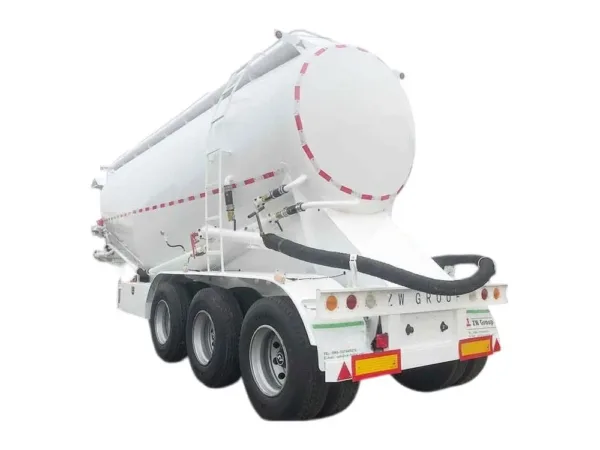




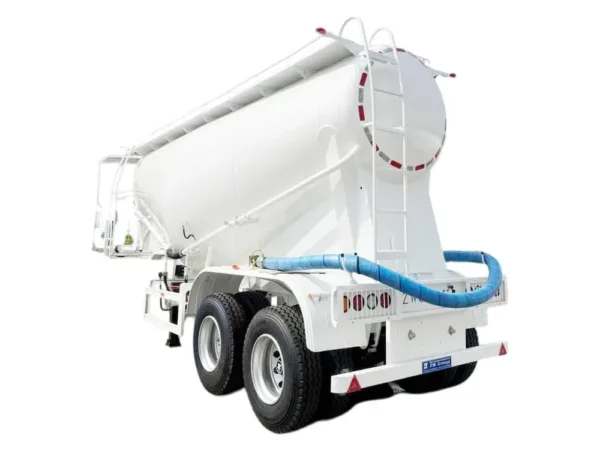
The bulk cement tanker trailer is a three-axle steel dry bulk powder semi trailer built to move cement and similar powders in bulk rather than in bags. It suits fleet operators, cement distributors and construction logistics companies that need a dependable hauler for high-volume dry cargo. Its 60T load capacity is the strongest reason to choose it: one unit carries a full commercial load per trip, so fewer journeys move the same tonnage. The tank body, pneumatic discharge system and optional air compressor work together as a complete hauling package. Buyers who compare a bulk trailer for sale on payload per trip will find this configuration aimed squarely at heavy, repetitive powder runs.
The core job for a bulk cement tanker trailer is moving dry cement powder from a plant, silo or terminal to where it is poured or mixed. A cement distributor loads at the works and discharges into site silos, batching plants or mobile storage units. The same trailer handles dry bulk powder cargoes such as fly ash and similar fine materials where the consignee receives in bulk rather than bags.
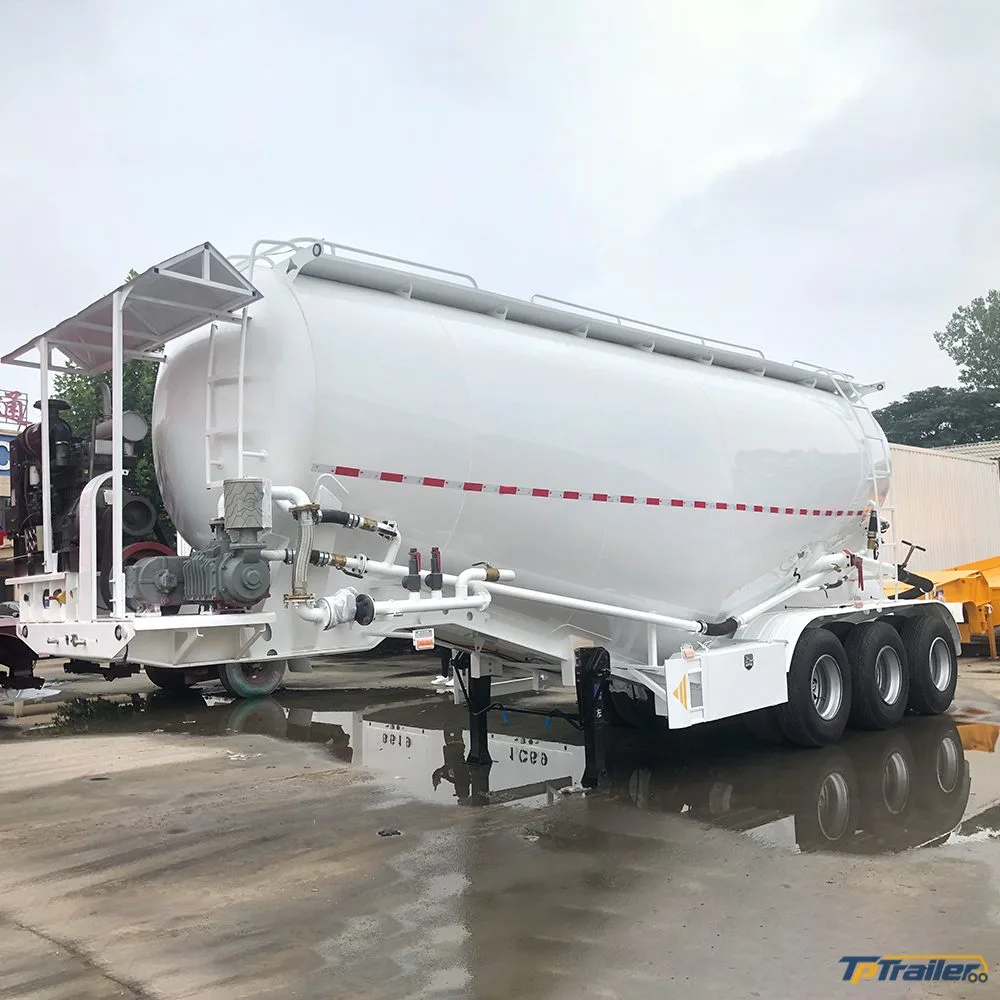
Routes are typically a mix of highway running between plant and city, then tighter access into construction sites, ready-mix yards and industrial plots. Because the tank discharges pneumatically, the trailer earns its keep where the receiving point has a silo connection or hose intake, so the operator is not dependent on bagging or manual unloading. Fleet planners value the bulk cement tanker trailer on these runs because one unit replaces a queue of bagged deliveries, keeping discharge quick at the receiving end and cutting handling on site.
Beyond plant-to-site delivery, the bulk cement tanker trailer fits repetitive shuttle work where the same powder moves between fixed points. That includes transfers between depots, resupply of storage silos during peak construction periods, and hauling powder to remote batching locations that keep no bagged stock. Operators running mixed fleets use it alongside flatbeds and tippers, assigning the powder runs to the tanker and leaving general cargo to other units.
The three-axle layout and mechanical suspension suit long highway legs as well as dusty terminal yards, so the trailer is not limited to short local trips. Where a bulk trailer for sale is bought to serve several sites, this configuration gives the operator one asset that can switch between plant, depot and construction delivery without reconfiguration. The dry bulk cement powder trailer role is narrow by design, and that focus is what makes it efficient on these dedicated powder routes.
On arrival, the buyer has to match the bulk cement tanker trailer to the tractor unit that will pull it. Check the fifth wheel height, the kingpin position and the landing gear clearance before the trailer is coupled. Confirm the air line couplings and the electrical socket match the tractor, because a mismatch stops the unit from moving. The discharge pipework and any compressor connection need to line up with the receiving equipment at the silo. Where the input gives no fitment data, a fitment drawing is confirmed at quotation instead of being assumed. Walk the mounting points and the hose routing before the first load, and check that nothing fouls the frame or the suspension.
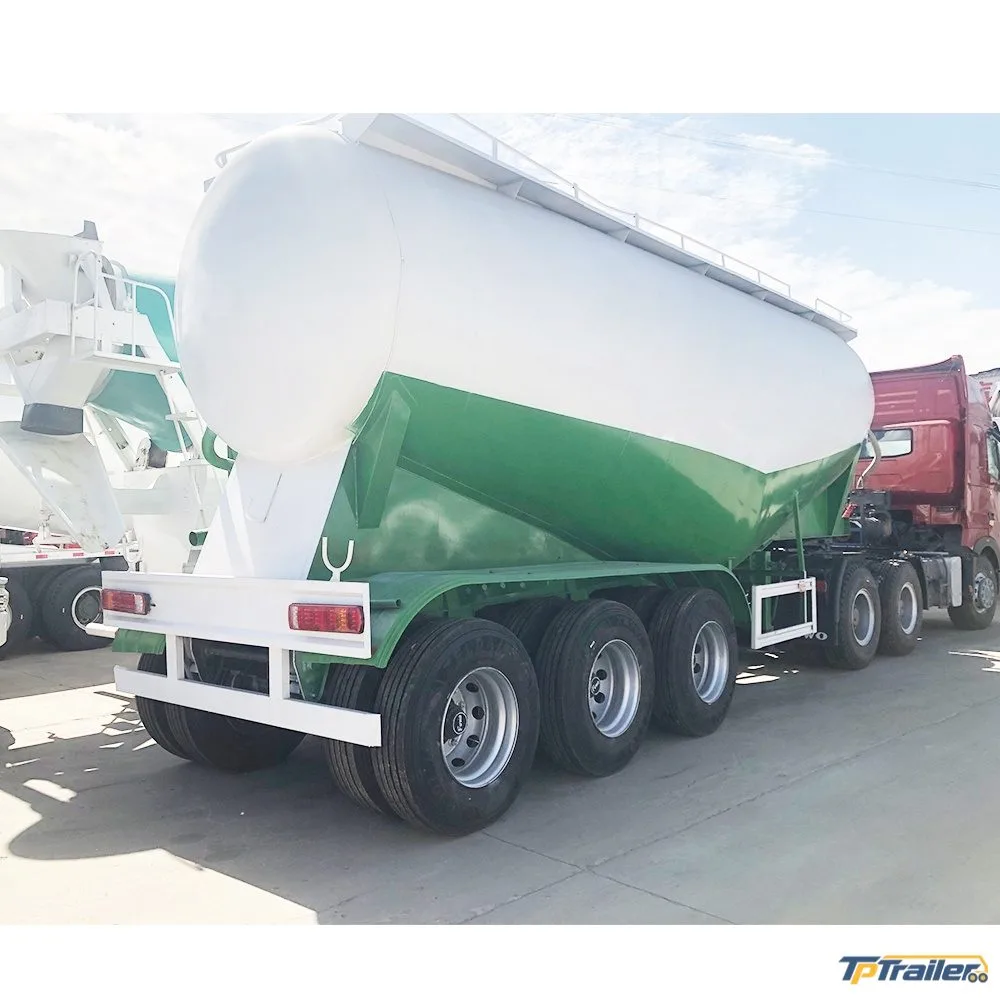
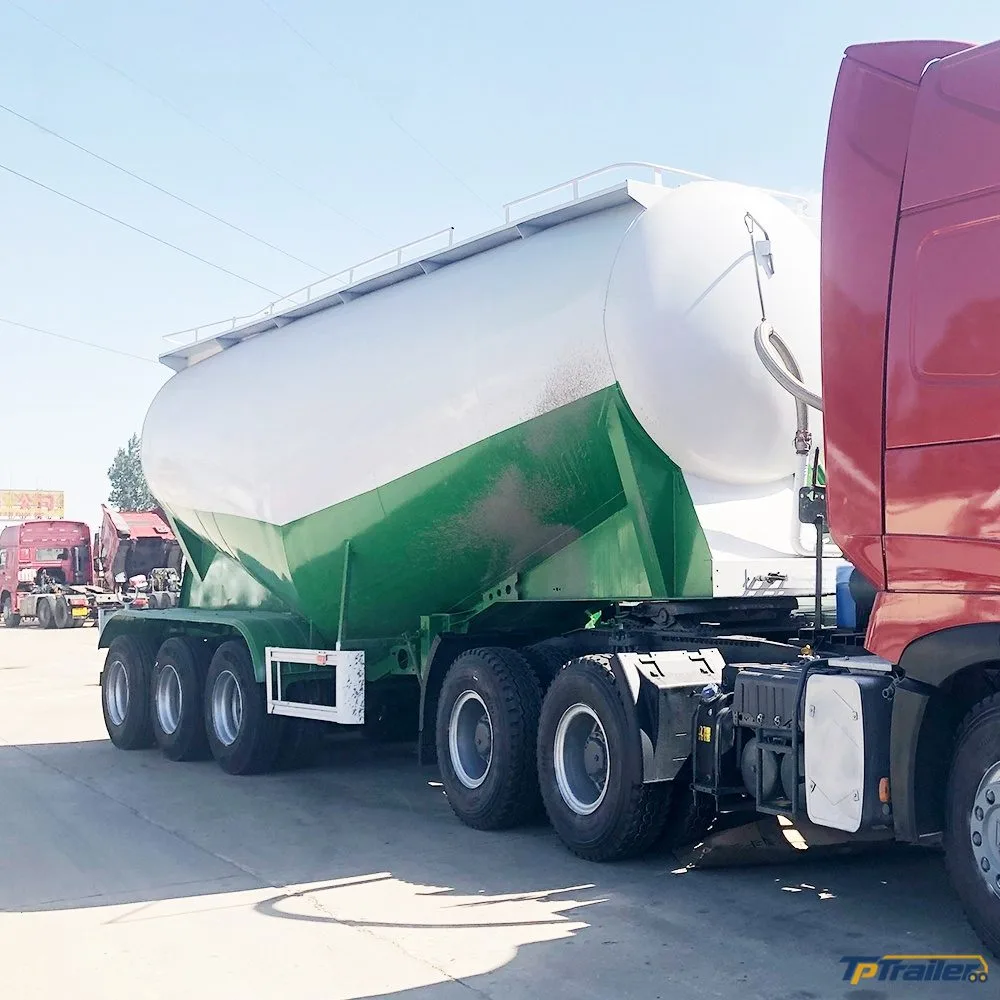
A wrong size or a mismatched connection costs the buyer downtime. A bulk cement tanker trailer that cannot couple to the tractor sits idle while adapters are sourced. A discharge line that does not meet the silo intake delays every delivery and may need rework on site. Hose routing that rubs against the frame wears through and forces an unplanned stop. Each of these problems is avoidable when the fitment drawing is checked at quotation and the tractor details are shared early. The operator should keep the confirmed drawing with the trailer documents, so a replacement part or a second unit is ordered to the same fitment. Confirm the details before dispatch, not after the trailer reaches the yard.
The bulk cement tanker trailer is prepared for sea freight as a complete unit. Mild steel surfaces and the tank shell are cleaned and coated before dispatch, and the painting colour you select is applied at that stage. Exposed fittings are wrapped, and loose items are boxed and secured to the chassis so nothing moves during transit. Because the unit is a full trailer, it is not dismantled for shipping. Ask the supplier to photograph the packed bulk cement tanker trailer before loading, and confirm which parts travel loose. That record protects you if a component is missing when the container is opened at destination.
Container loading depends on the unit and the shipping method. A complete bulk cement tanker trailer does not nest inside another unit, and stacking trailers is not standard practice. Space is saved by careful positioning and by matching the frame to the available deck length. The tank is a fixed shell, so the saving comes from the trailer footprint, not from folding the body. Ask for a loading plan with dimensions and the number of units per shipment. Verify that plan against the vessel or flat-rack booking before you confirm the order.
The unit is cleaned and painted before dispatch, and the painting colour is confirmed against your order. Exposed fittings are wrapped and loose items are boxed and secured to the chassis. Because it is a complete trailer, protection is focused on the tank shell, the running gear and the fittings rather than on a dismantled assembly. Ask for photographs of the packed unit before loading, and confirm in writing which components ship loose. That gives you a reference to check at destination.
Yes, quantity is a normal part of the order, and pricing is tiered by quantity. The number of units that fit per vessel or flat-rack booking depends on the trailer dimensions and the loading plan. Ask the supplier for a loading plan with dimensions and units per shipment, then confirm it against your booking. Do not assume a fixed number of units per container; the plan and the booking decide that. Confirm the shipping method at quotation.
Check the tank shell and paint for transit damage, and confirm the painting colour matches your order. Count the loose items against the packing list and check the tyres, axles and suspension against the order. Photograph anything that differs before you move the unit. If a component is missing or damaged, raise it with the supplier immediately with the photographs and the packing list. Confirm the inspection steps and the documents you need at quotation.
To receive a quote for a bulk cement tanker trailer, send the overall length you need, the axle count, and the quantity you plan to order. State your painting colour and axle brand preference if you have one. With those details, the supplier can confirm the configuration and the loading plan.
Explore more bulk cement tanker trailer in this range.
| Load Capacity | 60T 60T | Type | Semi-Trailer |
|---|---|---|---|
| Max Payload | 60Ton, 60T | Place of Origin | China (Mainland) |
| Province | Guangdong | Use | Truck Trailer |
| Material | Steel | Size | 13000 × 2500 × 4200mm |
| Dimensions | * * | ||

No reviews yet — click the Review button on the right to share your experience with this product.





Fill in the form below and our team will respond within 24 hours.
Write a Review