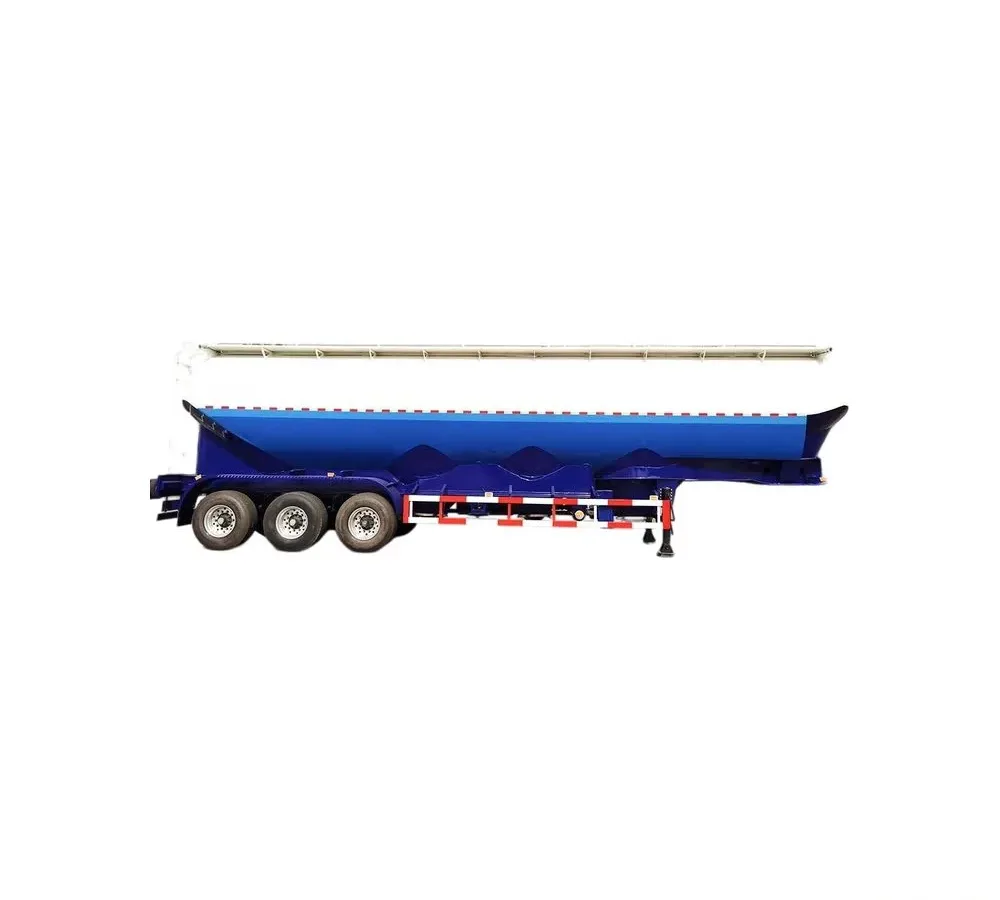
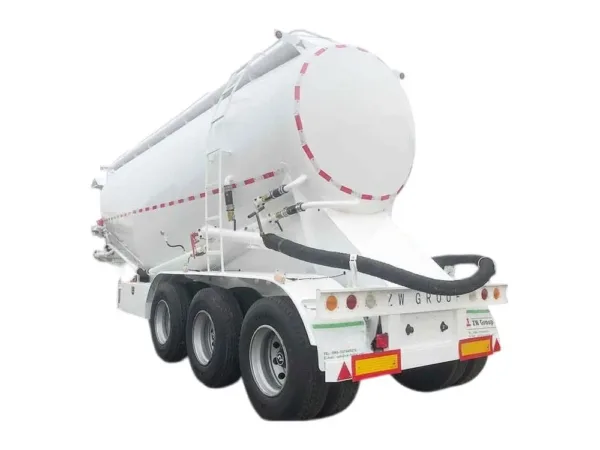
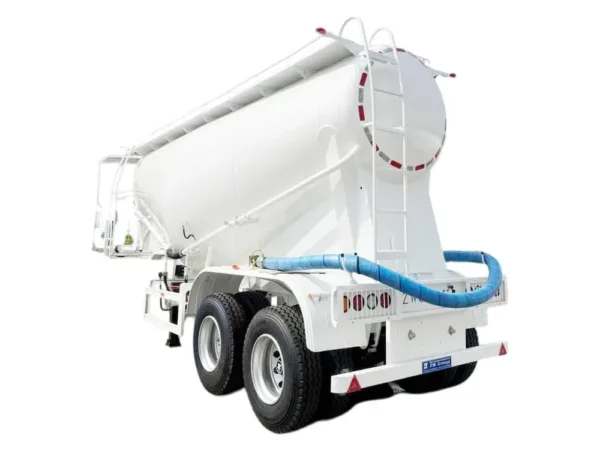
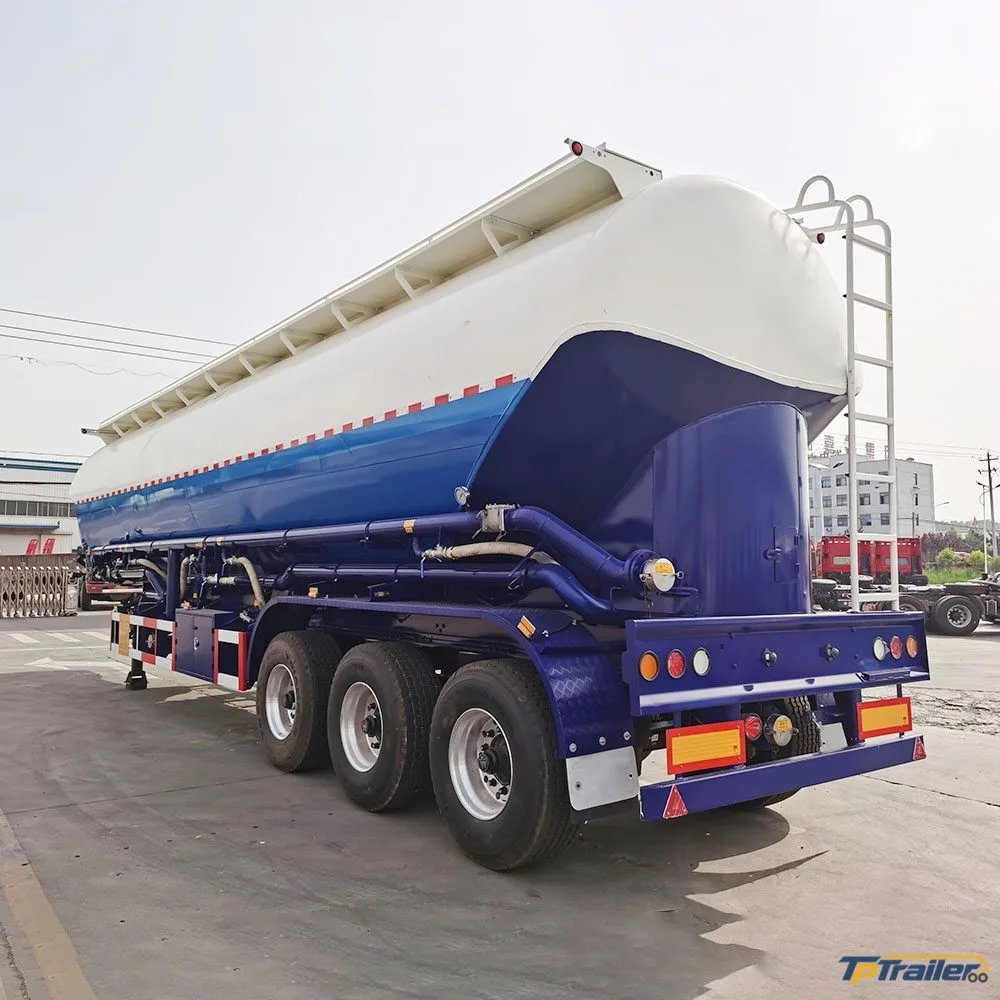
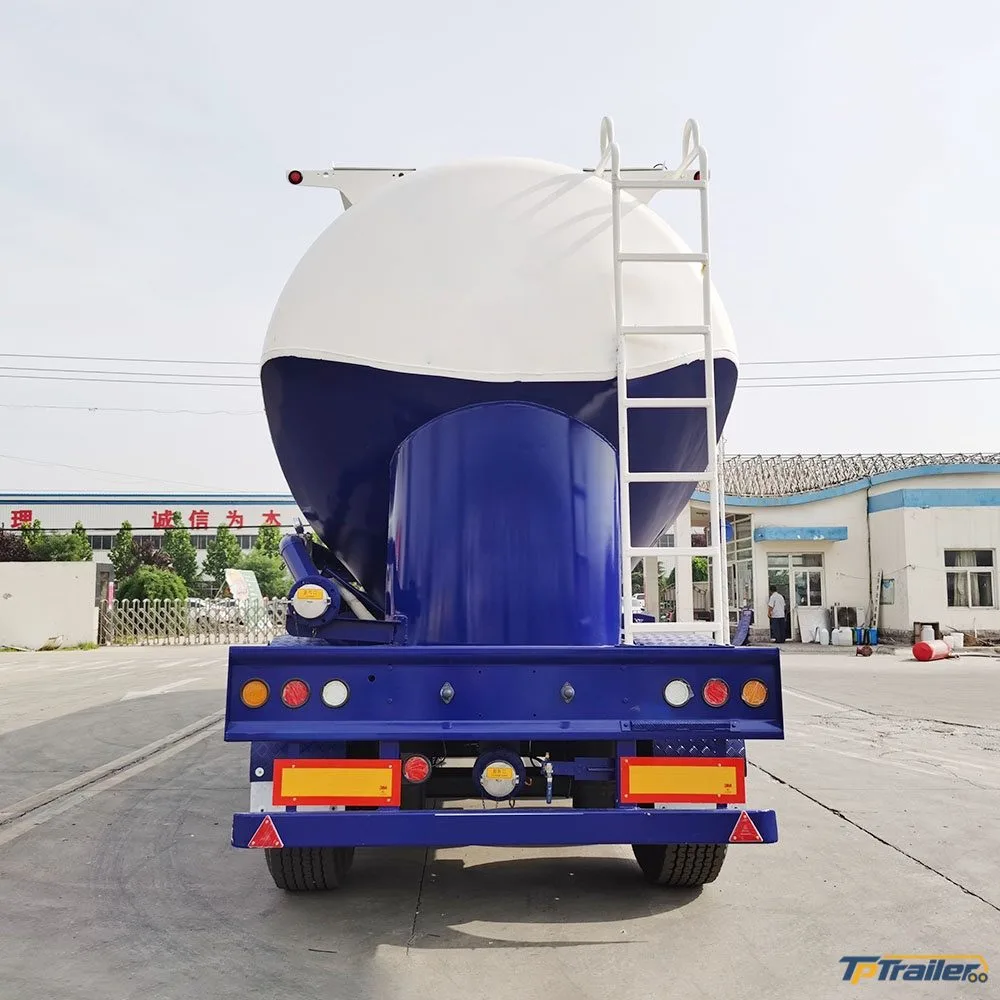
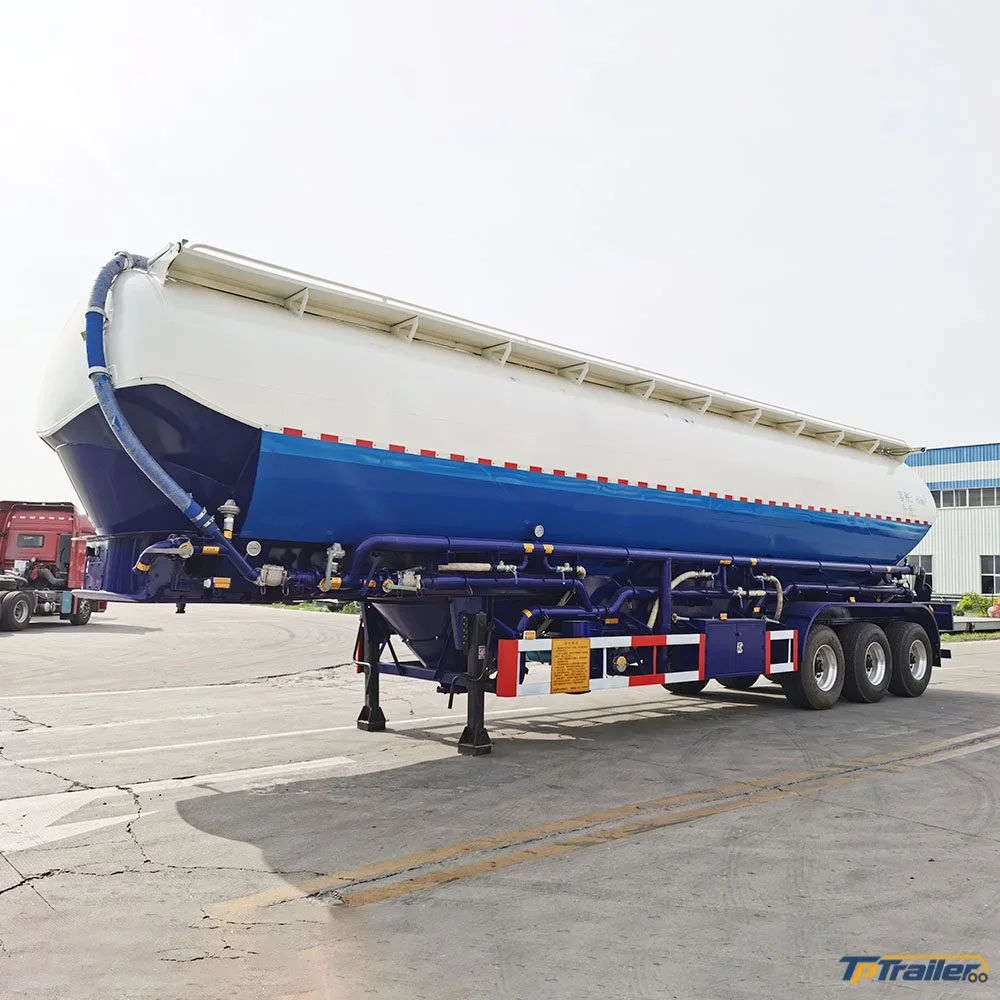
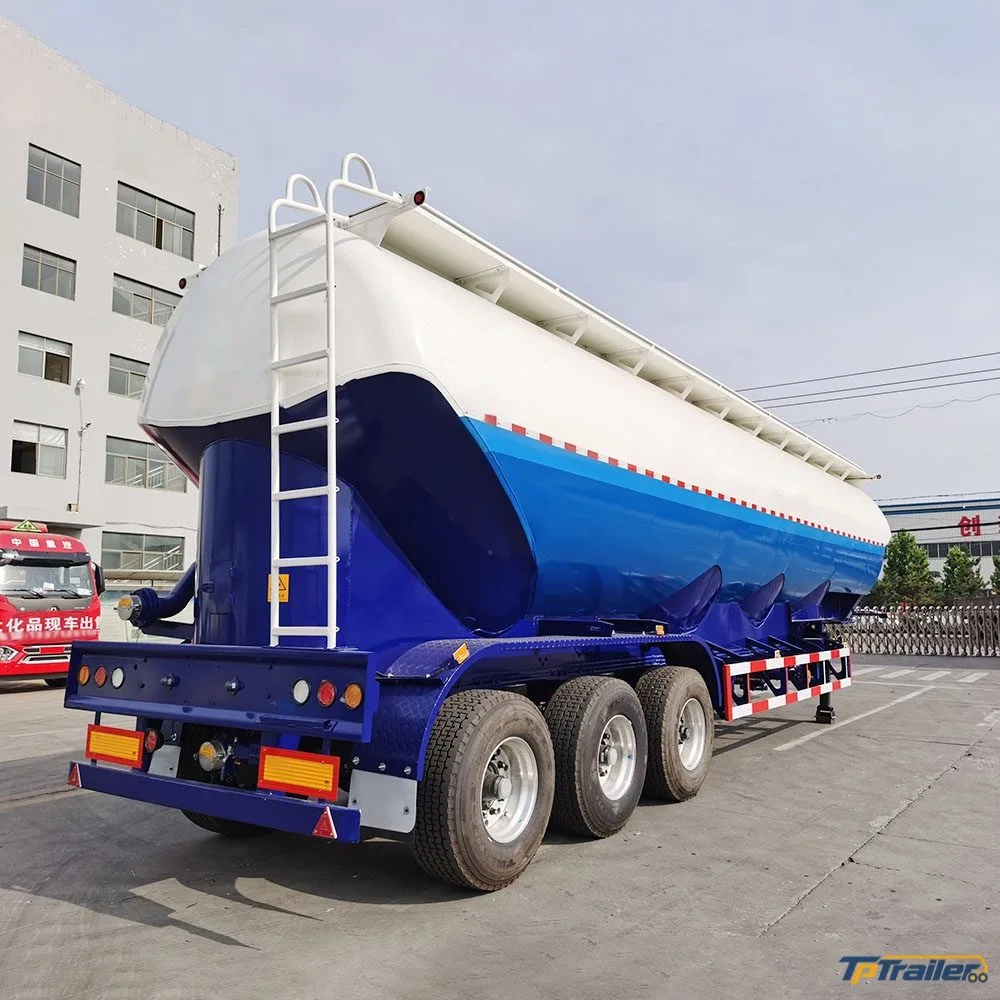
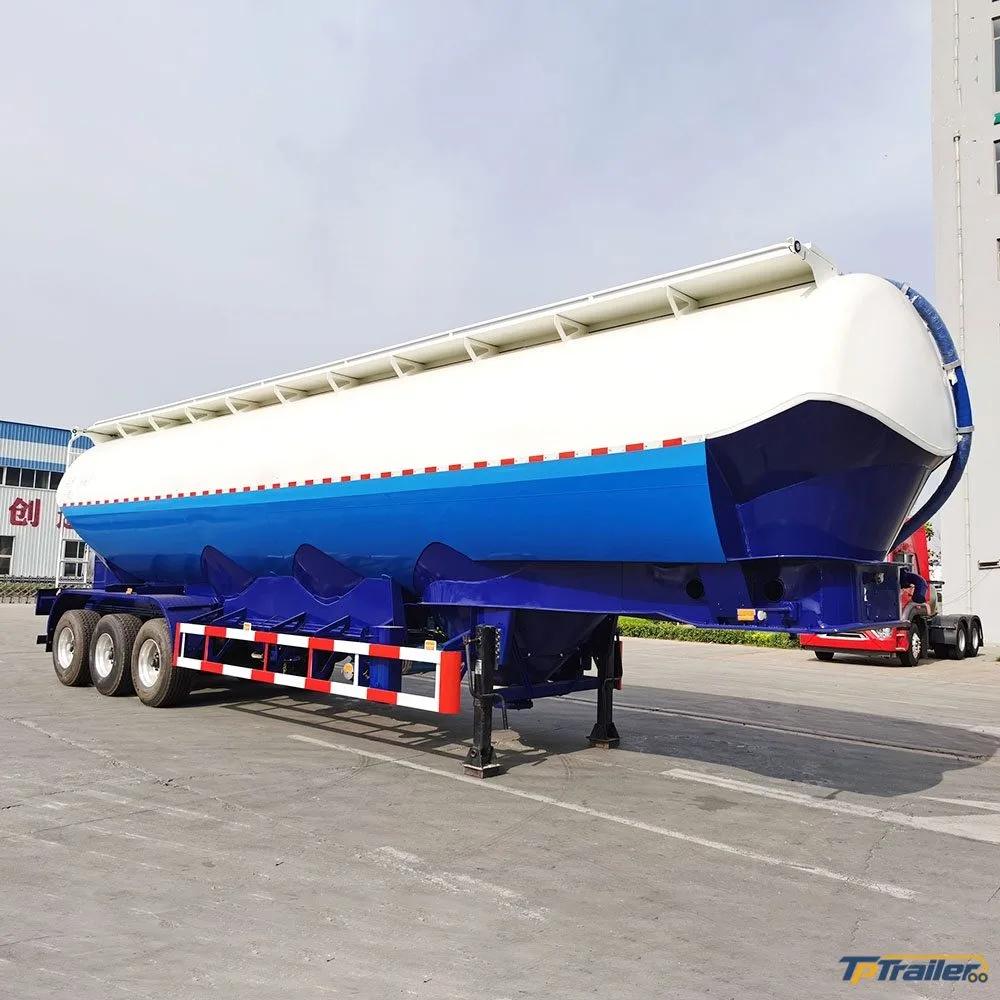
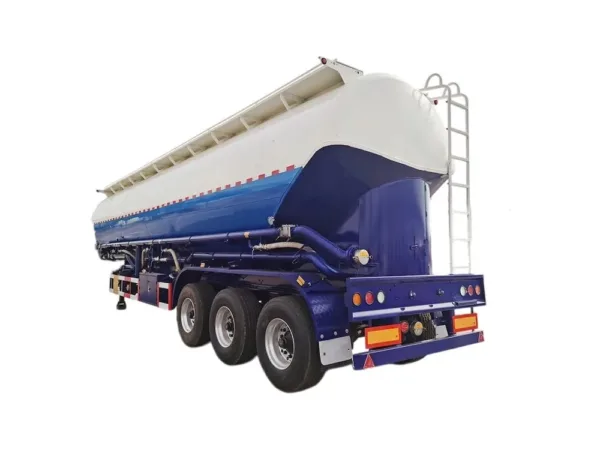
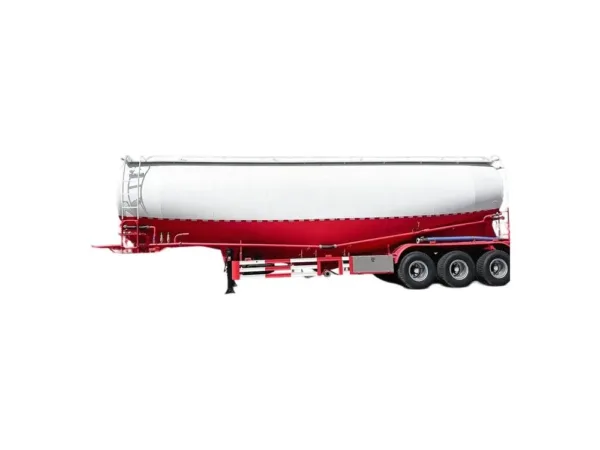
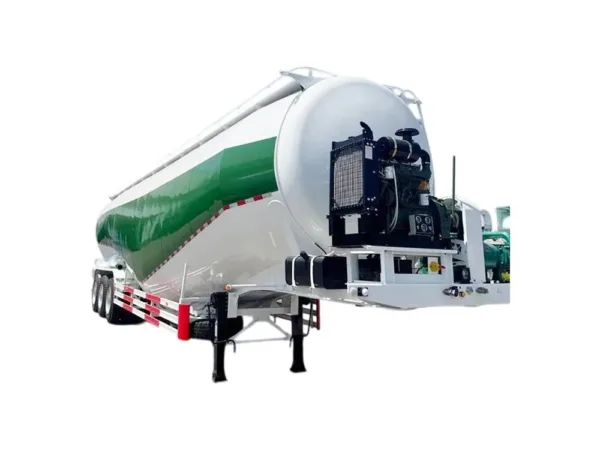
A dry bulk tanker trailer is a cylindrical pressure vessel on wheels, built to move free-flowing powders by air rather than by shovel. This three-axle aluminum alloy unit carries sugar, flour and other food-grade powders in a smooth-shell tank, discharging them pneumatically through aeration and air pressure. It suits bulk hauliers, food processors and logistics fleets that need a dedicated powder asset rather than a converted box or a rented silo truck.
Table of Contents
The strongest reason to choose it is the aluminum shell: it keeps the tare weight low enough to leave useful payload inside the rated load band, and it presents a clean, non-corroding interior surface to food-grade cargo. That combination is what makes a dry bulk tanker trailer earn its place on a tight dispatch schedule.
Why It Works On Site
Aluminum tank shell. An aluminum body weighs less than a steel equivalent of the same volume, so more of the rated load capacity goes to cargo instead of structure. For a fleet paid by delivered tonnage, that difference repeats on every trip, and it is the main reason operators specify a dry bulk tanker trailer in aluminum rather than mild steel.
Cylindrical pressure tank structure. The round shell distributes internal air pressure evenly, which is what allows pneumatic discharge without a tipping ram or an external blower rig on the ground. A dry bulk tanker trailer built this way can empty into a receiving silo through a hose, so the driver does not depend on the consignee having a tipper pit or a raised dock.
Food-grade powder application. Sugar, flour and similar powders are sensitive to contamination and to moisture pickup. A tank dedicated to food-grade work keeps the previous cargo out of the next load, which matters when a dry bulk tanker trailer is booked back-to-back between a mill and a bakery without a wash between drops.
Mechanical suspension. Leaf-spring suspension is simple, repairable and predictable on the mix of sealed roads and site tracks that powder deliveries usually involve. Fewer components means fewer roadside surprises, and a dry bulk tanker trailer on mechanical suspension can be kept running by workshops that do not carry air-suspension spares.
Three-axle configuration. Spreading the load across three axles keeps axle loads within road limits while supporting the tank and its payload. It also gives the dry bulk tanker trailer stable tracking when the tank is partly full and the powder shifts, which is the condition that catches out shorter or two-axle powder units.
Shell thickness of 5.8 mm. The wall section is sized for pressure discharge duty rather than for gravity dumping. That thickness supports repeated pressurise-and-vent cycles, so the dry bulk tanker trailer holds its shape and its aeration performance over a long service life instead of denting at the shell seams.
Where It Is Used
The most common duty is the mill-to-plant run. A dry bulk tanker trailer loads flour or sugar at a processing site, runs on sealed highway to a bakery, confectionery line or beverage plant, and discharges into a receiving silo through a pneumatic hose. These are short, repeated cycles, often several per day, and the trailer is judged on how fast it turns around at each end. Because discharge is by air, the receiving site only needs a fill pipe and a silo inlet, not a pit or a tipper. That widens the list of delivery points a dry bulk tanker trailer can serve, including urban plants where space is tight and reversing into a pit is impractical.
The second duty is bulk food logistics between storage and distribution. Here the cargo may be starch, cocoa powder, powdered milk or similar free-flowing food-grade material, moved from a port-adjacent warehouse or a bulk store to a packing line. The aluminum shell and the dedicated tank matter most in this work, because cross-contamination between food and non-food cargoes is the risk that ends contracts. Operators running a dry bulk tanker trailer on this lane usually keep it on food-grade work only and schedule cleaning between product changes. The same asset can also cover seasonal peaks, when a processor needs extra powder capacity for a harvest or a campaign without buying another silo.
Choosing The Right Spec
Match the load band to the cargo density. This trailer sits in the 15001-20000 KG load capacity band. Sugar and flour differ in bulk density, so the same tank volume fills to different weights. Check the density of your usual cargo against the band before you commit, because a dry bulk tanker trailer that cubes out before it weighs out will run light on every trip.
Decide whether aluminum is justified. The aluminum shell and the 5.8 mm wall cost more than a basic steel build, and they pay back where tare weight and food-grade cleanliness both matter. If your work is abrasive mineral powder on rough sites, compare the duty cycle honestly. A dry bulk tanker trailer specified for food-grade service is a different tool from a general powder hauler.
Check the suspension against your routes. Mechanical suspension suits fleets running mostly sealed roads with occasional site tracks, and it is the easier system to repair in a basic workshop. If your dry bulk tanker trailer will spend most of its life on unsealed haul roads or in sensitive urban zones, weigh that against the simplicity of leaf springs before ordering.
Plan discharge at the receiving end. Pneumatic emptying needs air supply and a compatible silo inlet at the destination. Confirm the fill pipe size and the pressure your receivers accept before you finalise the order. A dry bulk tanker trailer is only as fast as the slowest connection in the chain, so the discharge interface is a specification decision, not an afterthought.
Customisation Before Delivery
Axle count. The dry bulk tanker trailer is built on a three-axle running gear as described in the specification. If your route profile or payload plan calls for a different axle arrangement, raise it at order confirmation so the running gear and tank mounting are matched before the build starts. The choice is settled in the signed order, not after production.
Suspension type. Mechanical suspension is the standard fitment on this dry bulk tanker trailer. Buyers who run mostly smooth highway routes can keep it, while operators who want a different ride characteristic should state the preference when the order is confirmed. The suspension choice affects how the tank sits on the frame, so it is locked in early.
Tank shell specification. The dry bulk tanker trailer uses an aluminium cylindrical pressure tank with the shell thickness shown in the specification table. Confirm the shell specification against the powder you intend to carry, since food-grade sugar and flour place different demands on the interior finish than general cement work.
Colour and finish. Surface colour and any marking scheme are agreed at order confirmation. For a dry bulk tanker trailer used in food-grade powder transport, tell us the finish requirement up front so the exterior coating and any interior treatment are planned together rather than added later.
Tyre and wheel fitment. Tyre size, wheel type and the number of spare wheels are confirmed with the order. Because the dry bulk tanker trailer is rated for the load capacity given in the specification, the tyre selection must match that rating. State your preference for the running gear before production begins.
Fitting And Installation
When the dry bulk tanker trailer arrives, the first job is matching it to your tractor unit and to the blower equipment you already own. Check the kingpin and coupling height against your fifth wheel, then confirm the landing gear position clears your tractor’s frame. The pneumatic system is the part that needs the most attention: compare the discharge pipe diameter, the hose coupling size and the air inlet connection on the tank against the blower and hose set you plan to use.
Route the discharge hose so it does not foul the suspension or the tyres on full lock. If any of these dimensions do not match, the dry bulk tanker trailer cannot be put to work until adapters arrive, and that is downtime you pay for twice — once in lost haulage and once in the cost of the fix.
Electrical and braking connections come next. Confirm the lighting plug matches your tractor’s socket, check that the ABS or EBS connector, where fitted, is compatible, and test the brake lines before the first loaded run. Torque values for wheel nuts and structural fasteners should come from the documentation supplied with the unit; do not rely on generic figures. Because this dry bulk tanker trailer carries a pressure tank, the pressure relief valve and the aeration system should be checked by a competent fitter before any powder is loaded. If your order needs a specific mounting pattern or pipe layout, a fitment drawing is confirmed at quotation, so the match is settled on paper before the unit is built.
Service Life And Maintenance
Tank shell and interior finish. On a dry bulk tanker trailer carrying sugar or flour, the interior surface wears first through abrasion at the discharge cones and aeration pads. Inspect the interior for scoring, residue build-up and coating damage at each scheduled check. The aluminium shell resists corrosion, but food-grade work still demands a clean, intact interior to protect the load.
Pressure and safety valves. The relief valve and the pressure gauges are the components that protect the tank during discharge. Test them regularly and keep the seals in good order. A sticking valve on a dry bulk tanker trailer is a safety issue, not just a performance one, so replace worn parts rather than adjusting around them.
Aeration and discharge pipework. The aeration pads, air lines and discharge hose couplings take constant wear. Inspect for leaks, loose clamps and worn gaskets, and check that the pipework is clear before loading. Keeping the pneumatic circuit tight extends the working life of the dry bulk tanker trailer and shortens every unloading cycle.
Suspension and running gear. Mechanical suspension components, shackle pins and bushes wear with loaded mileage. Check them for play and inspect the tyres for uneven wear, which often points to a suspension fault. Regular inspection of the dry bulk tanker trailer running gear protects the tank from the vibration that comes with worn suspension.
Brakes, lights and structure. Brake adjustment, lining condition and lamp function should be checked on a set routine. Walk the frame and tank mounts for cracks or loose fasteners, and keep the exterior clean so early corrosion is visible. A disciplined inspection routine is what keeps a dry bulk tanker trailer in revenue service for its full working life.
Packing And Container Loading
Each dry bulk tanker trailer leaves the works as a complete unit, not as loose parts. The cylindrical pressure tank is the structural body, so there is no separate tank shell to crate. What does get packed are the removable items: discharge pipework ends, valves, manhole covers and any loose fittings, which are wrapped and secured so they cannot move against the aluminium shell during the voyage. Exposed machined faces on the axle ends and the landing gear are greased and capped. The buyer should ask for a packing list that matches the bill of lading line by line before the container is sealed.
A dry bulk tanker trailer of this size is not designed to be nested or stacked. The tank structure is a pressure vessel with fixed supports, and stacking two units would load the shell in a way it was never engineered for. Instead, loading is planned around the unit footprint, with the trailer blocked and chocked to the container floor and lashing points used at the chassis, not at the tank shell. Buyers shipping more than one unit should confirm the loading plan in writing, because the arrangement changes with quantity and with the discharge configuration ordered.
Common Mistakes Buyers Make
Ordering the wrong discharge configuration. Pneumatic unloading depends on the aeration and pipework layout matching the receiving silo, and a mismatch means the trailer cannot be used as delivered. The single check is to send the buyer’s receiving connection drawing with the enquiry and have the supplier confirm the discharge arrangement against it before the order is placed.
Ignoring the tare weight against local road limits. The tare weight is fixed by the aluminium construction, and the payload figure is only useful if the combined weight stays legal on the routes the trailer will run. The check is to compare the tare weight with the permitted gross weight on the buyer’s actual roads, not with a generic national figure.
Assuming food-grade suitability without confirming the internal finish. The application covers sugar and food-grade powder, but suitability depends on the internal surface condition and cleanliness of the tank as supplied. The check is to state the intended cargo in writing and ask the supplier to confirm the internal treatment and the cleaning condition at handover.
Specifying suspension without matching the duty cycle. The mechanical suspension is a defined choice, and buyers often order it by habit rather than by the roads and loads the trailer will see. The check is to describe the route profile and typical load in the enquiry so the suspension specification is confirmed against real operating conditions.
Skipping the arrival inspection. Damage in transit is usually found at the shell seams, the pipework and the axle ends, and a dry bulk tanker trailer inspected days later is hard to claim on. The check is to photograph the unit at the container before unloading and compare every item against the packing list while the seal record is still fresh.
Buyer Questions
Can the tanker be shipped in a standard container, and how is it secured?
The unit is loaded as a complete trailer and secured at the chassis and axle points rather than at the tank shell, because the shell is a pressure structure and should not carry lashing loads. Ask the supplier for the loading plan and the lashing point list before shipment. On arrival, check that the chocks and lashings are still in place and photograph them before removal. Container type and the exact number of units per shipment are confirmed at quotation.
What should I confirm about the discharge system before ordering a dry bulk tanker trailer?
Send the receiving silo connection details, the required discharge height and the conveying distance to the supplier with the enquiry. Ask for the pipework and aeration layout to be confirmed against those details in writing. Confirm whether the discharge outlets are supplied with caps and whether any hose or coupling is included, since the input does not define the accessory set. Accessory content and discharge options are confirmed at quotation.
How do I verify the specification on arrival?
Compare the delivered unit against the order confirmation item by item: tank material, shell thickness, tare weight, suspension type and tank structure. Measure the shell thickness at several points if you have the instrument, and check the tare weight against the weighbridge ticket. Photograph the tank, pipework and axle ends before unloading. Any deviation should be raised with the supplier before the unit enters service. Documentation supplied with the shipment is confirmed at quotation.
To receive an accurate quotation, send the overall length you need, the axle count and the quantity you intend to order. State your cargo and discharge requirements in the same message. Pricing depends on quantity, and the dry bulk tanker trailer configuration is confirmed against your written specification before the order is accepted.
We use cookies to enhance your browsing experience, serve personalized content, and analyze our traffic. By clicking "Accept All", you consent to our use of cookies. Privacy Policy
Cookie Preferences
Required for the website to function properly. Cannot be disabled.
Help us understand how visitors interact with the website (Google Analytics).
Used to deliver personalized ads and measure ad campaign effectiveness.












Write a Review