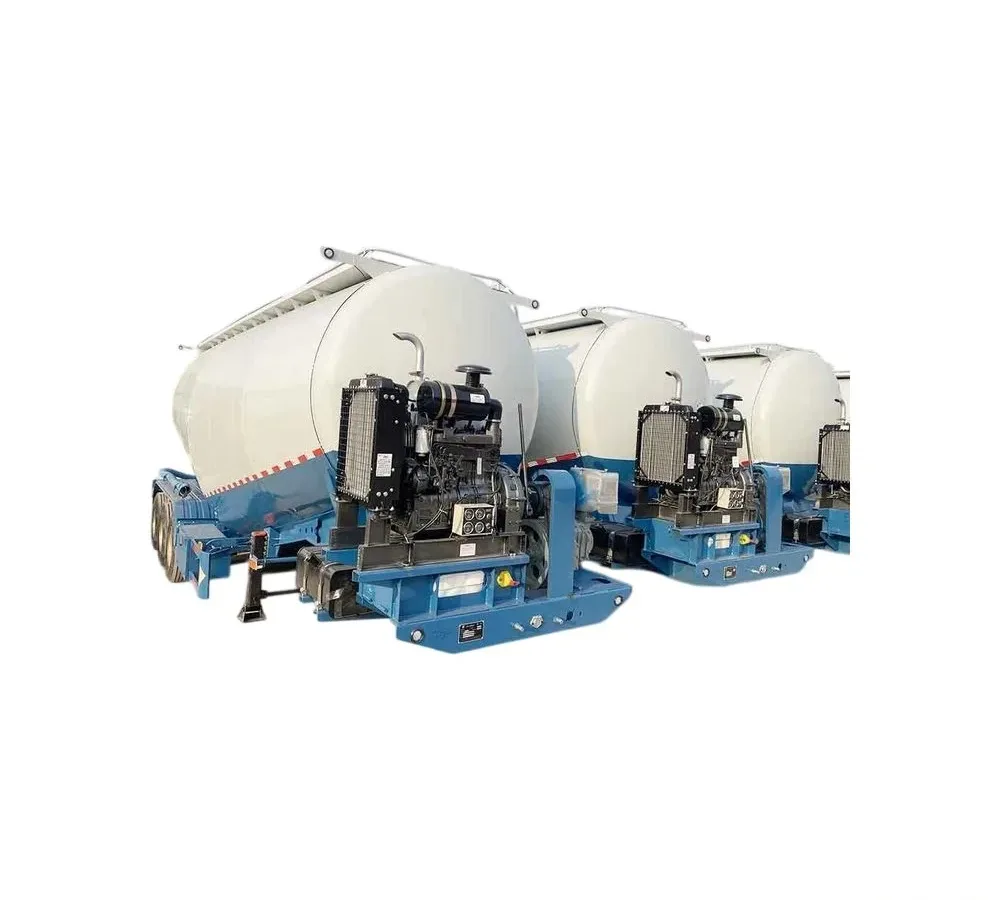
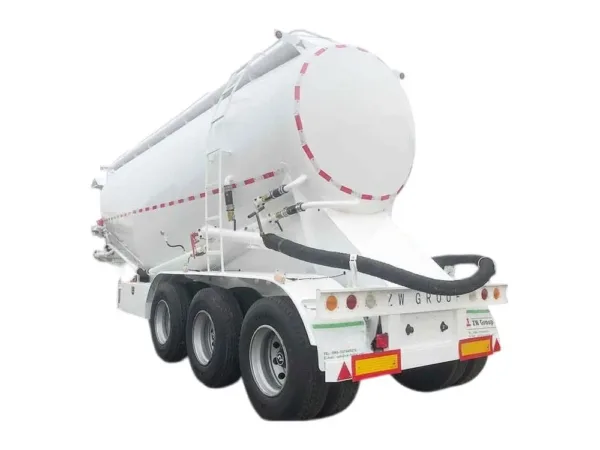
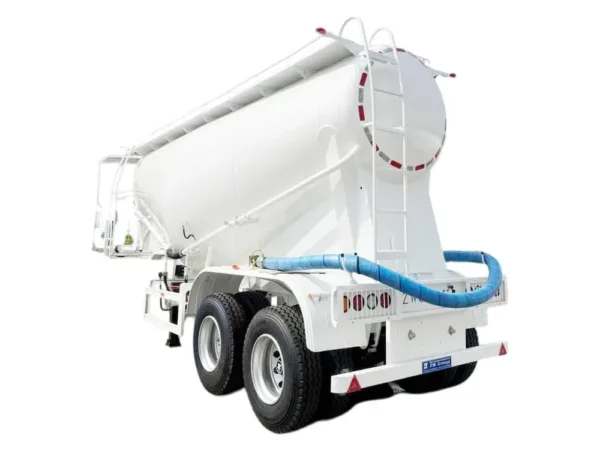
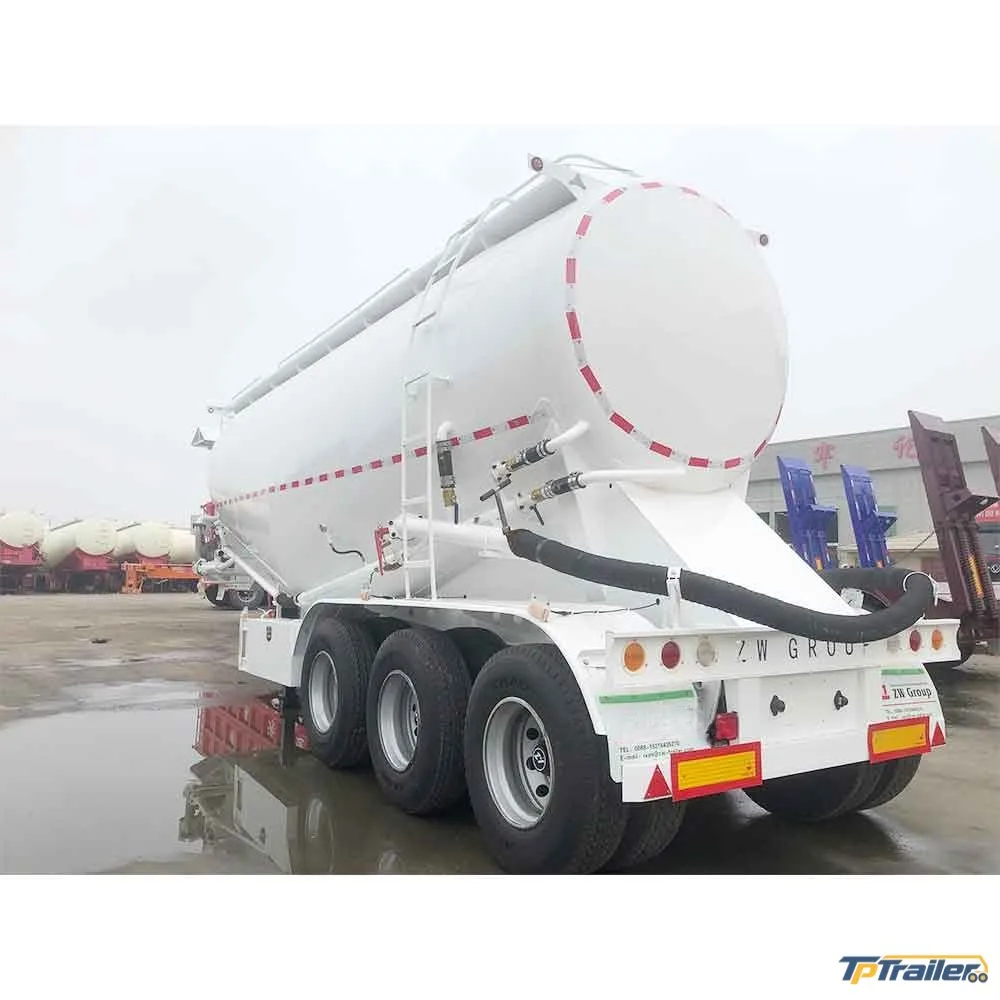
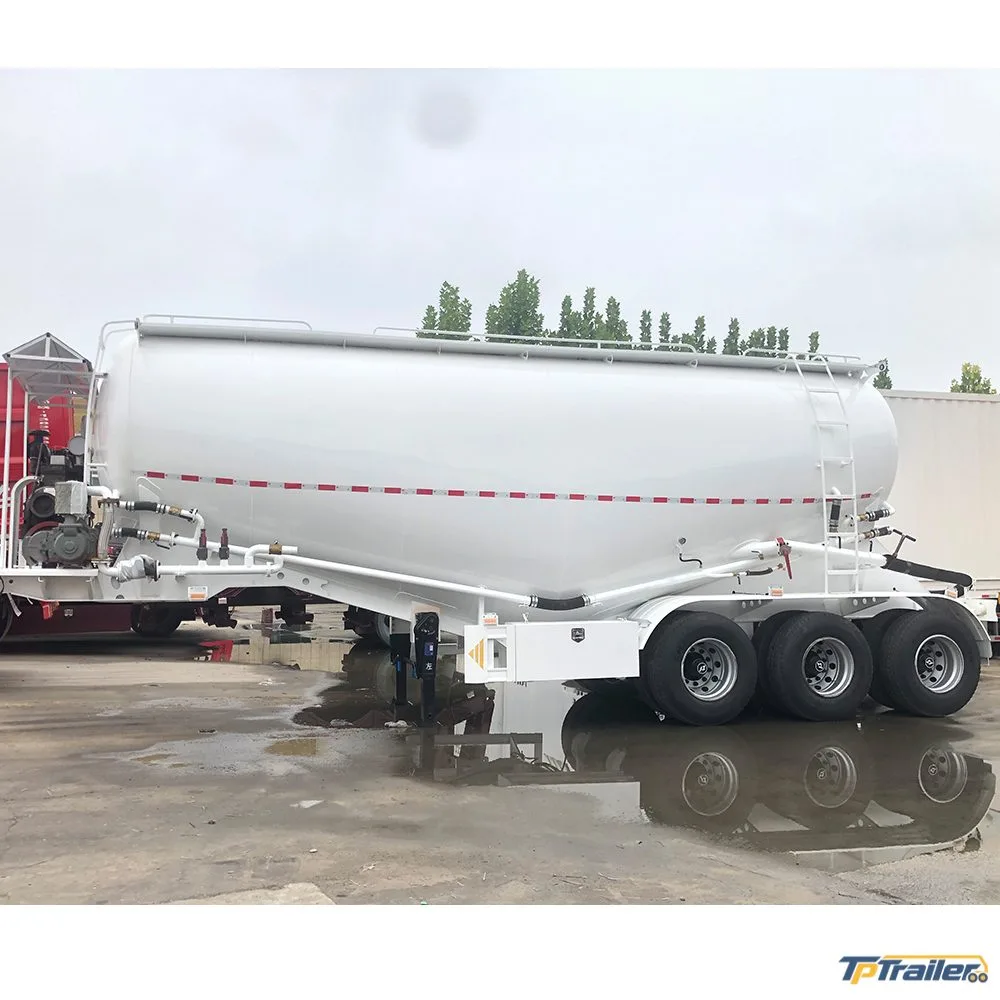
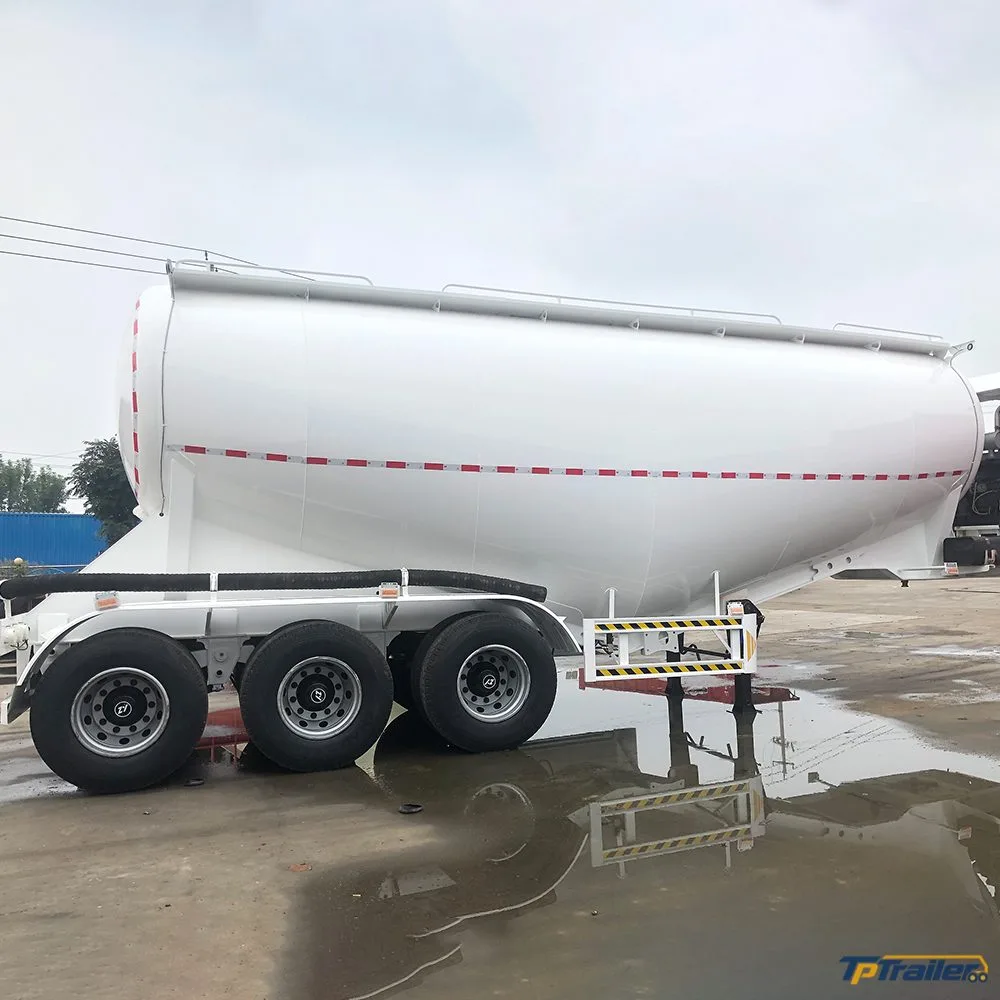
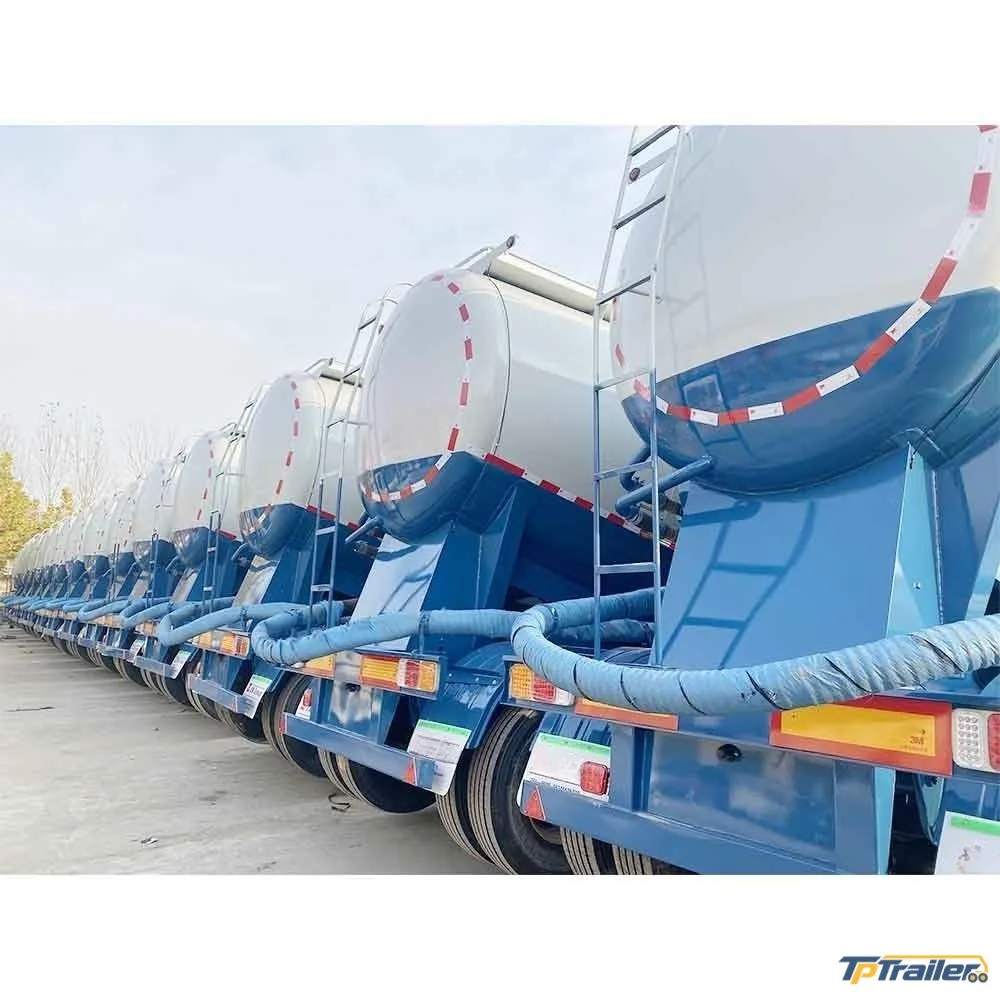
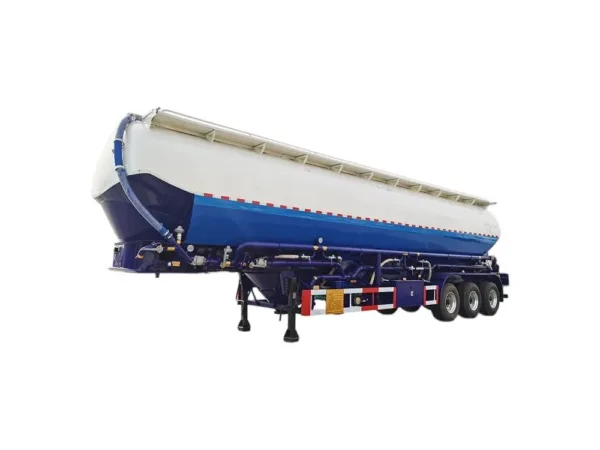
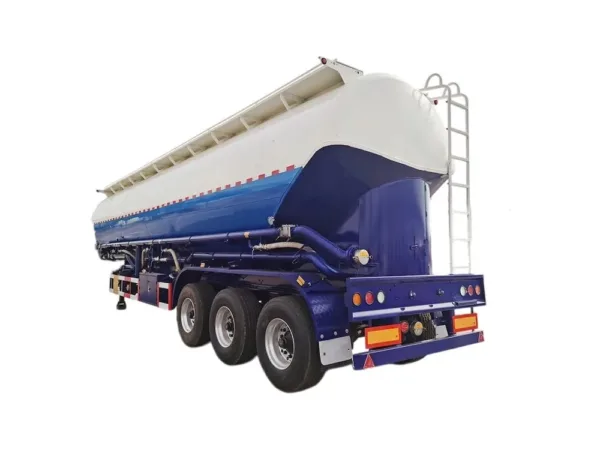
The bulk cement tank trailer is a 40cbm steel dry bulk tanker semi trailer built to move cement powder from silo to site without bagging. It suits fleet operators, cement distributors and construction material haulers who need high loading capacity on repeated short and medium runs. The single strongest reason to choose it is the 60T load capacity carried on a three-axle chassis, which lets one tractor unit clear a full silo batch per trip instead of splitting the load. Steel construction keeps the tank robust against site handling, and the trailer is configured for the discharge equipment cement plants already use. It is a working asset for high-cycle powder logistics, not a general-purpose flatbed.
Table of Contents
Why It Works On Site
60T load capacity. The rated load capacity sets how much powder each trip moves, so a bulk cement tank trailer can take a full silo allocation in one run. That cuts the number of trips per delivery and keeps the tractor working instead of waiting at the plant. For fleets paid per tonne delivered, the capacity is the earning figure.
40cbm tank volume. Tank volume and load capacity work together on light cement powder. The 40cbm body gives the space to fill toward the rated load without constant weight checks. It also means the bulk cement tank trailer handles a full batch from a plant silo rather than a partial fill that wastes a trip.
Q345 steel main beam. The main beam uses Q345 steel with a 16mm down plate and 8mm middle plate. That build carries the tank and load over rough site roads and repeated loading cycles. A stiff beam keeps the tank mounting points aligned, which matters on a bulk cement tank trailer that discharges under pressure.
13-ton axles on three axles. Three 13-ton axles spread the loaded weight across the running gear, so each axle carries a share instead of one overloading. This keeps tyre and bearing wear even on long hauls. The bulk cement tank trailer stays stable when a full tank shifts load on braking or on cambered site roads.
Suspension choice. Mechanical or air suspension is selected at order. Mechanical suspension suits predictable haul routes and simple maintenance schedules. Air suspension softens the ride for the tank body and the road surface. Either way, the bulk cement tank trailer is matched to the routes the fleet actually runs, not to a single default.
Heavy-duty landing gear. The 28T manual landing gear is rated for a loaded tank, so the bulk cement tank trailer can be dropped and picked up without the tractor taking the weight. That lets one tractor swap between trailers and keeps a spare tanker ready at the plant.
Where It Is Used
The core job for a bulk cement tank trailer is moving dry cement powder from a plant or distribution silo to a concrete batching plant, a pre-mix station or a construction site with its own receiving silo. These are short and medium runs, often repeated several times a day, where the trailer loads at the plant, drives a known route and discharges into a fixed hopper. The 60T load capacity and 40cbm tank volume suit this cycle because each trip carries a full silo batch and the trailer returns empty for the next load.
Fleets running dedicated cement corridors recognise this pattern: fixed loading points, fixed receiving points, and a premium on trips per day rather than on unusual cargo. A bulk cement tank trailer built for this rhythm keeps the tractor productive and the discharge equipment matched to the tank.
The same trailer also serves less regular powder hauling. Cement distributors use a bulk cement tank trailer to move stock between depots when bagged product would add handling and cost. Site work brings runs over unfinished access roads, where the steel tank and Q345 main beam take the knocks that a lighter body would not. Operators also use the trailer for dry bulk powders handled alongside cement, provided the receiving equipment matches. On these jobs the value is flexibility: one bulk cement tank trailer covers depot transfers, site deliveries and spot powder loads without a second trailer type. The three-axle layout and 60T load capacity keep it within normal heavy-haul practice on public roads and site tracks alike.
Choosing The Right Spec
Match tank volume to the load. The 40cbm body and 60T load capacity are the pair to check first. On dense powders the tank may reach rated load before it is full; on lighter powders volume fills first. Buyers running a fixed cement grade should confirm which limit their route hits, because it decides whether the bulk cement tank trailer is trip-limited or volume-limited.
Pick suspension by route. Mechanical suspension is the simpler choice for steady haul roads and routine workshop schedules. Air suspension is the option when the bulk cement tank trailer spends time on rougher site access or when the tank body needs a softer ride. The choice is made at order, so it should follow the actual route mix rather than a default.
Set tyre and rim to the duty. Tyre sizes 11R22.5, 12R22.5, 11.00R20 and 12.00R20 are offered, with 9.0-22.5 steel wheel rims. The size should match what the fleet already stocks so spares stay interchangeable. Buyers standardising a mixed fleet should align the bulk cement tank trailer with existing tyre stock to avoid carrying two sizes.
Choose king pin and axle brand to the tractor. The king pin is 2″ (50mm) or 3.5″ (90mm), and the axles are 13-ton units or a named brand. The king pin must match the fifth wheel already in service, and the axle choice should follow the load and route severity. These two options let the bulk cement tank trailer drop straight into an existing tractor line-up.
Customisation Before Delivery
The axle count is fixed when the order is confirmed. A three-axle bulk cement tank trailer suits many haul routes, but buyers moving different payloads can discuss the configuration with the sales team. The final axle layout is written into the order documents, and the running gear is built to that record rather than to a verbal understanding.
Suspension type is a real choice on this bulk cement tank trailer. Mechanical suspension is offered alongside air suspension, and the selection is settled at order confirmation. Air suspension changes how the trailer rides and how the load sits on the road, so the decision should match the tractor and the routes the trailer will serve, not a catalogue default.
Tyre size and wheel rim are selected per order. Several tyre sizes are available, and the steel wheel rim is matched to the chosen tyre. Because the tyre and rim pair carries the trailer at speed, the choice on a bulk cement tank trailer is confirmed before production, and the order record keeps tyre and rim together so the two cannot drift apart.
Colour is chosen from the offered range. Blue, yellow and white are standard options on this bulk cement tank trailer, and the colour is fixed at order confirmation. Paint choice is cosmetic, but it is recorded with the build so the delivered unit matches what the buyer signed for, which matters when a fleet wants a consistent look.
King pin and landing gear are confirmed alongside the running gear. The king pin is offered in two sizes, and the landing gear is a heavy-duty manual type, so the buyer should state the tractor coupling and expected ground conditions. Each choice on the bulk cement tank trailer is locked in at order confirmation, and nothing is assumed after that point.
Fitting And Installation
Fitting starts with the tractor. The buyer has to match the king pin size to the fifth wheel on the tractor that will pull the bulk cement tank trailer, and the two offered sizes cover the common couplings. The landing gear must be checked against the ground the trailer will stand on when uncoupled, because a heavy-duty manual set needs room to operate. Tyre and rim are matched at build, but the buyer should confirm the tyre size suits the routes and the local rules before the order is finalised.
Electrical and air connections follow the tractor, so the buyer should have the coupling points on hand. No fitment drawing is included in the product data, so a fitment drawing is confirmed at quotation instead of being assumed. That drawing is the reference the workshop should use when the trailer arrives.
A wrong size costs downtime. If the king pin does not match the fifth wheel, the bulk cement tank trailer cannot be coupled, and the unit sits until the coupling is corrected. If the tyre and rim do not suit the tractor or the route, the trailer may need new rubber before it earns anything. Air suspension adds another point to check, since the buyer must confirm the tractor and the trailer work together on the same setting.
Because the specification is settled at order confirmation, the cheapest moment to catch a mismatch is before production, not on delivery day. The buyer should send the tractor details with the order and keep the confirmed fitment drawing with the trailer documents so the workshop fits to the record. A short check at quotation protects the whole delivery schedule.
Service Life And Maintenance
The running gear wears first on any bulk cement tank trailer. Tyres, wheel rims and axle bearings carry the load on every trip, so the operator should inspect tread, rim condition and bearing play at each service. The steel wheel rim is a durable choice, but it still needs a check for cracks and looseness. Matching the tyre to the rim at order time keeps this wear predictable.
The suspension is the next wear point. Mechanical suspension and air suspension both have parts that move under load, and the operator should look at bushes, shackles and air bags where fitted. A bulk cement tank trailer on rough ground loads the suspension harder, so the inspection should follow the ground the trailer actually works on rather than a fixed habit.
The tank shell and its joints deserve a regular look. Cement powder is abrasive, and the discharge lines and connections take the most contact. The operator should inspect seams, hatches and pipework for wear or looseness on the bulk cement tank trailer. A clean, dry tank after discharge slows corrosion and keeps the powder free of contamination on the next load.
The main beam is a structural part and should be checked for cracks and loose fasteners. The steel grade and plate thickness are stated in the specification, and the buyer can refer to those values when planning inspection. A bulk cement tank trailer that works overloaded or on poor roads stresses the beam more, so the operator should keep the load within the rated capacity.
The landing gear and king pin are small parts with a large job. Heavy-duty manual landing gear should be kept clean and greased, and the king pin should be checked for wear where the fifth wheel grips it. On a bulk cement tank trailer these parts are cheap to maintain and expensive to neglect, so they belong on every inspection list.
Packing And Container Loading
A bulk cement tank trailer ships as a complete unit. The tank shell, the discharge pipework and the aeration system stay assembled. Exposed fittings are wrapped, and loose items travel inside the tank or in a marked crate fixed to the deck. The buyer should confirm at quotation which fittings are removed for the voyage and how they are labelled for refitting. Ask for the loading plan before dispatch, and check that the frame is blocked so it cannot shift against the container walls.
Space saving is limited on a bulk cement tank trailer. The vessel is long and cannot be nested like a flatbed. Some suppliers ship two or three units per break-bulk lot or on a flat rack, not inside a standard box. Ask which method applies to your order and how the units are separated. On arrival, check the tank shell for dents, the pipework for bending, and the landing gear and axles for impact damage. Photograph the seals and the frame before unloading.
Common Mistakes Buyers Make
Ignoring the king pin size. The tractor coupling must match the king pin fitted to the trailer. A mismatch means the unit cannot be towed from the port. Confirm the king pin size against your tractor before the order is released, and state it on the purchase order.
Ordering the wrong axle rating. The axle brand and rating must suit the loaded weight you plan to carry. Under-specified axles wear fast and fail inspection. Check the axle rating against your expected payload and road rules, then confirm the choice in writing.
Skipping the suspension choice. Mechanical and air suspension are both offered, and the wrong one affects ride and maintenance. Decide which suits your routes and workshop support. Ask what the suspension choice changes in the build, and confirm it on the order sheet.
Overlooking wheel rim and tyre pairing. The rim size must match the tyre size you intend to run. A mismatched set cannot be used and must be replaced. Confirm the rim and tyre combination in the quotation, and check the delivered set against the order before signing.
Not checking the main beam build. The main beam steel grade and plate thickness carry the load. A buyer who never asks may receive a lighter build than expected. Ask for the main beam specification in writing and compare it with the quotation before you pay a deposit.
Buyer Questions
Can the bulk cement tank trailer be shipped in a standard container?
Not as a complete unit. The trailer is a long, assembled vessel, so it normally moves on a flat rack, by break-bulk or on a ro-ro vessel. Ask the supplier which method applies to your order and get the loading plan before dispatch. Confirm the port of arrival and whether the receiving terminal can handle the method. Check the frame blocking and the tie-down points on the plan.
What should I check on arrival before accepting the bulk cement tank trailer?
Walk the unit before signing. Check the tank shell for dents, the discharge pipework for bends, and the landing gear and axles for impact damage. Confirm the king pin size, the axle rating and the rim and tyre set against your order sheet. Photograph the seals, the frame and any loose crates. Report damage to the carrier in writing on the same day, and keep the photos with the delivery papers.
Can I specify colour, tyre size and axle brand on the bulk cement tank trailer?
Yes. Colour, tyre size, axle brand and suspension type are all selectable. Send your required combination in writing with the order, and ask for it to appear on the quotation and the order sheet. Confirm the king pin size and the main beam specification at the same time. Anything not stated on the order sheet may be built to the standard configuration, so check the final sheet before the deposit.
To receive a quotation for a bulk cement tank trailer, send the tank length you need, the axle count, and the quantity you plan to order. Add your preferred colour, tyre size and king pin size if these are fixed. Our team will confirm the build against your list.
We use cookies to enhance your browsing experience, serve personalized content, and analyze our traffic. By clicking "Accept All", you consent to our use of cookies. Privacy Policy
Cookie Preferences
Required for the website to function properly. Cannot be disabled.
Help us understand how visitors interact with the website (Google Analytics).
Used to deliver personalized ads and measure ad campaign effectiveness.













Write a Review