60 Ton 3 Axle Dry Bulk Cement Tank Trailer Carbon Steel
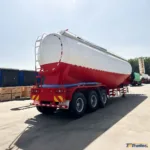
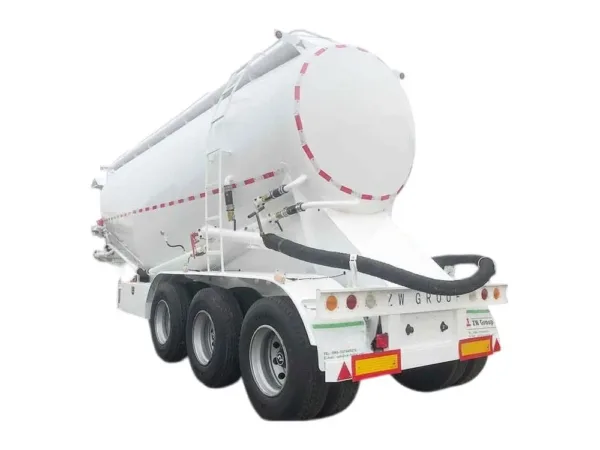
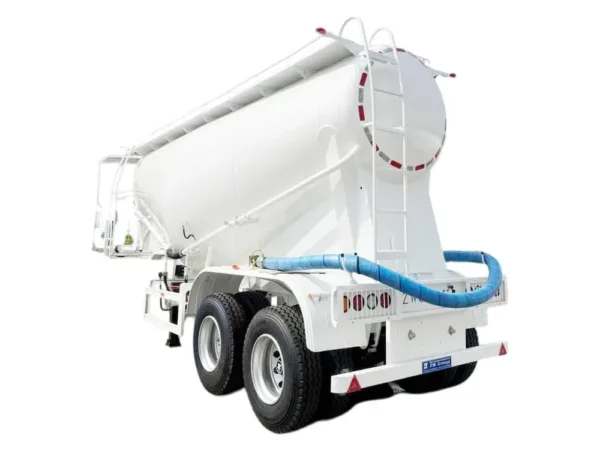
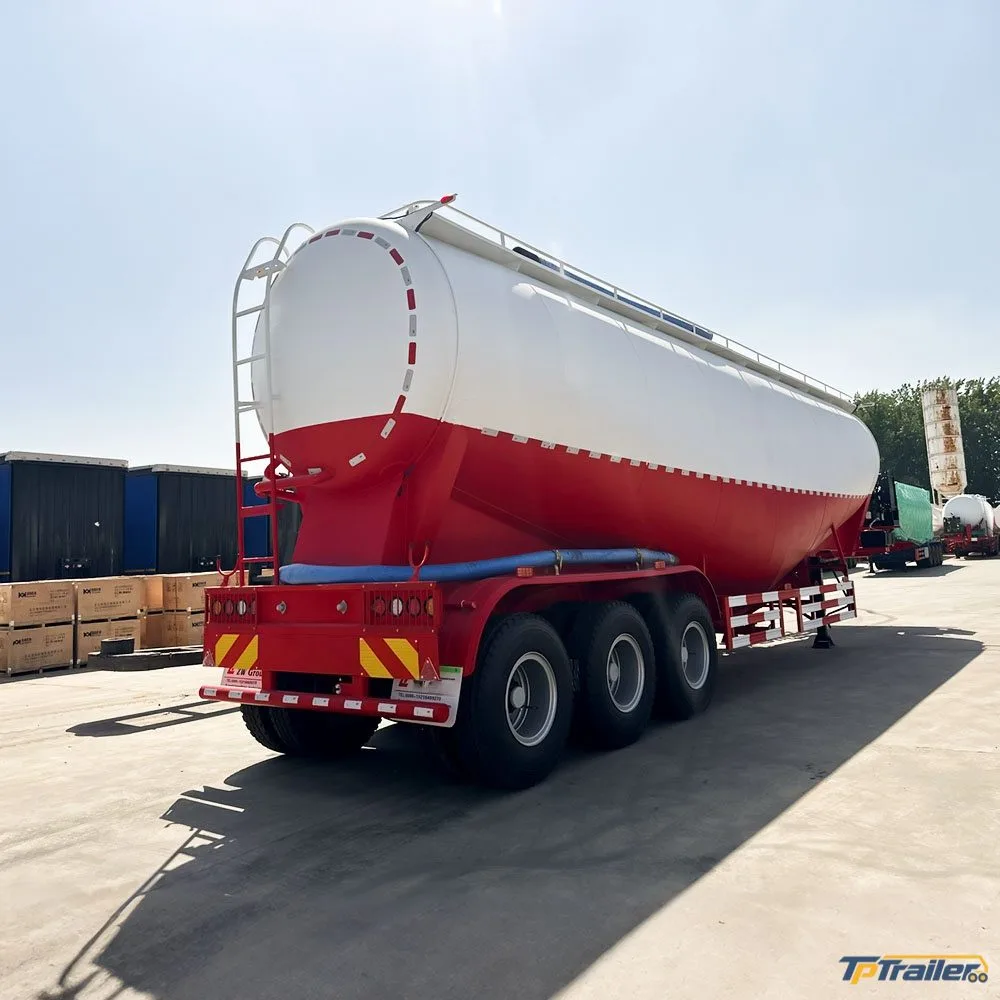
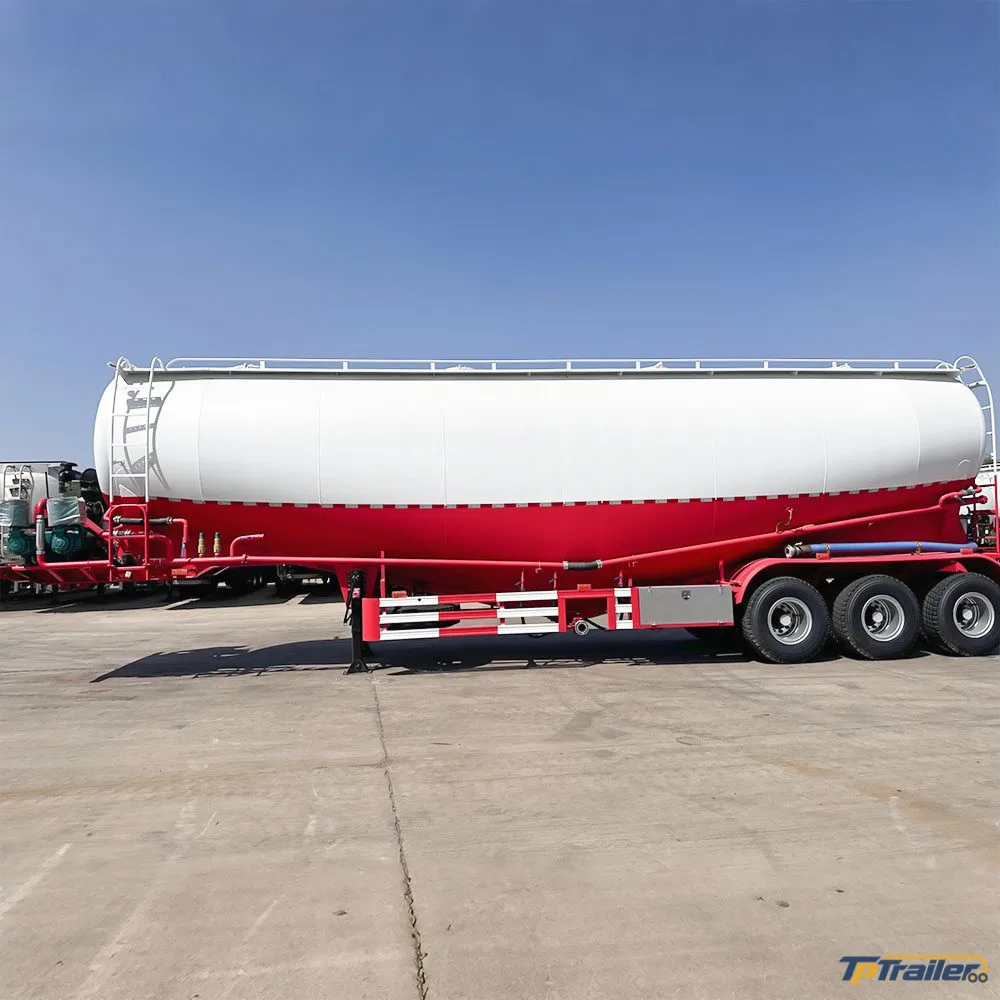
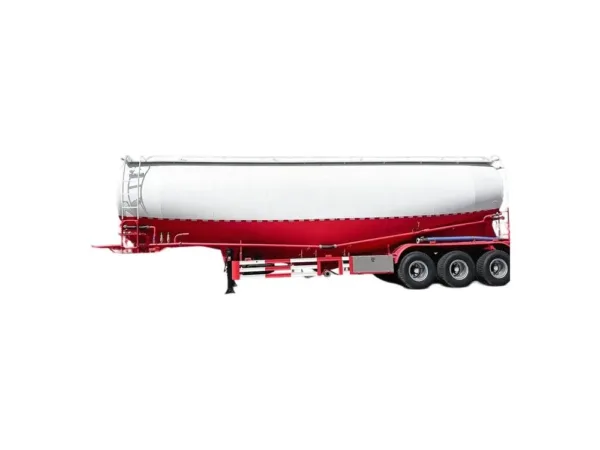
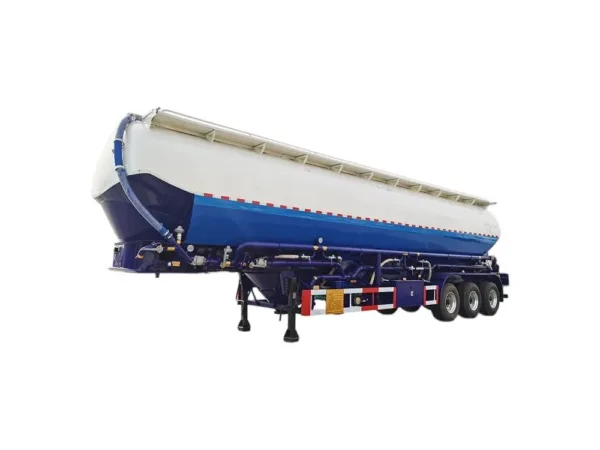
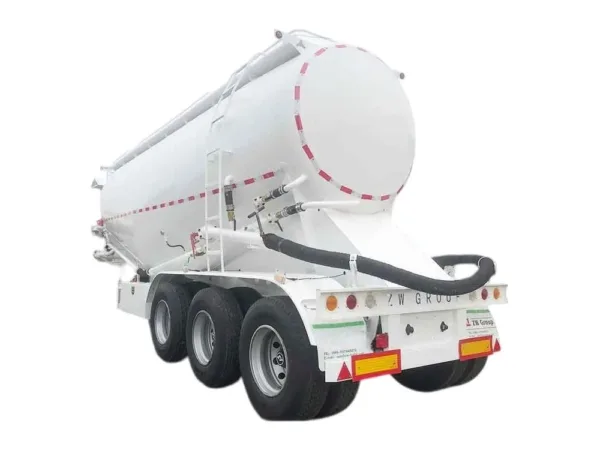
This bulk cement semi trailer carries 60 T in a carbon steel silo and pairs with a powerful air compressor for efficient dry bulk cement hauling in Africa.
60 T 3
FOB Reference PriceUS$8,000-12,000Final price confirmed by inquiry
Certifications
ISO 9001
Key Features
60 T load capacity for high-volume dry bulk cement haulage
3 axle configuration for stable heavy-duty road transport
Carbon steel silo tank body for dry bulk cement discharge
Built for African haulage routes and fleet operations
The bulk cement semi trailer is a three-axle dry bulk tanker built to move powdered cargo in bulk rather than in bags. It pairs a carbon steel silo with an onboard air compressor, so one power unit handles both the haul and the discharge. Fleet operators running cement, fly ash and similar powders will find it aimed squarely at their work. The strongest reason to choose it is the combination itself: a 60 T load capacity carried on a three-axle chassis, with the pneumatic gear mounted on the trailer instead of waiting at the destination. That means fewer site dependencies and a discharge cycle that starts when the driver arrives, not when a separate blower becomes free.
Table of Contents
Why It Works On Site
60 T load capacity. The rated payload sets how much powder each run can carry, which lets a fleet planner size the number of trips against a silo’s draw-down rate. Fewer trips per day for the same tonnage means less queuing at the loading point and a tighter schedule across the bulk cement semi trailer fleet.
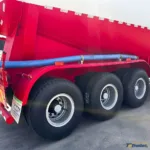
Three-axle running gear. Spreading the load across three axles keeps the gross weight distributed along the chassis, which matters on long highway legs and on the approaches to plants where surfaces are uneven. It also gives the bulk cement semi trailer a stable footprint when the tank is tipped or the compressor is running.
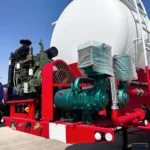
Onboard air compressor. The trailer carries its own air supply, so discharge does not depend on a fixed blower at the receiving end. A driver can pressurise the silo and start unloading as soon as the hose is connected, which shortens the turnaround on the bulk cement semi trailer and reduces idle time.
Carbon steel silo. The steel tank body is the pressure vessel and the cargo hold at once, shaped to let powder flow toward the discharge point under air. This is what makes the bulk cement semi trailer suitable for fine, dry powders that would bridge or pack in a flatbed or tipper body.
Dry bulk handling. Because the cargo stays enclosed from loading to discharge, the product is protected from rain, wind and contamination along the route. For the operator, that means the bulk cement semi trailer delivers the same material that was loaded, with no bagging, no pallets and no manual handling at either end.
Purpose-built tanker layout. The compressor, pipework and silo sit on one chassis designed as a unit, so there is no separate blower trailer to tow or position. A single driver handles the whole job, and the bulk cement semi trailer fits the routine of a plant-to-site or depot-to-depot shuttle.
Where It Is Used
The most familiar job for a bulk cement semi trailer is the run from a cement plant or grinding station to a concrete batching plant. The trailer loads at the plant silo, travels the highway leg, and discharges into the batching plant’s own storage under air pressure. This is a short, repeating circuit, often several trips a day, and it rewards equipment that unloads quickly and without outside help.
The same pattern applies between a distribution depot and a ready-mix yard, where the bulk cement semi trailer acts as the buffer between bulk supply and daily mixing. Operators on this duty care about discharge reliability more than outright speed, because a batching plant runs to a tight order book and a late load stops the whole line.
A second set of jobs takes the bulk cement semi trailer further from the plant. Construction sites with their own silos, pre-cast yards, and road or infrastructure projects all take powder in bulk and store it on site. Fly ash for concrete mixes, dry mortar and similar fine powders follow the same route.
On these runs the trailer may cover longer distances and meet surfaces that are not finished, so the three-axle layout and the enclosed silo both earn their place. The onboard compressor matters here too, because a remote site may have no blower of its own, and the bulk cement semi trailer can discharge without waiting for site equipment. Fleets often use the same trailer for plant shuttles during the week and longer site deliveries when demand shifts.
Choosing The Right Spec
Match the load capacity to your heaviest regular cargo. The rated payload is the ceiling for each trip, so compare it with the tonnage your silos and customers actually order. A bulk cement semi trailer working a fixed plant shuttle and one serving varied site orders will see different average loads, and the rating should sit above the routine figure rather than at it.
Think about axle count against your routes. Three axles distribute weight along the chassis, which suits highway legs plus the last stretch into a plant or site. If your work is mostly long highway running with steady loads, this layout keeps the bulk cement semi trailer predictable; if your routes change often, the same arrangement gives you margin on mixed surfaces.
Weigh the onboard compressor against your discharge points. If every destination has its own air supply, the onboard unit is backup; if some sites have none, it is the reason the bulk cement semi trailer can work there at all. List your regular discharge points and note which ones can pressurise a tanker before you decide.
Confirm the silo suits your powder. Carbon steel construction and a dry bulk design suit cement, fly ash and similar fine powders. If your cargo is abrasive, damp-prone or unusually fine, say so when specifying, because the bulk cement semi trailer is built around dry powder flow and the tank layout should match the material you haul most.
Customisation Before Delivery
The axle count of a bulk cement semi trailer is fixed at order confirmation. Buyers moving dense cement powder on long hauls often keep the standard three-axle layout, while operators working tighter access roads may ask for a different arrangement. Every axle choice is recorded in the signed order so the running gear matches your route and load profile.
Colour and finish are selected before the build starts. The carbon steel silo can be finished in the shade your fleet uses, which keeps a bulk cement semi trailer recognisable across a mixed yard. Paint choice is confirmed in writing at order confirmation, together with any marking you want applied to the silo body.
Suspension type is agreed at the same stage. Mechanical and other layouts suit different road surfaces, and the choice affects how the bulk cement semi trailer behaves when empty. Tell us the typical ground your fleet covers, and the suspension is locked into the order so the trailer arrives ready for your terrain.
Tyre specification is settled when the order is placed. The right set depends on whether the bulk cement semi trailer works sealed highways or unpaved site roads. Tyre size and pattern are listed in the order confirmation, so the trailer leaves the works with rubber that fits the duty cycle you described.
Discharge fittings and compressor configuration are confirmed with the rest of the order. Because the silo feeds through an air system, the outlet arrangement and hose connections are matched to your receiving equipment. Each choice is recorded at order confirmation, keeping the bulk cement semi trailer aligned with the unloading point it will serve.
Fitting And Installation
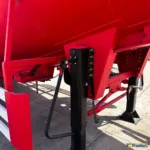
When a bulk cement semi trailer reaches your yard, the first job is matching it to the tractor unit that will pull it. Check the fifth wheel height and the kingpin engagement, then confirm the landing gear clears the ground through its full travel. Air and electrical couplings must reach the tractor without strain, and the brake lines need enough slack for articulation.
If the compressor is driven from the tractor, confirm the take-off point and the hose route before the first load. Where the input gives no fitment data, a fitment drawing is confirmed at quotation, so nothing is guessed on arrival. A bulk cement semi trailer that sits too high or too low on the tractor changes weight distribution and stresses the coupling.
A wrong size costs downtime you cannot recover during a hauling season. A mismatched hose or coupling stops the silo from pressurising, and the bulk cement semi trailer stands idle while the receiving silo waits. A fifth wheel that does not sit correctly wears the kingpin and plate faster and can fail an inspection. Electrical mismatch leaves lamps and sensors dead, which grounds the unit. Because the air system carries the powder, every joint on the bulk cement semi trailer must be checked against the drawing before dispatch. Confirm the fitment drawing at quotation, and the trailer arrives with connections that match your tractor and unloading equipment.
Service Life And Maintenance
The air compressor and its drive are the first items to demand attention on a bulk cement semi trailer. Powder discharge depends on steady air, so the operator should check belt tension, oil level where applicable and filter condition before each loading cycle. A weak compressor slows every drop and forces the silo to work harder, which shortens the life of the parts around it.
Hoses and couplings wear fastest because they flex at every connection. Inspect the discharge hose for cracks, soft spots and worn seals, and check that clamps stay tight. A leaking joint on a bulk cement semi trailer wastes pressure and contaminates the load path. Replace worn hose sections before they split under pressure rather than after a failed discharge.
The silo body and its welds should be inspected on a regular schedule. Look for dents, corrosion spots and any sign of stress around the tank seams. The carbon steel construction is the base material, and keeping the coating intact is what protects it. Touch up chips and scratches on the bulk cement semi trailer before rust takes hold, especially in humid coastal yards.
Running gear and brakes carry the load, so tyre pressure, tread depth and brake adjustment belong on the walk-around list. Uneven tyre wear on a bulk cement semi trailer often points to alignment or suspension problems. Check the suspension bushes and shackles for play, and keep the brake system dry and correctly set so the trailer stops straight when fully loaded.
The aeration system inside the silo needs periodic attention. Check that air pads and internal lines stay clear, and confirm the pressure relief arrangement works freely. A blocked aeration path turns a simple drop into a long delay. Operators who keep the bulk cement semi trailer’s air system clean and dry extend the working life of the compressor and the discharge fittings together.
Packing And Container Loading
A bulk cement semi trailer is not a small parcel, so packing starts with how the finished unit is prepared for sea freight. Before shipment, the tank body, discharge pipework and compressor area should be checked and protected against salt air and road spray. Loose items such as hose ends, valves and small fittings are normally boxed and secured inside the trailer or strapped to the chassis. Buyers should ask the supplier to photograph the unit before loading, because a bulk cement semi trailer is often shipped whole rather than crated. Confirm which parts travel loose and which stay fitted.
Space is the main cost driver. A bulk cement semi trailer cannot be nested like a container stack, so loading is usually roll-on or flat-rack based depending on the route. Ask whether the compressor, spare wheel carrier and discharge hoses are mounted before loading or packed separately to reduce the footprint. For multiple units, confirm whether the supplier can load more than one per shipment and how the axles and landing gear are blocked. Verify the container or vessel booking type before paying, since a bulk cement semi trailer needs a loading plan agreed in writing.
Common Mistakes Buyers Make
Ordering without confirming the discharge configuration. The air compressor, pipework and valve layout must match how the buyer will unload at destination. A unit set up for one method may not suit another. The single check: send the supplier a written description of the unloading method and ask for the pipework drawing before production starts.
Ignoring the load capacity against local road limits. The rated load capacity is not the same as what local axle rules allow on the road. The single check: compare the rated capacity with the permitted axle load in the buyer’s market and confirm the axle count suits it.
Skipping the tank and chassis material review. Carbon steel construction needs the right wall thickness and coating for the cargo and climate. The single check: request the material specification and surface treatment in writing, then compare it with the intended cement type and local humidity.
Not checking shipping dimensions before booking. A bulk cement semi trailer has a fixed length and height that affect vessel and port handling. The single check: obtain the overall dimensions and weight from the supplier and pass them to the freight forwarder before booking.
Leaving spare parts and documents out of the order. Missing valves, seals or paperwork can delay registration and first use. The single check: list the spare parts and documents needed and have them confirmed on the quotation as included items.
Buyer Questions
What should I confirm about the air compressor before ordering a bulk cement semi trailer?
Ask the supplier to state the compressor type, its drive method and how it connects to the tank pipework. Confirm whether the compressor is mounted on the trailer or supplied separately, and whether the discharge line and valves are included. Request the pipework layout drawing and check it against your unloading point. If any of these details are not stated in the offer, ask for them to be confirmed at quotation, because the compressor setup decides how fast the trailer empties at destination.
How do I check that the load capacity suits my operation?
Start with the rated load capacity in the offer, then compare it with the density of the cement you carry and the axle limits on your routes. A bulk cement semi trailer must stay within local road rules when loaded, so confirm the axle count and tyre specification match your market. Ask the supplier for the tare weight and overall dimensions, then calculate the payload you can legally carry. Any figure not in the offer should be confirmed at quotation.
Can the trailer be shipped with other units, and what should I verify on arrival?
Ask the supplier for a loading plan covering how many units fit per shipment and how each is secured. On arrival, check the tank body, chassis and compressor for transit damage, confirm all loose parts and documents are present, and compare the delivered unit with the agreed specification. Photograph everything before unloading. Shipping terms, packing method and any loading limits should be confirmed at quotation, since they depend on the route and the number of units ordered.
To receive a quotation for a bulk cement semi trailer, send the tank length you need, the axle count, the discharge method and the quantity you plan to order. Include your destination port so the loading plan can be prepared. With those details, the supplier can confirm the configuration and price tier that fits your fleet.
We use cookies to enhance your browsing experience, serve personalized content, and analyze our traffic. By clicking "Accept All", you consent to our use of cookies. Privacy Policy
Cookie Preferences
Required for the website to function properly. Cannot be disabled.
Help us understand how visitors interact with the website (Google Analytics).
Used to deliver personalized ads and measure ad campaign effectiveness.















Write a Review