60 Ton 3 Axle Steel Bulk Cement Tanker Semi Trailer
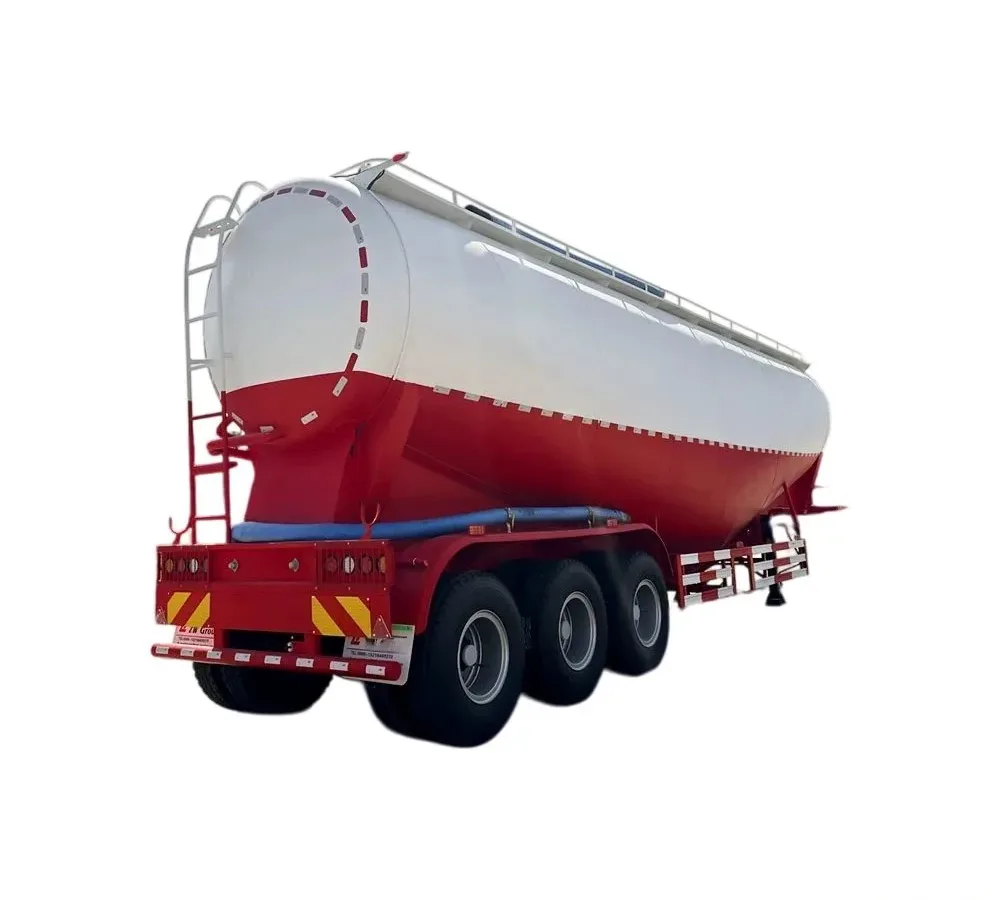
Bulk cement semi trailer with 60 T load capacity and 3 axles in steel build. Compare the pneumatic tanker setup and request a quote for your fleet today.
60 T 3
FOB Reference PriceUS$8,000-12,000Final price confirmed by inquiry
Certifications
ISO 9001
Key Features
60 T load capacity for high-volume cement haulage
3 axle steel tanker configuration for heavy duty semi trailer work
Pneumatic discharge with engine air compressor for bulk cement handling
V shape tanker body for complete material discharge
Steel construction suited to daily bulk powder transport
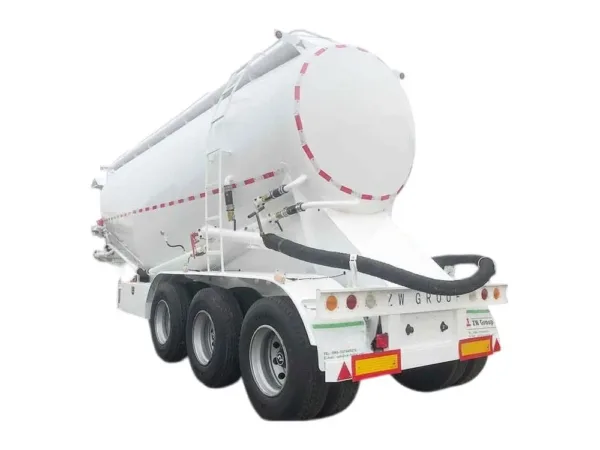
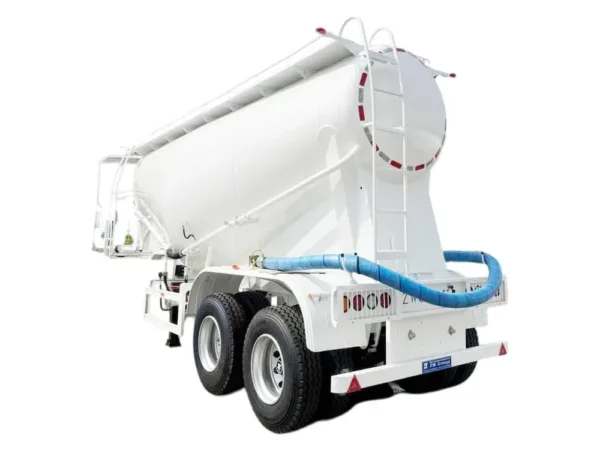
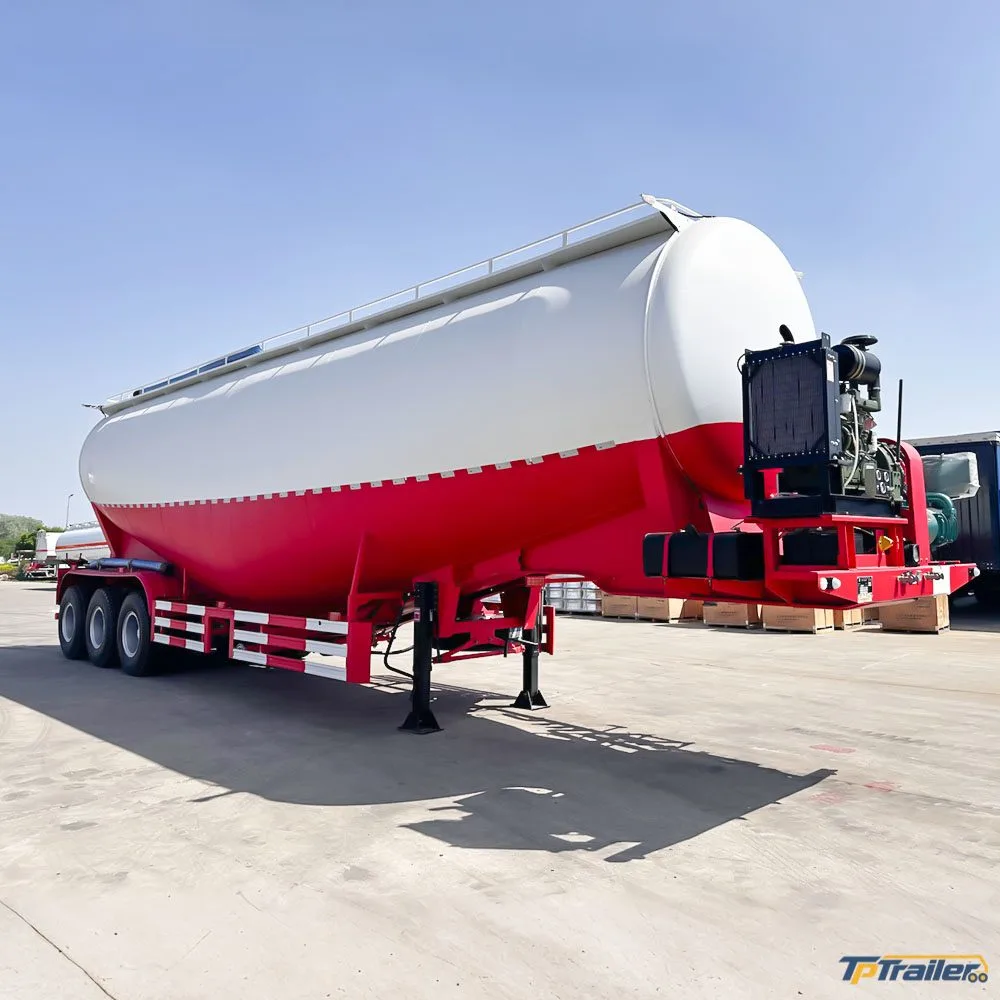
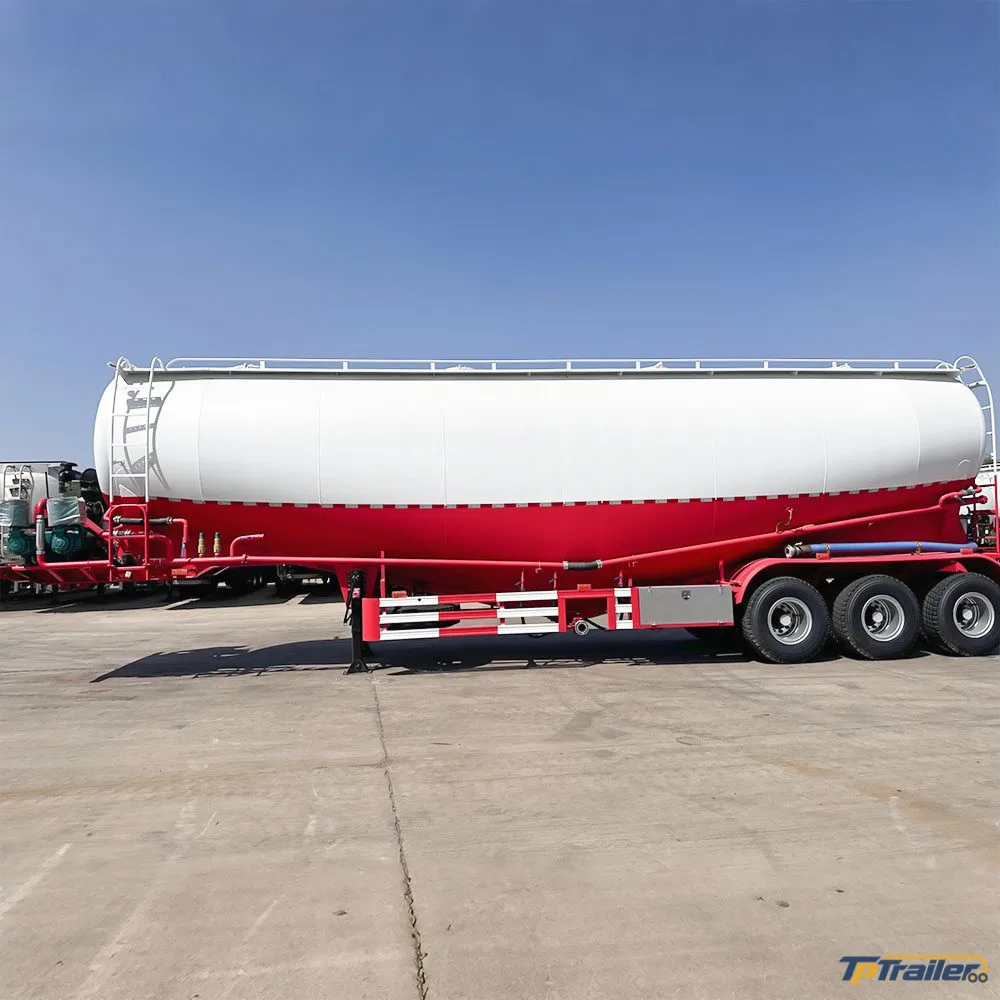
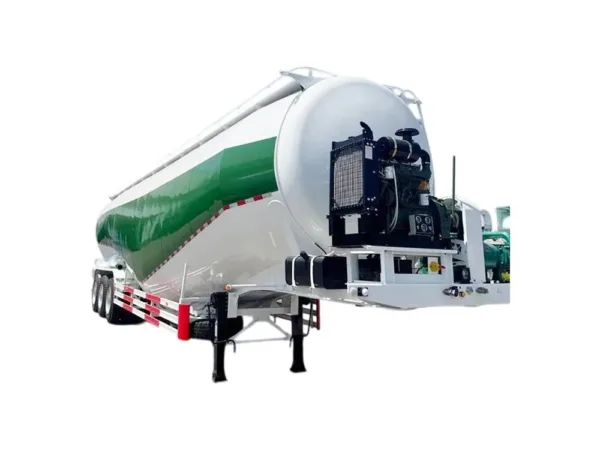
The bulk cement semi trailer is a three-axle pneumatic tanker built to move 60 T of dry powder in one haul. It pairs a V-shaped steel tank with an engine-driven air compressor, so loading and discharge happen on the vehicle itself. Fleet operators running cement depots, batching plants and powder transfer contracts are the intended buyers. The strongest reason to choose it is self-sufficiency: the trailer carries its own air supply, so it does not wait for a shore compressor at either end of the run. That single design decision keeps a tanker cycling instead of parked, and it is why this unit suits operators who measure value in turns per day rather than in sticker price.
Table of Contents
Why It Works On Site
Onboard engine air compressor. The trailer generates its own pneumatic pressure instead of relying on a fixed plant compressor. That means a bulk cement semi trailer can discharge at a silo, a batching bin or a remote transfer point where no air line exists. The job it unlocks is the site with no compressed air infrastructure, which is exactly where a hired compressor would otherwise add cost and delay to every load.
V-shaped tank floor. The V profile funnels powder toward the discharge outlets under gravity rather than leaving it spread across a flat floor. For the operator this reduces the manual labour needed to clear the tank and shortens the tail end of each discharge cycle. A bulk cement semi trailer that empties more completely also carries less dead weight on the return leg, which matters on repeated short hauls.
Three-axle running gear. Three axles spread the loaded mass across more tyre contact points than a two-axle layout. The practical effect is steadier tracking on crowned roads and better load distribution for the driver to manage at the weighbridge. For a bulk cement semi trailer working mixed route profiles, that spread is what keeps the unit inside legal axle group limits without constant rebalancing.
60 T load capacity. The rated load capacity sets the payload ceiling for each trip. A higher ceiling per run means fewer trips for the same tonnage delivered, which directly cuts driver hours, fuel and toll exposure per tonne moved. Operators comparing a bulk cement semi trailer against smaller units should read this figure against their heaviest regular silo delivery, not against their average one.
Steel tank shell. Steel resists the abrasion that dry cement and similar powders cause as they move through the tank and lines. That durability translates into a longer service interval before shell repair is needed, and it tolerates the pressure cycles of repeated pneumatic discharge. For a bulk cement semi trailer in daily depot rotation, a steel shell is the low-drama choice.
Pneumatic discharge system. Powder leaves the tank through air pressure rather than tipping or augering. This lets the trailer deliver into closed silos and elevated bins without opening the load to weather. The job it makes possible is the weather-sensitive delivery, where a bulk cement semi trailer must keep material dry from fill point to silo inlet.
Where It Is Used
The most common duty for this trailer is the depot-to-plant shuttle. A cement terminal fills the tank, and the unit runs to a concrete batching plant where the powder is blown into a storage silo. These runs are short and repeated, often several times a day, so the onboard compressor and the V-shaped floor do most of the work. A bulk cement semi trailer on this pattern is judged on cycle time: how fast it fills, how fast it empties and how quickly it is back at the terminal. The 60 T load capacity means each cycle carries a full silo top-up rather than a partial one, which is what keeps the batching plant from running short between deliveries.
A second pattern is the longer regional transfer between terminals and outlying storage. Here the trailer spends more time on the road and less at each end, so axle stability and load distribution matter as much as discharge speed. Dry bulk cargoes beyond cement also fit this tanker: fly ash for ready-mix operations, mineral powder and similar fine dry materials that flow under air pressure. Operators on these routes value a bulk cement semi trailer that can take a return load of a different powder without a full teardown. The pneumatic system handles the transfer, and the steel shell tolerates the abrasion of repeated fills and blows across mixed cargo types.
Choosing The Right Spec
Match the load capacity to your heaviest routine delivery. The 60 T rating is the ceiling for each trip. Buyers should compare it with the largest silo top-up they regularly make, because a bulk cement semi trailer sized below that figure forces split deliveries. Sizing above it wastes running cost on capacity never used. The right choice sits just above the heaviest normal load, not at the theoretical maximum.
Decide whether the onboard compressor is essential. If your discharge points all have plant air, the engine compressor is backup rather than necessity. If any regular delivery lands at a site without compressed air, the self-contained bulk cement semi trailer is the only version that completes the job without hired equipment. Map your discharge points before choosing, since this is the feature that most changes daily logistics.
Weigh axle count against your route profile. Three axles suit operators whose routes mix highway running with site access roads and crowned surfaces. A bulk cement semi trailer with this layout spreads load across more contact points, which helps on uneven approaches to silos and batching plants. Operators running only smooth, flat depot loops have less need for the extra axle group and should weigh that against the added tyre cost.
Check tank shape against your cargo flow. The V-shaped floor suits free-flowing dry powders that discharge under gravity and air. If your cargo is prone to packing or bridging, the V profile is what helps it move toward the outlets. For a bulk cement semi trailer carrying cement, fly ash or mineral powder, the shape is a direct fit. Buyers hauling coarser or damp material should confirm flow behaviour before committing.
Customisation Before Delivery
Axle configuration. The three-axle layout is the reference build for this bulk cement semi trailer, and the axle count is confirmed at order confirmation. Buyers moving to softer ground or tighter access roads can discuss a different arrangement with the sales engineer. Axle count affects load spread and brake hardware, so it is settled before the chassis is cut, not after.
Suspension type. Mechanical and air suspension options are both discussed at quotation for this bulk cement semi trailer. The choice depends on road surface, axle load habits and how the tractor is used. Suspension is fixed at order confirmation because the mounting brackets are welded to the frame during fabrication. Changing it later means cutting and re-welding.
Tyre and rim selection. Tyre size, tread pattern and rim type are agreed when the order is confirmed. Operators running long highway legs and operators working unpaved plant roads need different tread behaviour. Tyre choice also sets the spare-wheel carrier position on the bulk cement semi trailer. Confirm the size before production so the carrier and fenders match.
Colour and finish. The paint scheme is chosen at order confirmation. Buyers can specify a single body colour or a two-tone layout, and can ask for their own markings on the tank shell. Finish choice matters on a bulk cement semi trailer because cement dust clings to rough surfaces. A smoother topcoat is easier to wash down.
Tank and discharge details. The V-shaped tank, aeration pads and the engine-driven air compressor are the core of this bulk cement semi trailer. Access ladder position, hose carrier and discharge pipe routing are agreed at order confirmation. Tell the sales engineer which silo connection you use so the outlet is prepared to suit it.
Fitting And Installation
On arrival, the first job is matching the trailer to the tractor. Check the kingpin plate height, the fifth-wheel position and the clearance between the tank front and the tractor cab. Confirm the electrical socket type and the air line couplings on the towing unit. The engine air compressor and pneumatic system on this bulk cement semi trailer need a clean, dry air supply, so inspect the tractor’s own dryer before coupling.
Walk the frame and note the mounting points for any side guards, mudguards and hose carriers. If the input gives no fitment drawing, a fitment drawing is confirmed at quotation instead of being assumed. That drawing should show the coupling height, the discharge outlet position and the compressor service access. Do not drill or weld on the pressure vessel shell to make something fit.
A wrong size is expensive in downtime. A mismatched coupling height puts load on the kingpin and tyres, and it can stop the unit entering a low silo bay. The wrong discharge pipe diameter means the bulk cement semi trailer cannot seal to the receiving silo, so every load is blown slowly or spilled. Wrong air line fittings stop the pneumatic system from working at all. Before the first load, check hose routing for sharp bends and rubbing points, and confirm every clamp is tight. Torque values are not stated here; use the values in the delivery documents. Keep the fitment drawing with the trailer so a replacement part can be ordered correctly.
Service Life And Maintenance
Air compressor and engine. The engine-driven compressor works hardest on every discharge, so it wears first. Check oil level, air filter and belt tension before each trip, and look for oil carry-over in the air line. A blocked filter makes the compressor run hot. Clean air and correct oil extend the interval between services on any bulk cement semi trailer.
Aeration pads and tank interior. Cement is abrasive and damp cement sets hard. Inspect the aeration pads and the V-shaped floor for tears, blockages and cement build-up. Blow the tank clear after unloading and keep hatches closed in rain. A dry interior protects the pads and keeps discharge smooth on the bulk cement semi trailer. Record what you find at each check.
Discharge hoses and couplings. Hoses crack at the bends and couplings wear at the seal faces. Inspect the full hose run for soft spots, cuts and loose clamps, and check the gaskets before every load. Replace worn seals early. A leaking coupling spills cement and slows the blow. Storing hoses coiled without sharp bends keeps them serviceable.
Brakes, tyres and suspension. Tyres and brake linings wear with distance and load. Check tread depth, inflation and sidewall damage at each stop, and listen for uneven brake pull. Inspect suspension bushes and U-bolts for looseness. On a three-axle bulk cement semi trailer, uneven tyre wear points to alignment or load balance problems worth fixing early.
Frame, paint and fasteners. Cement dust and road salt attack paint edges and welds. Wash the frame and tank shell regularly, and touch up chips before rust starts. Check the V-tank support welds, ladder fixings and hatch hinges for cracks. A good topcoat and prompt touch-up extend the life of the steel structure on the bulk cement semi trailer.
Packing And Container Loading
A bulk cement semi trailer ships as a complete unit, so protection starts with the tank shell and the running gear, not with a crate. The pneumatic V shape tanker body is sealed at every manhole and discharge outlet before dispatch, keeping dust and moisture out of the interior during the sea voyage. Exposed fittings such as the engine air compressor, valves and pipework are wrapped or boxed so they cannot rub against the frame. Mudguards and lamps are removed or cushioned where the loading method requires it. Buyers should confirm the sealing method in writing, because a tank that takes on humid air in transit can arrive with internal surface rust that is hard to prove later.
Stacking is not an option for a bulk cement semi trailer. The tank shell and the axle assembly carry the load in one plane, and no part of the structure is designed to take a second unit on top. Nested loading is equally unsuitable, since the tank is a closed pressure vessel rather than a hollow frame. Space is saved by careful positioning and by keeping the unit complete rather than by stacking. On arrival, the buyer should verify the seal condition, photograph every outlet and manhole, check the compressor and pipework for transit damage, and confirm the axle count and tank shape against the order before accepting the delivery.
Common Mistakes Buyers Make
Ordering the wrong tank shape. A buyer who specifies a V shape tanker without checking the discharge angle against the material being hauled may find the product does not flow as expected. The single check is to confirm the tank profile and outlet arrangement in writing before the order is placed. The load capacity alone does not describe how the tank behaves in service.
Ignoring the axle count. The axle count must match the permitted gross weight on the routes the trailer will run, not just the payload figure. A buyer who fixes the payload and leaves the axle count open can receive a unit that is legally awkward on some roads. The single check is to confirm the axle count on the quotation and compare it with local axle load rules.
Assuming the compressor is included. The engine air compressor is named in the product title, but buyers still order without confirming whether it is part of the delivered unit or an option. The single check is to list every auxiliary item on the purchase order and have the supplier confirm each one line by line. A bulk cement semi trailer without its air supply is not ready to discharge.
Skipping the discharge fittings review. Manhole size, outlet type and pipe diameter are easy to overlook when attention goes to the tank and axles. A mismatch here delays commissioning more than any other detail. The single check is to send the buyer’s discharge hose and receiving equipment details to the supplier and ask for written confirmation that the fittings match. Do this before the bulk cement semi trailer is built.
Leaving packing and loading to chance. Buyers often accept whatever loading plan the supplier proposes without asking how the unit is protected and secured. The single check is to request the loading plan and sealing method in writing, then compare it with the arrival inspection list. A bulk cement semi trailer is a large asset, and the cost of a damaged fitting is far higher than the time spent confirming the plan.
Buyer Questions
How do I confirm the tank and axle configuration before ordering?
Put the tank shape, axle count and load capacity on the purchase order as separate line items, and ask the supplier to confirm each one in writing. Do not rely on the product title alone, because a bulk cement semi trailer can be configured in more than one way. Ask for a drawing or specification sheet showing the tank profile, outlet positions and axle layout. Compare that document with your route permits and receiving equipment before you approve it. Any point the supplier cannot confirm should be marked as confirmed at quotation.
Can the engine air compressor be supplied with the trailer?
The product title names an engine air compressor, so the buyer should ask whether it is included in the base unit or treated as a separate option. Request the compressor specification in writing and confirm how it is mounted and connected to the tank. Ask whether the pipework and valves are matched to that compressor. Because the input does not state compressor output or drive details, treat those figures as confirmed at quotation. A bulk cement semi trailer is only as useful as its air supply, so settle this before the order.
What should I check when the trailer arrives?
Inspect the tank seals, manholes and discharge outlets first, and photograph each one before unloading. Check the compressor, valves and pipework for transit damage, and confirm the axle count and tank shape against the order documents. Look for moisture or rust inside the tank shell. Ask for the loading plan and sealing record so you can compare what was agreed with what arrived. If anything differs, record it before signing. Any warranty terms should be confirmed at quotation, since the input does not state them.
To receive a quotation for a bulk cement semi trailer, send the required tank length, the axle count and the quantity you plan to order. Include the tank shape and the discharge fittings you need, and state whether the engine air compressor is required. With those details, the supplier can confirm the configuration and the price tier that applies to your order volume.
We use cookies to enhance your browsing experience, serve personalized content, and analyze our traffic. By clicking "Accept All", you consent to our use of cookies. Privacy Policy
Cookie Preferences
Required for the website to function properly. Cannot be disabled.
Help us understand how visitors interact with the website (Google Analytics).
Used to deliver personalized ads and measure ad campaign effectiveness.














Write a Review