Steel Fence Semi Trailer 40T-80T Load 3 Axle Cargo Transport
Fence semi trailer rated 40T-80T with a 3 axle steel frame, mechanical suspension and 12 tires for livestock and cargo hauling. Request a quote for your fleet.
40T - 80T 3
FOB Reference PriceUS$4,500-7,000Final price confirmed by inquiry
Certifications
ISO 9001
Key Features
40T - 80T load capacity for bulk cargo and livestock hauling
3 axle steel chassis with I shape mild alloy 16Mn main beam
Automatic submerged arc welding for a strong, consistent beam
10/10/10 leaf spring mechanical suspension for stable road handling
Standard 30Ton landing gear for safe parking and coupling
King pin in 2"(50mm) or 3.5"(90mm) for tractor compatibility
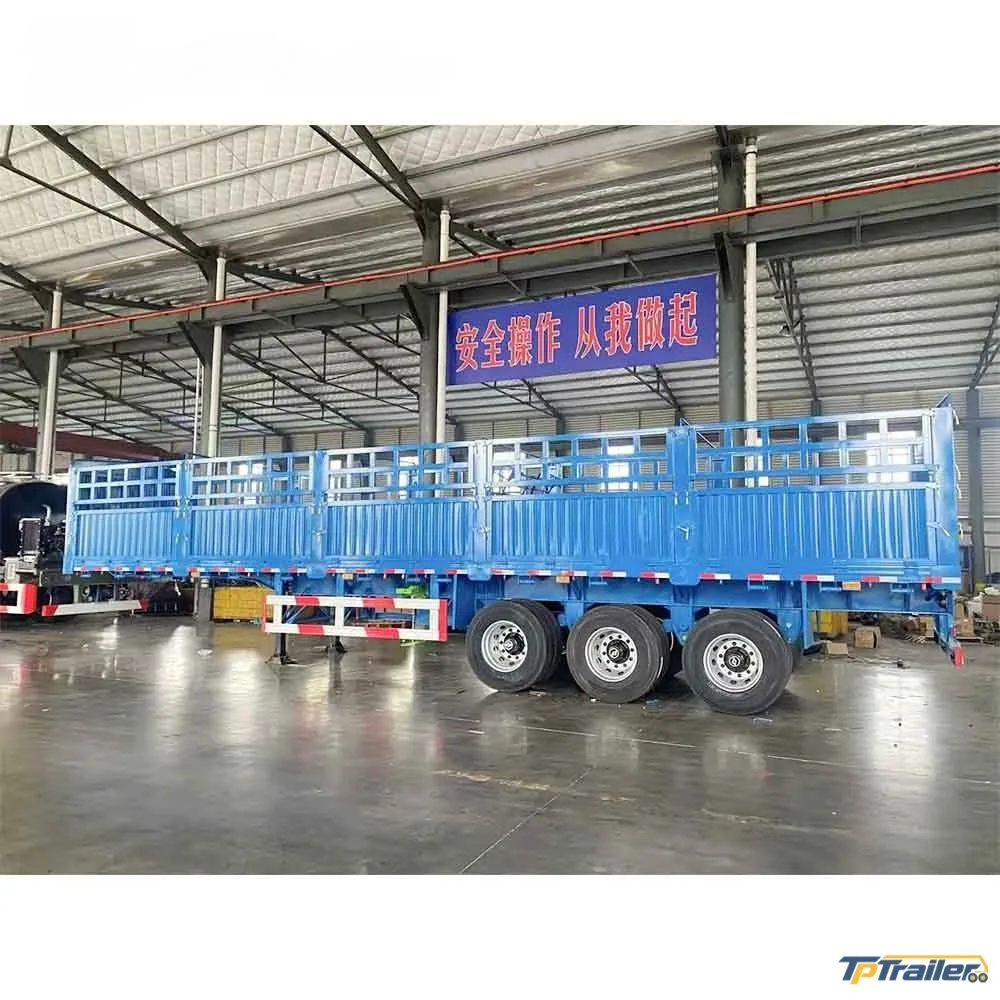
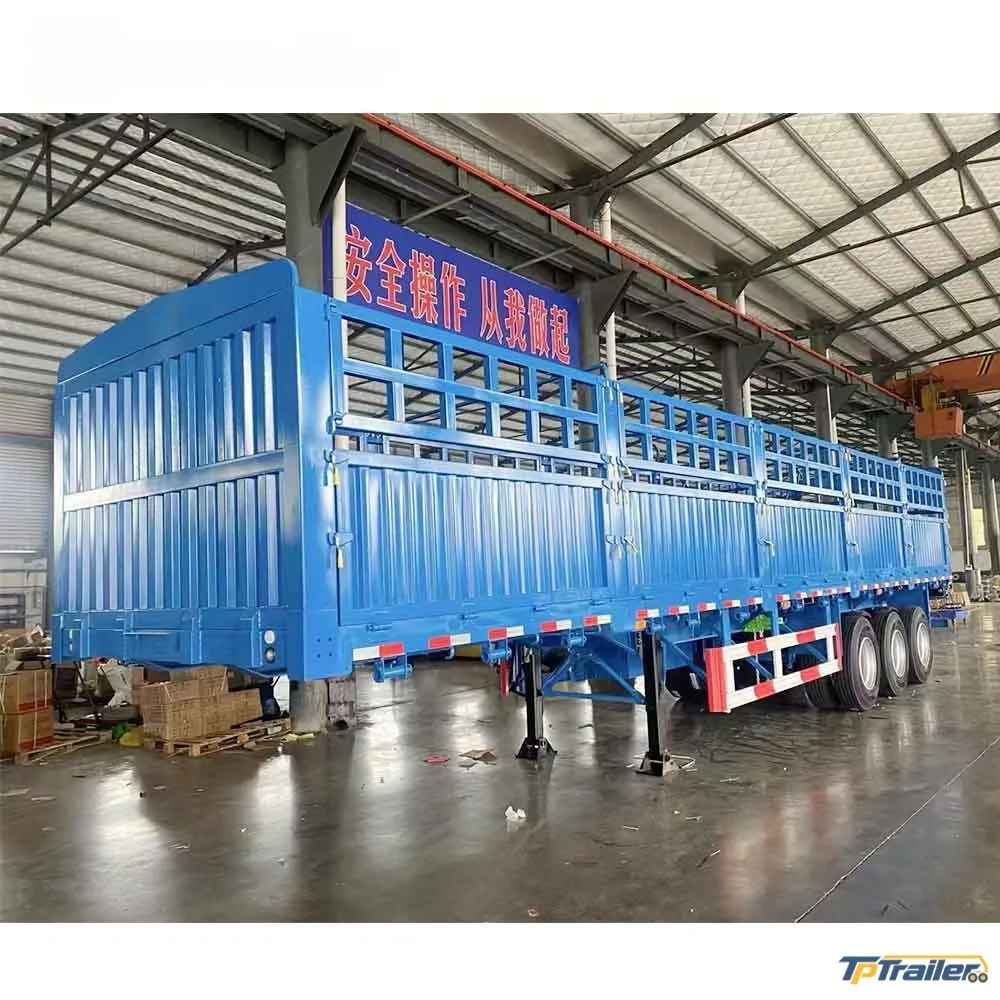
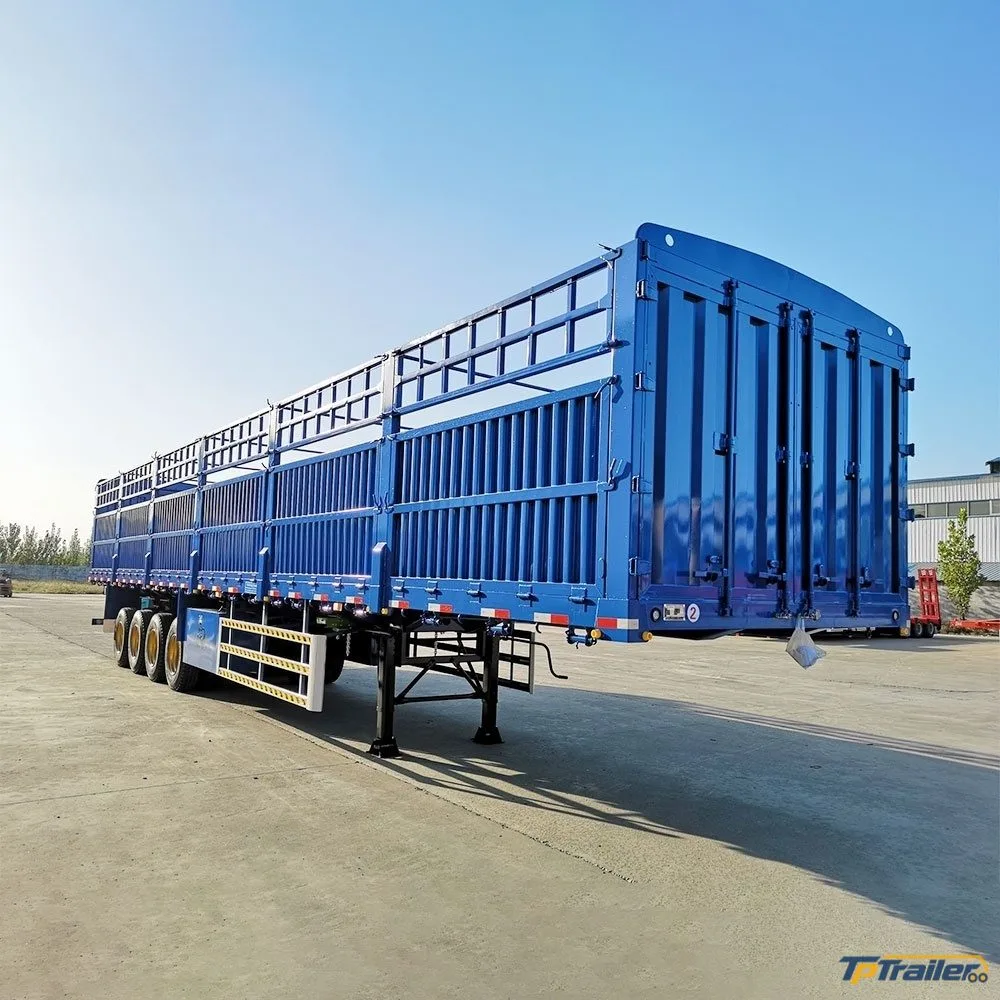
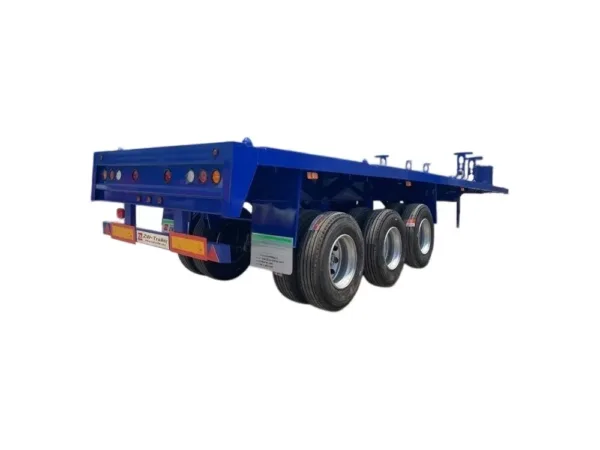
The ZW Brand 3-axis steel fence semi trailer is a straight-beam stake platform built for efficient cargo transportation. It is aimed at fleet operators, freight contractors and agricultural haulers who move bulky loads that need side containment rather than a sealed box. The strongest reason to choose it is the combination of a mild alloy I-beam main frame and a modular fence body: the trailer carries heavy, awkward cargo while staying easy to load from the side, top or rear. With a rated load capacity of 40T to 80T, it covers a wide band of hauling duty without moving to a different trailer class.
Table of Contents
Why It Works On Site
Fence body for side-loaded cargo. The stake-and-rail structure keeps loose or irregular loads contained while leaving the sides open, so a forklift or telehandler can place pallets and bundles directly between the posts. This is what makes the fence semi trailer fast to turn around at a yard or farm gate, cutting the time a truck spends waiting rather than earning.
Mild alloy I-beam main frame. The main beam is I-section mild alloy (16Mn) joined by automatic submerged arc welding. That gives the frame consistent penetration and a predictable fatigue profile along the span, which matters on repeated highway cycles where a lighter or unevenly welded beam would need more inspection attention.
10/10/10 leaf spring suspension. The steel spring set is rated evenly across all three axle positions, so each axle shares load the same way. On mixed routes with potholes and site tracks, this mechanical setup absorbs shock without the servicing complexity of an air system, which suits operators running the fence semi trailer in dusty or remote conditions.
Mechanical suspension and standard 30-ton landing gear. The mechanical suspension keeps the axle group aligned under load, while the standard landing gear lets a loaded trailer be dropped and picked up safely in a yard. That combination supports drop-and-hook working, where a tractor swaps between trailers without a fixed dock.
Wheel base options for load distribution. Two wheel base layouts are offered, and each sets where the axle group sits relative to the cargo bed. Operators can match the layout to the load they carry most often, keeping weight over the axles instead of at the rear of the fence semi trailer.
Tyre and king pin choices. The trailer takes 12 tyres across several listed sizes, and the king pin is available in two sizes. That lets a buyer fit the fence semi trailer to the tractor already in the fleet and to the road surfaces and load ranges it will actually meet.
Where It Is Used
The most common duty for a fence semi trailer is moving cargo that is too tall or too awkward for a van body. Construction crews use it for scaffolding, timber, steel sections and bundled rebar, where the open rails allow a crane or forklift to lift loads straight over the side. Agricultural operators load hay bales, bagged feed, fertiliser and seed pallets, then secure them against the stakes for the run to a depot or processor.
Because the deck is flat and the sides are open, the same trailer can be loaded from three directions, which keeps turnaround short when a yard has only one machine free. Fleets running mixed freight often place the fence semi trailer on this kind of work because it does not need a dock to be productive.
A second set of jobs involves livestock and general rural hauling. The keyword set for this class includes cattle carrier and livestock transport duty, and the open stake body suits that work: air moves through the load, the rails hold animals or penning panels, and the deck can be swept clean between runs. Away from the farm, the fence semi trailer fits industrial and municipal tasks such as moving pipe, drums, machinery crates and palletised goods on regional highway routes.
Operators also use it as a flexible spare in a mixed fleet, covering peak cargo runs when a dedicated flatbed or box trailer is already committed. On longer trunk routes the rated load band keeps it useful for dense loads as well as bulky ones.
Choosing The Right Spec
Load capacity band. The stated range of 40T to 80T spans light regional work up to heavy dense cargo. A buyer hauling timber, steel or bagged material at the top of the band should confirm the axle, tyre and suspension combination fitted to the fence semi trailer matches that duty, rather than assuming every unit is built to the ceiling figure.
Wheel base layout. The two listed wheel base options place the axle group differently under the bed. A longer layout favours long, uniformly heavy loads where weight should sit forward; the shorter option suits mixed loads and tighter yard manoeuvring. Match the layout to the cargo length the fence semi trailer will carry most often.
Tyre size selection. Several tyre sizes are listed, in a 12-tyre configuration. Larger section tyres generally suit heavier axle loads and longer highway runs, while the smaller listed sizes suit regional work and easier replacement sourcing. The choice should follow the routes and load range the fence semi trailer will actually see.
King pin and tare weight. The king pin comes in two sizes, so the fence semi trailer can be matched to the fifth wheel already on the tractor. Tare weight should be checked against the tractor’s allowable gross combination, because a heavier tare reduces the payload left for cargo on every trip.
Customisation Before Delivery
Axle configuration. The fence semi trailer is built around a three-axle layout, and the axle count you settle on changes how the load is spread across the road. Buyers moving dense cargo often keep the full set; buyers running lighter routes sometimes discuss a reduced arrangement. The choice is fixed at order confirmation, so bring your route and cargo profile to that conversation.
Deck length and wheel base. Two wheel base figures appear in the build sheet, and the deck length follows the same decision. A longer deck suits bulky freight; a shorter one tightens the turning circle. Because the fence semi trailer carries cargo between the stake posts, deck length also sets how many posts you get. Confirm the figure at order confirmation.
Suspension and leaf springs. Mechanical suspension with a ten-leaf spring set is the standard arrangement on this fence semi trailer. It is a simple, repairable system that suits mixed road conditions. If your routes are mostly smooth highway, the same mechanical layout still works; the point is to state your duty cycle so the spring rate is matched to it.
Tyres and king pin. Tyre size and the king pin size are both buyer-selected on this fence semi trailer. The tyre choice affects ground pressure and replacement cost; the king pin choice must match your tractor. Both are locked in at order confirmation, and both are worth checking against your existing fleet before you sign.
Finish and fittings. Colour and the small fittings around the stake pockets are agreed at order confirmation. The main beam is mild alloy welded by automatic submerged arc, so the finish choice is about visibility and corrosion rather than structure. Tell us the operating environment and the finish is matched to it.
Fitting And Installation
On arrival, the first job is matching the fence semi trailer to the tractor that will pull it. The king pin must seat cleanly in the fifth wheel, and the coupling height must leave the deck level when loaded. Check the landing gear travel against your yard surface, because a standard landing gear set has to lift the trailer clear before the tractor backs under. Confirm the air line couplings and the electrical socket match the tractor loom.
Route the lines so they clear the landing gear and the spring hangers through full articulation. Where the build sheet gives no torque figure, use the tractor and component manufacturer’s published values rather than guessing. A fitment drawing is confirmed at quotation, so the mounting points and coupling geometry are settled before the fence semi trailer is built, not after it lands.
A mismatch at this stage is expensive in a way that is easy to underestimate. If the king pin size does not match the fifth wheel, the fence semi trailer cannot legally or safely move, and the fix is a workshop job rather than a yard adjustment. If the deck sits too high or too low, every load is handled at the wrong angle and the landing gear takes loads it was not designed for.
If the air lines are routed too tight, they chafe through on the first tight turn. Each of these turns a delivery into downtime, and downtime on a cargo trailer means missed loads. That is why the coupling and routing details belong in the quotation conversation, where they cost nothing to change.
Service Life And Maintenance
Leaf springs and hangers. The spring pack is the first thing to watch on any fence semi trailer. Inspect the leaves for cracks, the centre bolt for movement and the hanger pins for play. A broken leaf changes how the axle carries load, so replace the pack rather than a single leaf where the set is matched. The ten-leaf mechanical arrangement is repairable in the field, which keeps the trailer working.
Tyres and wheel ends. Tyre wear tells you about alignment and load balance before a gauge does. Check pressure cold, look for uneven shoulder wear and inspect the wheel nuts for looseness. On a fence semi trailer the rear axle usually wears fastest under a heavy, evenly spread load. Rotating tyres and keeping the axle alignment true extends the interval between replacements without any change to the build.
Main beam and welds. The I-shape mild alloy main beam is joined by automatic submerged arc welding, which gives a consistent weld along the length. Inspect the beam flanges and the weld toes at the cross-member joints for cracks or corrosion. Keep the beam clean of standing water and road salt. A sound coating on the beam is what protects the weld toes, so touch up chips when you find them.
Stake posts and fence panels. The fence semi trailer earns its name from the stake and panel structure, and that structure takes knocks during loading. Check posts for bending and panel welds for cracking. Loose posts let cargo shift, so tighten or replace the mounting hardware as soon as play appears. Keeping the posts straight also keeps the load within the deck footprint on the road.
Landing gear, king pin and brakes. Grease the landing gear screw and check it lifts without binding. Inspect the king pin for wear at the fifth wheel contact face. Check brake chambers, slack adjusters and air lines at every service. These are the parts that decide whether a fence semi trailer stops and parks safely, and they are cheap to inspect compared with the cost of a failure on the road.
Packing And Container Loading
Each fence semi trailer is prepared for sea freight as a complete unit or in knock-down form, depending on the order size. Steel surfaces are cleaned and coated before dispatch so that the main beam, side panels and posts resist moisture during the voyage. Small fittings such as the king pin, landing gear components and suspension parts are boxed and strapped to the chassis so they cannot move inside the container. The buyer should confirm the coating system and the packing method at quotation, because the input does not fix a packing standard for every order.
Space saving matters when several units ship together. A fence semi trailer can be partially disassembled, with the fence panels, axles and tyres packed separately to reduce the footprint. Where the order allows, units may be nested or stacked, but the buyer must ask the supplier to confirm the arrangement and the maximum stack height. Loading plans should state the container type, the number of units per container and the lifting points. Verify the load plan before production, not after the trailer is built.
Common Mistakes Buyers Make
Ignoring the king pin size. A tractor with a mismatched fifth wheel coupling will not connect safely. Confirm the king pin dimension against your tractor before ordering, and state the required option in the purchase order. This single check avoids a fence semi trailer that cannot be coupled on arrival.
Assuming the suspension suits every road. The mechanical suspension and leaf spring setup is fixed at build, so a buyer who later needs a different ride height or axle spacing is stuck. Measure your typical load and road conditions first, then confirm the suspension choice in writing before the fence semi trailer enters production.
Overlooking the wheel base. The wheel base affects turning behaviour and bridge law compliance in some regions. Measure your route constraints and yard access, then match the wheel base option to them. This check prevents a fence semi trailer that is legal on paper but difficult to manoeuvre in practice.
Ordering tyres by habit. Tyre size and count must match the rims, the axle load and local regulations. Confirm the tyre specification and the number of units per trailer at quotation. A fence semi trailer delivered with the wrong tyre set is expensive to correct and may fail inspection at the port.
Skipping the arrival inspection. Buyers often sign off before checking the coating, the fence panels and the boxed fittings. Photograph every unit against the packing list, verify the king pin and landing gear, and record any transit damage before releasing the carrier. This protects both the fence semi trailer and your claim position.
Buyer Questions
Can the trailer be shipped in a container, and how many units fit?
The input does not fix a container loading quantity, so this must be confirmed at quotation for each order. Ask the supplier for a written loading plan that names the container type, the number of units and whether partial disassembly is used. For a fence semi trailer order, request the plan before production begins and check that the fence panels, axles and tyres are listed separately. Confirm the lifting points and the stack height limit in the same document.
What should I check on the trailer when it arrives?
Inspect the coating on the main beam and fence panels for transit damage, and confirm the king pin, landing gear and suspension match the order. Count the tyres and check the sizes against the packing list. Photograph every unit before releasing the carrier. For a fence semi trailer, also verify that all boxed fittings are present and that the fence posts are straight. Record any discrepancy in writing and notify the supplier promptly.
Can I change the axle count or tyre size after ordering?
Changes are possible only before production starts, and the supplier must confirm them in writing. The axle count, tyre size and suspension are fixed at build, so a late change may not be feasible. Send the revised requirement with your purchase order and ask for a revised quotation. For a fence semi trailer, confirm the wheel base and king pin option at the same time so the specification stays consistent.
To receive a quotation, send the required trailer length, the axle count you need and the quantity you plan to order. State the king pin and tyre options if you already know them. Our team will confirm the specification, packing plan and price tier for your fence semi trailer order.
We use cookies to enhance your browsing experience, serve personalized content, and analyze our traffic. By clicking "Accept All", you consent to our use of cookies. Privacy Policy
Cookie Preferences
Required for the website to function properly. Cannot be disabled.
Help us understand how visitors interact with the website (Google Analytics).
Used to deliver personalized ads and measure ad campaign effectiveness.
















Write a Review