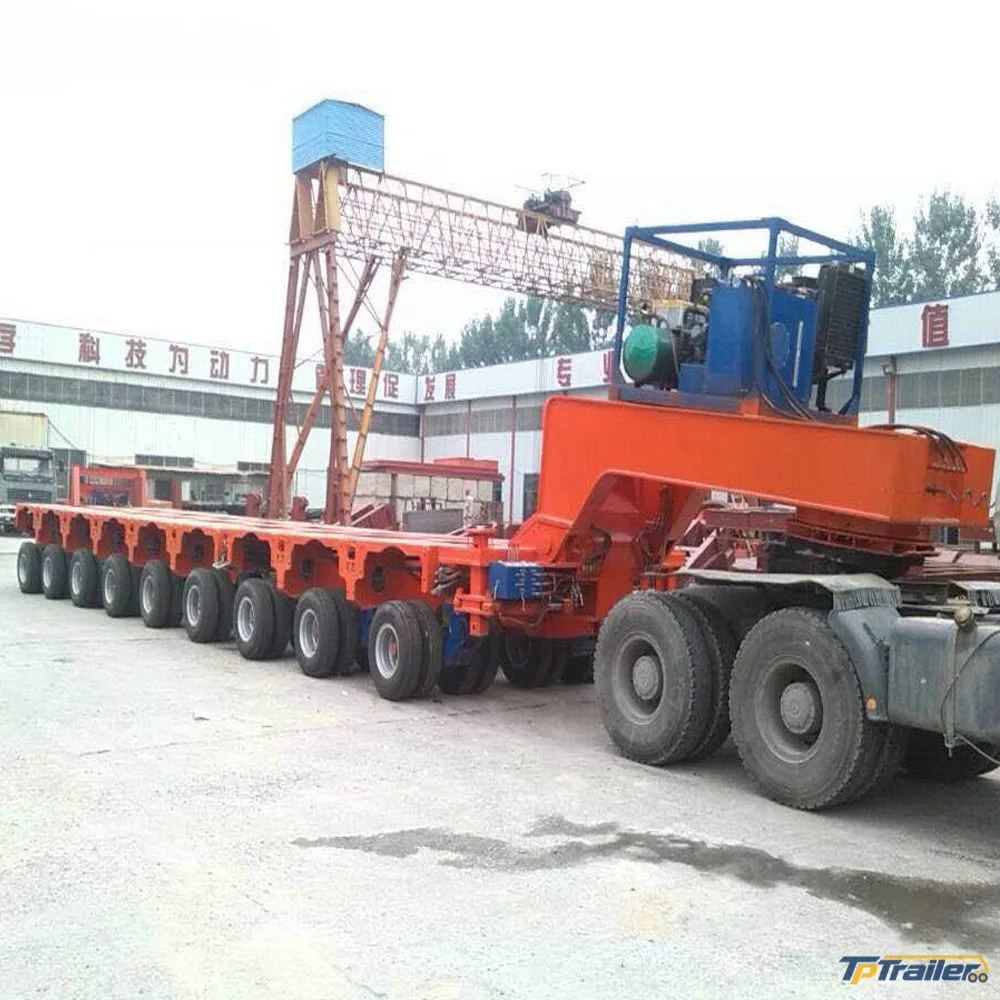
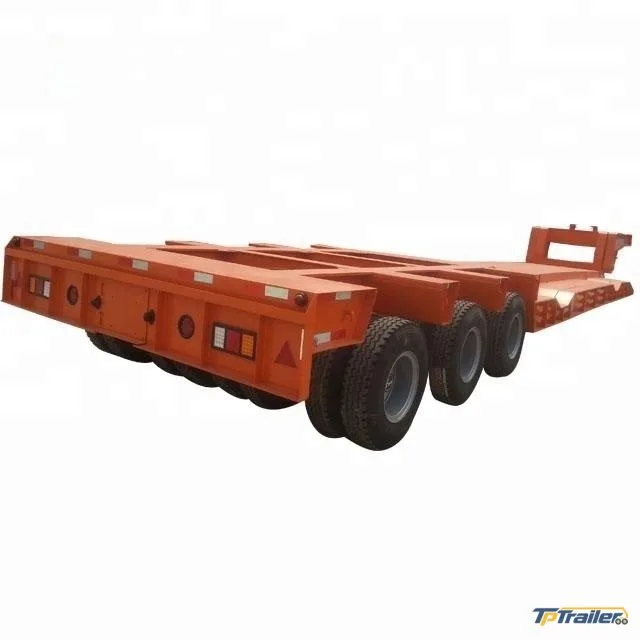
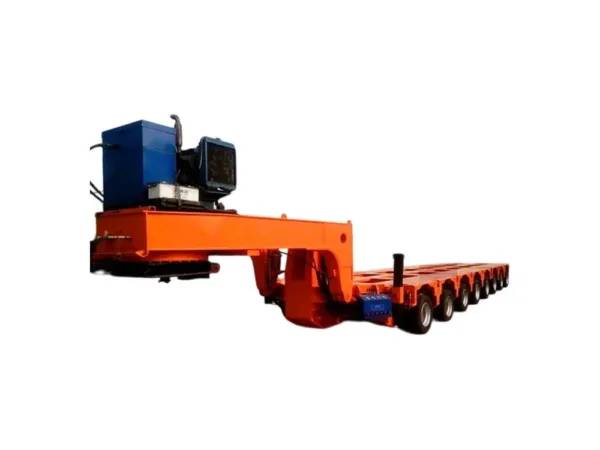
A multi-axle modular trailer is a heavy-haul platform built from steel frame modules that bolt together into the length and width a load demands. It is aimed at fleet operators, heavy-haul contractors and project logistics teams who move loads that standard semi-trailers cannot legally or physically carry. The strongest reason to choose it is the combination of a shot-blasted frame and common mechanical suspension with a ten-piece steel spring pack: a durable, field-serviceable base that keeps working when the cargo is abnormal and the route is difficult. Every module is a building block, so one fleet can cover many hauling jobs.
Table of Contents
Why It Works On Site
Shot-blasted frame processing. Blasting the steel before coating removes mill scale and surface contamination, so the paint keys to clean metal instead of sitting on loose oxide. On a multi-axle modular trailer that spends its life on gravel yards, quarry roads and site tracks, that preparation is what keeps corrosion from starting at welds and corners, and it makes inspection of the frame faster because cracks and dents show against a uniform surface.
Common mechanical suspension. Mechanical suspension is simple, repairable and familiar to any heavy vehicle workshop. There are no hydraulic circuits or sensors in the spring path to diagnose when a multi-axle modular trailer sits loaded on uneven ground. A fitter can inspect bushes, shackles and alignment with hand tools, which shortens downtime between jobs and keeps the trailer in service during tight project windows.
Ten-piece steel spring packs. The leaf pack is built from multiple leaves rather than a single thick spring, which spreads load across the stack and lets the pack deflect progressively as weight comes on. For a multi-axle modular trailer working at the edge of its rated capacity, that progressive behaviour protects the frame and the cargo from shock loads when wheels drop into ruts or cross expansion joints.
Landing gear rated for heavy static loads. The manual landing gear is sized to hold a loaded module when it is uncoupled from the tractor. That matters when a multi-axle modular trailer is staged overnight, when modules are split or joined in a yard, or when a prime mover has to leave and return. Manual operation means no auxiliary power is needed to set the trailer down safely.
Two standard tool boxes. The trailer ships with two tool boxes as standard equipment, mounted where the crew can reach them without unloading cargo. Chains, binders, dunnage and inspection tools stay with the multi-axle modular trailer instead of being carried in the tractor cab, so the crew that arrives on site has what it needs to secure a load and check the running gear before departure.
Optional cat ladder. The cat ladder is offered as an option for crews that need safe access to the deck, the cargo or the coupling points. On a multi-axle modular trailer with a high deck, climbing on tyres or frame edges is a common cause of slips; a dedicated ladder gives a repeatable, secure route up and down during loading, lashing and inspection.
Where It Is Used
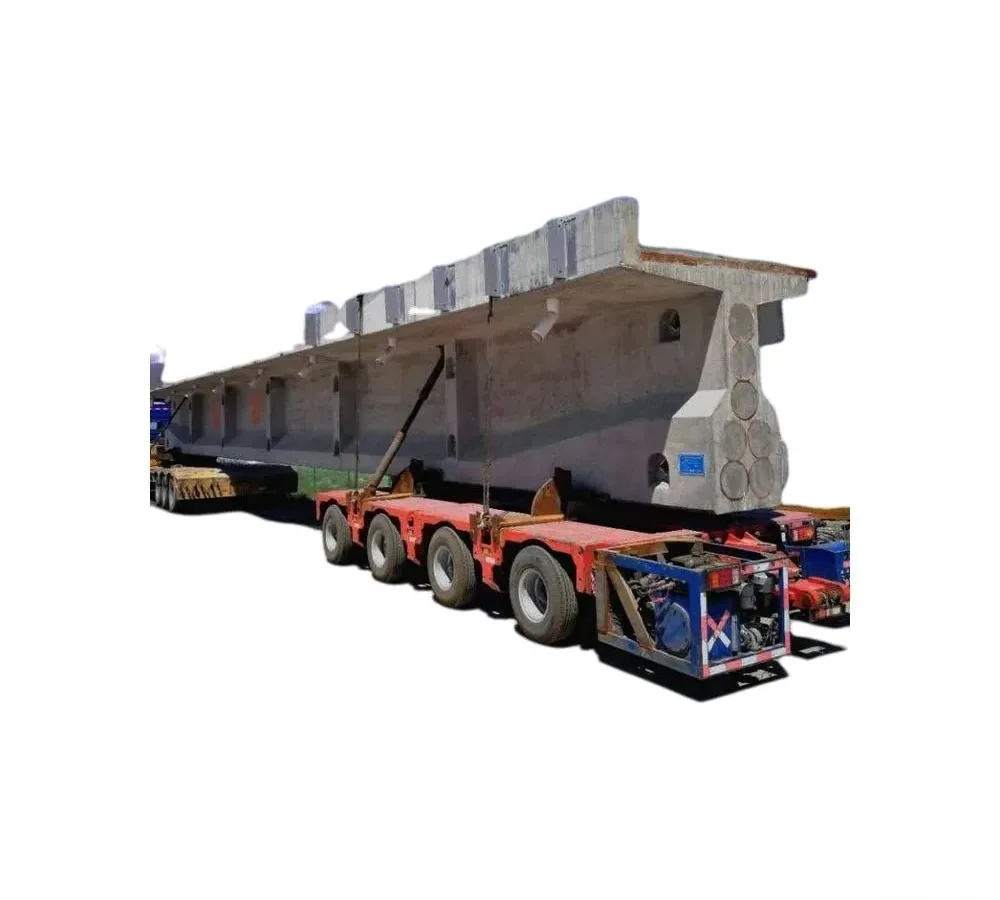
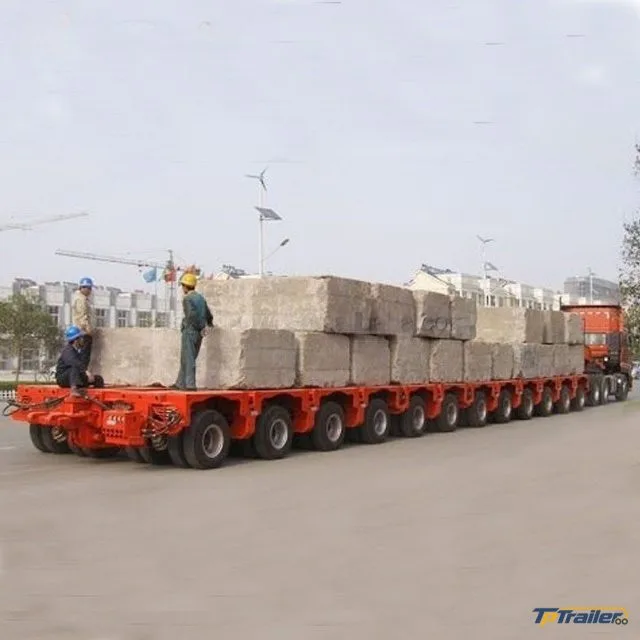
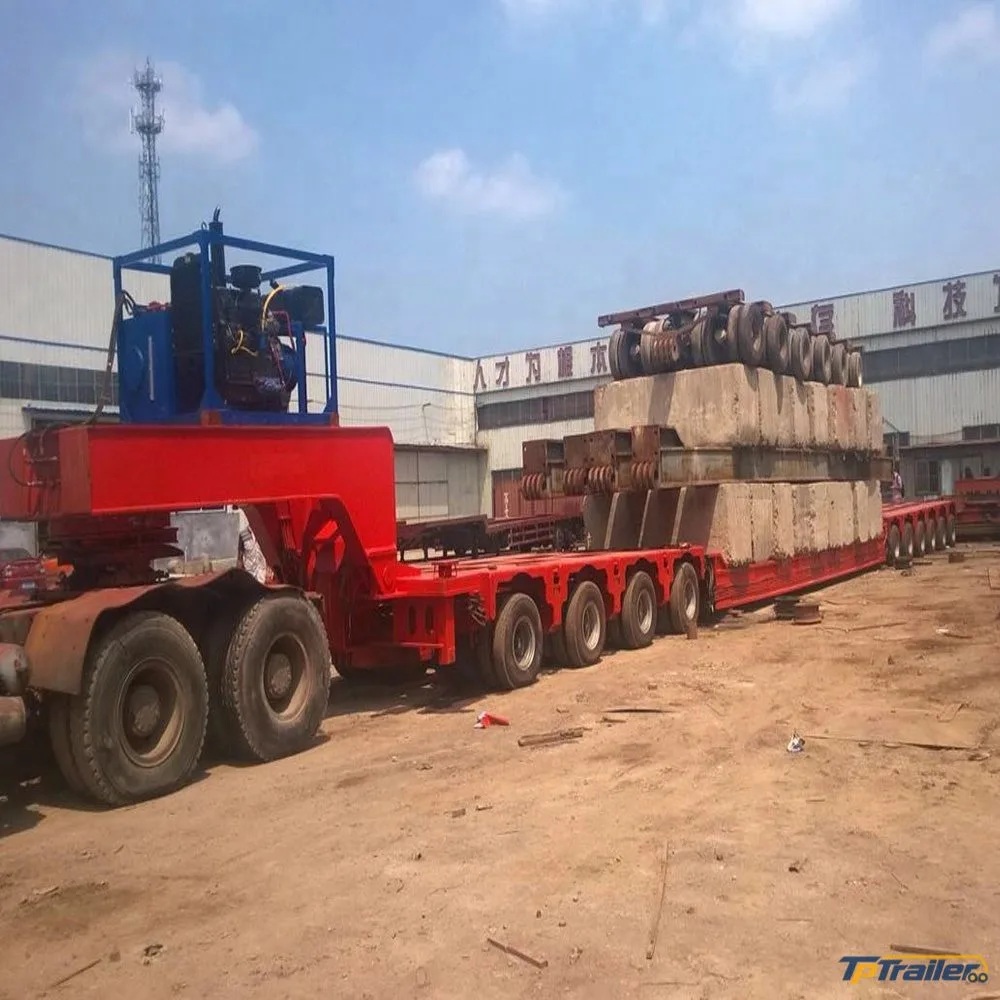
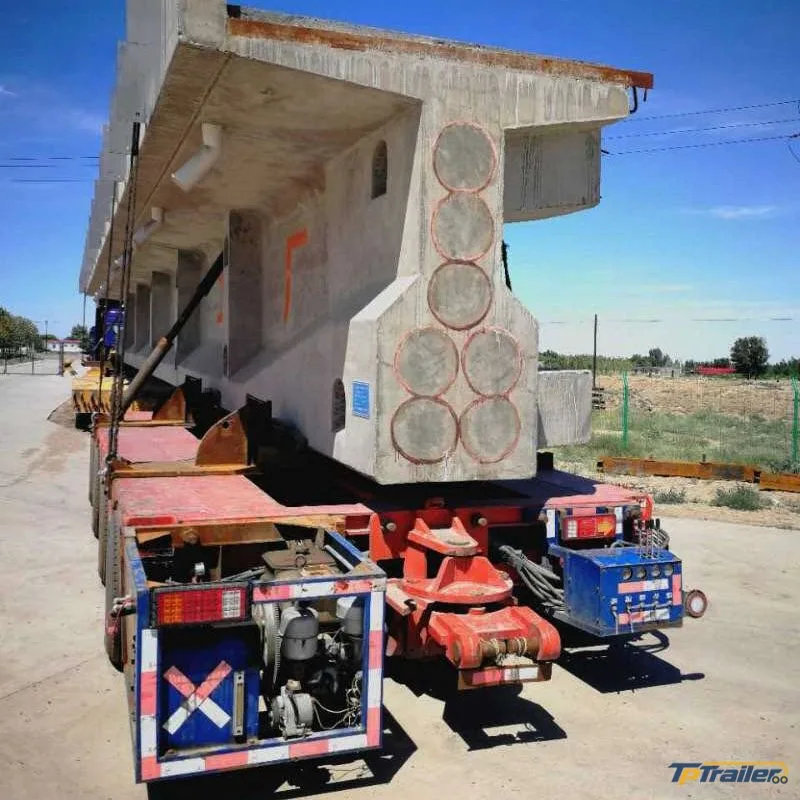
The core work of a multi-axle modular trailer is cargo that is too long, too wide, too tall or too heavy for a conventional semi-trailer. That includes excavators, dozers and wheel loaders moving between sites, transformer and generator sets going to substations, and precast concrete beams, bridge sections and piling headed to construction projects. Steel fabrications, pressure vessels, skids and packaged plant modules are also routine loads.
Because the platform is assembled from modules, the same fleet can run a short, wide configuration for a compact but heavy machine and a long configuration for a beam or vessel. Routes are typically a mix of public highway under permit, industrial access roads and unpaved site tracks, so the trailer has to cope with tight turns, gradients and soft ground within the same trip.
Beyond construction and energy projects, the multi-axle modular trailer earns its place in ports, rail yards, mining operations and heavy manufacturing plants, where oversized components have to be shuttled between quays, sidings, storage yards and assembly halls. In these settings the trips are short but frequent, and the load changes every day. That is where the mechanical suspension and steel spring pack pay off, because the trailer is checked and serviced between movements rather than at the end of a long season.
Operators also use modular trailers for recovery and relocation work, moving damaged or decommissioned equipment out of sites where cranes cannot reach. The common thread is a fleet that needs one platform to handle unpredictable cargo rather than a fixed route with a fixed load.
Choosing The Right Spec
Axle count and module layout. The number of axles and how modules are joined set how much deck length and width you can offer and how the weight is spread along the route. A fleet running mostly compact, dense loads gains more from a shorter, wider build, while long vessels and beams call for extra length. Decide the layout from the cargo envelope you meet most often, not the largest load you have ever quoted.
Suspension and spring choice. The common mechanical suspension with the ten-piece steel spring pack suits operators who want field-serviceable running gear and predictable behaviour on mixed surfaces. If your work is dominated by smooth paved routes and you value a softer ride, discuss the suspension question with the supplier before ordering; the stated specification is the mechanical arrangement, and it should be matched to your route profile and load spectrum.
Landing gear and coupling needs. The manual landing gear is the right choice for crews that stage trailers in yards and split modules regularly, because it needs no power source and is simple to maintain. Think about how often the multi-axle modular trailer will be uncoupled loaded, and how much space the crew has around it. Frequent coupling and uncoupling on site favours simple, robust manual equipment over anything powered.
Accessories and tyre specification. The two standard tool boxes and the optional cat ladder are the practical differences between a bare platform and a working trailer. Crews that lash loads daily will use the boxes constantly; crews that climb to the deck often should take the ladder option. The 12R22.5 tyre size is a common heavy-duty size, so replacements are easy to source on the road and tyre stock stays simple across the fleet.
Customisation Before Delivery
Axle count and configuration. A multi-axle modular trailer is normally specified by how many axle lines the haul needs. You set the count at order confirmation, together with any gooseneck or spacer arrangement. The builder then matches the frame processing and the suspension layout to that configuration, so the trailer arrives as one system rather than a kit of parts.
Suspension and steel spring set. The standard build uses common mechanical suspension with a ten-piece steel spring pack. Buyers running very uneven site roads sometimes ask to review that choice before the order is fixed. Any change to the spring set is settled at order confirmation, because it affects the deck height and the way the multi-axle modular trailer sits under load.
Tyres and wheels. The multi-axle modular trailer ships on 12R22.5 wheel tyres as the standard fitment. If your fleet runs a different tyre size or wheel pattern, raise it before the order is confirmed so the hub and rim specification is agreed in writing. Tyre choice also affects ground pressure, so it is worth settling early rather than after the trailer is built.
Cat ladder and tool boxes. A cat ladder is an optional item on this multi-axle modular trailer and is decided at order confirmation. Two standard tool boxes are included in the build. Landing gear is the manual operating type rated for heavy static loads. These fittings are agreed with the rest of the specification so nothing is added after the frame leaves processing.
Finish and frame preparation. The frame goes through shot blast before coating, which removes mill scale and gives the paint a key. Colour and coating choice for the multi-axle modular trailer are confirmed at order. Because shot blast happens before painting, a finish decision made late in the order cycle holds up the whole build sequence.
Fitting And Installation
Fitting starts with the tractor and the trailer agreeing on the same coupling geometry. On a multi-axle modular trailer the buyer has to match the mounting points on the gooseneck or drawbar to the fifth wheel or hitch on the prime mover. Check the height of the coupling face against the deck line you need. Confirm the hydraulic and pneumatic connection points line up with the tractor take-offs.
Route hoses so they clear the steering linkage through the full turn. A multi-axle modular trailer carries its load across many axle lines, so a coupling height error shows up as uneven tyre loading rather than an obvious fault. The input gives no torque values or tube sizes, so a fitment drawing is confirmed at quotation instead. That drawing is the document your workshop works from on arrival.
A wrong size at the coupling or in the hose run costs downtime in the most direct way. The multi-axle modular trailer cannot be loaded until the connection is right, and the haul is already scheduled. Replacing a mismatched hose or adaptor is quick in itself, but sourcing the correct part on a remote site is not. The same applies to the landing gear footprint and the tool box positions on the multi-axle modular trailer: they must clear the tractor frame and any rear equipment.
Walk the full combination before the first load. Check the spring pack sits level, the tyres clear the frame on full lock, and the cat ladder, if ordered, reaches the deck safely. Any mismatch found at that stage is a workshop fix, not a roadside one.
Service Life And Maintenance
Tyres and wheel ends first. Tyres and wheel bearings take the earliest wear on any multi-axle modular trailer, because every axle line shares the load. The operator should inspect tread depth, sidewall condition and bearing play at each walk-round. Uneven wear across the multi-axle modular trailer usually points to a suspension or alignment issue rather than a tyre fault, so record the pattern and act on it early.
Steel spring packs. The ten-piece steel spring set is a wear item on this multi-axle modular trailer. Inspect for cracked leaves, worn bushes and shifted clips. A broken leaf changes how the multi-axle modular trailer shares load between axle lines, which then overloads the neighbours. Replace leaves as a set rather than one at a time, and keep the spring seats clean so grit does not accelerate the wear.
Frame coating and shot blast finish. The shot blast preparation under the coating is what protects the frame of the multi-axle modular trailer from corrosion. Inspect the coating at welds, corners and the deck edges, where stone chips start. Touch up bare metal promptly. Keeping the coating intact on the multi-axle modular trailer extends the interval before a full repaint is needed and protects the structural steel underneath.
Landing gear and manual operation. The manual landing gear carries the trailer when it is uncoupled. Inspect the screw, the foot plate and the mounting bolts on the multi-axle modular trailer. Keep the screw lubricated and free of grit. Operate the gear through its full travel during inspection so a bent screw or seized nut is found before it is needed under a loaded multi-axle modular trailer.
Tool boxes, ladder and fittings. The two standard tool boxes and the optional cat ladder are the parts most often damaged on site. Check hinges, latches and mounting bolts on the multi-axle modular trailer at each service. A loose tool box or ladder is a snag hazard on a moving multi-axle modular trailer. Keep the boxes sealed against water so the tools inside stay serviceable between jobs.
Packing And Container Loading
Each multi-axle modular trailer leaves the works with its frame shot blasted and protected before shipment. Steel surfaces receive a protective coating to limit corrosion during sea transit. The standard tool boxes travel with the unit, and loose items are boxed and secured so they cannot shift inside the container. Wheel tires and suspension components are checked and braced for transport. Buyers should ask the supplier to photograph the packed unit before the doors close, so the condition at loading is documented for the arrival inspection.
A multi-axle modular trailer is a long, heavy unit, so loading is planned around its overall length and axle count rather than treated as general cargo. The frame is not designed for stacking, and the hydraulic axle trailers should not be nested to save space. Confirm the shipping method and the number of units per shipment at quotation. On arrival, check the coating, the tool boxes, the tires and the axle assemblies against the loading photos before signing the delivery receipt.
Common Mistakes Buyers Make
Ordering the wrong overall length. A multi-axle modular trailer that is too long or too short will not match the loads or the route it is bought for. Measure the longest load and the tightest turning point on your route, then give the supplier the required platform length in writing before the order is placed.
Ignoring the axle count. The number of axles sets how the load is spread and how the hydraulic axle trailers behave under load. Confirm the axle count you need against your heaviest load and the ground conditions, and state it on the purchase order so the build matches the quotation.
Skipping the suspension check. The common mechanical suspension and steel spring pack are part of the base build, and a buyer who assumes a different arrangement will be disappointed. Ask the supplier to confirm the suspension type and spring configuration in writing, and compare it with the road and site conditions the trailer will face.
Overlooking the landing gear duty. The manual landing gear has a rated capacity, and buyers often forget to check it against the load carried when the trailer is unhitched. Confirm the landing gear rating against your expected unhitched load, and ask whether the cat ladder option is needed for safe access.
Forgetting the accessory count. Tool boxes are easy to leave off a specification, and a multi-axle modular trailer delivered without the agreed accessories causes disputes. List the tool boxes and any optional items on the order, and check the packing list against the delivery so nothing is signed for short.
Buyer Questions
How is the multi-axle modular trailer protected for sea freight?
The frame is shot blasted and coated before packing, and the unit is braced inside the container or on the deck so it cannot move in transit. Loose items such as the tool boxes are boxed and secured separately. Ask the supplier for loading photos and a packing list before dispatch. On arrival, inspect the coating, the tires, the axle assemblies and the accessories against those photos, and note any damage on the delivery receipt before signing.
Can several units be nested or stacked to cut container cost?
The frame is not built for stacking, and the hydraulic axle trailers should not be nested to save space. Each unit is loaded as a complete assembly, so the number of units per shipment depends on overall length and shipping method. Give the supplier your quantity and the length you need, and ask for the loading plan at quotation. Do not assume a shared container will fit more than one unit until that plan is confirmed.
What should I confirm before ordering a multi-axle modular trailer?
Confirm the overall length, the axle count, the suspension type and the landing gear duty against your loads and route. State the tool boxes and any optional items such as the cat ladder on the order. Ask for the tire specification and the frame treatment in writing. Then request a quotation that lists every item, so the build, the packing and the delivery can be checked against one document.
To receive a quotation for a multi-axle modular trailer, send the overall length you need, the axle count, and the quantity you plan to order. Add any optional items, such as the cat ladder, and the route or site conditions the trailer will work in. With those details the supplier can confirm the build and the loading plan.
We use cookies to enhance your browsing experience, serve personalized content, and analyze our traffic. By clicking "Accept All", you consent to our use of cookies. Privacy Policy
Cookie Preferences
Required for the website to function properly. Cannot be disabled.
Help us understand how visitors interact with the website (Google Analytics).
Used to deliver personalized ads and measure ad campaign effectiveness.










Write a Review