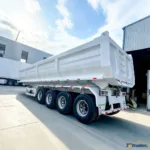
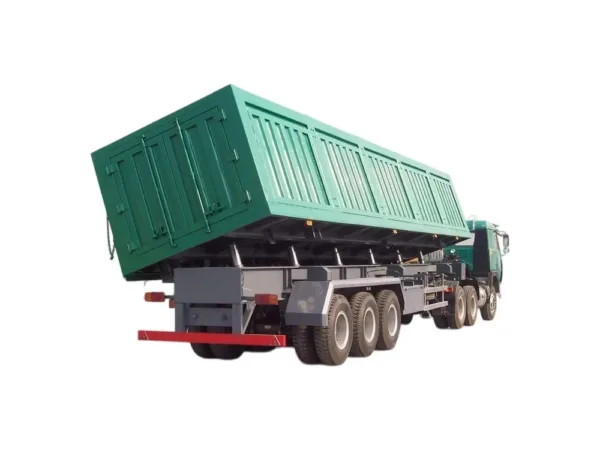
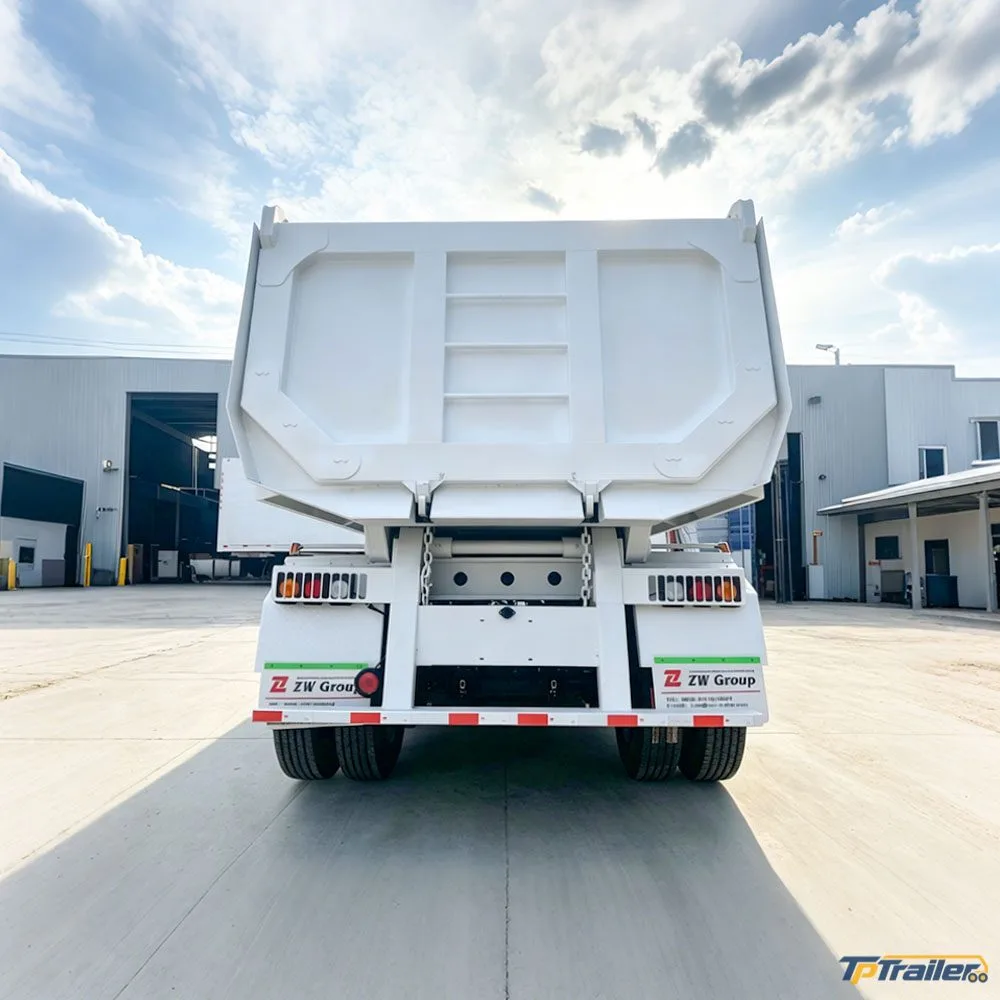
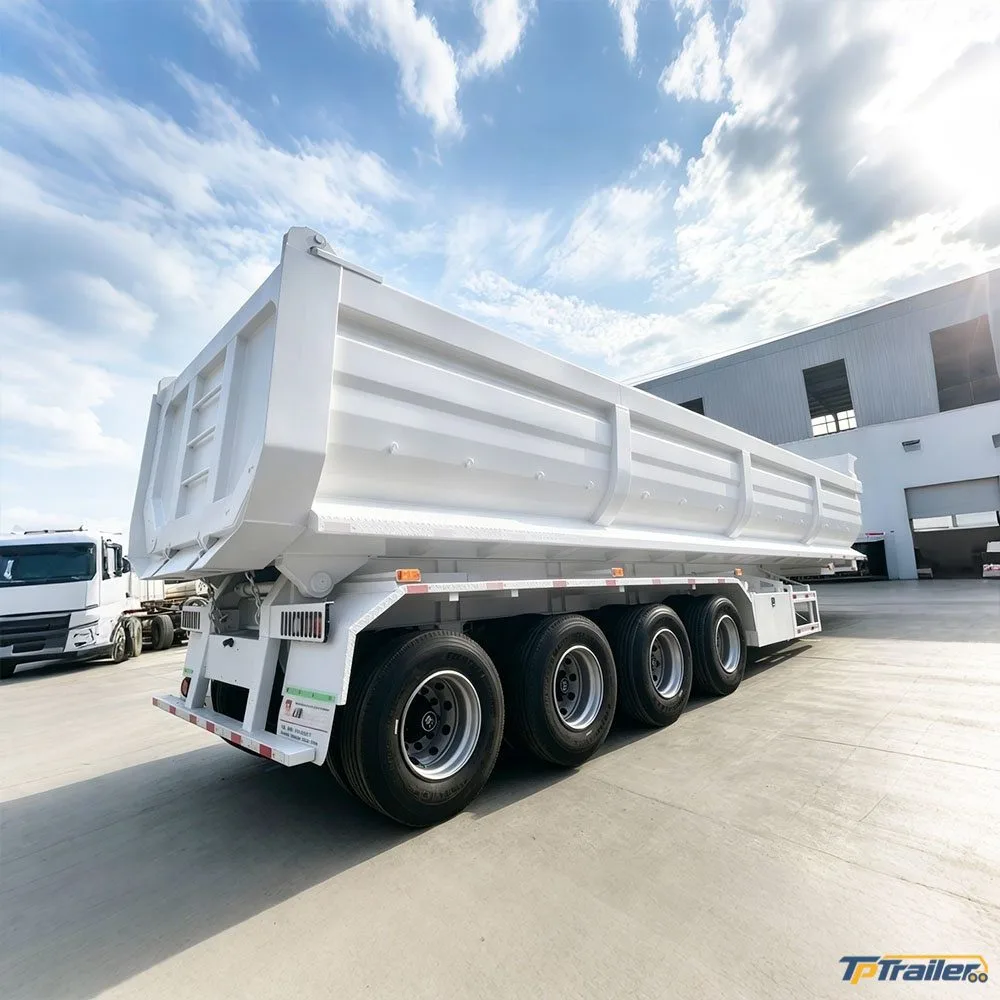
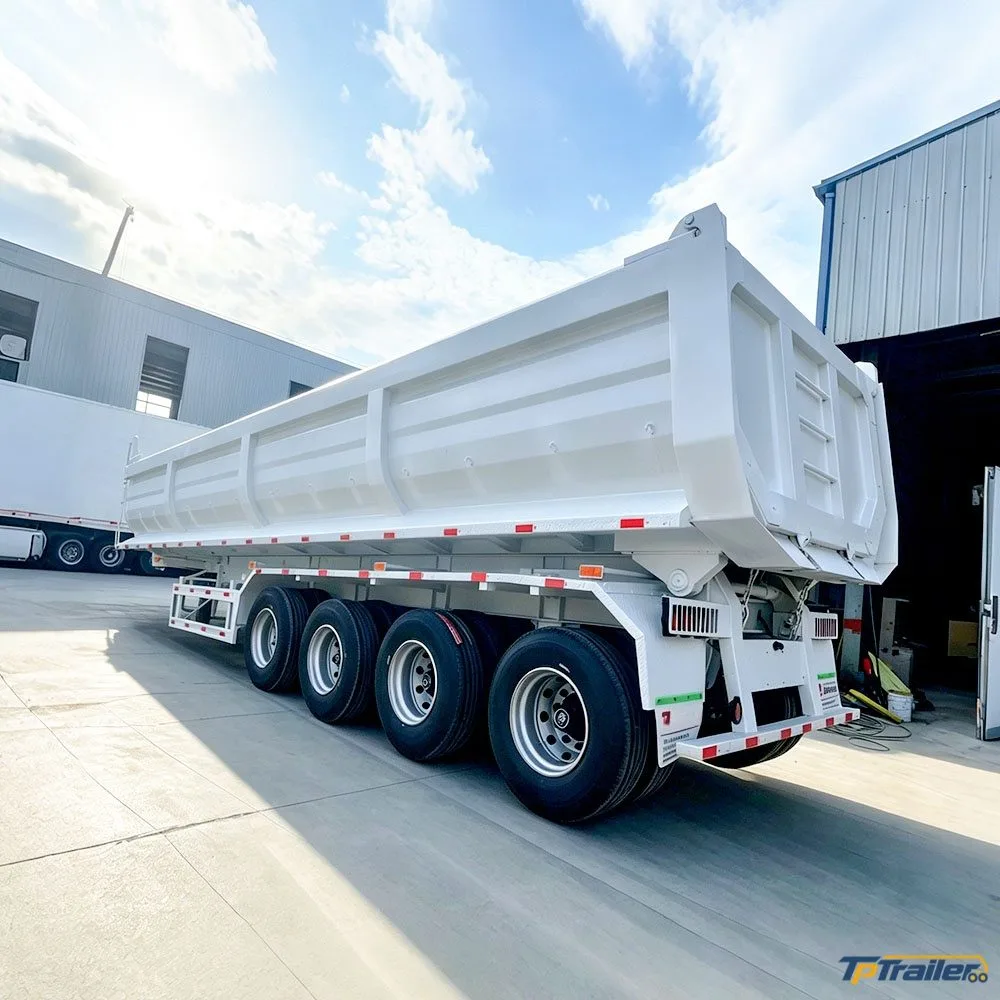
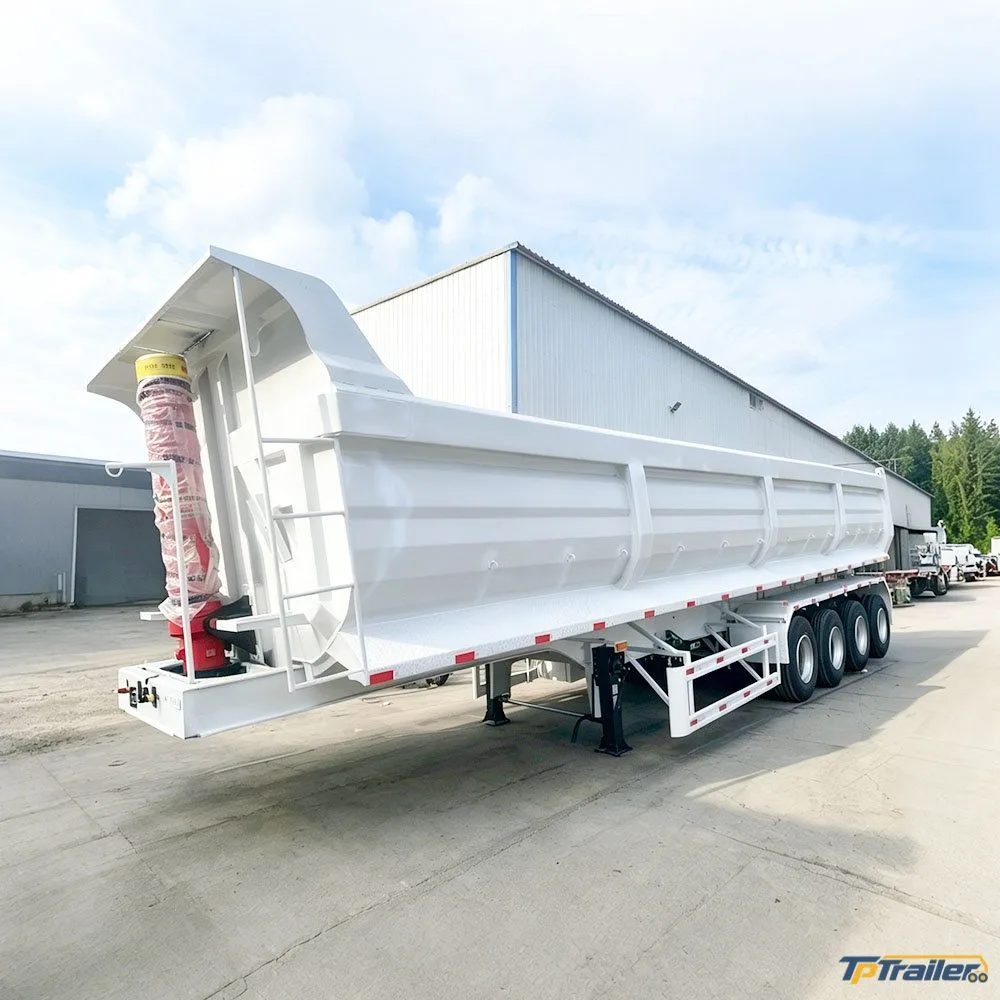
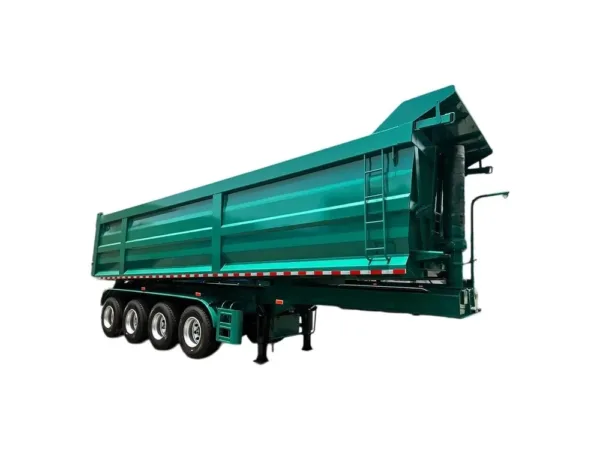
The 4 axle hydraulic tipper semi trailer is a 40CBM dump trailer built for coal, stone, gravel and construction-site hauling, and it is aimed at fleet operators and contractors who tip loads many times a day. Its strongest argument is the combination of a 60T load capacity with a reinforced main frame, so heavy bulk cargo moves in fewer trips without the body flexing out of shape. If your work is short-haul aggregate, quarry-to-yard runs or site spoil removal, this trailer is designed around that duty cycle rather than general freight. It tips, it takes the load, and it keeps the body square.
Table of Contents
Why It Works On Site
The static rating carries the load. A 60T load capacity is the figure the running gear and body are built around, which matters when a loader fills the body by volume and the scale is the last thing checked. For a site operator this means fewer part-loads and a tipping cycle that is not limited by the trailer before the truck.
The main frame resists tipping stress. Main frame sections in 18, 20 and 12mm put the stiffness where the hydraulic lift loads the chassis. Repeated raising with a full body twists a light frame; this one is sized for that cycle, so the 4 axle hydraulic tipper semi trailer stays aligned over a long working season.
The 8mm floor handles abrasive cargo. Stone and gravel scour a thin floor quickly. An 8mm floor gives the wear allowance that drop-loading and tipping demand, so the body does not need patching in its first working years. That is the difference between a trailer that tips and one that keeps tipping.
The 6mm side wall keeps volume usable. A 6mm side wall holds the 40CBM body shape under load without adding dead weight. The operator gets the full rated volume for coal or spoil, and the walls stay straight enough that the load releases cleanly on the tip.
Mechanical suspension suits rough ground. Common mechanical suspension is simple, serviceable and matched to unpaved site roads and quarry tracks. There are fewer parts to fail than on a complex system, which keeps the 4 axle hydraulic tipper semi trailer working when a breakdown would stall the whole haul.
Wheel and tyre choice follows the route. Rim options in 9.0-22.5 or 8.5-20 and tyres in 12R22.5 vacuum or 11.00R20 let a buyer match the 4 axle hydraulic tipper semi trailer to highway running or softer site surfaces instead of accepting one fixed combination.
Where It Is Used
The most common duty for a 4 axle hydraulic tipper semi trailer is aggregate movement: quarry to batching plant, pit to stockpile, yard to road project. These are short, repeated runs where the trailer is loaded by a front-end loader or hopper, driven a known distance and tipped into a pile or receiver. Coal transport follows the same pattern, from stockyard to plant or port staging area, with the body tipped by hydraulic ram rather than unloaded by hand or by crane.
Gravel and crushed stone runs put the floor and side walls under constant abrasion, which is why the 8mm floor and 6mm side wall matter more here than on general cargo work. The trailer is chosen for the number of cycles per shift, not for the length of any single trip.
Construction sites use the same 4 axle hydraulic tipper semi trailer for spoil removal, trench excavation and delivery of sand, stone and fill. Routes are often part paved, part unsealed, with tight site entrances and temporary haul roads. Mechanical suspension and a sturdy main frame are what make that mix workable, and the tipping body means the load is placed where the site needs it rather than dropped for a second machine to move. Operators also use this trailer for demolition debris and reclamation work, where the cargo is heavy, irregular and abrasive. In all these jobs the 4 axle hydraulic tipper semi trailer is judged on how fast it turns around and how little it needs between shifts.
Choosing The Right Spec
Match the body to the cargo density. Coal and gravel fill a 40CBM body at different weights. If your loads run heavy, the 60T load capacity and the 8mm floor are the parts that decide whether the 4 axle hydraulic tipper semi trailer is working within its design or being pushed past it. Confirm the density of what you haul before fixing the body size.
Pick the kingpin for your tractor. The 2″ or 3.5″ traction pin option must match the fifth wheel on the truck that will pull the trailer. Choosing the wrong pin means the 4 axle hydraulic tipper semi trailer cannot enter service. Check the tractor fleet first, then order the pin to suit, especially if the trailer will be swapped between trucks.
Choose rim and tyre by route. The 9.0-22.5 rim with 12R22.5 vacuum tyre suits highway-biased running, while the 8.5-20 rim with 11.00R20 tyre is the option for softer or rougher site surfaces. The right pairing for the 4 axle hydraulic tipper semi trailer depends on how much of the route is sealed road and how much is track.
Set colour and finish to your fleet. Colour is supplied according to your request, so the 4 axle hydraulic tipper semi trailer can be finished to match existing units. This is a practical choice for operators running mixed fleets, where identification and consistent presentation matter on site and in the yard. Specify it at order stage.
Customisation Before Delivery
The 4 axle hydraulic tipper semi trailer is built around a fixed axle count, so the running gear layout is set once the order is confirmed. Buyers who later want a different axle arrangement are looking at a new build, not a modification. Settle the configuration at order confirmation so the frame, suspension mounts and hydraulic mounting points are all matched to one plan.
Rim and tyre choice is yours to specify. The 4 axle hydraulic tipper semi trailer can be supplied with either rim size listed in the specification, paired with vacuum tyres or the alternative tyre size. This choice affects ground pressure, load spread and how the trailer sits on soft coal or gravel yard surfaces, so match it to the routes the trailer will actually run.
Colour is finished to your request. The 4 axle hydraulic tipper semi trailer can be painted to a fleet colour or a site identification scheme, which helps when several trailers work the same construction site. Confirm the shade at order confirmation, because paint is applied during build and cannot be changed once the unit leaves the line.
Kingpin size is a coupling decision, not a cosmetic one. The 4 axle hydraulic tipper semi trailer is offered with either of the two traction pin sizes in the specification, and the right one depends on the tractor unit in your fleet. Confirm it with the order so the trailer couples correctly on arrival and does not need rework at the yard.
Suspension is specified as common mechanical. Because the 4 axle hydraulic tipper semi trailer carries its load on a mechanical setup, the choice is settled at order confirmation along with the frame and floor specification. Discuss the duty cycle with us first, then lock the configuration so the build matches the work.
Fitting And Installation
On arrival, the buyer has to match the 4 axle hydraulic tipper semi trailer to the tractor unit and to the site. The first check is the coupling: the kingpin must suit the fifth wheel, and the trailer height must clear the tractor frame. Next comes the hydraulic circuit. The tipper ram is fed by the tractor’s hydraulic system, so the buyer must confirm the pump output, the hose size and the coupling type before the first raise.
Hose routing matters as much as hose size. Lines should run clear of the landing legs, the suspension travel and any point where the frame flexes under load. Where the input gives no fitment data, a fitment drawing is confirmed at quotation instead of being assumed. The 4 axle hydraulic tipper semi trailer is a heavy unit, so the drawbar and coupling checks belong to a competent fitter, not to a driver improvising in the yard.
A wrong size costs downtime in a very direct way. If the kingpin does not match the fifth wheel, the 4 axle hydraulic tipper semi trailer cannot leave the yard. If the hydraulic hose size or coupling type is wrong, the ram will not raise, and the trailer sits idle while parts are sourced. If the tyre or rim choice does not suit the ground, the trailer may bog down on soft gravel or cut up a yard surface.
Each of these faults stops a loaded unit, and a loaded tipper that cannot tip is a blocked site. Confirm the fitment drawing, the coupling and the hydraulic connections at quotation, then check them again on arrival. The 4 axle hydraulic tipper semi trailer should be signed off against that drawing before it carries its first load.
Service Life And Maintenance
The hydraulic system wears first on any tipper. Seals, hose ends and couplings take the pressure cycle every time the body raises, and a weeping joint is the early warning. The operator should inspect hoses for chafing and check couplings for tightness as part of the pre-start walkaround. Catching a damp hose end early keeps the 4 axle hydraulic tipper semi trailer working instead of waiting for a replacement line.
The tipping body and floor take the abrasion. Coal, stone and gravel slide across the floor on every cycle, and the floor plate is the surface that sees it. The operator should watch for scoring, dents and bent edges, especially where the side wall meets the floor. The floor thickness specified for this trailer is the wear allowance, so a thinner plate shortens the interval before replacement.
The main frame carries the bending load. On the 4 axle hydraulic tipper semi trailer, frame sections and crossmembers should be checked for cracks, loose bolts and distortion at the mounting points. The main frame dimensions in the specification set the strength of that structure, so inspect welds around the suspension hangers and the ram mounts. A crack found early is a weld repair; a crack found late is a chassis rebuild.
Tyres and rims are the contact point. The operator should check tread depth, sidewall damage and rim condition, and confirm wheel nut torque at the stated intervals. The 4 axle hydraulic tipper semi trailer runs on the tyre and rim combination chosen at order, so keep the spare matched to that specification. Mixed tyre sizes on a multi-axle unit change the load spread and wear the suspension faster.
The mechanical suspension and kingpin are the slow-wearing parts. Springs, hangers and bushes should be inspected for wear, and the kingpin checked for play at the fifth wheel. The 4 axle hydraulic tipper semi trailer depends on that coupling for every trip, so a worn pin is a safety item, not a comfort item. Paint finish also protects the frame, so touch up chips before rust starts.
Packing And Container Loading
A 4 axle hydraulic tipper semi trailer ships as a complete unit or in sections, depending on the loading plan agreed at order. The tipper body, hydraulic cylinder and running gear are the parts that need the most attention. Hydraulic hoses are capped and tied back so they do not rub against the frame during the voyage. Exposed rod surfaces are greased and wrapped. Loose items such as the kingpin, spare rim and tool kit are boxed and strapped inside the body or stored in a fixed crate. Every 4 axle hydraulic tipper semi trailer leaving the yard should be photographed before loading, with the photos sent to the buyer as a record of condition at dispatch.
Space saving is a real question on this product. A 4 axle hydraulic tipper semi trailer is a long, wide, tall unit, so nesting is limited. Some builders load the dump body inverted over the chassis or ship the trailer partly disassembled to reduce height, but that must be confirmed at quotation because it affects the hydraulic plumbing and the re-assembly work at destination. Stacking two complete trailers is not normal practice and should not be assumed. Ask for the loading drawing before production, check the declared dimensions against your route permits, and confirm whether the quoted price covers the loading plan you need. On arrival, verify the cylinder, hoses, floor and side wall panels against the dispatch photos.
Common Mistakes Buyers Make
Ordering the wrong kingpin size. The tractor coupling must match the kingpin fitted to the trailer, and a mismatch means the unit cannot be pulled off the dock. Confirm the kingpin size against your tractor before the order is released, and state it in writing on the purchase order so the factory builds to it rather than to a default.
Ignoring the wheel base and route limits. The wheel base affects turning behaviour and how the trailer sits on tight construction sites. Check the wheel base against your yard layout, site roads and local length rules. If the figure does not suit your operation, raise it before production, not after the 4 axle hydraulic tipper semi trailer has shipped.
Choosing tyres and rims without checking the haul road. Tyre and rim options suit different surfaces and loads, and the wrong pairing wears fast on gravel or coal yards. Confirm the tyre and rim combination against your actual haul road and load profile, and make sure the spare set matches what is fitted to the 4 axle hydraulic tipper semi trailer.
Overlooking the floor and side wall thickness. The floor and side wall panels take the abrasion from stone and gravel, and a thin specification wears through quickly. Match the floor and side wall to the material you carry and how it is loaded. Put both figures on the order so the built 4 axle hydraulic tipper semi trailer can be checked against them.
Leaving colour and suspension to chance. Colour and suspension type are easy to leave unstated, and the factory then builds to its own standard. Confirm the colour code and the suspension type in writing, and check them against the order confirmation before production starts. A colour mismatch on a 4 axle hydraulic tipper semi trailer is expensive to correct after delivery.
Buyer Questions
Can the trailer be shipped in one container, or does it need a different loading method?
That depends on the loaded dimensions and the loading plan, so it is confirmed at quotation. A complete 4 axle hydraulic tipper semi trailer is a long unit, and whether it fits a standard container or needs another method should be settled before you book freight. Ask the supplier for the loading drawing and the declared dimensions, then compare them with your forwarder’s limits. Do not assume the price includes a particular loading method until it is written into the quotation.
What should I check on arrival before signing the delivery note?
Check the unit against the dispatch photos first. Inspect the hydraulic cylinder and hoses for damage, look for rub marks on the frame, and confirm the floor and side wall panels are the thickness you ordered. Verify the kingpin, tyre and rim combination, wheel base, suspension type and colour against your order confirmation. Note any damage on the delivery document before signing. If something does not match the order, photograph it and raise it with the supplier immediately rather than after the 4 axle hydraulic tipper semi trailer is put to work.
Can I specify colour, tyre type and kingpin size for my order?
Yes. Colour is built to your request, and the tyre, rim, kingpin, suspension, floor and side wall specifications are all selectable within the options the supplier offers. Send your full requirement list with the enquiry so the quotation reflects it. Confirm every selection on the order confirmation before production, because once the 4 axle hydraulic tipper semi trailer is built, changing colour or running gear is costly. Where an option is not listed, ask and it will be confirmed at quotation.
To receive a quotation, send the trailer length you need, the number of axles, and the quantity you plan to order. Add your preferred colour, tyre and rim combination, kingpin size and suspension type if you have them. With those details, the supplier can confirm the specification and the loading plan for your 4 axle hydraulic tipper semi trailer.
We use cookies to enhance your browsing experience, serve personalized content, and analyze our traffic. By clicking "Accept All", you consent to our use of cookies. Privacy Policy
Cookie Preferences
Required for the website to function properly. Cannot be disabled.
Help us understand how visitors interact with the website (Google Analytics).
Used to deliver personalized ads and measure ad campaign effectiveness.





















Write a Review