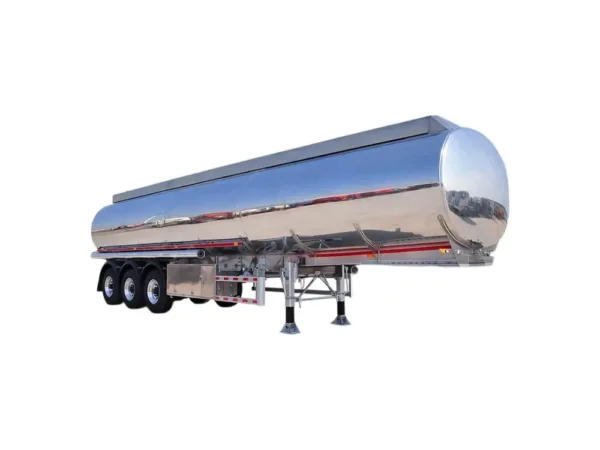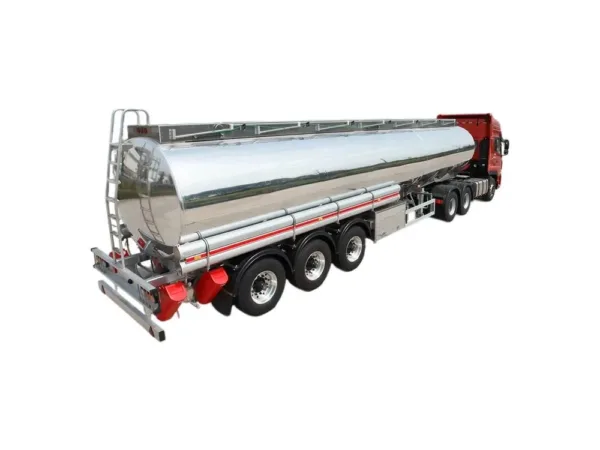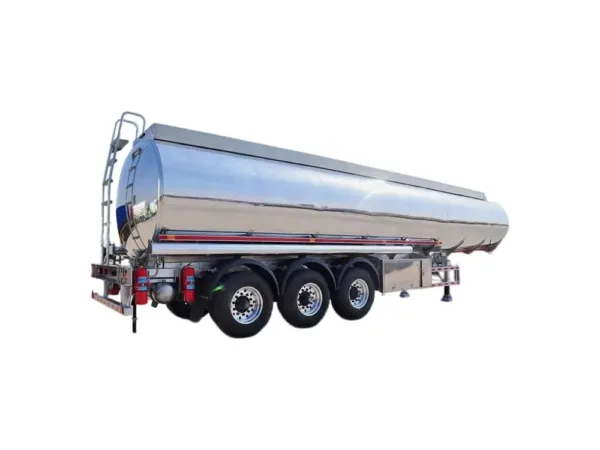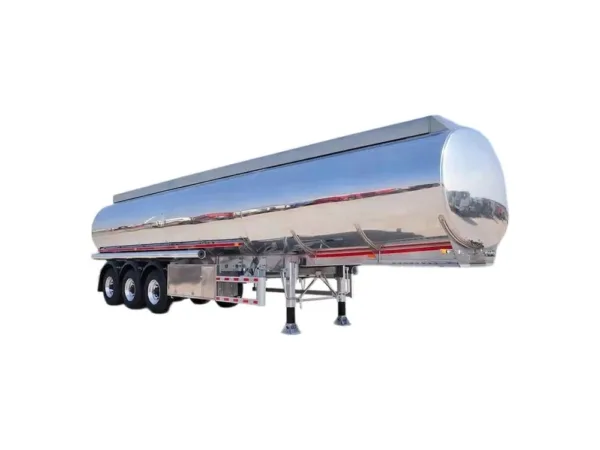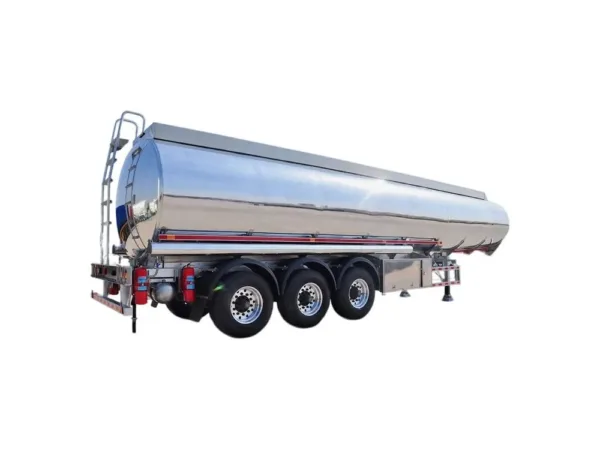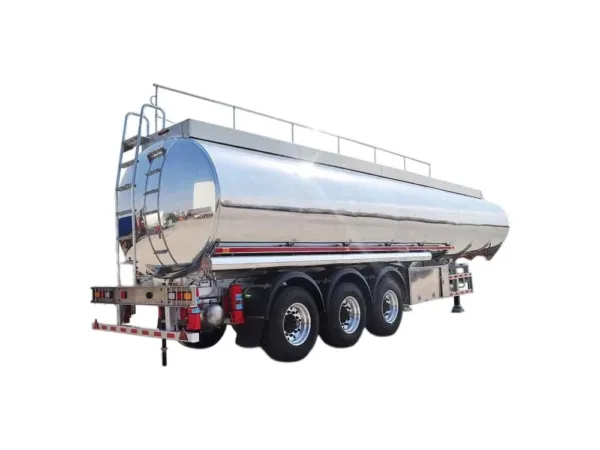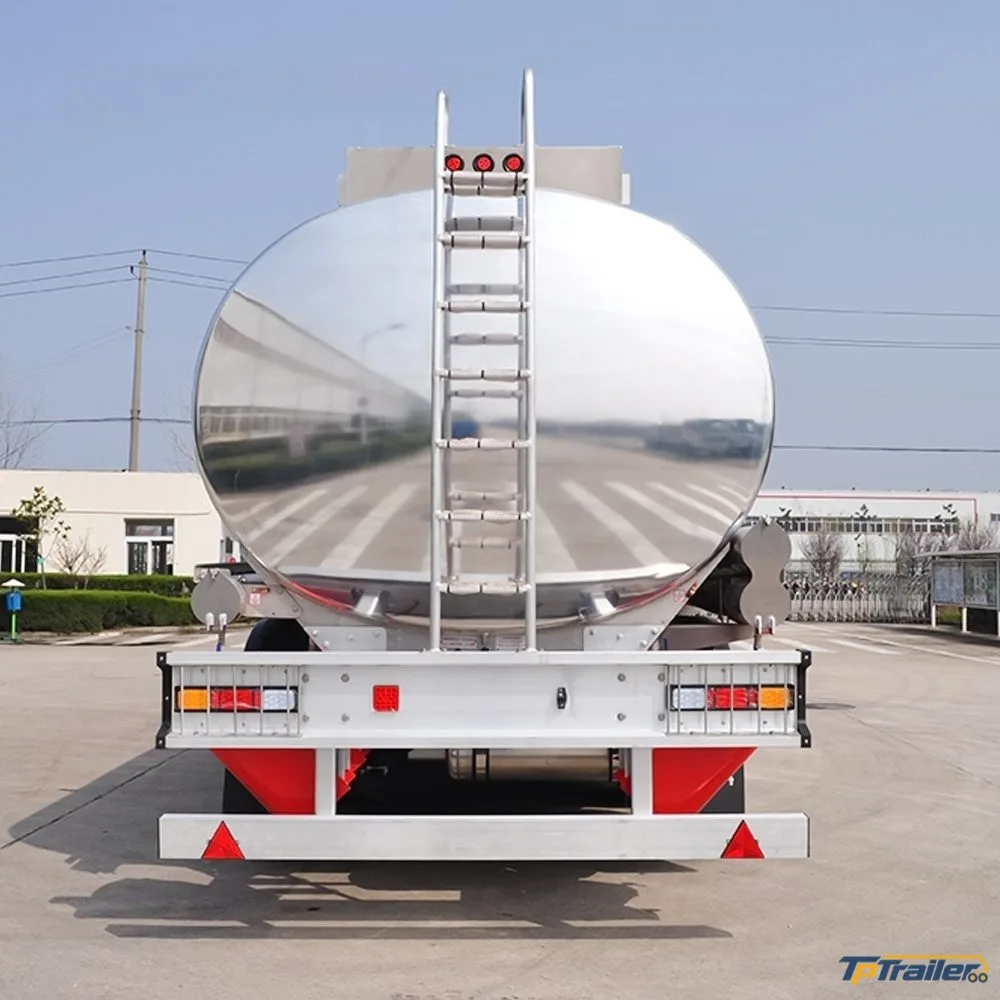
3 Axle 40000 Liter Carbon Steel Fuel Tanker Semi Trailer 60 Ton

Fuel tanker semi trailer with 3 axles, 40000 liter carbon steel tank and 60 ton capacity for diesel and petrol haulage. Quotes available on request.
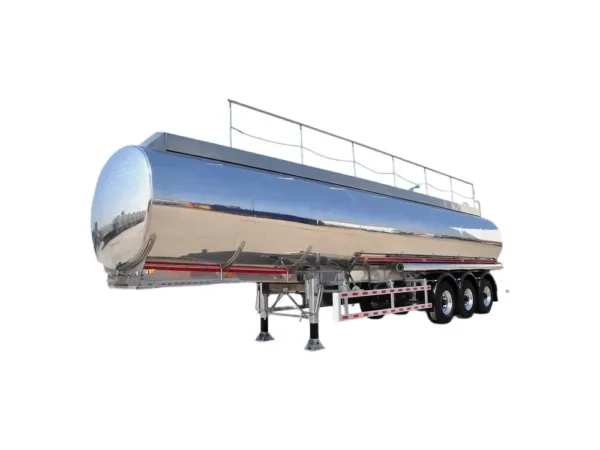
25001-30000 KG 3
FOB Reference Price US$6,000-10,000 Final price confirmed by inquiry

Certifications

  • ISO 9001

Key Features

  • 40000 liter tank volume on a 3 axle configuration for bulk fuel haulage
  • 5mm carbon steel tanker body with Q345 carbon steel main beam
  • 1 to 9 compartments to separate diesel, petrol and other fuel grades
  • 2 to 9 manholes at 16" or 20" with vent valve for safe loading
  • 4" API adaptor valve or 3" spherical valve discharge options
  • 3" and 4" bottom valve controlled by pneumatic block
  • Manual or pneumatic handrail and optional bottom loading with overfilling and recovery system
Load Capacity 25001-30000 KG
Type Semi-Trailer
Use Truck Trailer

Fuel Tanker Semi Trailer is the working name for this large-capacity carbon steel unit built for hauling diesel, petrol and other liquid fuels in bulk. It is aimed at fuel distributors, transport contractors and fleet operators who move product between depots, terminals and retail sites. The strongest reason to choose it is straightforward: a Q345 carbon steel main beam and a 5 mm tanker body carry a load range from 28 to 70 tons across volumes of 28,000 to 70,000 liters, so one platform covers both short depot shuttles and long-distance bulk runs without changing the trailer concept.

Why It Works On Site

  • Payload spread across one platform: the stated payload band runs from 28 to 70 tons, which lets a fleet standardise on a single trailer family and still match each unit to the density of the product it carries. Lighter loads suit shorter routes, heavier loads suit high-volume depot transfers, and the operator does not need a second trailer type to cover both.
  • Tanker body in 5 mm carbon steel: the wall thickness gives the shell enough substance for repeated loading and discharge cycles at terminals. That matters on site because the tank is the part that takes the wear, and a thicker body means fewer concerns about handling during routine fuel transfer work with a Fuel Tanker Semi Trailer.
  • Compartments from 1 to 9: splitting the barrel into separate compartments lets one run carry several grades or separate delivery drops. A distributor can load different products for different customers on the same trip, which cuts empty running and makes the Fuel Tanker Semi Trailer more useful on multi-stop delivery routes.
  • Manholes of 16 or 20 inch with vent valve: the manhole count tracks the compartment count, from 2 up to 9 pieces. Each one gives access for inspection and cleaning, and the vent valve keeps the tank breathing correctly during loading and discharge, which supports safe pressure behaviour on site.
  • Discharge and bottom valve options: the discharge side can be a 4 inch API adaptor valve or a 3 inch spherical valve, while the bottom valve comes in 3 or 4 inch sizes controlled by a pneumatic block. Operators can therefore match the outlet to the receiving equipment at the terminal or depot.
  • Manual or pneumatic handrail: the handrail choice changes how the operator accesses the top of the tank during loading. Pneumatic operation reduces the manual effort of folding and unfolding the rail, which speeds up turnaround for crews working a Fuel Tanker Semi Trailer through a busy loading bay.

Where It Is Used

The most common duty is moving diesel and petrol from a fuel terminal or depot to retail filling stations. Here the trailer works as a shuttle unit: it loads at the rack, runs a fixed route and discharges into station storage tanks. The compartment range matters in this job because a station may take more than one grade on a single drop, and a split load saves a second trip. The discharge valve choice also matters, since station pipework and adaptors vary from site to site. A Fuel Tanker Semi Trailer set up with the right outlet and the right number of compartments turns this kind of multi-grade delivery into one clean operation rather than several.
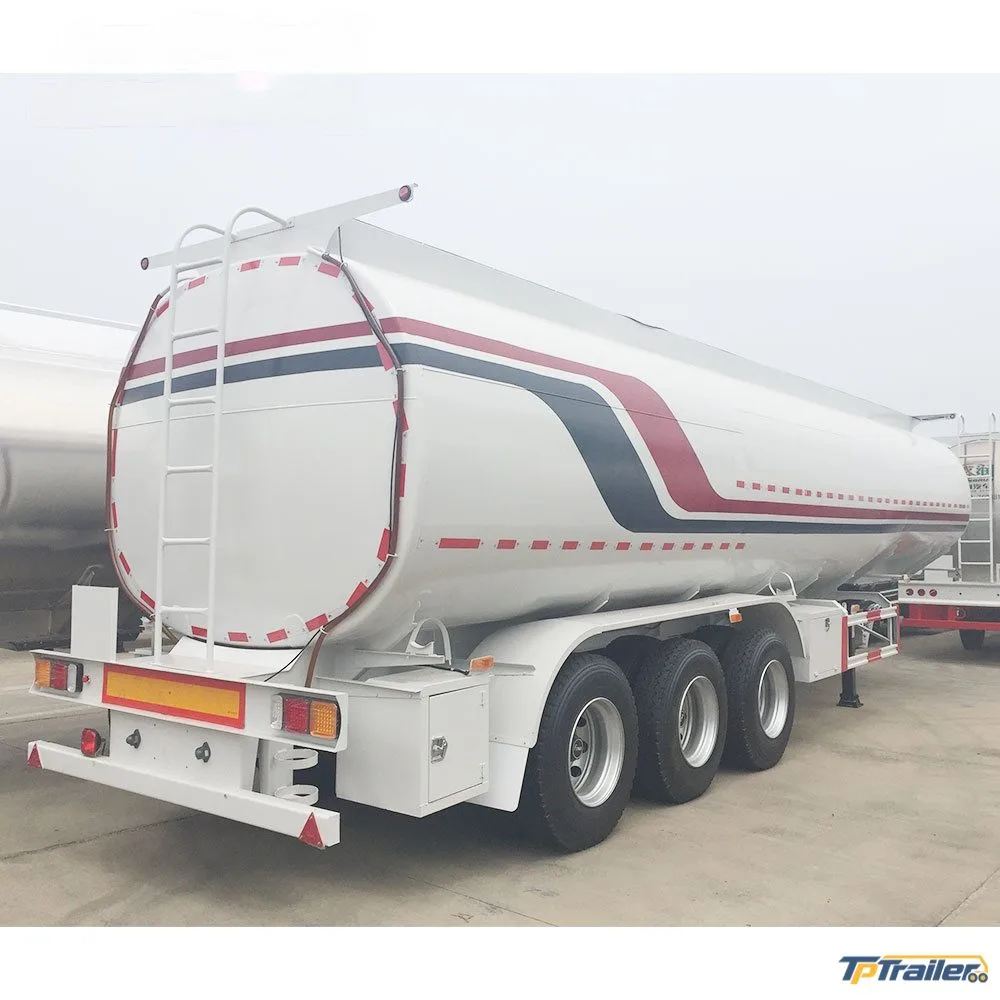
3 4 axles Liquid Petrol Truck Transport Cargo Trailers Crude Oil Trailer Fuel Gas Tanker Semi Trailer - detail 1

The second duty is bulk transfer between depots and larger storage facilities, where volume per trip is the deciding factor. On these runs the larger end of the volume range earns its place, because fewer trips mean less driver time and less coordination for the dispatcher.

The carbon steel body and the Q345 main beam carry the load over longer road distances, and the pneumatic bottom valve control lets the operator release product from the cab-side block rather than working each valve by hand. Fleets also use the same trailer for crude oil and other liquid cargo where a robust steel barrel is preferred, which is why a Fuel Tanker Semi Trailer often appears in mixed haulage operations that cannot dedicate a unit to one product alone.

Choosing The Right Spec

  • Match volume to the delivery pattern: the volume range runs from 28,000 to 70,000 liters. Shorter, more frequent station drops usually sit at the lower end, where a smaller barrel keeps the unit flexible in tight forecourts. Long depot-to-depot runs sit at the upper end, where each trip has to carry as much as possible. Decide the route pattern before fixing the barrel size on a Fuel Tanker Semi Trailer.
  • Set compartment count by the number of grades: the 1 to 9 compartment range maps directly onto how many separate products or drops a run must cover. A single-grade shuttle needs few compartments; a multi-customer delivery round needs more. Remember that the manhole count follows the compartment count, so the two choices are made together rather than separately.
  • Pick the discharge valve to suit the receiving site: the 4 inch API adaptor valve and the 3 inch spherical valve are not interchangeable in practice, because the receiving equipment at each site dictates which one connects cleanly. Confirm what the terminal or station uses before ordering, and pair it with the 3 or 4 inch bottom valve controlled by the pneumatic block.
  • Choose the handrail and loading options for the crew: manual or pneumatic handrail changes daily effort at the loading point, and the optional bottom loading package adds overfilling and recovery systems for terminals that load from below. These choices should follow how the crew actually works, not the other way round, because they shape turnaround time on every shift a Fuel Tanker Semi Trailer is in service.

Customisation Before Delivery

  • The number of axles on a Fuel Tanker Semi Trailer is chosen at order confirmation. Axle count changes the load spread and the turning behaviour on site roads. Confirm it against the gross weight you plan to run, not against an old unit. Your choice is fixed in the order document before build starts.
  • Volume and compartment count are settled together. Compartments let one Fuel Tanker Semi Trailer carry different grades on a single run. More compartments mean more manholes and more discharge points to check. State the grades and the split you need, and the layout is agreed at order confirmation.
  • Manhole size and discharge valve type are buyer choices. A 16-inch or 20-inch manhole with vent valve suits different loading habits. The discharge valve can be an API adaptor type or a spherical type. Each option is confirmed in writing before the Fuel Tanker Semi Trailer is built.
  • Bottom loading hardware is optional. An overfilling and recovery system can be fitted to a Fuel Tanker Semi Trailer for terminal loading. It is not standard, so ask for it explicitly. The decision is locked at order confirmation so the tank shell is prepared once.
  • Handrail operation is manual or pneumatic. Pneumatic rails reduce climbing effort at the top of a Fuel Tanker Semi Trailer. Manual rails are simpler to maintain. Tell us which you want at order confirmation, because the rail mounts are welded during fabrication, not added later.

Every option above is settled at order confirmation. Nothing is assumed from the title alone. A Fuel Tanker Semi Trailer built to a written confirmation avoids rework at delivery. Buyers who change their mind after the shell is welded face extra work, so decide early.
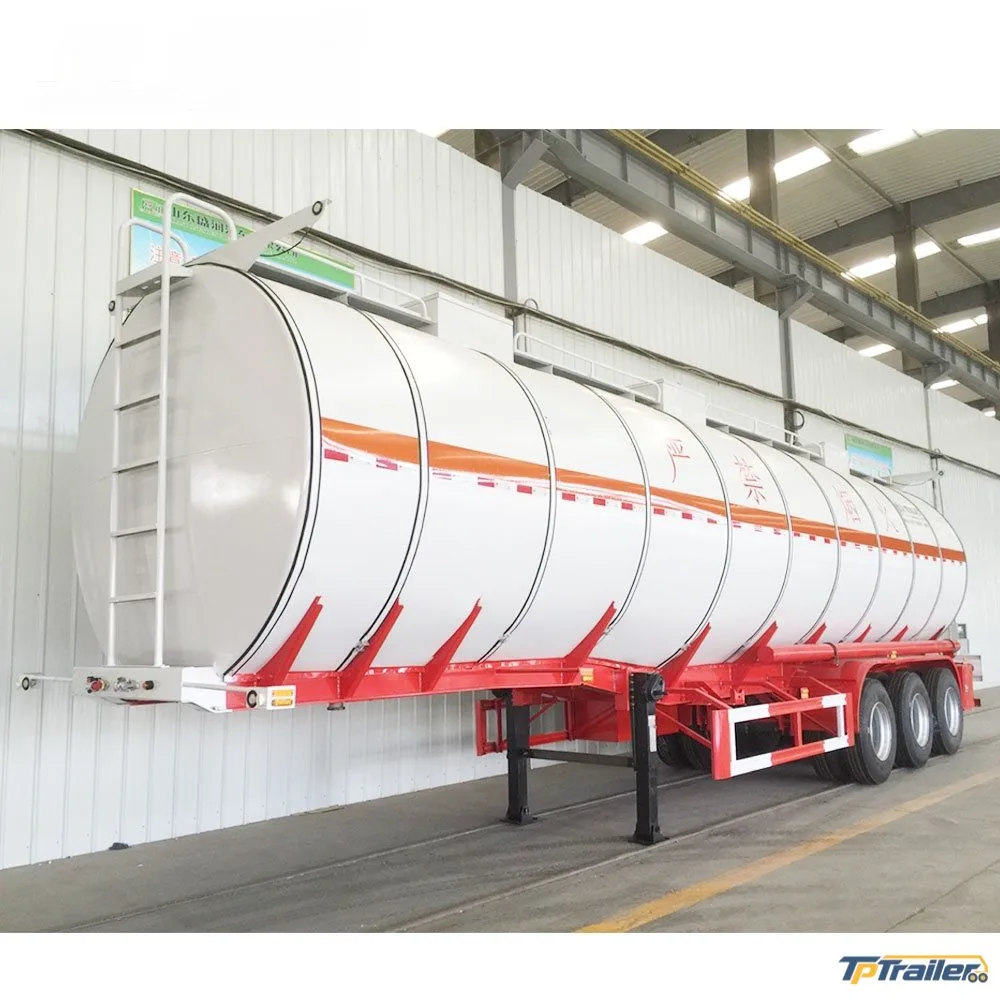
3 4 axles Liquid Petrol Truck Transport Cargo Trailers Crude Oil Trailer Fuel Gas Tanker Semi Trailer - detail 2

Fitting And Installation

On arrival, the buyer matches the tractor to the Fuel Tanker Semi Trailer. Check the fifth wheel height against the kingpin plate. Check the main beam mounting points and the suspension hanger positions. Confirm the brake line couplings and the electrical socket match the tractor. Confirm the discharge valve outlet matches your hose or loading arm. No fitment drawing is included in this text. A fitment drawing is confirmed at quotation instead, so the tractor and the trailer agree before build.
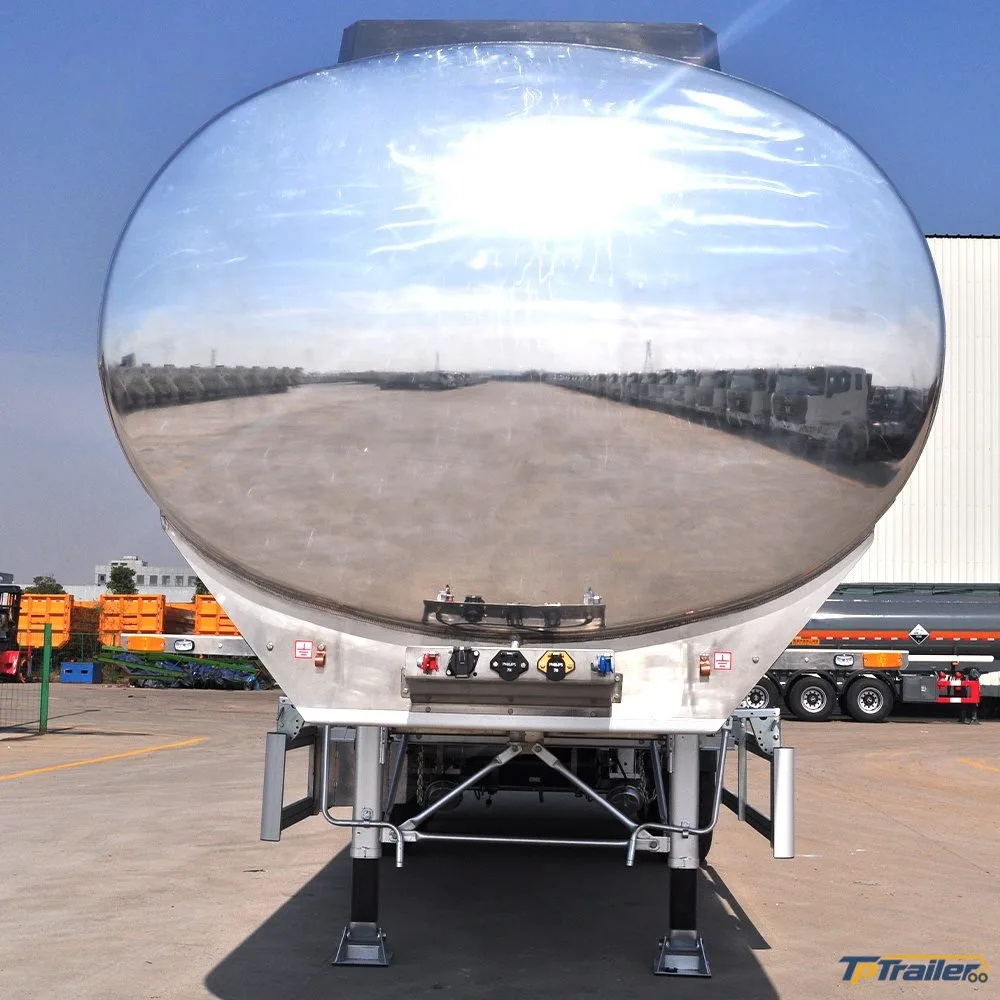
3 4 axles Liquid Petrol Truck Transport Cargo Trailers Crude Oil Trailer Fuel Gas Tanker Semi Trailer - detail 3

A wrong size costs downtime. A mismatched fifth wheel or kingpin height keeps the Fuel Tanker Semi Trailer parked while the tractor is adjusted. A discharge outlet that does not match your hose delays the first load. Brake line couplings that do not match mean a workshop visit before the unit moves. These are not trailer faults, but they stop work. Confirm the interface points at quotation, and the Fuel Tanker Semi Trailer arrives ready to couple.

Service Life And Maintenance

  • The tank shell and its welds wear first. Inspect the shell, the baffles and the weld seams for cracks or corrosion. The 5mm carbon steel body is the main wear surface on a Fuel Tanker Semi Trailer. Keep the exterior coating intact to slow corrosion. A damaged coating spot should be cleaned and recoated before it spreads.
  • Valves and seals are the next wear point. Inspect the discharge valve, the bottom valve and the manhole vent valves for leaks. The bottom valve is controlled by a pneumatic block, so check that air line too. A leaking seal on a Fuel Tanker Semi Trailer is a safety matter, not just a spill. Replace worn seals before they fail on the road.
  • The main beam and running gear carry the load. Inspect the Q345 carbon steel main beam for cracks at the hanger welds. Check the suspension, the axle mounts and the tyre condition. A Fuel Tanker Semi Trailer running at high gross weight puts stress on these joints. Catching a crack early is cheaper than a roadside repair.
  • Handrails and top access need routine checks. Inspect the manual or pneumatic handrail for loose mounts and bent sections. Confirm the pneumatic rail moves freely if fitted. Top access is where operators work, so a loose rail on a Fuel Tanker Semi Trailer is a fall risk. Tighten mounts and replace damaged sections promptly.
  • Optional bottom loading hardware needs its own check. Inspect the overfilling and recovery system lines for leaks and blockages. Confirm the recovery connection seals well. This hardware is only present if ordered, so confirm it against your order record. A Fuel Tanker Semi Trailer with this system should have it checked before each loading session.

The material choice supports the maintenance plan. Q345 carbon steel is the given main beam material, and the 5mm tanker body is the given shell thickness. Neither is a substitute for inspection. A Fuel Tanker Semi Trailer lasts longer when the coating, the seals and the welds are checked on a routine the operator sets against its own duty cycle.

Packing And Container Loading

Each Fuel Tanker Semi Trailer leaves the yard as a complete welded unit, so sea freight protection centres on the tank shell, the running gear and the exposed fittings. Suppliers normally coat the carbon steel tanker body with a protective film or primer coat before dispatch. Manholes are closed and taped, discharge valves are capped, and the pneumatic block controlling the bottom valve is sealed against dust and salt spray. The main beam and axle assemblies are strapped and braced so nothing shifts inside the hold. Buyers should ask for photographs of the finished unit before it is loaded, because a Fuel Tanker Semi Trailer is too large to repack cheaply once it reaches the destination port.

Stacking is not possible for a Fuel Tanker Semi Trailer; the unit rolls onto a flat rack or into a bulk deck and occupies its own footprint. Nested loading is also ruled out, so container planning means counting units against deck space rather than compressing them. Chassis, axles and wheels are usually shipped assembled, and loose items such as handrail sections and valve spares travel crated alongside. On arrival, verify the tank shell for dents and weld damage, confirm the main beam is straight, check that every manhole and valve still operates freely, and compare the delivered compartment count and volume against the order. Record any transport damage before signing the delivery note, since claims depend on that first inspection.

Common Mistakes Buyers Make

  • Ordering the wrong compartment count. A single-compartment tank cannot carry several fuel grades at once, and retrofitting internal baffles after fabrication is expensive. The check: list every product you intend to haul and match it to the compartment count on the quotation before signing.
  • Ignoring the discharge valve type. An API adaptor valve and a spherical valve suit different terminal connections, and a mismatch strands the trailer at the loading rack. The check: confirm the discharge valve style against the fittings at your regular terminals, then write it into the order.
  • Overlooking the bottom valve control. Pneumatic block operation depends on the tractor supplying air, and a buyer expecting manual control may find the valve inoperable. The check: confirm the control method and confirm your tractor can supply what the system needs.
  • Assuming the handrail is manual. A manual handrail and a pneumatic handrail are different builds, and changing the choice later means reworking the tank top. The check: decide the handrail type before fabrication starts and confirm it on the specification sheet.
  • Skipping the payload review. Buyers match tank volume to the tractor and road limits too late, so the Fuel Tanker Semi Trailer arrives heavier than the route allows when full. The check: confirm the load capacity against your tractor rating and local weight rules before ordering.

Buyer Questions

Can the tank be built with bottom loading for terminal filling?

Bottom loading is offered as an option on this Fuel Tanker Semi Trailer, and the input lists overfilling and a recovery system as part of that package. If your terminals fill from below rather than through the manholes, state the requirement at enquiry so the tank is fabricated with the correct connections and vapour recovery path. Confirm the terminal coupling standard with your operator, then put the bottom loading requirement, the recovery arrangement and the compartment layout into the written order. Retrofitting after delivery is not a simple field change.

Which discharge valve should I specify?

The input offers a four-inch API adaptor valve or a three-inch spherical valve, and the right choice depends on the hose couplings and loading arms at your receiving points. Measure or photograph the connections your terminals and customers use, then confirm the matching valve style with the supplier before the order is placed. Also confirm the bottom valve size and that pneumatic block control suits your tractor air supply. Where your terminals use mixed fittings, say so at quotation so the specification is confirmed rather than assumed.

How many units fit in one shipment?

A Fuel Tanker Semi Trailer cannot be nested or stacked, so each unit takes its own deck space on a flat rack or bulk vessel. The number per shipment depends on unit length, axle count and the vessel or rack configuration, and the input does not fix a figure. Send your required length, axle count and order quantity to the supplier, and ask for a loading plan showing how many units fit per sailing. That plan, not an assumed container count, is what you should confirm at quotation.

To receive an accurate quotation, send the overall length you need, the axle count, the compartment and valve preferences, and the quantity you plan to order. With those details the supplier can confirm the build specification, the packing arrangement and the loading plan for your Fuel Tanker Semi Trailer shipment.

Explore more 3 4 axles Liquid Petrol Truck Transport Cargo Trailers Crude Oil Trailer Fuel Gas Tanker Semi Trailer in this range.

Load Capacity 25001-30000 KG Type Semi-Trailer
Place of Origin China (Mainland) Use Truck Trailer
Material Aluminum,Brass Size 10500X2500X3750mm
Dimensions 500 × 500 × 500

Reviews (0)

No reviews yet — click the Review button on the right to share your experience with this product.

Frequently Bought Together

Inquiry about: 3 Axle 40000 Liter Carbon Steel Fuel Tanker Semi Trailer 60 Ton

Fill in the form below and our team will respond within 24 hours.