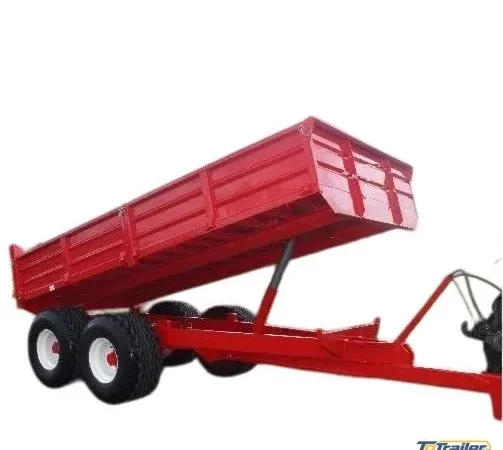
A finished semi-trailer is an awkward object to move: 13 metres long, 2.5 metres wide, and too tall for a standard container. There are four realistic ways to ship one, and the right choice depends on how many units you are buying and what your port can handle.
RORO: roll-on, roll-off
The trailer is driven onto the vessel and driven off at destination. Nothing is dismantled, so the unit arrives exactly as it left the factory.
Best for: single units and small orders to ports with regular RORO service.
Watch for: limited sailing frequency, port handling charges, and a vehicle that must be drivable at both ends. Some routes charge by cubic metre rather than by unit, which can be expensive for a 13-metre trailer.
Flat rack container
The trailer is loaded onto an open-top flat rack, lashed down and shipped as container cargo. It moves on standard container vessels, so schedules are frequent and the cargo is handled by container terminals.
Best for: two to six units where RORO service is poor but container lines are frequent.
Watch for: the trailer overhangs the rack, so you pay for the space it occupies plus lashing. Height and width limits still apply, and a wide or extra-tall unit may not fit.
Container, knocked down
For higher volumes the trailer is shipped partially disassembled — axles, suspension, ramps and sometimes the deck separated — and packed into standard 40ft containers. This is the cheapest per unit on ocean freight, because a container holds far more value per cubic metre than a flat rack.
Best for: fleet orders, dealers who resell, and buyers with workshop capability at destination.
Watch for: assembly labour and a torque check on every fastener at destination, plus the risk of parts damage or misplacement if packing is not disciplined. Ask for a packing list that matches the crate markings.
Break bulk
Units are loaded individually into the hold or onto deck of a general cargo vessel, lifted by crane. It is the traditional method for oversize cargo and the only practical option for some out-of-gauge units.
Best for: very large units, low-bed trailers with wide decks, and destinations without container or RORO service.
Watch for: lowest sailing frequency, highest handling risk, and lifting points that must be marked and rated. Insurance is more expensive because the cargo is handled more.
How to choose
| Order size | 1–2 units | 3–8 units | 9+ units |
|---|---|---|---|
| Usual method | RORO or flat rack | Flat rack or container (SKD) | Container (SKD) |
| Main trade-off | Schedule availability | Space cost versus assembly labour | Assembly labour and packing discipline |
Documents that must match the shipment
- Commercial invoice and packing list, with chassis numbers listed per unit
- Bill of lading, with the shipping method and container numbers stated
- Certificate of origin for duty purposes
- CE or conformity documents where the destination market requires them
- Insurance certificate, if the terms are CIF rather than FOB
A mismatch between the packing list and the physical shipment is the most common cause of customs delay. Check the numbers before the vessel sails, not after it arrives.
Terms worth understanding
FOB means the supplier’s responsibility ends when the cargo is loaded at the port of departure. CIF adds freight and insurance to your destination port. DAP puts the trailer at your yard but leaves import duty and clearance with you. Each term shifts cost and risk between you and the supplier, so compare quotations only when they use the same term.