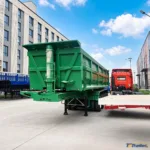
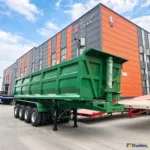
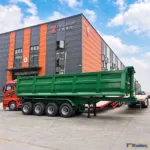
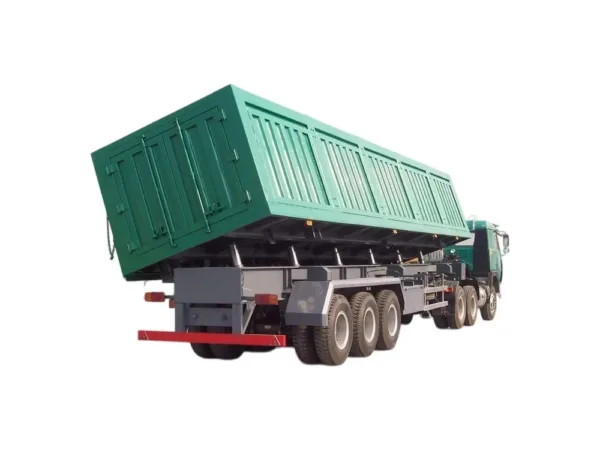
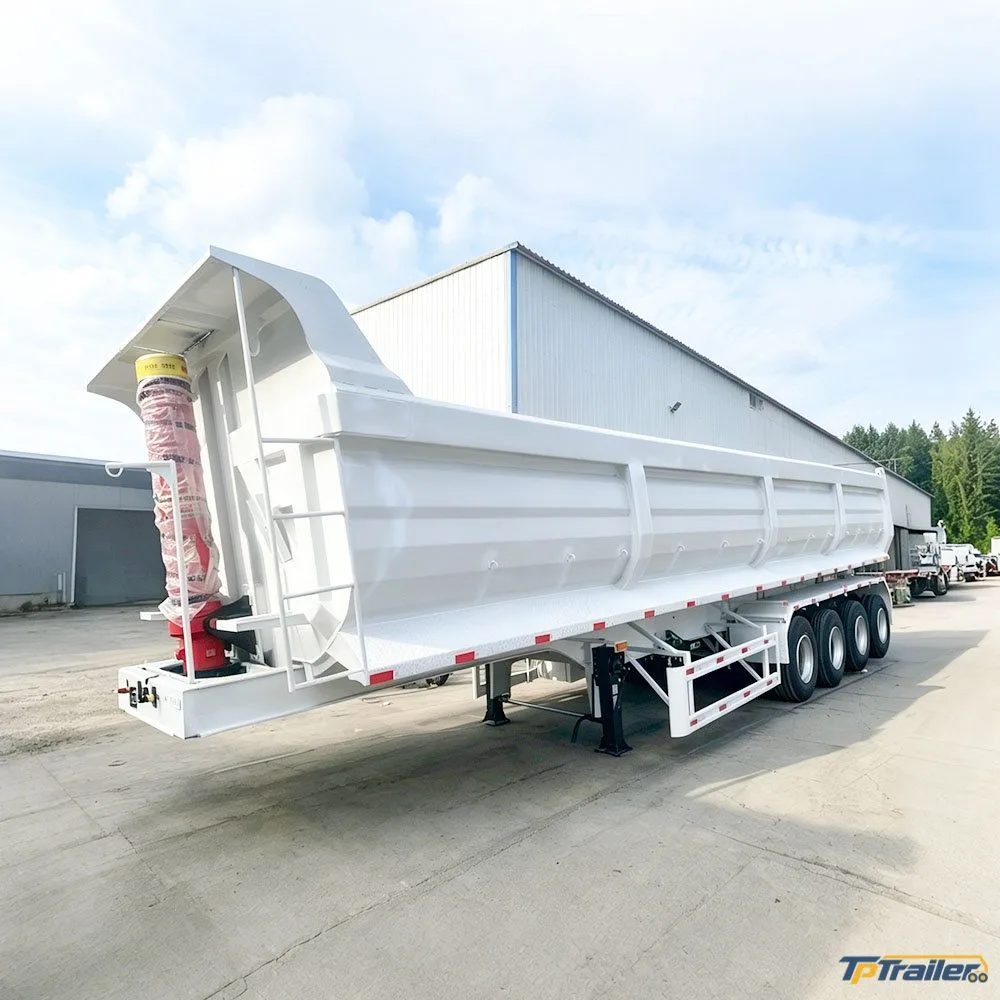
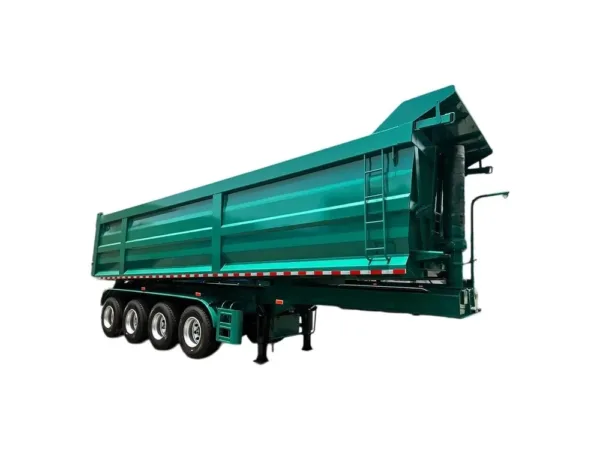
The 4 axle dump semi trailer is a heavy-duty hydraulic end tipper built for moving sand, stone and aggregate in bulk. It pairs a U-type bucket with a four-axle running gear and a tipping ram set, so one tractor unit can discharge a full load without a separate conveyor or shovel crew. Fleet operators and aggregate yards choose it because the U-shaped body sheds sticky material cleanly and the axle count spreads weight across more tyres.
Table of Contents
With a rated load capacity of 30000 KG, it sits in the working range of quarry and construction haulage rather than light delivery duty. This page covers how the trailer performs on site, the jobs it suits and how to match the specification to your routes.
Why It Works On Site
U-type bucket geometry. The curved floor and sides have no flat corners for damp sand or wet stone to pack into. Material slides out in one pass when the ram lifts, so the driver spends less time scraping the bucket and more time on the next load. That matters on a 4 axle dump semi trailer cycling between a quarry face and a stockpile all day.
Hydraulic end tipping. The ram raises the front of the bucket to tip the load out of the rear. One operator controls the discharge from the cab, which removes manual unloading and shortens turnaround at the tip point. A 4 axle dump semi trailer working a fixed route can complete more trips per shift when each drop takes minutes.
Four-axle load spread. Spreading the rated load over four axles lowers the weight carried per axle group. That helps the trailer stay within road and bridge limits on mixed public and site roads, and it reduces peak stress on tyres and suspension. Operators running a 4 axle dump semi trailer over long hauls feel this in tyre life and ride quality.
40CBM working volume. The bucket carries a large bulk volume per trip, which suits low-density cargo like dry sand and gravel. Fewer trips for the same tonnage means less fuel and fewer driver hours. A 4 axle dump semi trailer matched to loose aggregate keeps the volume and the rated load in balance.
Heavy-duty frame and ram mounting. The chassis and tipping structure are built for repeated loaded cycles, not occasional use. That supports daily quarry rotations and steady construction supply runs, where the trailer tips several times per shift. Buyers specifying a 4 axle dump semi trailer for aggregate work get a unit sized for that duty cycle.
Rear discharge for tight tips. End tipping drops the load behind the trailer, so the tractor can pull forward and leave cleanly. That suits stockpiles, hoppers and fill areas where there is no room to tip sideways. A 4 axle dump semi trailer fits sites that unload in a straight line.
Where It Is Used
The most common duty is quarry and pit haulage. A 4 axle dump semi trailer loads at the face with a wheel loader, runs a haul road to the crusher or stockpile, and tips the raw stone or sand in one movement. Because the bucket is U-shaped, damp pit sand and washed aggregate release without a operator entering the body.
Fleet managers use this trailer where the same load type repeats all day and the tip point is fixed, so cycle time is predictable and the ram is not asked to handle mixed or oversized rock. The rated load capacity of 30000 KG sets the working band for this kind of rotation, and the four-axle layout keeps axle loading sensible on the road between the pit and the plant.
Construction supply and infrastructure fill work is the second main use. A 4 axle dump semi trailer delivers sand, crushed stone and aggregate to road bases, building pads and backfill areas, then tips directly where the material is needed. Contractors value the rear discharge because the tractor can pull away and the next truck can take the spot. On longer runs between a depot and a spread-out job site, the volume of the bucket keeps trip counts down for bulky, lighter cargo. Operators also use this trailer for steady aggregate transfers between yards and rail or barge transfer points, where a 4 axle dump semi trailer loads, moves and empties on a repeating schedule without extra handling equipment on site.
Choosing The Right Spec
Match bucket volume to cargo density. The 40CBM body suits sand, gravel and light aggregate, where volume fills before the weight limit is reached. If your cargo is dense crushed rock, plan loads against the rated capacity rather than filling the bucket. A 4 axle dump semi trailer works best when volume and weight are checked together for each cargo type.
Check the load rating against your routes. The 30000 KG rating defines the working load. Compare it with the payload your tractor and permits allow on your regular roads, so the trailer is not underused or overloaded. Operators moving heavier cargo should confirm axle and tyre ratings before committing a 4 axle dump semi trailer to a fixed haul.
Consider axle count for road limits. Four axles spread weight across more contact points than a shorter configuration, which helps on public roads and bridge crossings. On confined sites with tight turning, the turning envelope matters as much as the rating. Choose the 4 axle dump semi trailer layout that matches both the road legal limits and the space at your tip point.
Plan around the tip point. End tipping needs clear space behind the trailer and a level pad for the ram to lift safely. Stockpiles, hoppers and fill areas suit this discharge style; side-tipping jobs do not. Confirm the tip geometry before you specify a 4 axle dump semi trailer, because discharge method decides how fast each load clears.
Customisation Before Delivery
Axle count. The 4 axle dump semi trailer configuration is fixed at order confirmation. Buyers running long hauls or soft ground often keep the full set for load spread. Buyers on short sealed runs may ask about fewer axles. The choice is settled at order confirmation, together with the brake and hub arrangement that matches it.
Body volume and profile. The U type body shape is the standard build. Confirm the volume you need for your cargo density. Sand and stone behave differently from wet aggregate. The body volume and profile are agreed at order confirmation, so the shell suits the material you carry rather than a generic figure.
Suspension type. Mechanical and air suspension options are settled at order confirmation. Mechanical suspension suits rough site roads and simple servicing. Air suspension suits long highway runs and mixed loads. State your route mix when ordering, so the 4 axle dump semi trailer leaves the works with the right spring and hanger set.
Tyres and rims. Tyre size, tread pattern and rim type are agreed at order confirmation. Match the tyre to the surface: block tread for site work, rib tread for highway. Confirm the spare wheel count at the same time. Tyre choice affects ground pressure and how the 4 axle dump semi trailer behaves when fully loaded.
Colour and markings. Body and chassis colour are confirmed at order confirmation. Fleet buyers often match existing units. Markings, reflective tape and plate positions are agreed in the same step. Send clear artwork with the order, so the 4 axle dump semi trailer arrives ready for registration and fleet numbering.
Fitting And Installation
Fitting starts with the tractor unit, not the trailer. Confirm the fifth wheel height, the kingpin position and the clearance above the coupling plate. On a 4 axle dump semi trailer the front axle group sits close to the kingpin, so cab or exhaust parts that overhang the rear of the tractor can foul the body on tight turns. Check the landing leg ground clearance against your yard ramps.
Check the hydraulic power take-off output on the tractor before the unit arrives. The pump drive, tank position and control valve layout must match the trailer kit. Where the input gives no fitment data, a fitment drawing is confirmed at quotation. Do not cut or weld on the body before that drawing is agreed.
Hydraulic connection is the second checkpoint. Match the hose tube size and coupler type to the tractor take-off. Route hoses clear of the fifth wheel sweep and any hot surfaces. A wrong tube size throttles oil flow and slows the tip cycle on every load. A coupler that does not match means the 4 axle dump semi trailer cannot work at all until an adapter is sourced.
Wrong mounting points cost more than time. Drilling new holes in a stressed body member weakens the structure and can void the warranty. Every hour spent reworking a mismatch is an hour the unit is not earning. Book the fitment check before the trailer is scheduled to enter service, and keep the agreed drawing on file for the next unit in the fleet.
Service Life And Maintenance
Hydraulic seals and hoses. The hoist seals and hose ends wear first under constant tipping. Inspect for weeping oil, cracked covers and chafed routing at each service. Replace hoses before the outer layer fails. On a 4 axle dump semi trailer, clean fittings and correct oil grade extend the seal interval more than any other single habit.
Body shell and floor. Abrasive sand and stone wear the floor and lower side walls. Check for thinning, dents and cracked welds after heavy loads. Keep the body clean and touch up bare steel promptly. A sound paint or coating system on the 4 axle dump semi trailer is what holds back corrosion between loads.
Tailgate and hinges. The tailgate takes impact every time the load releases. Inspect hinge pins, latch faces and seal edges for wear and bending. A tailgate that does not seat lets material spill on the road. Adjust the latch rather than forcing it. Regular checks keep the 4 axle dump semi trailer sealing properly on every trip.
Suspension and axle ends. Springs, bushes, U-bolts and hub bearings carry the load. Check for loose U-bolts, worn bushes and wheel play. Look for uneven tyre wear, which points to alignment or bearing trouble. On the 4 axle dump semi trailer, correct tyre pressure and prompt bush replacement protect the axle ends and stretch service life.
Chassis and paint. The chassis frame and cross members carry the tipping load. Inspect for cracks, loose bolts and paint damage after rough site work. Clean off mud and salt regularly. A protective coating on the 4 axle dump semi trailer is the cheapest way to slow corrosion and keep the structure sound for years.
Packing And Container Loading
The 4 axle dump semi trailer ships as a complete unit or in knocked-down sections, depending on the loading plan agreed at order. Steel surfaces are cleaned and coated before dispatch. Exposed hydraulic lines, the tipping cylinder and valve block are wrapped or capped so grit and salt air cannot enter during the voyage. Small fittings are boxed and lashed to the frame, not left loose on the deck. The buyer should confirm the coating system and the wrap specification in writing, because a trailer that sits on a wharf for weeks is exposed to moisture the workshop never sees.
Space saving matters on a 4 axle dump semi trailer because the body is bulky but light when empty. Units can sometimes be nested or partially disassembled to reduce the footprint, and axle sets may be shipped separately from the tub. Whether nesting is possible depends on the body profile and the shipping line’s rules, so it is confirmed at quotation rather than assumed. Ask for a loading drawing before booking. On arrival, check the frame for distortion, the hydraulic caps for seals, and the coating for transit damage before signing the delivery note.
Common Mistakes Buyers Make
Ordering without checking the fifth wheel height. A 4 axle dump semi trailer that sits too high or too low at the coupling point changes the tipping angle and can foul the tractor’s chassis. The single check: measure the tractor’s fifth wheel height and confirm the trailer’s kingpin plate position in the drawing before production starts.
Ignoring the load capacity against the axle count. Buyers assume more axles always means more payload, then find the tub volume and the rated load do not match their material density. The single check: compare the load capacity figure with the volume you actually haul, and confirm the combination at quotation.
Skipping the hydraulic system specification. The tipping cylinder, pump and valve block must suit the tractor’s hydraulic output. A mismatch means the 4 axle dump semi trailer tips slowly or not at all. The single check: confirm the required flow and pressure with the supplier and match them to the tractor before ordering.
Not agreeing the discharge side and tailgate type. End dump work depends on where the material must fall and how the gate opens. Get this wrong and the trailer is unusable on site. The single check: state the tipping direction and gate configuration in the purchase order, not in a phone call.
Treating packing as an afterthought. Buyers accept a generic loading plan and then find hydraulic parts loose or coating scuffed. The single check: request the loading drawing and the protection list for the 4 axle dump semi trailer, and approve both in writing before shipment.
Buyer Questions
How do I confirm the trailer suits my tractor before I order?
Send the tractor’s fifth wheel height, the kingpin position you need and the hydraulic output available at the coupling. The supplier can then check the 4 axle dump semi trailer against your tractor rather than against a generic drawing. Ask for the dimensioned side view and confirm the coupling height on it. If any figure is missing from the published specification, request it in writing and have it added to the quotation so both sides work from the same document.
Can the trailer be shipped in one container, and what does that change?
Container loading depends on the body profile and whether the unit is nested or partly disassembled. The exact plan, the number of containers and any packing charge are confirmed at quotation, not assumed from a catalogue. Ask for a loading drawing showing the footprint, the lifting points and the protection applied to the hydraulic system. Approve that drawing before dispatch. Then check the same points against the delivery on arrival, and photograph any discrepancy before signing.
What should I verify on arrival to protect my claim?
Inspect the frame for distortion, the coating for transit scuffs, the hydraulic caps and wraps for seals, and the boxed fittings against the packing list. Confirm the load capacity and axle configuration on the plate match your order. Note any damage on the delivery document before signing, and photograph it. Claims are far easier to settle when the record is made at the gate. Anything unclear about the 4 axle dump semi trailer should be raised with the supplier the same day.
Send the body length you need, the axle count you require and the quantity you plan to order. With those three details, the supplier can confirm the configuration, the loading plan and the price tier that applies to your volume.
We use cookies to enhance your browsing experience, serve personalized content, and analyze our traffic. By clicking "Accept All", you consent to our use of cookies. Privacy Policy
Cookie Preferences
Required for the website to function properly. Cannot be disabled.
Help us understand how visitors interact with the website (Google Analytics).
Used to deliver personalized ads and measure ad campaign effectiveness.


















Write a Review