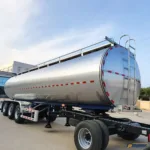
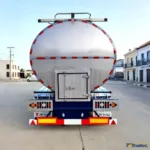
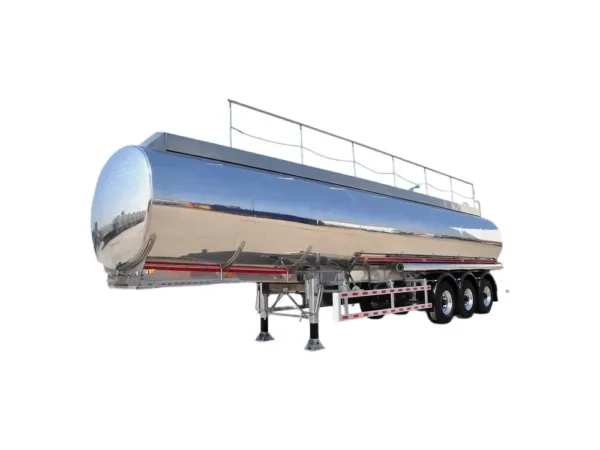
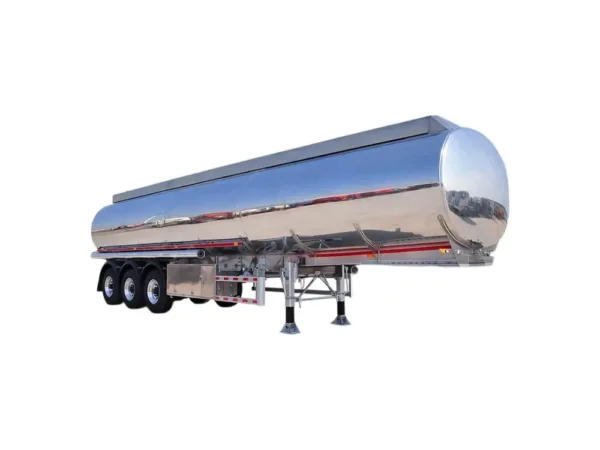
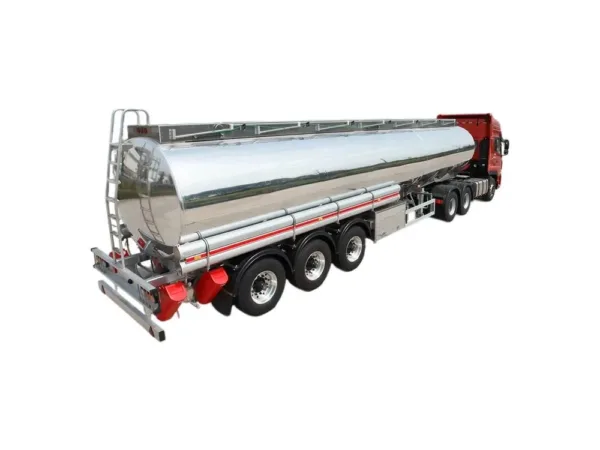
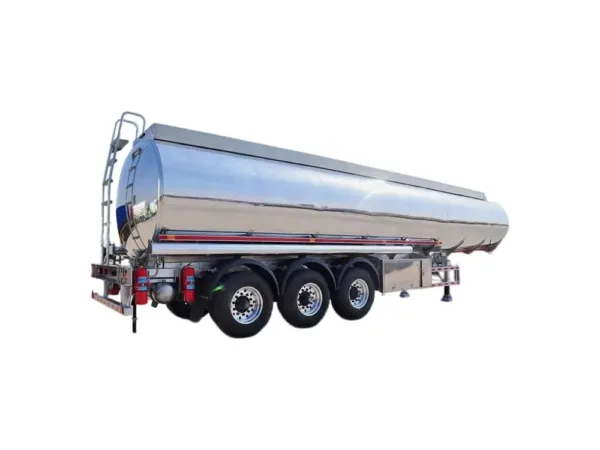
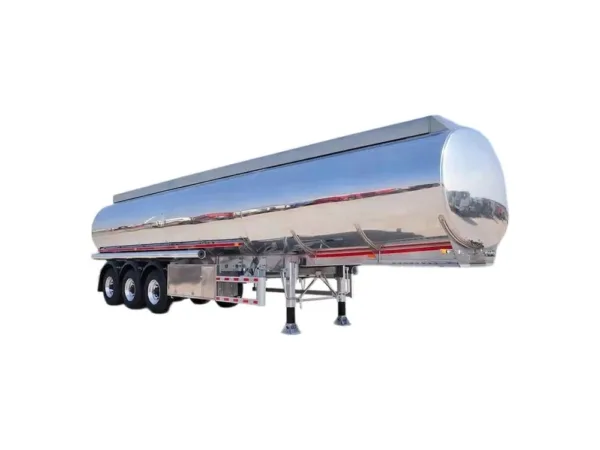
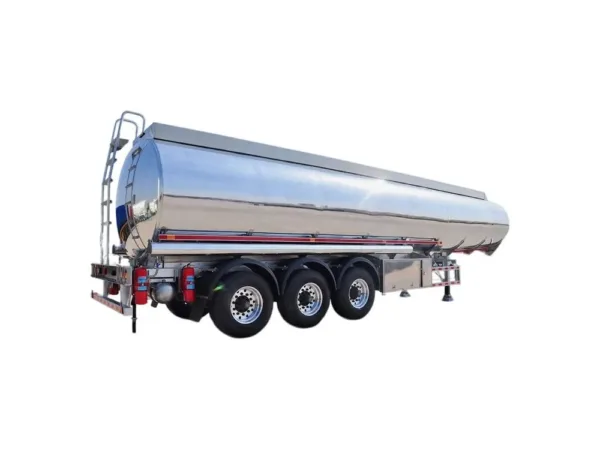
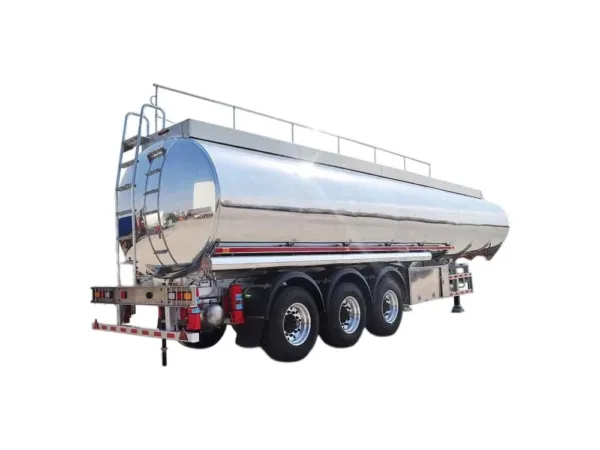
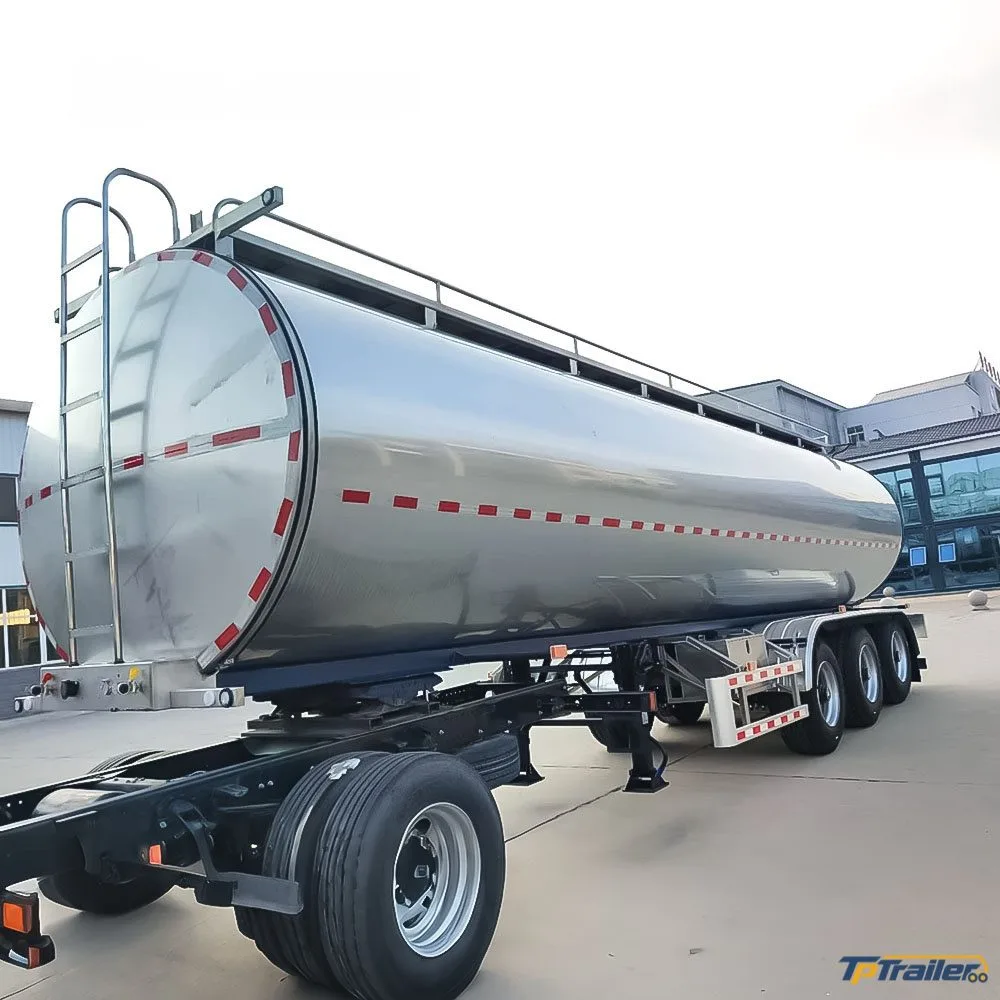
The heavy duty stainless steel milk tanker trailer is a food-grade bulk liquid carrier built for dairies, processors and fleet operators who move raw milk and edible liquids in volume. It pairs a stainless steel barrel with insulation and three axles, so one unit handles long-distance collection runs and depot transfers without compromising hygiene or payload stability. Buyers choose it because the food-contact surface, thermal protection and running gear are engineered as one system rather than assembled from mismatched parts. If your operation depends on repeatable, clean liquid haulage, this is the unit that keeps the schedule and the cargo intact.
Table of Contents
Why It Works On Site
Food-grade stainless barrel. The tank shell is stainless steel, so the product contact surface resists corrosion and cleans down between loads. That matters on a dairy route where the same trailer switches from morning collection to a later run; crews can wash, inspect and reload without worrying about flavour carryover or surface staining from residues.
Insulated body. Insulation slows heat transfer through the barrel wall during transit. On a long-distance delivery, that keeps chilled milk closer to its loading temperature across hours of highway running, reducing the load on downstream chilling and protecting the grade of the cargo before it reaches the receiving bay.
Three-axle running gear. Spreading the load across three axles gives the heavy duty stainless steel milk tanker trailer a stable footprint under a full barrel. Drivers get predictable braking and tracking on crowned roads and highway curves, and fleet managers get a platform that behaves consistently whether the tank is full or running part-loaded between collections.
High-efficiency tank geometry. The barrel is shaped to drain cleanly and fill without trapping air. That shortens turnaround at the loading bay, cuts product left clinging to the shell, and lets wash crews reach the full interior. For a depot running several loads a day, saved minutes per fill add up across the week.
Bulk liquid capacity. A large single-barrel design means fewer trips for the same volume. Dairy logistics planners can consolidate collection points into one run instead of splitting the route, which lowers driver hours and fuel spend per litre moved while keeping the heavy duty stainless steel milk tanker trailer as the workhorse of the schedule.
Trailer-mounted semi format. Because the tank sits on its own semi-trailer chassis, it detaches from the tractor for cleaning, maintenance or a swap to a fresh power unit. Fleets keep one tanker in service while another is washed, and a single tractor can serve several tanks across a shift.
Where It Is Used
The most familiar job for the heavy duty stainless steel milk tanker trailer is farm collection. A driver leaves the depot early, runs a loop of dairy farms, and draws raw milk from bulk holding tanks into the barrel before heading to the processing plant. The insulated body holds the load at temperature across that whole loop, which often covers rural back roads followed by a long highway leg.
Operators value the stainless interior here because every pickup point expects a clean, odour-free tank, and the wash-down between routes has to be quick enough to fit the collection window. On these runs the trailer is judged by how steadily it holds temperature and how easily the barrel drains at the plant intake.
The second setting is inter-plant and depot transfer of edible liquids. Processors move milk, cream, whey and similar food-grade liquids between sites, and the heavy duty stainless steel milk tanker trailer fits that duty because the barrel handles repeated fill-and-empty cycles without the surface degrading. A fleet running scheduled shuttles between a collection hub and a bottling or cheese plant needs predictable payload and a body that cleans down fast between grades.
Long-distance delivery is the other common pattern: a tanker leaves a regional depot and covers highway miles to reach a larger facility, and the insulated shell protects the cargo over that distance. In all these jobs, the trailer is chosen for hygiene, thermal stability and steady road behaviour under a full load.
Choosing The Right Spec
Match load capacity to route density. The stated load capacity figure tells you the payload class this barrel is built around. A dense collection route with many small pickups rewards a tank sized so the driver fills it before returning, while a lighter route may run part-loaded. Compare the figure against your typical daily volume to see whether one trip covers the route or whether the heavy duty stainless steel milk tanker trailer needs to be paired with a second unit.
Barrel volume versus trip count. The tank volume sets how much liquid moves per run. Higher volume means fewer journeys for the same total, which suits long-distance delivery where fuel and driver hours dominate cost. On short urban loops, the same volume may be more than a single shift can fill, so weigh trip frequency against the heavy duty stainless steel milk tanker trailer’s capacity before committing a fleet to one size.
Axle count and road conditions. Three axles distribute weight across more contact points than a lighter configuration. If your routes mix highway running with farm access tracks and uneven surfaces, that spread helps keep axle loads predictable and the trailer planted. Fleets running mostly smooth trunk roads still benefit, because the heavy duty stainless steel milk tanker trailer tracks steadily whether the barrel is full or light.
Insulation needs by distance and climate. The insulated body is the lever for thermal control. Short depot shuttles may only need the shell to hold temperature briefly, while long-distance delivery across hot days depends on insulation doing more of the work. Match the duty cycle to how long the cargo sits in the barrel, and the heavy duty stainless steel milk tanker trailer stays within its intended thermal window from loading to discharge.
Customisation Before Delivery
Axle configuration. A heavy duty stainless steel milk tanker trailer is ordered with the axle count that matches your route and load rules. Buyers choose between tandem and multi-axle layouts, and the choice is settled at order confirmation. Tell us the roads you run and the weight you carry, and the configuration is fixed in the signed order rather than assumed.
Suspension and running gear. Suspension type and running gear specification are selected with the rest of the chassis package. A heavy duty stainless steel milk tanker trailer used on rough rural roads may call for a different setup from one on sealed highways. Everything is agreed at order confirmation, so the build sheet and the invoice describe the same trailer.
Tyre specification. Tyre size, pattern and brand tier are part of the order options. Operators collecting milk from farm gates often prefer a tread that copes with mud and gravel. The heavy duty stainless steel milk tanker trailer you receive carries the tyres named in the confirmed order, and any change is recorded before production begins.
Colour and finish. Paint colour for the chassis and running gear is chosen by the buyer. A heavy duty stainless steel milk tanker trailer keeps its stainless barrel unpainted, while the frame and wheels can be finished to match a fleet identity. Colour is confirmed at order placement, and the finish follows that written confirmation.
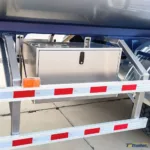
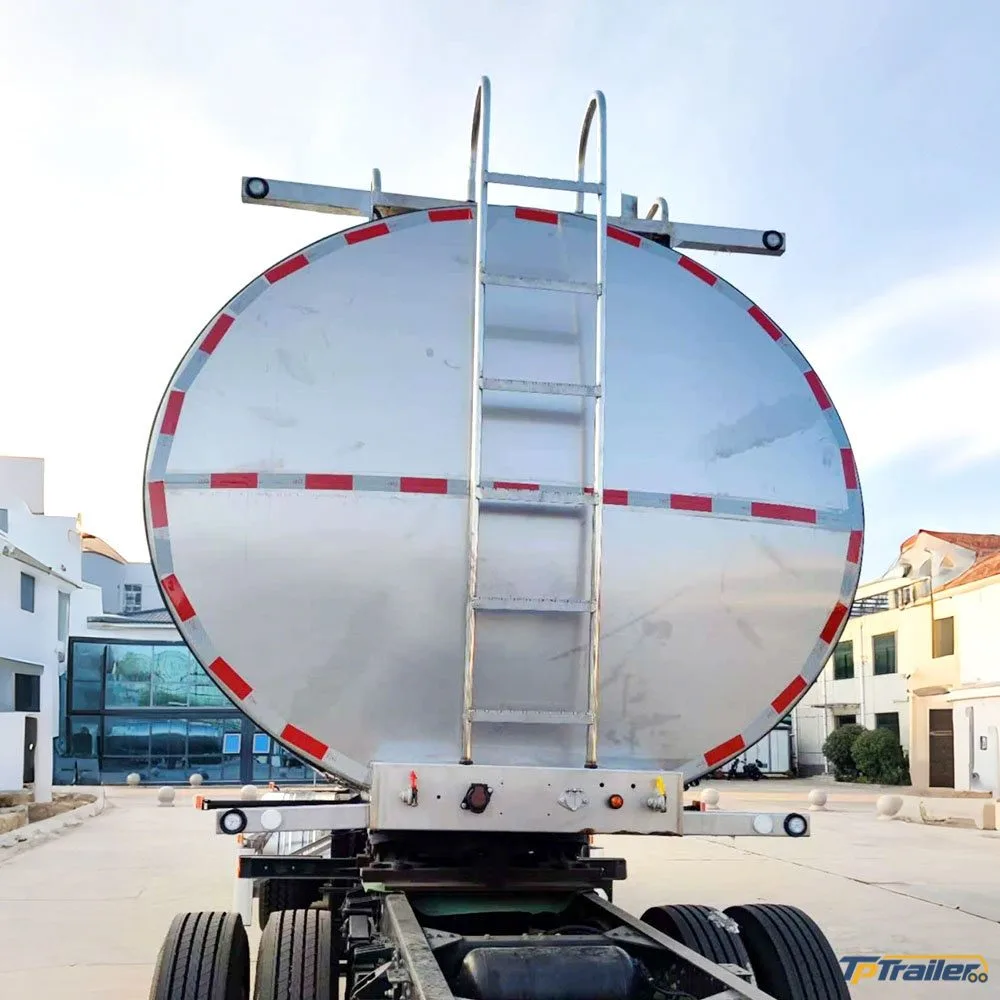
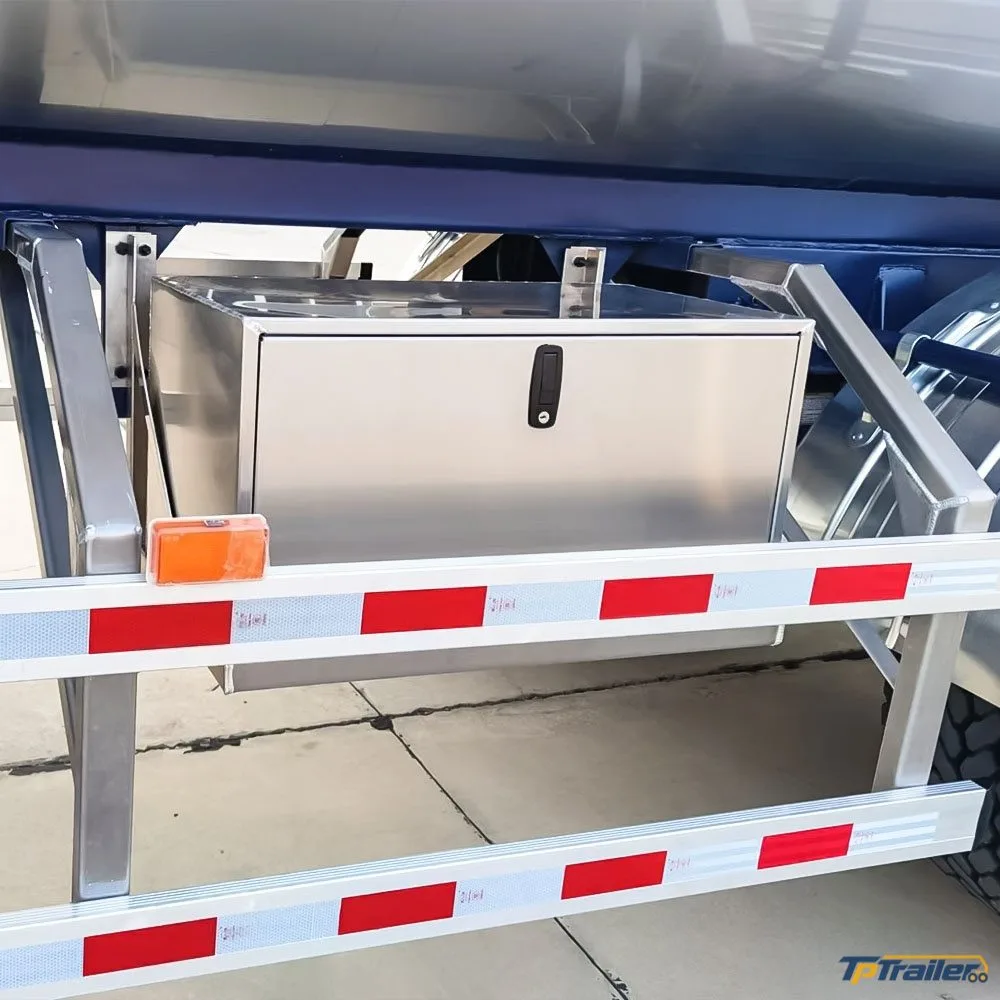
Ancillary fittings. Outlet size, valve type, ladder position and cabinet layout are discussed before the order is placed. Each heavy duty stainless steel milk tanker trailer is assembled around the fittings the buyer names. These details are settled at order confirmation so the delivered unit needs no rework at your yard.
Fitting And Installation
The heavy duty stainless steel milk tanker trailer arrives as a complete unit, so installation centres on matching it to your tractor and your transfer equipment. Check the kingpin and landing gear against the fifth wheel and ground clearance at your yard. Confirm the electrical connector and air line couplings match the tractor. Hose and outlet routing should be reviewed against your pump and receiving line before first use.
A heavy duty stainless steel milk tanker trailer purchased without a fitment drawing leaves these checks to the buyer, so ask for the interface details at quotation and confirm them in writing. Where the input gives no fitment data, a fitment drawing is confirmed at quotation instead of being assumed. Walk the whole assembly with the driver before the first loaded run.
A mismatch found on arrival costs real money. A wrong coupling size means the trailer sits while adapters are sourced. Incorrect hose routing can mean a re-plumbed outlet and a delayed collection. A heavy duty stainless steel milk tanker trailer that does not line up with your tractor keeps a route idle for as long as the fix takes. Downtime on a milk run is not recoverable, because the load cannot wait. Confirm mounting points, tube size and hose routing against your own equipment before dispatch. A heavy duty stainless steel milk tanker trailer is a capital item, and a short pre-delivery check protects the schedule. Record every confirmed dimension in the order file.
Service Life And Maintenance
Stainless barrel and welds. The barrel is the part that decides how long a heavy duty stainless steel milk tanker trailer stays in service. Inspect welds and seams for staining or pitting at each wash cycle. A heavy duty stainless steel milk tanker trailer used for liquid food depends on clean, intact surfaces. Report any discolouration early, because small defects are cheaper to treat than large ones.
Valves and seals. Outlet valves, gaskets and seals wear first because they cycle on every load. Check for weeping at the outlet and around the cabinet after each delivery. A heavy duty stainless steel milk tanker trailer with worn seals risks contamination and product loss. Replace seals as soon as they show damage rather than waiting for a failure on the road.
Insulation and cladding. Insulation performance drops when the outer skin is damaged. Inspect cladding for dents and open seams that let moisture in. A heavy duty stainless steel milk tanker trailer holds temperature only while the insulation stays dry and intact. Repair cladding promptly, and the thermal performance of the barrel is protected for longer.
Chassis and running gear. Brakes, bearings, suspension bushes and tyres are the mechanical wear points. Check brake adjustment and tyre pressure before long runs. A heavy duty stainless steel milk tanker trailer carries a full load on every trip, so running gear is worked hard. Grease the specified points and watch for uneven tyre wear, which points to alignment or suspension issues.
Wash-down routine. Cleaning discipline extends service life more than any single component. Rinse after each discharge and follow a documented wash cycle. A heavy duty stainless steel milk tanker trailer kept clean resists corrosion and stays fit for food contact. Train operators to inspect while washing, since that is when surface changes are easiest to spot.
Packing And Container Loading
Each heavy duty stainless steel milk tanker trailer is prepared for sea freight with the barrel protected against surface damage and the running gear secured for transport. The stainless shell is wrapped and the polished surfaces are shielded from rubbing during handling. Axles, suspension and exposed fittings are braced so nothing shifts in transit. Buyers should confirm the packing method in writing before dispatch, because protection choices affect both the condition on arrival and the loading plan for the container or vessel.
A heavy duty stainless steel milk tanker trailer is a long, rigid unit, so nesting and stacking are not options. Loading is planned around the overall length, the axle count and the tank barrel diameter, and the unit travels as a single secured piece. Ask the supplier for the loading layout and confirm which lashing points are used. On arrival, inspect the tank shell, insulation cladding and running gear before signing the delivery receipt, and photograph any damage immediately.
Common Mistakes Buyers Make
Ordering the wrong barrel volume. Buyers compare tank size against the load capacity without checking how the two relate for their cargo density. The single check: confirm the required working volume and the load capacity together in the quotation before the order is placed.
Ignoring the discharge and inlet layout. Outlet position, valve type and manhole placement are often assumed rather than specified. The single check: send a simple drawing of the filling and emptying points at your depot and have the supplier confirm the layout matches.
Skipping insulation and cladding details. Temperature-holding performance depends on the insulation build and the outer skin, which are easy to leave undefined. The single check: state the temperature range and holding time you need, and ask for the insulation specification in writing.
Mismatching the running gear to local roads. Axle count, suspension type and tyre size must suit local weight rules and road conditions. The single check: confirm the permitted axle load and tyre specification with your transport authority before ordering.
Overlooking the food-grade finish requirement. Interior surface finish and cleanability matter for dairy and edible liquids, yet are rarely written into the order. The single check: request the interior finish and cleaning access details as part of the technical confirmation.
Buyer Questions
Can the tank barrel be customised for our dairy routes?
Customisation should be discussed as a technical requirement, not assumed. Tell the supplier the liquid you carry, the collection points on your route and how the tank will be cleaned between loads. Ask for the proposed barrel layout, compartment arrangement and outlet positions in a drawing. Confirm the final configuration in the quotation, since the input does not state which options are standard. A heavy duty stainless steel milk tanker trailer works best when the layout matches your actual loading and unloading routine.
What should we confirm about the chassis and running gear?
Ask for the axle configuration, suspension type and tyre specification to be listed in the quotation. Check that the axle count suits your local road weight rules and the routes the trailer will run. Confirm the braking system and the coupling arrangement match your tractor unit. For a heavy duty stainless steel milk tanker trailer used on long-distance delivery, the running gear specification should be agreed in writing before production begins, because changes after build are costly.
How is the trailer delivered and what do we check on arrival?
Delivery is by sea freight, with the unit secured as a single load rather than nested or stacked. Ask for the loading plan and confirm the lashing points before dispatch. On arrival, inspect the tank shell, insulation cladding, valves and running gear, and compare the delivered configuration against the approved drawing. Photograph any transit damage before signing. Exact shipping terms and delivery arrangements for the heavy duty stainless steel milk tanker trailer are confirmed at quotation.
To receive a quotation, send the required tank length, the axle count you need and the quantity you plan to order. Include your liquid type and route details so the configuration can be confirmed in writing. Pricing for the heavy duty stainless steel milk tanker trailer is tiered by order volume, so state your full quantity up front.
We use cookies to enhance your browsing experience, serve personalized content, and analyze our traffic. By clicking "Accept All", you consent to our use of cookies. Privacy Policy
Cookie Preferences
Required for the website to function properly. Cannot be disabled.
Help us understand how visitors interact with the website (Google Analytics).
Used to deliver personalized ads and measure ad campaign effectiveness.

















Write a Review