


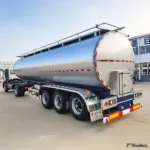
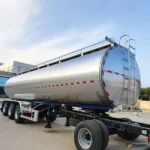

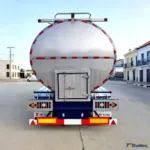
Heavy duty stainless steel milk tanker trailer with 45000L food grade tank, 3 axles and 30000kg payload, built for liquid transport in Tanzania.
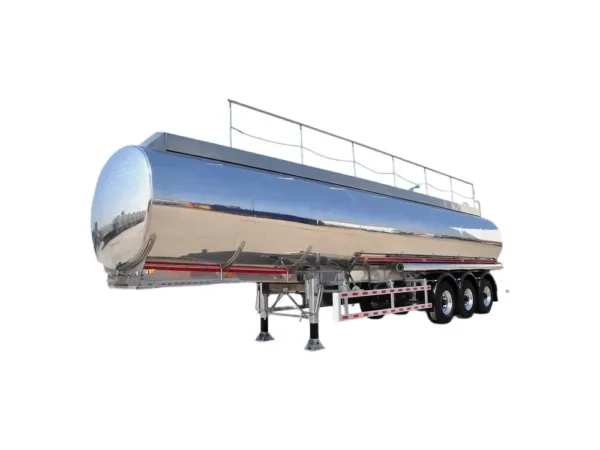

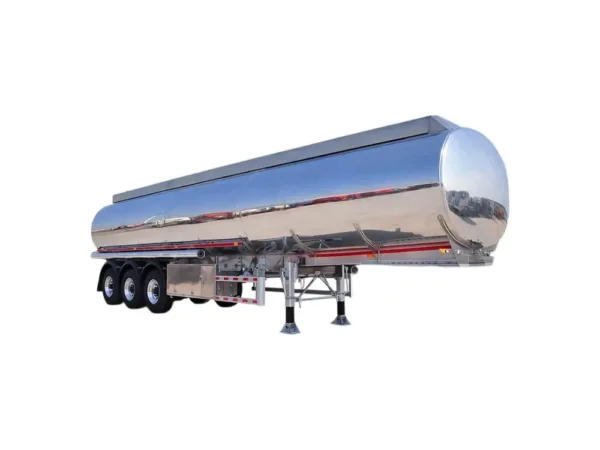
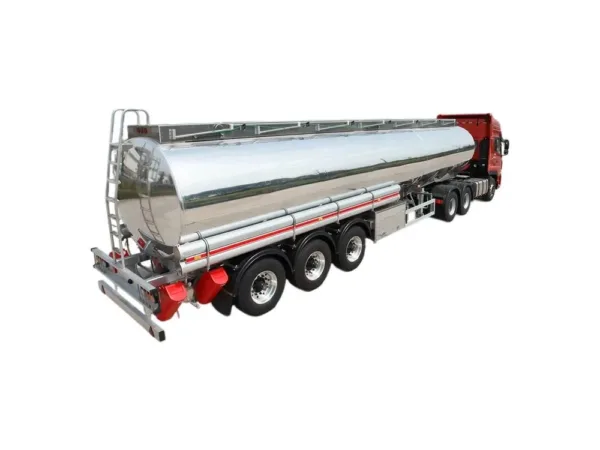
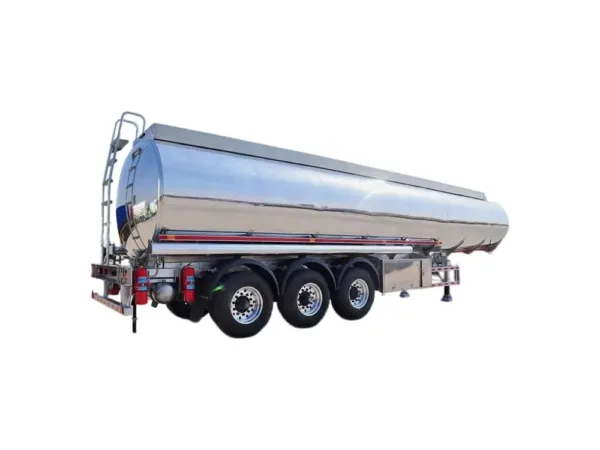
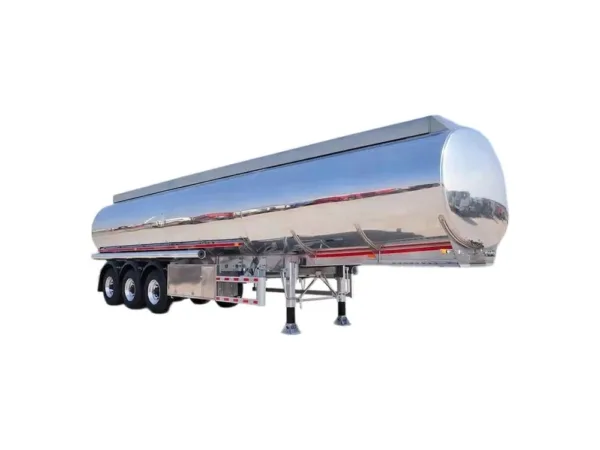
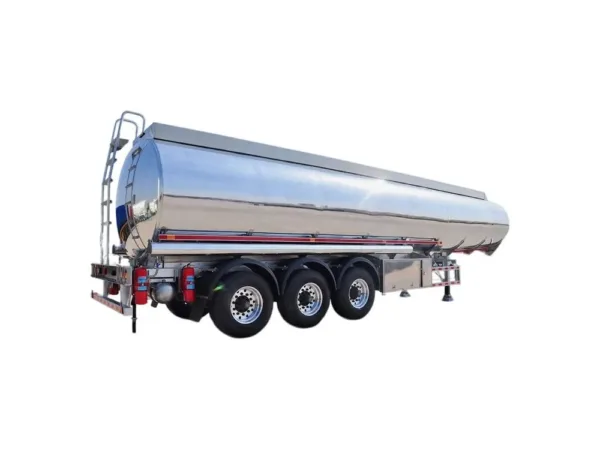
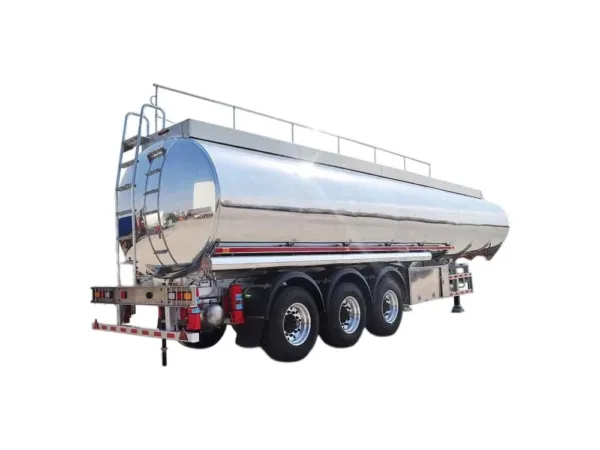
This heavy duty stainless steel milk tanker trailer is a food-grade liquid tank semi trailer built to move raw milk and other edible liquids in bulk over long distances. It suits dairy processors, farm logistics operators and bulk liquid hauliers who need a hygienic tank that holds up to daily loading cycles. The strongest reason to choose it is the stainless steel barrel: it protects cargo quality while standing up to the washdown routine that food-grade transport demands, so the trailer keeps working shift after shift instead of sitting idle between cleanings.
Dairy farm logistics is the core job for this heavy duty stainless steel milk tanker trailer. A collection fleet runs it between farm gates and a processing plant, picking up raw milk from multiple suppliers on a fixed round. The barrel holds the load through the rural access roads and the highway stretch that follows. Because the tank is built for food-grade cargo, the same trailer can be scheduled on back-to-back collection runs without the barrel becoming the reason a load is rejected at intake. Operators plan the round around the full barrel capacity and the payload rating, so the number of stops per trip is set by the schedule rather than by the tank.
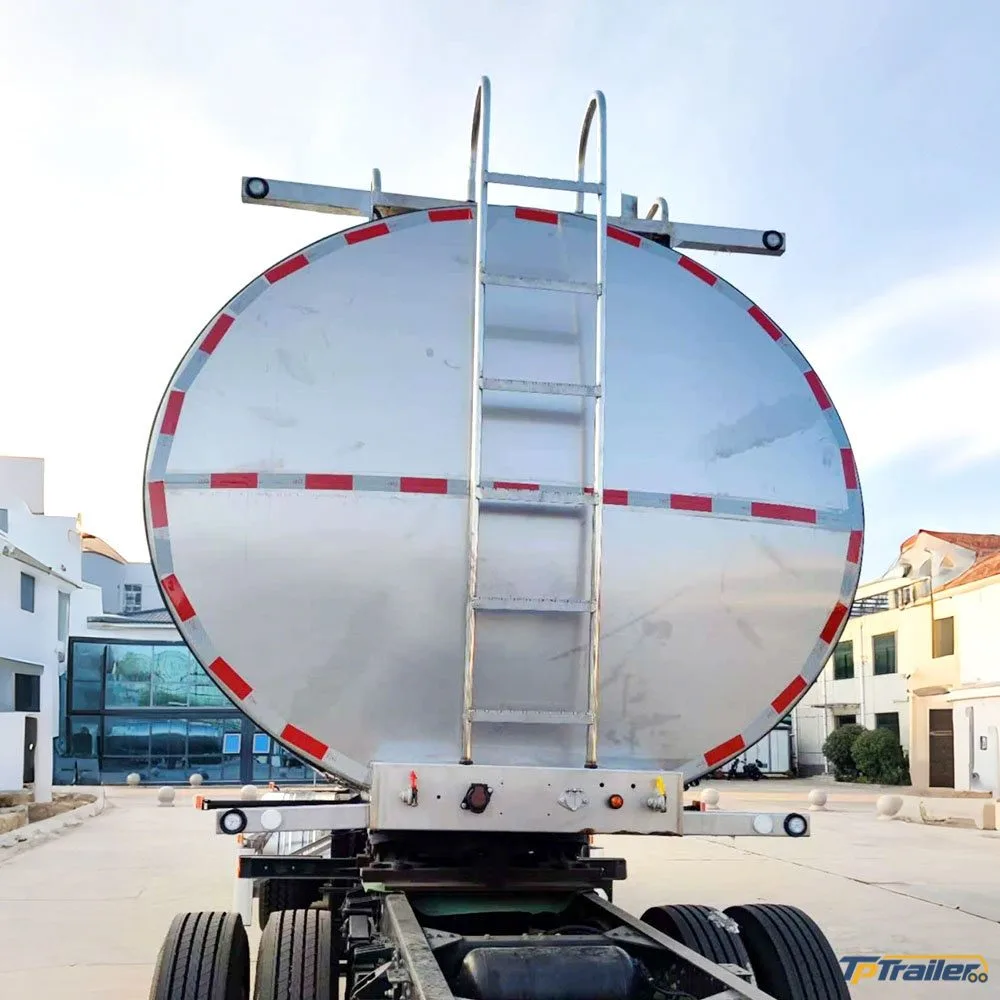
Beyond raw milk collection, the trailer fits bulk liquid food grade hauling more broadly. Edible liquid producers and distributors use tankers of this type to move bulk loads between production sites and storage or distribution points. The semi-trailer format means the same tractor unit can pull the tanker on a morning food-grade run and switch to another trailer later, which keeps utilisation high across a mixed fleet. For long-distance delivery work, the three-axle running gear and heavy duty build give drivers a stable platform on extended highway routes. Fleets that already run tanker semi-trailers recognise this configuration as a straightforward addition to an existing schedule.
For a Tanzanian operation, the route profile is the deciding factor. Long trunk hauls between a collection hub and a processing plant reward the three-axle layout and the steady tracking it gives at highway speed, while the final farm access leg is where the trailer’s ground clearance and suspension choice earn their keep. Buyers should map their own round before fixing the specification: the number of farm gates, the distance between them and the length of the highway leg all feed into the barrel size and axle decision. The heavy duty stainless steel milk tanker trailer is a working asset, and its value comes from fitting the round it actually runs, not from the largest possible barrel.
The customisation list is short on purpose. Each item is fixed at order confirmation because the chassis, tank mounts and cladding are built around those choices from the first weld. Changing an axle count or a suspension type after production starts means reworking a finished assembly, which costs time the buyer rarely has. The practical approach is to settle the round, the payload and the discharge layout first, then use the customisation list to lock the hardware that supports them. A heavy duty stainless steel milk tanker trailer is built to order, so the specification conversation belongs before the purchase order, not after.

On arrival, the buyer’s workshop has to line up the trailer with the tractor unit that will pull it. That means checking the kingpin and fifth wheel coupling, the landing leg positions, and the electrical and pneumatic connections against the towing vehicle. Because no fitment data is stated in this listing, a fitment drawing is confirmed at quotation rather than assumed here.

The heavy duty stainless steel milk tanker trailer should be matched to the tractor’s coupling height and hose reach before the first loaded run. Operators should also confirm the tank outlet height against the receiving point at the dairy or collection bay, and check that the discharge fittings suit the hose and pump sizes in use. Getting these points confirmed early avoids a trailer that sits idle while adapters are sourced.
A wrong size at this stage costs downtime, and downtime on a milk run is expensive because the load is perishable and the collection schedule is fixed. If the coupling height is off, the trailer rides nose-up or nose-down and the load shifts against the baffles. If the hose routing does not reach the discharge point, the operator has to improvise a connection, which adds handling risk to a food grade product.
The heavy duty stainless steel milk tanker trailer is a large asset, and installation errors are rarely corrected on the roadside. Buyers should book a fitment check with their own workshop before the first collection and keep the confirmed drawing on file. That way the heavy duty stainless steel milk tanker trailer enters service with known dimensions, not guessed ones.
The landing legs deserve their own check. When the trailer is uncoupled, the legs carry the front of the assembly, and a leg that is set too high or too low makes recoupling awkward and puts stress on the kingpin area. Operators should confirm the leg travel suits the tractor’s fifth wheel height and that the crank handle clears the tank cladding through the full range. A leg that binds is a sign the mounting is out of line, not a fault to be forced. This is a small check that prevents a larger one later, and it belongs in the pre-service routine for any heavy duty stainless steel milk tanker trailer.
A maintenance routine is only useful if it is written down. Fleet managers should record the date and outcome of each shell inspection, each brake adjustment and each seal replacement against the trailer’s unit number. Over a season, those records show whether wear is normal or whether a route is punishing the assembly harder than expected. They also give the workshop a baseline when a driver reports a change in handling. The heavy duty stainless steel milk tanker trailer rewards a simple logbook more than an elaborate schedule, because the items that fail first are known and few.
A heavy duty stainless steel milk tanker trailer ships as a complete unit. The tank shell, insulation and outer cladding stay assembled. Ladder, walkway, manhole covers and discharge fittings are braced or wrapped separately. Exposed stainless surfaces receive a protective film. Valves and pipe ends are capped. The buyer should confirm the packing list against the delivered unit before signing. Ask the supplier to photograph the loaded unit, the fittings crate and the seal numbers. These images are the reference for any claim raised after arrival.
A heavy duty stainless steel milk tanker trailer does not nest or stack. The barrel, frame and running gear form one rigid body. Container space is saved by choosing the right box and loading method, not by nesting. A buyer ordering several units should confirm whether the supplier ships them in one container or in separate boxes. Confirm the loading plan in writing before production. On arrival, check the tank shell, cladding, insulation, manholes and discharge valves. A heavy duty stainless steel milk tanker trailer with crushed cladding or bent fittings needs documented photographs within the agreed claim window.
One mistake sits behind several of the others: treating the quotation as a price request rather than a specification document. The quotation is where the barrel grade, the payload figure, the axle count and the discharge layout are confirmed in writing. Buyers who send those details with the enquiry get a quotation that can be checked line by line; buyers who send only a quantity get a price they then have to renegotiate once the details surface. The heavy duty stainless steel milk tanker trailer is built to order, so the enquiry is the cheapest place to get the specification right.
The input describes a food grade liquid tanker, so the barrel, fittings and finish are specified for that duty. If the cargo differs, confirm the required steel grade, interior finish and valve materials with the supplier before ordering. State the cargo name in the enquiry. Ask whether the discharge layout suits your receiving point. Get the confirmed configuration in writing on the quotation. A heavy duty stainless steel milk tanker trailer is built to order, so the cargo decision must come before production starts.
Measure the filling point height and the hose connection at the dairy. Measure the turning space and the route width on your delivery roads. Confirm the permitted axle load with your registration authority. Compare these figures with the trailer drawing before you sign. Send the measurements with your enquiry so the supplier can check the manhole, ladder and outlet positions. A heavy duty stainless steel milk tanker trailer that fits the route and the filling point avoids rework after delivery.
The load capacity is stated for the trailer, but the legal limit depends on your tractor, axles and local road rules. Ask the supplier for the tare weight in writing. Compare it with the permitted gross weight on your route. Confirm the axle count and tyre specification match your registration class. If the figures do not align, change the order before production. A heavy duty stainless steel milk tanker trailer is only compliant when the whole combination is checked, not the trailer alone.
Send the tank length, the axle count and the quantity you need for a quotation. Add the cargo, the discharge layout and your destination port. The supplier will confirm the configuration, the packing plan and the price tier in writing before production begins. For a fleet replacing an ageing unit or adding capacity for a new collection round, the heavy duty stainless steel milk tanker trailer is quoted against your actual duty rather than a generic sheet, so the figures you receive match the work you plan to do.
| Load Capacity | 30000 | Type | Semi-Trailer |
|---|---|---|---|
| Place of Origin | China (Mainland) | Province | Guangdong |
| Use | Truck Trailer | Material | Steel |
| Size | 11700x × 2500 × 3800mm | Dimensions | * * |


No reviews yet — click the Review button on the right to share your experience with this product.










Fill in the form below and our team will respond within 24 hours.
Write a Review