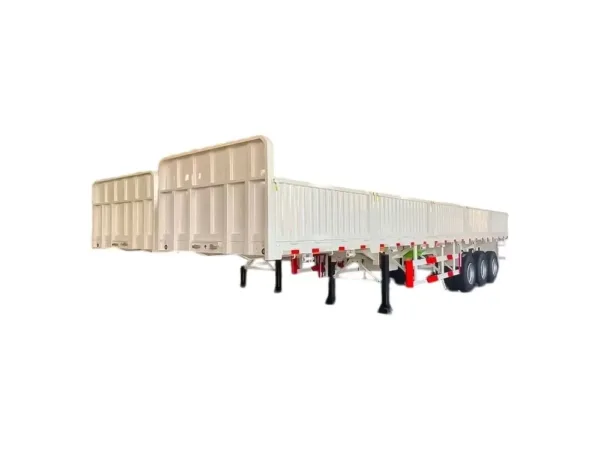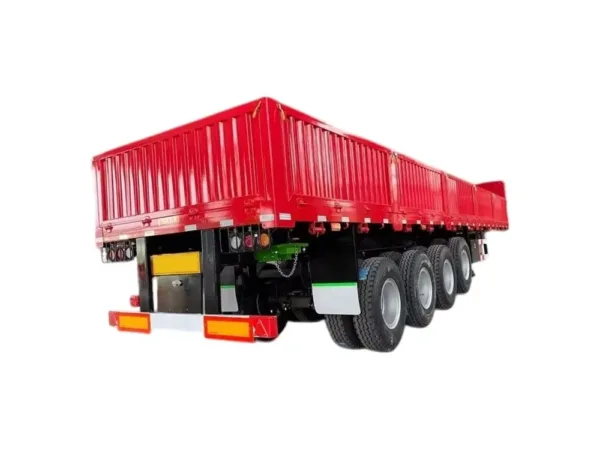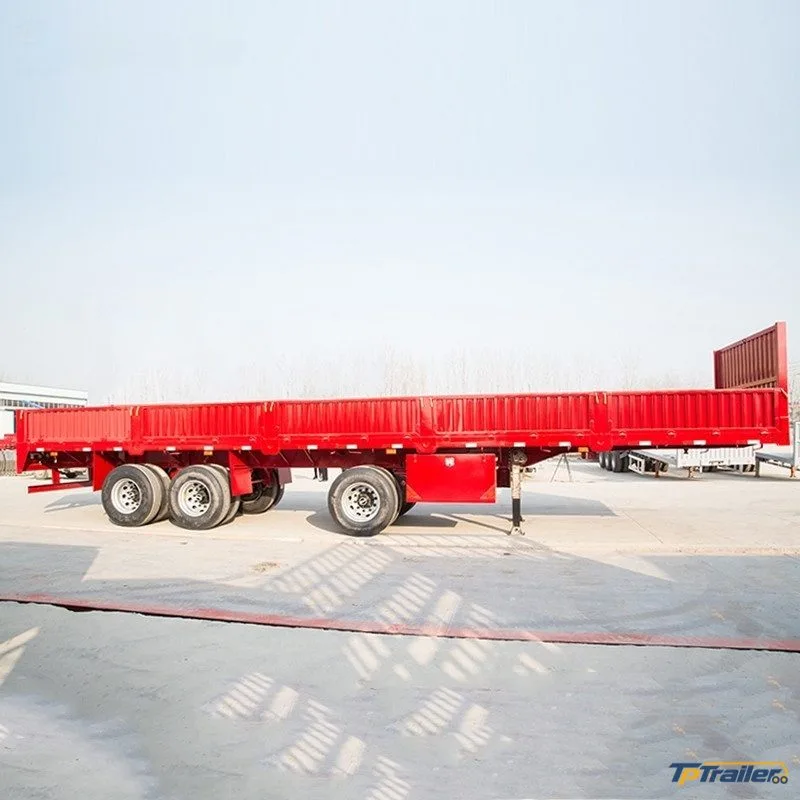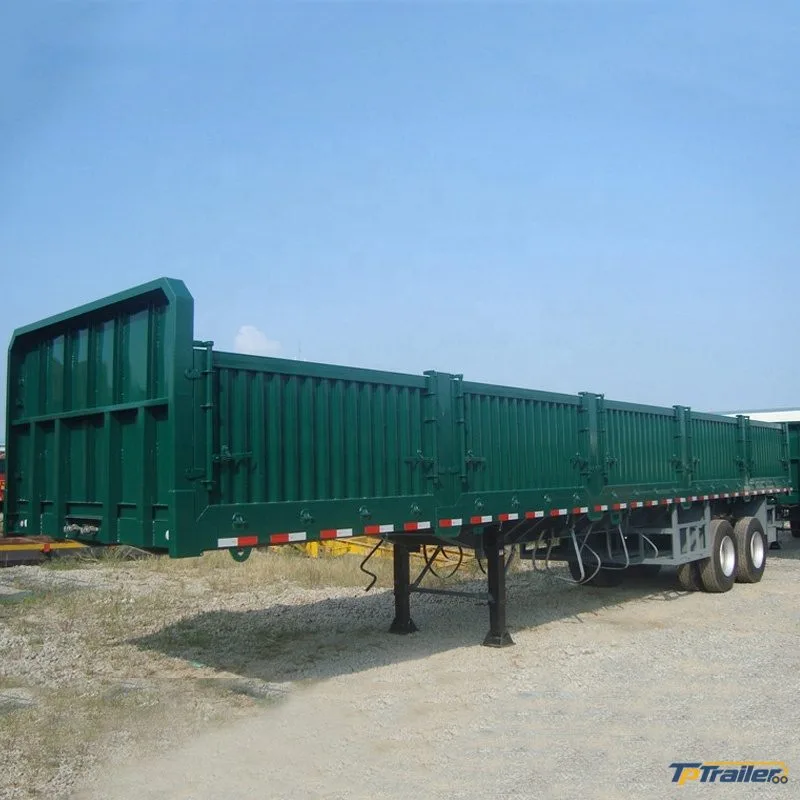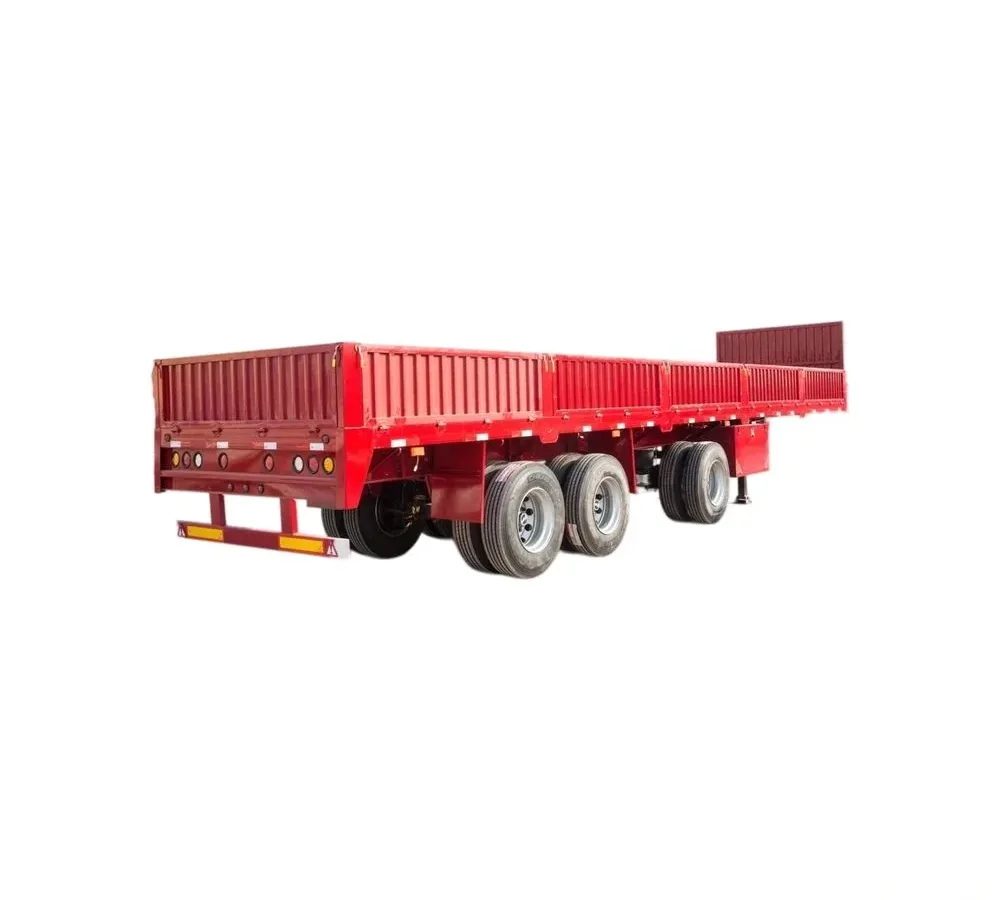
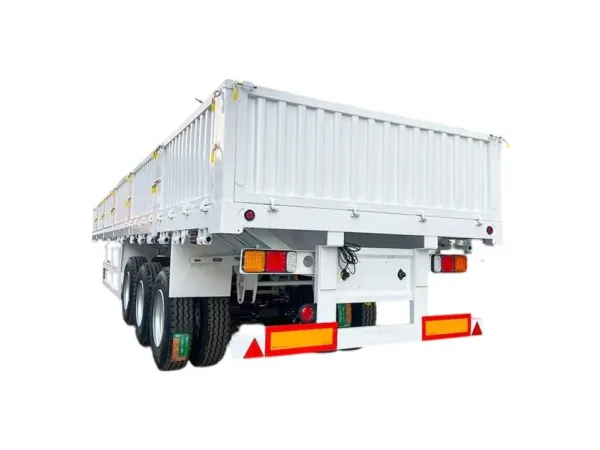
3 Axle Side Wall Semi Trailer 70T Load Capacity

side wall semi trailer with 70T load capacity, 3 axles and 600mm sidewall for cargo transport. Q345 steel build, 12R22.5 tires. Request a quote today.

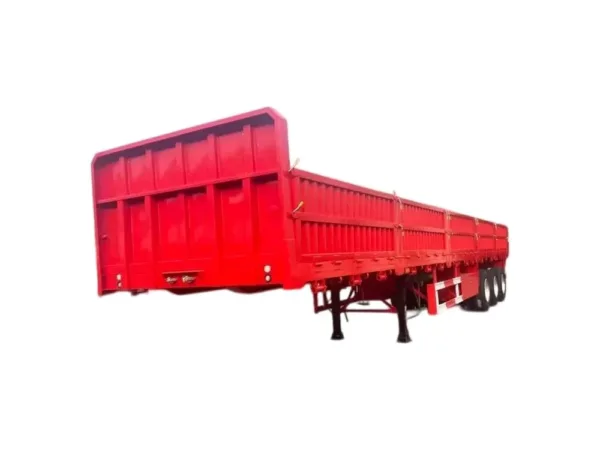
70T 3
FOB Reference Price US$5,000-6,500 Final price confirmed by inquiry

Certifications

  • ISO 9001

Key Features

  • 3 axle sidewall trailer rated at 70T load capacity for heavy cargo transport
  • 600mm high sidewall in 1.5mm steel plate keeps bulk loads contained
  • 3mm diamond steel plate floor for grip and wear resistance
  • Q345 steel construction for a durable cargo trailer body
  • King pin available in 2'' or 3.5'' to match your tractor unit
  • 10-piece spring setup and 12R22.5 tires for road haulage
  • One standard tool box included for on-road maintenance
Load Capacity 70T
Type Semi-Trailer
Use Truck Trailer

The side wall semi trailer is a three-axle cargo platform built for hauling bulk and palletised freight with the sides up and the deck open. It suits fleet operators, freight forwarders and construction suppliers who need one trailer to move steel, bagged goods, machinery and stacked timber without a box body getting in the way. Its strongest argument is the balance it strikes: a 70T load capacity carried on Q345 steel structure, with drop sides that open for crane and forklift access. You get the payload of a heavy platform trailer and the load containment of a sided body, at a factory price that keeps fleet acquisition costs predictable.

Why It Works On Site

  • 70T load capacity on a three-axle platform. The rated capacity lets a side wall semi trailer take dense cargo such as coiled steel, bagged cement or stacked stone without the operator splitting loads across two units. That matters on sites where weighbridge limits and trip counts decide the day’s margin, and where a single heavy run beats two light ones.
  • Q345 steel structure throughout. The main frame and sidewall panels use Q345 steel, a grade chosen for yield strength under repeated loading. For a side wall semi trailer working construction supply runs, that means the body resists denting and bowing when cargo shifts against the walls, so the trailer keeps its shape across years of loading cycles rather than needing panel straightening.
  • 600mm sidewall in 1.5mm steel plate. The walls are high enough to contain palletised goods, sand, gravel and scrap during cornering, but low enough to load over the side by hand or from a crane. A side wall semi trailer with this wall height keeps loose cargo from spilling onto the road while still allowing top loading from either side.
  • 3mm diamond steel plate floor. The checker pattern gives forklift tyres and steel feet something to bite into, which reduces slipping when the deck is wet or dusty. On a side wall semi trailer used for mixed freight, that grip speeds up loading and lowers the risk of a pallet sliding into the sidewall during braking.
  • 10-piece spring suspension. The spring pack is sized to carry rated loads over uneven ground, from yard ruts to broken asphalt access roads. A side wall semi trailer with this suspension setup keeps the deck stable when the load is off-centre, which protects both the cargo and the tyres on repeated site entries.
  • 12R22.5 tyres and a standard tool box. The tyre size is common on heavy trailers, so replacements are easy to source on the road. The tool box keeps straps, chains and jack gear with the trailer, so a side wall semi trailer arrives on site ready to secure a load without a separate support vehicle.

Where It Is Used

Construction supply is the most familiar duty for a side wall semi trailer. Operators run bagged cement, sand, gravel, rebar bundles and precast blocks from depots and quarries to building sites. The drop sides let a forklift lift pallets straight over the wall, and the 600mm sidewall holds loose aggregate in place on the highway leg.
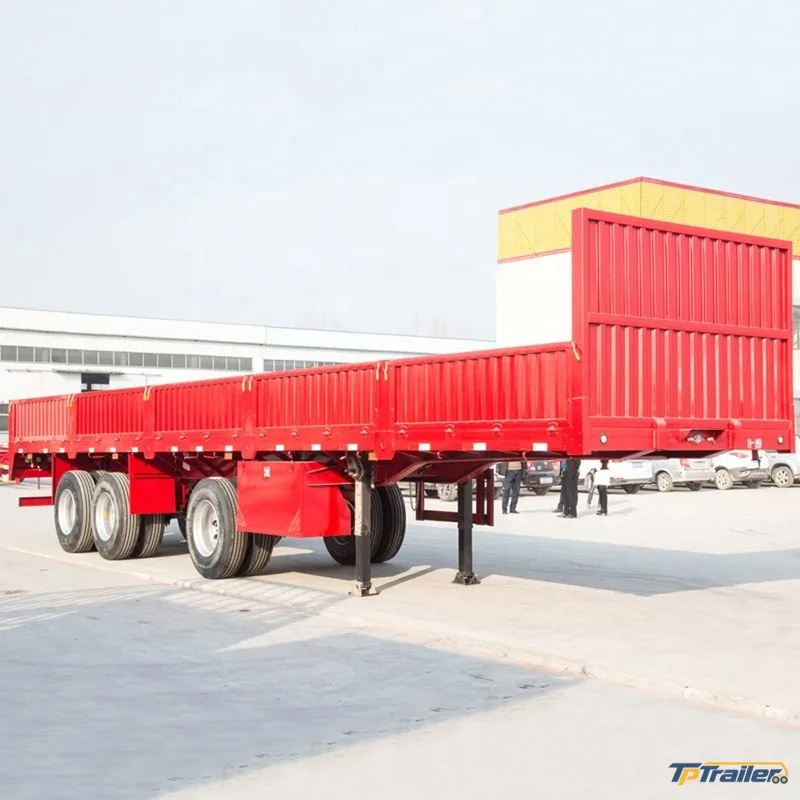
side wall semi trailer - detail 1

Because the deck is flat and open, a crane can lift long steel or concrete elements on and off without a roof or door frame in the way. Fleets that deliver to sites with tight turning areas also value the three-axle layout, which spreads load across the deck and keeps the trailer stable when part of the cargo is unloaded at the first stop. The same trailer then returns with site waste, empty pallets or equipment, so the run is never wasted.

General freight and industrial haulage is the second common pattern. A side wall semi trailer moves stacked timber, steel plate, drums, machinery parts and palletised consumer goods between warehouses and distribution yards. The diamond plate floor gives forklift operators grip during fast loading cycles, and the sidewall height contains loads that would otherwise need strapping at every level.

For scrap and recycling work, the walls keep loose material from spilling when the trailer is loaded by grab or magnet, and the open top allows overhead loading without a tipper body. Operators also use the platform for oversized items that sit above the wall line, secured to the deck and the side posts. On mixed-freight routes, the trailer handles a different cargo mix each day without a rebuild, which is why it stays in service rather than sitting between specialist jobs.

Choosing The Right Spec

  • Match the load capacity to your densest cargo. The 70T rating is the ceiling for the side wall semi trailer, and it suits operators moving steel, stone, bagged minerals or heavy machinery. If your regular loads are lighter but bulky, the same platform still works; the rating simply leaves headroom, which reduces stress on the frame and springs over years of service.
  • Pick the king pin to fit your tractor fleet. The 2” or 3.5” king pin option lets you match the trailer to the fifth wheels already in your yard. A side wall semi trailer ordered with the wrong pin size becomes a coupling problem on day one, so confirm the tractor specification before ordering and keep the fleet interchangeable.
  • Choose paint according to route and climate. Paint is optional, which lets a buyer decide between a basic finish and a coated body. For a side wall semi trailer working coastal routes, fertilizer or salt exposure, a protective finish is worth discussing with the supplier; for dry inland haulage, the standard finish may be enough to protect the Q345 steel structure.
  • Consider the 600mm sidewall against your loading method. The fixed wall height suits forklift and crane loading from above. If your cargo is taller than the wall line, you load above it and secure to the deck; if it is loose bulk, the wall contains it. Confirm the wall height against your most common cargo before finalising the side wall semi trailer order.

Customisation Before Delivery

  • The axle count is the first choice to settle on a side wall semi trailer. This build carries three axles, and the configuration is fixed at order confirmation so the running gear matches the load you plan to carry. Confirm the axle count before production starts, because changing it later affects the frame, the suspension and the braking layout together.
  • Paint is optional on this side wall semi trailer. You can specify a colour or finish that matches your fleet, or leave the steel in its standard protective coating. The choice is recorded at order confirmation. State your preference early so the surface preparation and coating stage is planned around it rather than added afterwards.
  • The king pin is offered in two sizes, and the right one depends on your tractor unit. Tell us which coupling your fleet uses when you order, and the side wall semi trailer is built to suit. This is a small part that decides whether the trailer couples cleanly, so settle it at order confirmation with the rest of the build.
  • Tyres on this side wall semi trailer are specified by size, and the size is agreed at order confirmation. Match the tyre to the roads and loads you run, and keep the spare policy consistent across your fleet. Because the tyre choice affects ride height and clearance, it is best fixed before the chassis is built.
  • Small fittings round off the order. The standard tool box is included, and the side wall semi trailer can be specified with the accessories you need for daily work. List them at order confirmation so they are fitted during assembly and not sourced as an afterthought once the trailer is finished.

Fitting And Installation

A side wall semi trailer arrives as a complete unit, so fitting means matching it to your tractor unit and checking every connection before the first loaded run. Start at the coupling: confirm the king pin size agrees with the fifth wheel on your tractor, and check that the plate sits flat and locks without play. Then work along the air lines and electrical lead, matching the couplings to the tractor, and route the hoses so they clear the landing legs and do not rub on the frame.

side wall semi trailer - detail 3
side wall semi trailer - detail 2

Check the side wall panels and the dropside hinges for movement in transit, and confirm the floor plate is clean and undamaged. Walk the tyres and wheels, checking that wheel nuts are at the torque your workshop specifies, and inspect the springs and suspension mountings. If your input package includes a fitment drawing, follow it; where no fitment data is stated, a fitment drawing is confirmed at quotation so the mounting points and connections are agreed before delivery.

The cost of a mismatch shows up as downtime. A side wall semi trailer that will not couple cleanly cannot enter service, and a wrong king pin size means the tractor and trailer stay apart until the coupling is corrected. Hose and lead routes that are too short or badly placed chafe against steel and fail at the roadside, taking the trailer out of the schedule. Wheel fixings left unchecked become a safety issue, not a delay.

Because this build carries a high load capacity, the mounting points and suspension must be right from the first day. Confirm the fitment details at quotation, keep the drawing with the trailer paperwork, and brief the driver on the pre-trip check. A short, disciplined installation routine protects the side wall semi trailer and keeps the asset earning from the first load.

Service Life And Maintenance

  • Tyres wear first on any side wall semi trailer, especially on the drive over long distances. Check tread depth, pressure and sidewall condition at every pre-trip inspection, and look for uneven wear that points to alignment or suspension faults. Rotating tyres where the layout allows spreads the wear and keeps the axle set working as a matched unit for longer.
  • The side wall panels and dropside hinges take daily punishment. Inspect the 1.5mm steel plate for dents, cracks and distortion, and check that the hinges open and close freely. A panel that no longer sits flat lets the load shift and strains the frame. Touch up damaged paint early, because bare steel on a side wall semi trailer rusts faster than coated steel.
  • Springs and suspension mountings are the next wear point. The build uses ten-piece springs, and the leaves, shackles and bushes should be checked for cracks, looseness and sag. A broken leaf changes the ride height and loads the neighbouring parts. Inspect after heavy runs and before long trips, and replace worn bushes rather than waiting for play to spread through the side wall semi trailer.
  • The floor takes the load directly. The 3mm diamond steel plate should be checked for wear, cracks and loose fixings, and kept clear of debris that traps moisture. A worn floor is a structural concern, not a cosmetic one. Cleaning and a quick inspection after each unloading cycle extends the floor life and protects the Q345 steel structure beneath it.
  • The king pin, landing legs and brake system complete the routine. Check the king pin and fifth wheel for wear, confirm the landing legs raise and lower smoothly, and test brakes and air lines before every trip. The optional paint choice protects the steel and slows corrosion, so a coated side wall semi trailer holds its condition longer. Keep a simple log of every inspection.

Packing And Container Loading

Each side wall semi trailer is prepared for sea freight with its steel structure protected against moisture and handling damage. The sidewall panels and diamond steel plate floor are the surfaces most exposed during loading, so they are the first to be covered. Buyers should confirm with the supplier which protective materials are used and whether they are removed before shipment or left in place. Ask for loading photographs before the container is sealed, because a side wall semi trailer is a large unit and the packing stage is the last chance to catch a problem.

Container loading depends on how the trailer is broken down for transport. A side wall semi trailer can be shipped in a disassembled or knocked-down form to make better use of container space, with components stacked and braced inside. The buyer should verify the loading plan in advance: how many units fit per container, whether the sidewalls and landing legs travel separately, and how the load is secured. Confirm the shipping configuration in writing, since the loading method affects both freight cost and what arrives on site.

On arrival, inspect the container before unloading. Check for moisture, condensation and any deformation of the sidewall panels or floor plate. Verify that every component listed on the packing list is present, including the standard tool box and the spring sets. Photograph the condition of the side wall semi trailer as it is unpacked, and compare the delivered configuration against the agreed loading plan. Report any shortage or transit damage to the supplier promptly, with images, so the issue can be resolved before assembly begins.

Common Mistakes Buyers Make

  • Ordering the wrong king pin size. The king pin is offered in two sizes, and matching it to the tractor is essential. A buyer who assumes a size without checking the fifth wheel coupling will find the side wall semi trailer cannot be hitched. The single check: confirm the required king pin size with the tractor operator and state it on the order.
  • Ignoring the load capacity requirement. Buyers sometimes compare trailers on price alone and overlook the rated load capacity. A side wall semi trailer built for one duty cycle may not suit heavier haulage. The single check: state the maximum payload you intend to carry and confirm the rated load capacity covers it before ordering.
  • Misjudging sidewall height. The sidewall height determines what cargo the trailer holds securely. Buyers who order without measuring their typical loads may find the walls too low or too high for the job. The single check: measure the tallest and bulkiest loads you plan to carry and match the sidewall height to them.
  • Skipping the paint and finish decision. Paint is optional, and buyers who leave it unspecified may receive a finish that does not suit their climate or fleet. The single check: decide the paint requirement before the order is placed and have it written into the quotation for the side wall semi trailer.
  • Not confirming the shipping configuration. Some buyers assume a fully assembled trailer will arrive. The loading plan and degree of disassembly affect both freight and assembly time. The single check: request the loading plan and confirm how the side wall semi trailer will be packed and what assembly is required on arrival.

Buyer Questions

What should I confirm before ordering a side wall semi trailer?

Confirm four things in writing: the king pin size that matches your tractor, the sidewall height suited to your cargo, the paint requirement, and the shipping configuration. Also state your intended payload so the load capacity is verified against your duty cycle. Ask the supplier to list every component included, such as the tool box and spring sets. A written confirmation at quotation stage prevents most fitment disputes later, and it gives you a reference to check the delivery against.

How is the trailer packed, and what should I inspect on arrival?

The side wall semi trailer is protected for sea freight, with panels and floor plate covered against moisture and handling damage, and it may ship partly disassembled to save container space. On arrival, inspect the container for condensation and the panels for deformation. Check every item on the packing list, including the tool box and springs. Photograph the condition as you unpack, and report shortages or damage to the supplier promptly with images before assembly starts.

Can the sidewall height and paint be changed to suit my operation?

The sidewall height and paint are both order-specific choices, so raise them before the quotation is finalised. Tell the supplier the cargo you carry and the wall height you need, and state whether paint is required and to what specification. The trailer is built from steel plate and diamond plate floor, so these choices are set at build stage. Confirm the final specification in writing, since changes after production begins are difficult to reverse.

To receive a quotation for a side wall semi trailer, send the overall length you require, the number of axles, and the quantity you intend to order. State your king pin size, sidewall height and paint requirement, and confirm the shipping configuration you prefer. With those details, the supplier can quote accurately against your operation.

Explore more side wall semi trailer in this range.

Load Capacity 70T Type Semi-Trailer
Place of Origin China (Mainland) Province Guangdong
Use Truck Trailer Material Steel
Size 12500x2500x1550 Dimensions * *

Reviews (0)

No reviews yet — click the Review button on the right to share your experience with this product.
Frequently Bought Together

Inquiry about: 3 Axle Side Wall Semi Trailer 70T Load Capacity

Fill in the form below and our team will respond within 24 hours.