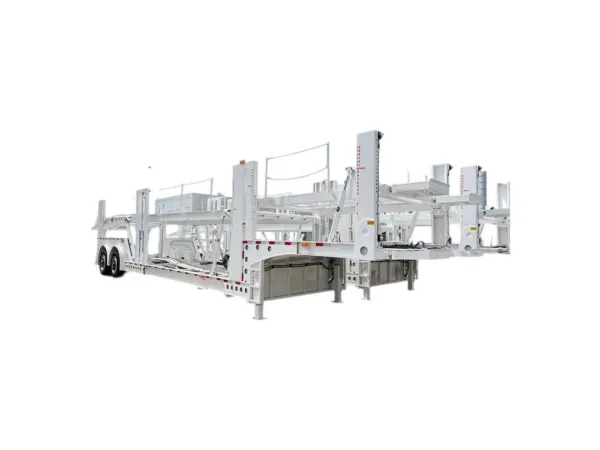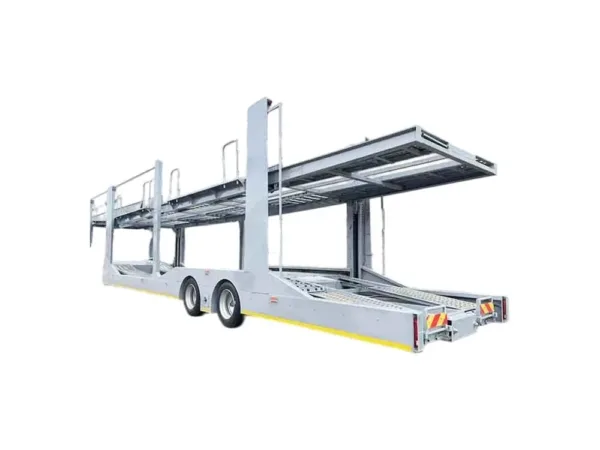
Double Deck Car Carrier Semi Trailer 9T Tare 2 Axle Steel

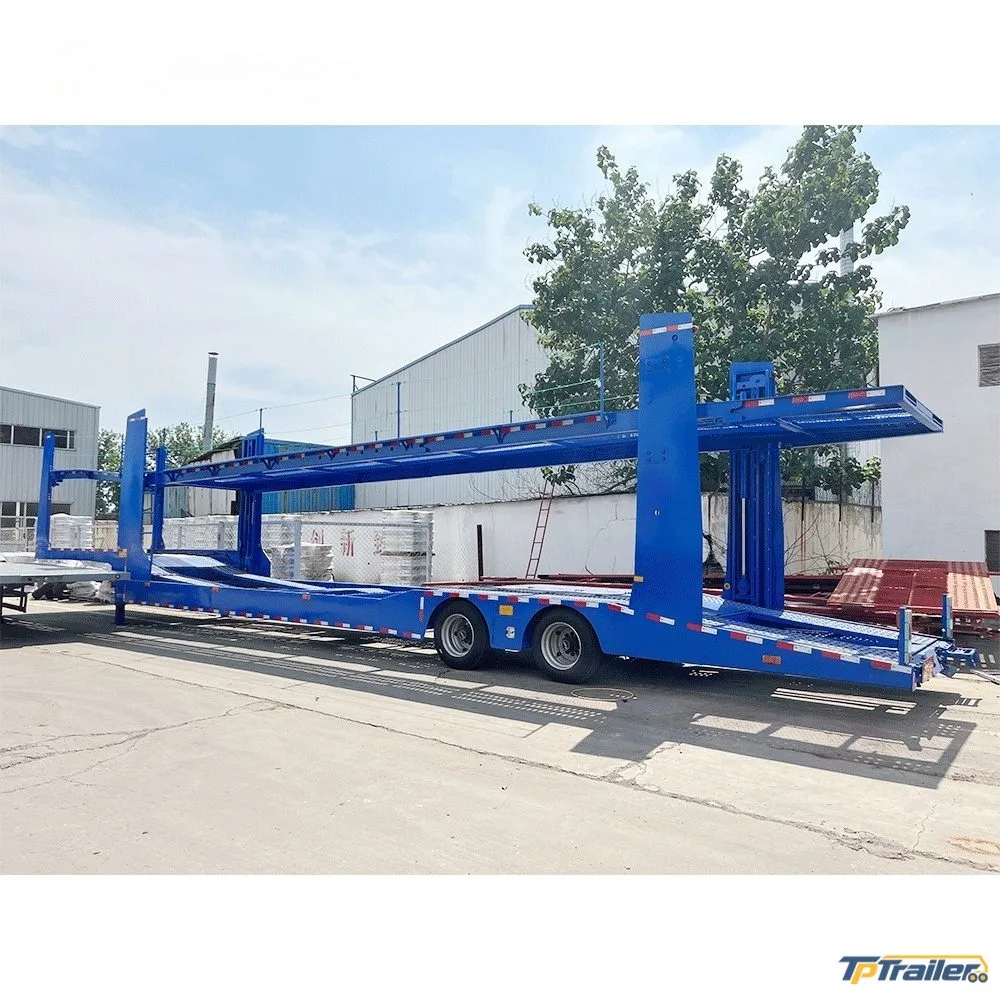
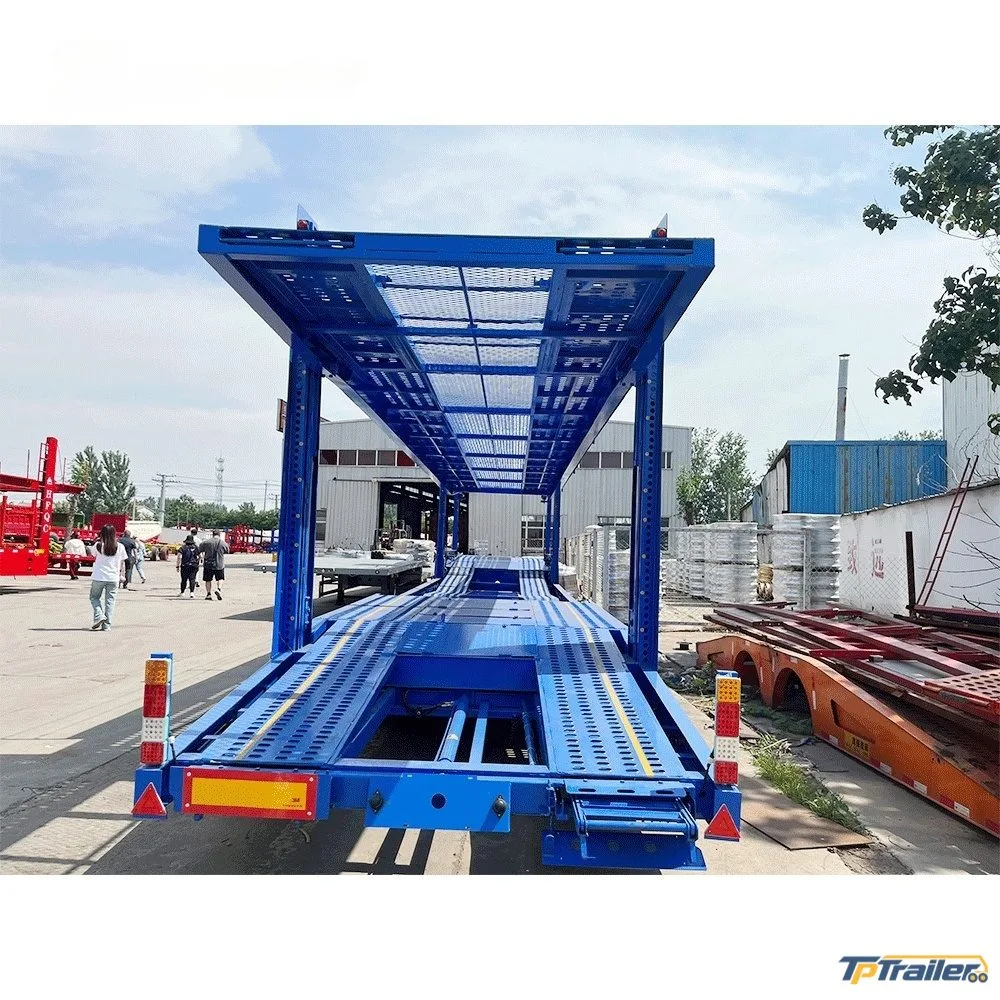
Double Deck vehicle truck trailers car carrier semi trailer with a 9T tare steel build, designed for high-capacity car transport on Uzbekistan routes.

2
FOB Reference Price US$7,700-9,800 Final price confirmed by inquiry

Certifications

  • ISO 9001

Key Features

  • Double deck structure for high capacity car transport
  • Hydraulic lifting system for deck adjustment
  • Tare weight 9T with 2 axles for stable road handling
  • 8 tires in 235/75R17.5 size
  • King pin 50# 90# for standard tractor coupling
  • C200 landing leg for stable parking and loading
Dimensions 50 × 50 × 50

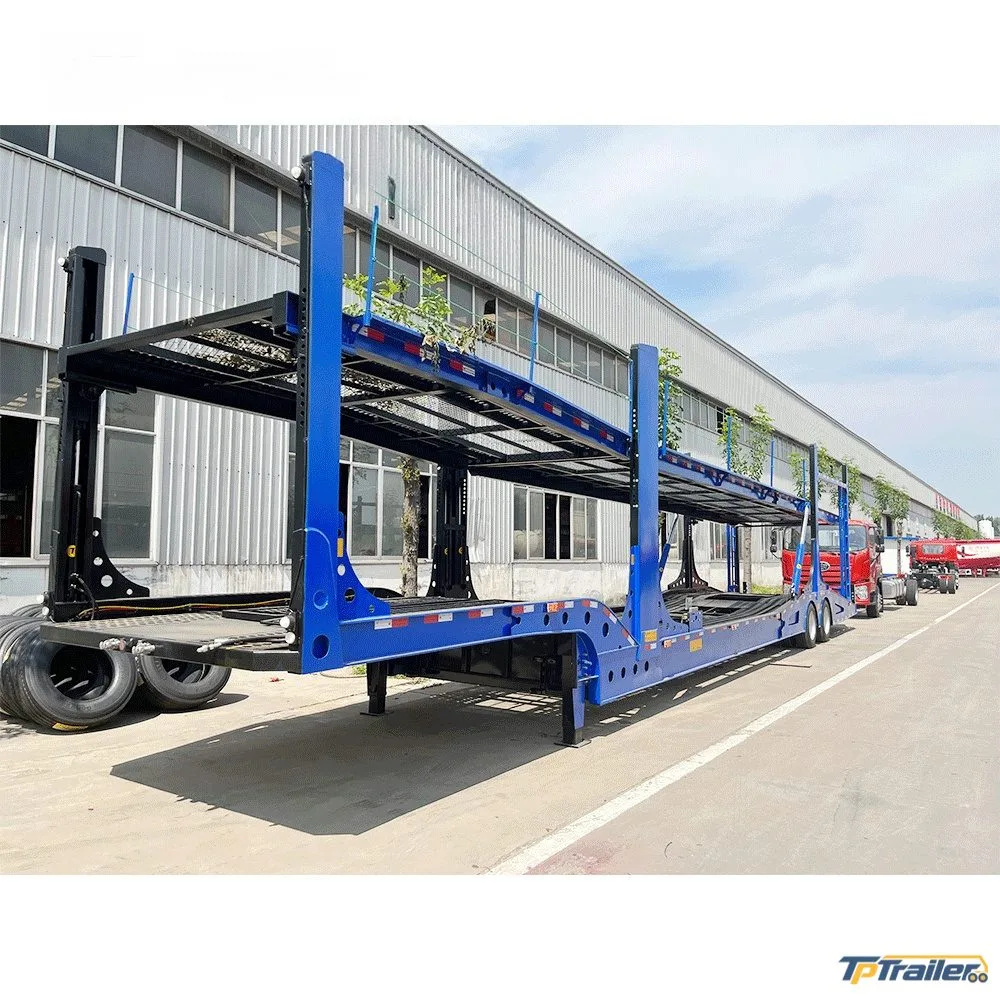
Double Deck vehicle truck trailers car carrier semi trailer is a two-level car-carrying semi-trailer built to move several passenger vehicles in one run. It is aimed at fleet operators, vehicle logistics companies and dealers who need to shift cars between depots, auctions, ports and showrooms without paying for a separate trip per unit.

The trailer uses a hydraulic lifting system to raise and lower the upper deck, so the crew can load the top level and the lower level in sequence. The strongest reason to choose it is capacity per trip: the double deck layout turns one tractor unit and one driver into a multi-vehicle delivery, which is where the real saving sits on short regional runs and long intercity hauls alike.

Why It Works On Site

  • Double deck layout and load count. The two-level structure is the core of the design on this Double Deck vehicle truck trailers car carrier semi trailer. It lets the crew stack vehicles vertically instead of spreading them along the length, so a single trip carries a full batch of cars. For the operator this means fewer runs for the same delivery volume, less fuel burned per vehicle moved and fewer driver hours spent on the road.
  • Hydraulic lifting system and loading sequence. The hydraulic system raises and lowers the upper level, which is what makes the deck usable on a normal yard rather than only at a ramp-equipped terminal. The crew can position the top deck for loading, then bring it down for travel. That flexibility keeps the Double Deck vehicle truck trailers car carrier semi trailer working at sites with limited fixed equipment.
  • Axle configuration and weight distribution. The axle number and the special vehicle axle brand are matched to the tare weight of the trailer, so the running gear is sized for the structure it carries. For the buyer this means the load is spread across the axles as the design intends, which matters when the decks are fully loaded and the tractor is pulling on a long grade or a rough access road.
  • Tyre set and road contact. The tyre type and tyre count are specified for this car carrier semi trailer, and the number of tyres is tied to the axle layout. The result is predictable road contact under a loaded double deck, so the trailer tracks steadily on highway runs and holds its line on yard manoeuvres. Fewer surprises at the contact patch mean less downtime and steadier wear across the set.
  • King pin and tractor matching. The king pin options let the trailer couple to the fifth wheel hitches commonly found on tractor units in the region. A fleet does not need a dedicated prime mover to put this Double Deck vehicle truck trailers car carrier semi trailer to work. That matters when tractors are shared across a mixed fleet and the trailer has to slot into an existing schedule.
  • Landing leg and standing stability. The landing leg specification supports the trailer when it is uncoupled and being loaded or unloaded. On a double deck unit the crew works at height and moves around the structure, so a stable parked stance is part of safe daily operation. It also lets the trailer stand loaded in a yard between runs without relying on the tractor.

Where It Is Used

The most common job for this Double Deck vehicle truck trailers car carrier semi trailer is moving finished passenger cars from a holding yard to dealers and distribution points. A logistics operator collects a batch of vehicles, loads the lower level first, raises the upper deck with the hydraulic system and loads the second layer, then runs the route. Because the trailer carries several cars per trip, it suits regular shuttle work between a central depot and a spread of showrooms.

Double Deck vehicle truck trailers car carrier semi trailer - detail 1

The same pattern fits auction houses and rental fleets that need to reposition vehicles between sites without booking a separate transporter for each car. On these runs the double deck layout is what keeps cost per vehicle down, and the car carrier semi trailer format keeps loading familiar to crews who already handle vehicle transport.

A second set of jobs sits around ports, rail terminals and cross-border corridors, where vehicles arrive in volume and have to be moved inland. Here the Double Deck vehicle truck trailers car carrier semi trailer works as the road leg of a longer chain, taking cars from a collection point to regional storage or onward delivery. Operators on these routes value the hydraulic lifting system because it lets the crew adapt the deck height to the vehicles being carried, and they value the coupling options because tractors are pooled rather than assigned.

The trailer also fits dealer-to-dealer transfers, trade-in movements and event or exhibition logistics, where a handful of vehicles must travel together on a fixed date. In each case the trailer is chosen for one reason: it turns a multi-car movement into a single scheduled run instead of several.

Choosing The Right Spec

  • Match deck capacity to your typical batch size. The double deck structure sets how many vehicles travel per run, so start from the number of cars you usually move at once. If your work is regular dealer replenishment with a consistent batch, the two-level layout on this Double Deck vehicle truck trailers car carrier semi trailer is the fit. If loads vary widely, plan the mix of vehicle sizes you will carry before fixing the configuration.
  • Check overall dimensions against your routes. The trailer’s overall length, width and height determine which roads, yards and forecourts it can enter. Before ordering, walk the regular routes and check turning space, gate widths and overhead clearance at loading points. A double deck trailer runs taller than a flat unit, so bridge and canopy heights on the delivery route deserve a check. The dimensions in the specification are the reference for that survey.
  • Confirm tractor compatibility. The king pin options and the landing leg specification decide how the trailer couples and stands. Check the fifth wheel on your tractor units against the king pin offered, and confirm the landing leg suits the surfaces where the trailer will be parked. For fleets with mixed tractors, this step avoids discovering a mismatch after delivery. It is a quick check that protects the whole schedule.
  • Weigh tare against payload needs. The tare weight is the starting point for what the trailer can legally carry once vehicles are loaded. Compare it with the payload your tractor and route permits allow, then match the axle and tyre set to the load you plan. Operators moving heavier vehicles should confirm the running gear suits the duty cycle. Getting this right keeps the Double Deck vehicle truck trailers car carrier semi trailer within its design envelope on every run.

Customisation Before Delivery

  • Axle count. The base build of this Double Deck vehicle truck trailers car carrier semi trailer runs on a twin-axle arrangement. Buyers moving heavier mixed loads can discuss a different axle count at order confirmation, where the choice is settled against the load plan you intend to run.
  • Deck length. Deck length is fixed against the vehicles you plan to carry, not against a catalogue figure. Because the upper deck lifts on the hydraulic system, the travel of that lift has to suit the deck length, so both are agreed together before the build starts.
  • Suspension and axles. The axle brand and suspension type are named at order confirmation. A Double Deck vehicle truck trailers car carrier semi trailer spends its life partly empty on the return leg, so tell us whether the trailer will run loaded both ways or one way.
  • Tyres. The tyre type and the number of tyres fitted are recorded on the order. Operators running long highway legs and operators working short shuttle routes often want different rubber, and the choice is written into the confirmation rather than assumed.
  • Finish and fittings. Colour, king pin size and landing leg specification are all set at order confirmation. The king pin choice should match the tractor you will actually couple to, and the landing leg is selected for the ground the trailer rests on between trips.

Every one of these points is settled at order confirmation, before the steel is cut. A Double Deck vehicle truck trailers car carrier semi trailer is not a stock item, so a change agreed late is a change that costs. Bring your route profile, your load mix and your tractor details to the quotation and the specification follows from them.
Double Deck vehicle truck trailers car carrier semi trailer - detail 2

Fitting And Installation

On arrival, the work is mostly about matching the trailer to the tractor and to the ground it stands on. The king pin has to sit at the height your fifth wheel expects, and the coupling has to lock without forcing. The landing leg has to reach the ground with the trailer level, not nose-down. The hydraulic lifting system needs its power source and its hose routing checked against the tractor before the first deck cycle. Confirm the tyre set matches the axle rating you ordered, and check that the deck stops and locks at the positions described in the paperwork. If any of these do not line up, stop and call before you load.

Double Deck vehicle truck trailers car carrier semi trailer - detail 3

A mismatch is expensive in a way that is easy to underestimate. A king pin that does not suit the fifth wheel grounds the trailer until a coupling is replaced. A hydraulic line routed against a moving part fails on the road, not in the yard.

A deck that does not lock at the top position is a load risk every time the trailer is used. None of these are faults in the trailer; they are fitment gaps, and they cost days of downtime plus the cost of the correction. The Double Deck vehicle truck trailers car carrier semi trailer is built to a confirmed configuration, so the safest approach is to compare the delivery paperwork against the tractor before the first trip.

The product data supplied for this trailer does not include a fitment drawing, mounting point coordinates or torque values. We will not guess at them. Instead, the fitment drawing is confirmed at quotation, so the coupling geometry, the hydraulic connection points and the deck locking positions are agreed in writing before the order is placed. Treat that drawing as the installation reference. A Double Deck vehicle truck trailers car carrier semi trailer that is coupled and cycled correctly on day one is a trailer that stays in service.

Service Life And Maintenance

  • Hydraulic system first. The lifting system carries the upper deck every cycle, so it wears before the structure does. Inspect hoses for chafe, check the ram seals for weeping and listen for a change in pump note. A Double Deck vehicle truck trailers car carrier semi trailer lives or dies on that lift working smoothly.
  • Deck locks and pivots. The locking points and pivot pins take the load in transit. Check them for play and for free movement before each loaded run. A lock that is stiff or loose is a warning, and catching it early keeps the deck aligned and the load secure.
  • Tyres and axle ends. Tyre condition and axle end play are the operator’s routine check. Look for uneven wear across the tread, which points to alignment, and check the axle brand’s own guidance for bearing play. The tyre type fitted at order confirmation sets the wear pattern you should expect.
  • King pin and landing leg. The king pin and the landing leg are the two points that meet the outside world. Grease the king pin, inspect the leg for bending and check the foot for wear. A Double Deck vehicle truck trailers car carrier semi trailer that couples cleanly every time is one that has been looked after at these points.
  • Structure and finish. Walk the frame and deck surfaces for cracks, corrosion and loose welds. The finish chosen at order confirmation is what protects the steel, so touch up any breach early. Regular inspection at these points is what extends the working life of a Double Deck vehicle truck trailers car carrier semi trailer.

No service interval is stated here because none is fixed by the product data. Build your own schedule around the duty cycle, and record what you find at each inspection so wear trends show up before a failure does.

Packing And Container Loading

A Double Deck vehicle truck trailers car carrier semi trailer leaves the works as a knocked-down or partly assembled unit. Steel decks and ramps are protected against rubbing with wrapping, and hydraulic rams and hoses are capped so sea air cannot enter the seals. The landing leg assembly and king pin area are the first points a stevedore touches, so the buyer should confirm which of those areas are wrapped and which are left bare for lifting. Ask the supplier for the loading plan before the container is booked, because a Double Deck vehicle truck trailers car carrier semi trailer is loaded around its own lifting points.

Stacking is limited by the deck structure. A Double Deck vehicle truck trailers car carrier semi trailer cannot be nested deck-on-deck without risk to the upper platform, so it travels as a single unit or in a small group with timber dunnage between frames. Loose items such as ramps and tyre sets should be crated and lashed, not dropped onto the deck. On arrival, check the frame for twist, the hydraulic lines for chafe, and that every tyre and the king pin match the order. A Double Deck vehicle truck trailers car carrier semi trailer is only as square as its journey allowed.

Common Mistakes Buyers Make

  • Ordering the wrong deck length. The overall dimension is fixed, but the usable deck is shorter once the ramps and king pin area are counted. The single check: measure the longest vehicle you will load, then ask the supplier to mark the usable deck length on a drawing for the Double Deck vehicle truck trailers car carrier semi trailer.
  • Ignoring the tare weight against the tow unit. The trailer carries its own mass before any car is loaded. The single check: compare the tare weight with the rated capacity of the tractor and the road limits on your route, and confirm the combination with the supplier.
  • Assuming the axle count suits local rules. Axle number and axle brand are stated, but road rules vary by country. The single check: send your route and permit limits to the supplier and have the axle configuration of the Double Deck vehicle truck trailers car carrier semi trailer confirmed in writing before deposit.
  • Mismatching the king pin. Two king pin options are offered, and the wrong one will not lock into the fifth wheel. The single check: read the fifth wheel plate on your tractor and order the king pin size that matches it, not the one in stock.
  • Overlooking the lifting system duty. The hydraulic system moves the decks, and its working load is not the same as the trailer rating. The single check: state the heaviest vehicle per deck and confirm the lifting system is sized for it on the Double Deck vehicle truck trailers car carrier semi trailer.

Buyer Questions

Can the trailer be shipped in one container?

That depends on the loaded envelope, not on the trailer alone. Give the supplier your container type and internal dimensions, and ask for a loading sketch showing how the Double Deck vehicle truck trailers car carrier semi trailer sits inside it. Confirm whether ramps and tyres travel loose or fitted, and who supplies dunnage. Break-bulk or flat-rack options should also be priced, because the cheapest freight is not always the container you assumed. Get the loading method written into the quotation.

What should I confirm about the hydraulic lifting system before ordering?

Confirm the number of lift positions, the control location and whether manual override is included. Ask how the rams are protected during shipping and what fluid is specified for your climate. For a Double Deck vehicle truck trailers car carrier semi trailer, also confirm the deck lock mechanism that holds the platform while loading. Spare seal kits and hose sets should be listed in the quotation if you want them on the same shipment. The supplier should confirm all of this in writing, not verbally.

How do I know the tyre and axle package suits my operation?

Start from your heaviest load and your longest route. The tyre size and tyre count are stated, and the axle brand and number are stated, so match them to your road surfaces and permit limits. Ask the supplier to confirm the load index of the fitted tyres and the wheel nut torque at delivery. For the Double Deck vehicle truck trailers car carrier semi trailer, request the axle spacing on the drawing and check it against local turning rules. Anything not stated is confirmed at quotation.

To price your unit, send the overall length you need, the axle count your route allows, and the quantity you plan to order. Add your destination port and the container type you prefer. With those three points, the supplier can quote the Double Deck vehicle truck trailers car carrier semi trailer against the right configuration and the right freight plan.

Explore more Double Deck vehicle truck trailers car carrier semi trailer in this range.

Dimensions 50 × 50 × 50

Reviews (0)

No reviews yet — click the Review button on the right to share your experience with this product.
Frequently Bought Together

Inquiry about: Double Deck Car Carrier Semi Trailer 9T Tare 2 Axle Steel

Fill in the form below and our team will respond within 24 hours.